


Growing up in Türkiye, we did not celebrate Thanksgiving, so I learned how to cook a turkey as an adult after moving to the U.S. more than 20 years ago. Over the years, watching more experienced cooks and learning from a few dry turkeys myself, I discovered one very important truth:
There is a tiny window between juicy perfection and dry disappointment.
So I started focusing on the techniques that truly keep turkey moist. One option is using a Turkey Injection to add seasoning and moisture inside the meat, but I also wanted an option that was easier and required no special tools.
That is where this compound butter, which I specifically created for turkey, comes in.
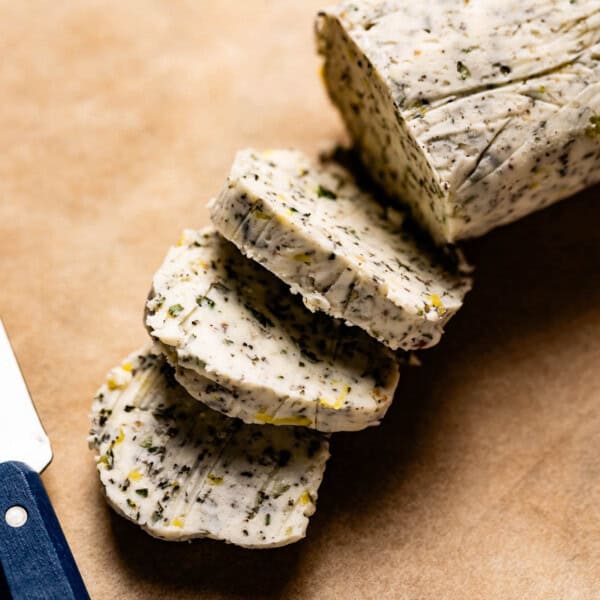
In the simplest terms, it is softened butter mixed with herbs, garlic, and spices that slowly melts under the skin as the turkey roasts, keeping the meat juicy and helping the skin turn beautifully golden and crisp.
To me, this make-ahead friendly recipe is a simple shortcut with big rewards. And in this post, I will walk you through everything you need to know, from the herbs and spices to use to the easiest way to spread it under the skin so you can confidently cook a tender, flavorful, perfectly browned turkey that everyone will love.
Ingredients You’ll Need With Substitution Ideas
The key ingredients in this compound butter recipe have the perfect balance of fresh herbs, citrus, and garlic, resulting in a perfectly seasoned turkey. You can find the exact measurements and the full list in the recipe card below, but here are a few important notes from my testing:
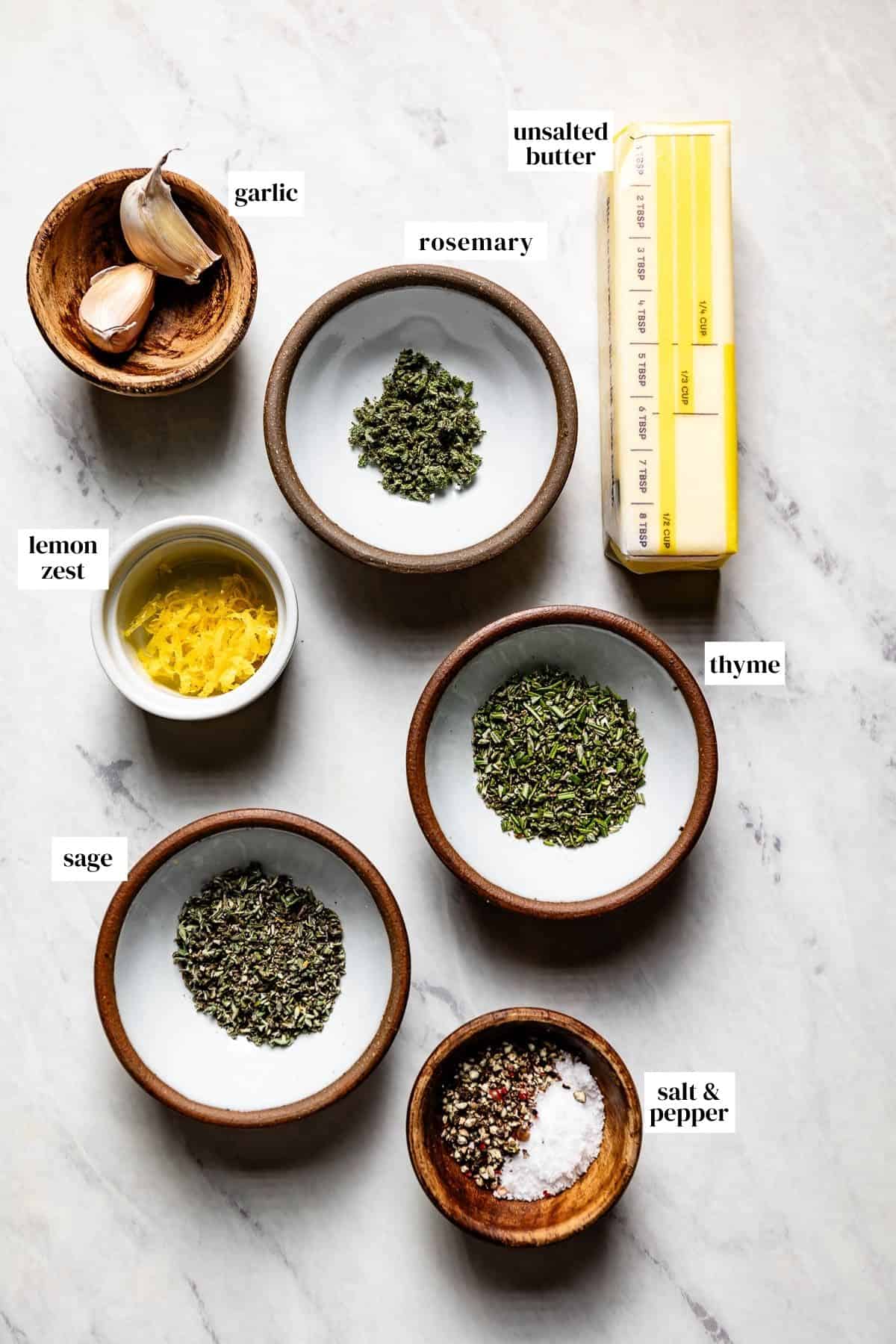
Unsalted butter: I like to use unsalted butter to control the amount of salt. With that said, you can use salted butter and reduce the salt to ¾ teaspoon.
Use softened butter: Let the butter sit at room temperature for about an hour, until it’s soft and spreadable. If it’s too firm, it won’t blend smoothly with the herbs and seasoning.
Fresh herbs (or dried herbs): Fresh herbs will give you the best flavor. I like adding fresh rosemary, fresh thyme, and fresh sage, but you can also use soft herbs like fresh parsley or chives.
If you’re using fresh herbs, wash and dry them thoroughly before mincing, as they can hold onto moisture, which makes the butter watery.
I like to place the washed herbs between two pieces of paper towels to absorb excess moisture; alternatively, put them in a salad spinner to remove as much liquid as possible.
Chop your herbs as finely as possible to ensure they distribute evenly throughout the butter.
While I recommend using fresh herbs, dried ones can also be used as an alternative. Use the chart below when substituting:
| For 1 Stick (4 oz) of Butter | Dried Herb/Seasoning Equivalent |
| 1 tbsp fresh rosemary | 1 tsp dried rosemary |
| 1 tbsp fresh thyme | 1 tsp dried thyme |
| 1 tsp fresh sage | 1/3 tsp dried sage |
| 2 cloves fresh garlic | 1/2 tsp garlic powder |
How to Make Compound Butter for Turkey (Step-by-Step)
Once your ingredients are ready, this recipe can be prepared in under 5 minutes. Here’s how to make it step by step:
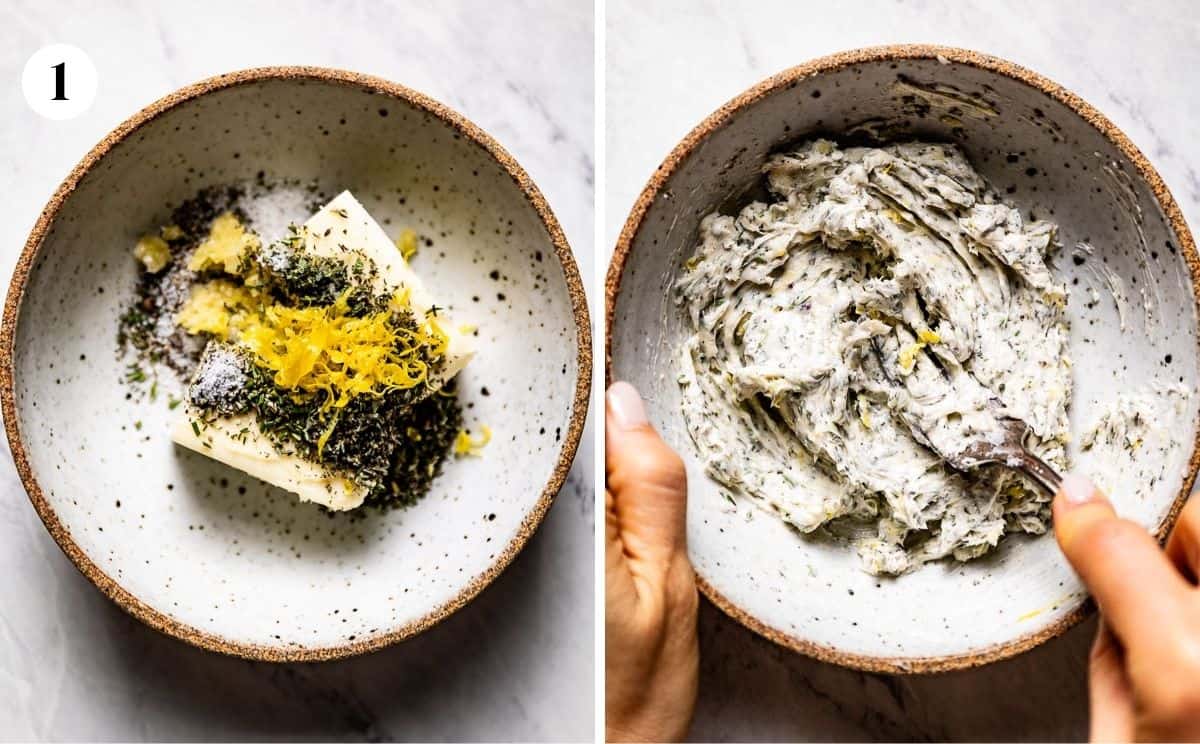
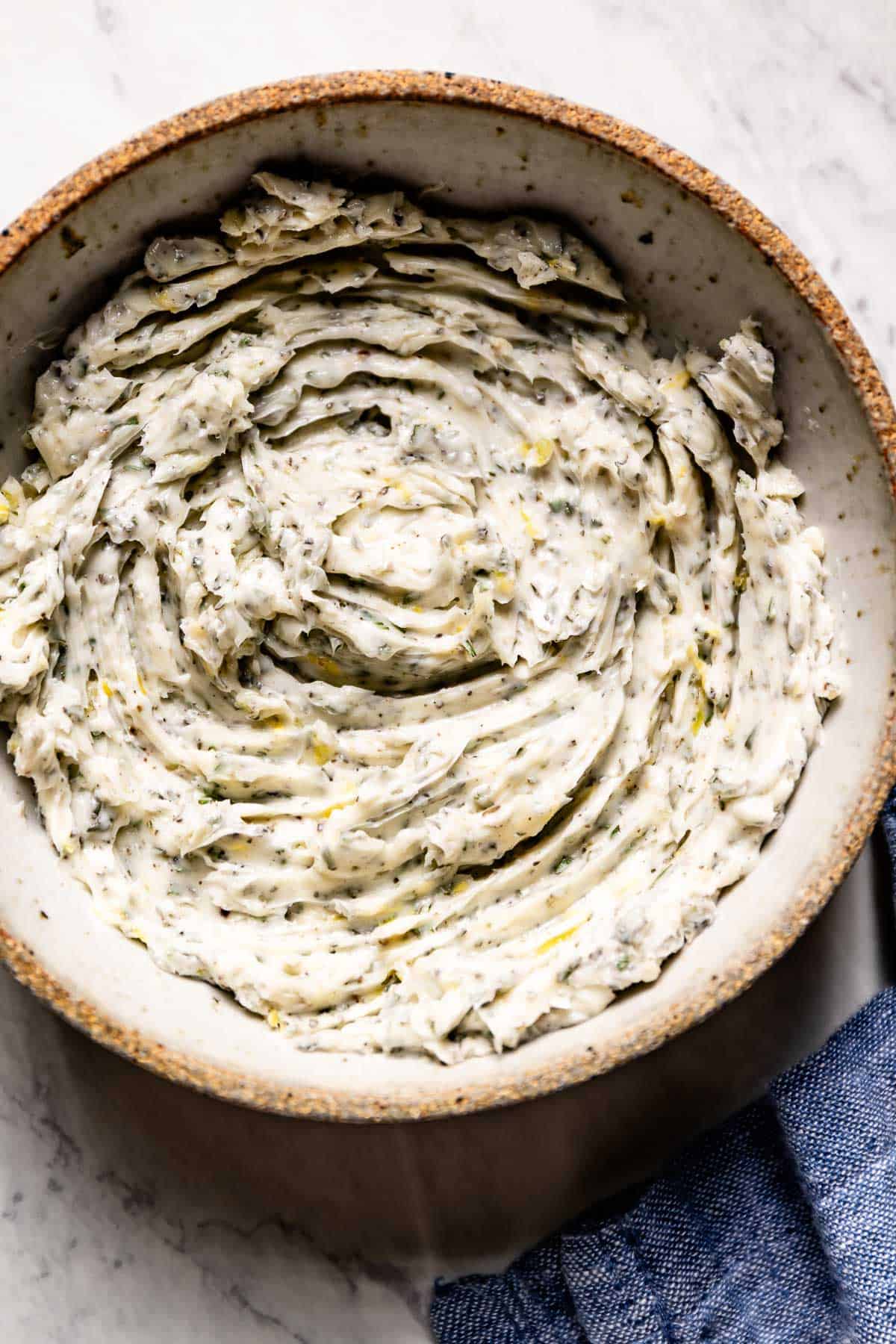
Step 1 – Mix butter, herbs, and garlic: In a small bowl, combine softened butter, rosemary, thyme, sage, garlic, lemon zest, Kosher salt, and black pepper. Mash the herbs into the butter with a fork or a rubber spatula until well combined, for about 1 minute.
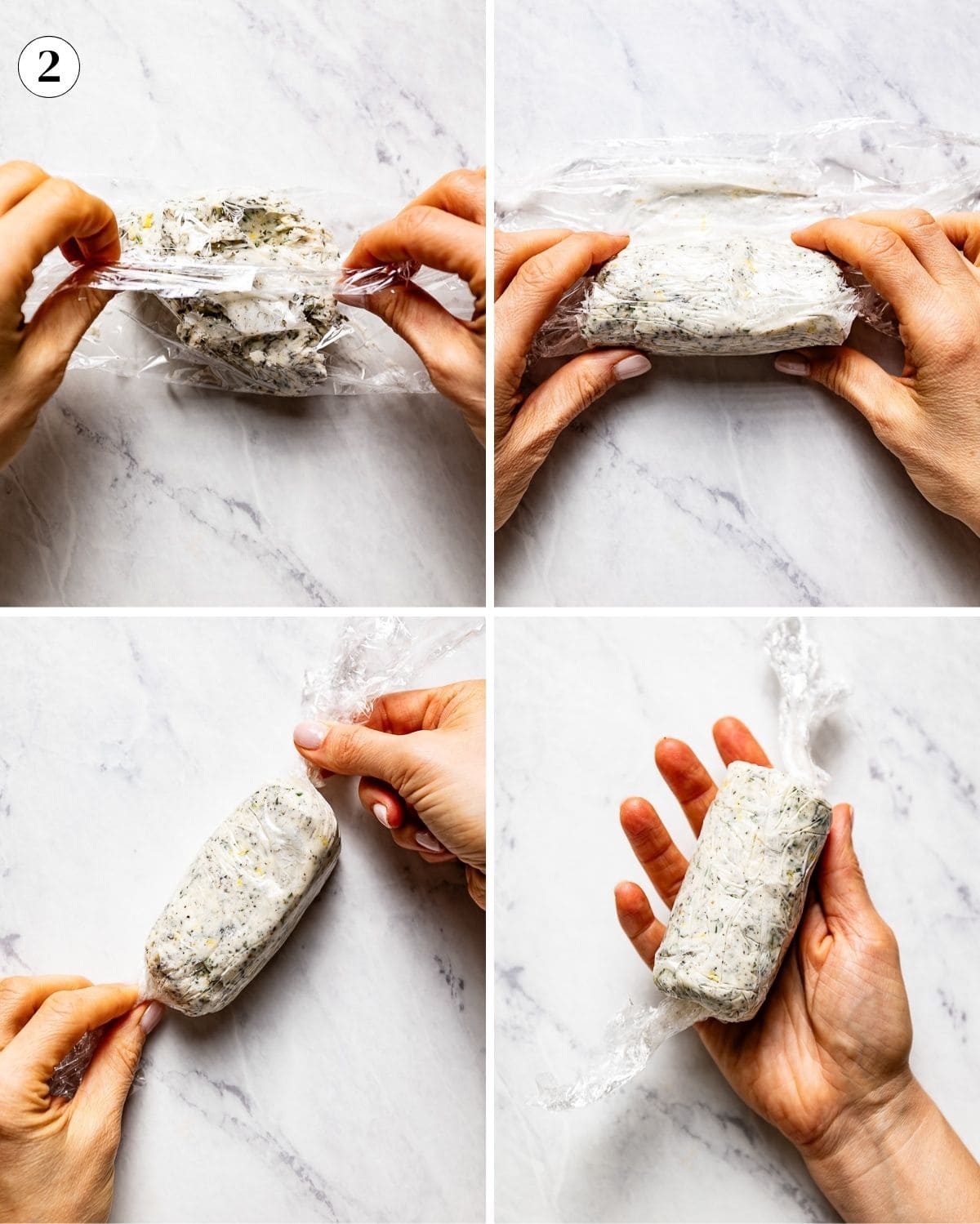
Step 2 – Use immediately or shape into a log: At this point, your turkey compound butter recipe is ready to use. You can use it right away or roll it up for later use.
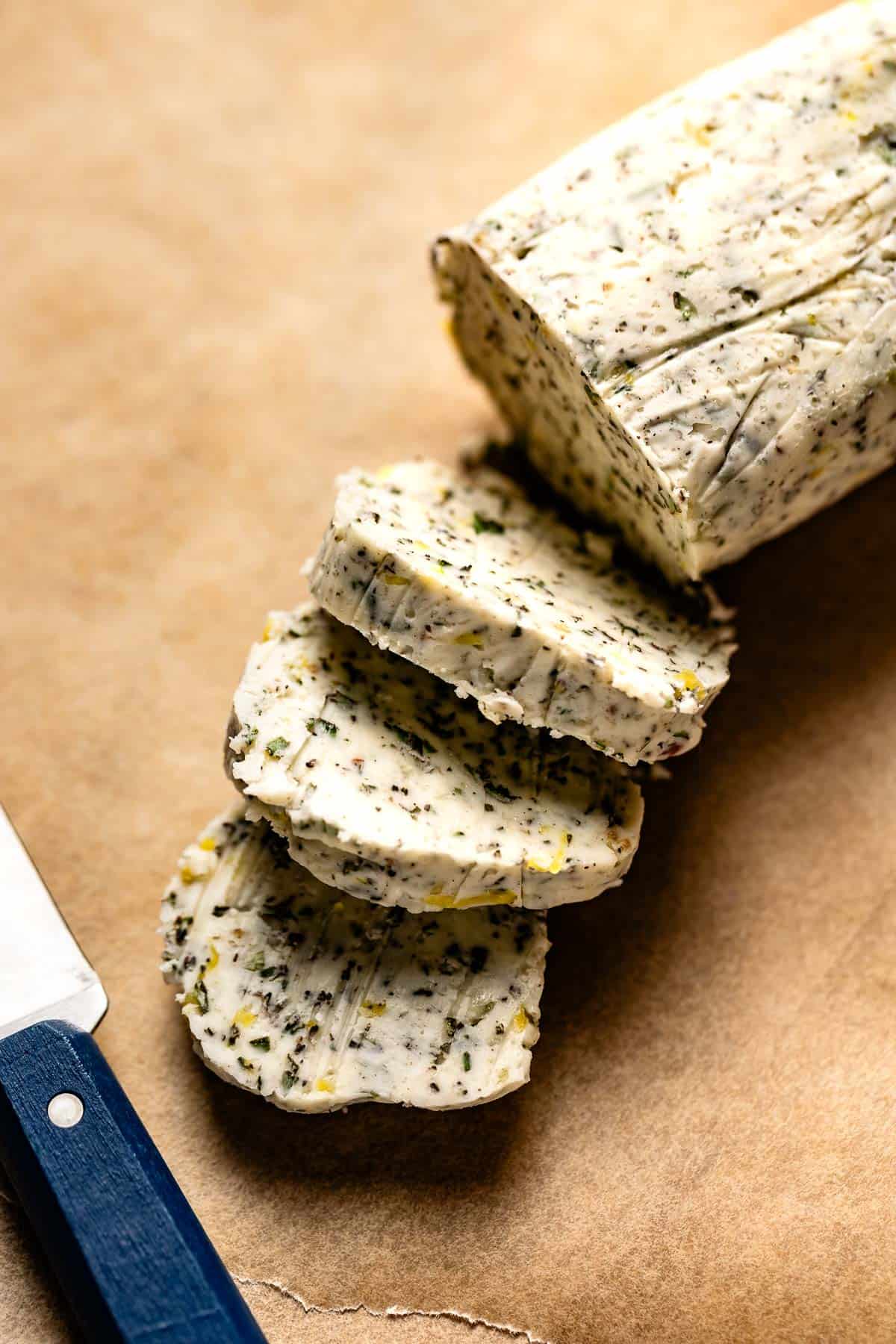
If you are planning to use it later, place the butter on a sheet of parchment paper or plastic wrap. Then shape it into a log, wrap it tightly, and refrigerate for at least 3 hours.
Pro tip: I like to twist the ends of the parchment like a candy wrapper. It helps the butter keep its shape and makes it super easy to slice later.
How to Put Compound Butter Under Turkey Skin (Step-by-Step)
Now that the compound butter is ready, it’s time to use it. If it’s your first time spreading compound butter under the turkey skin, don’t worry, as it’s easier than it looks.
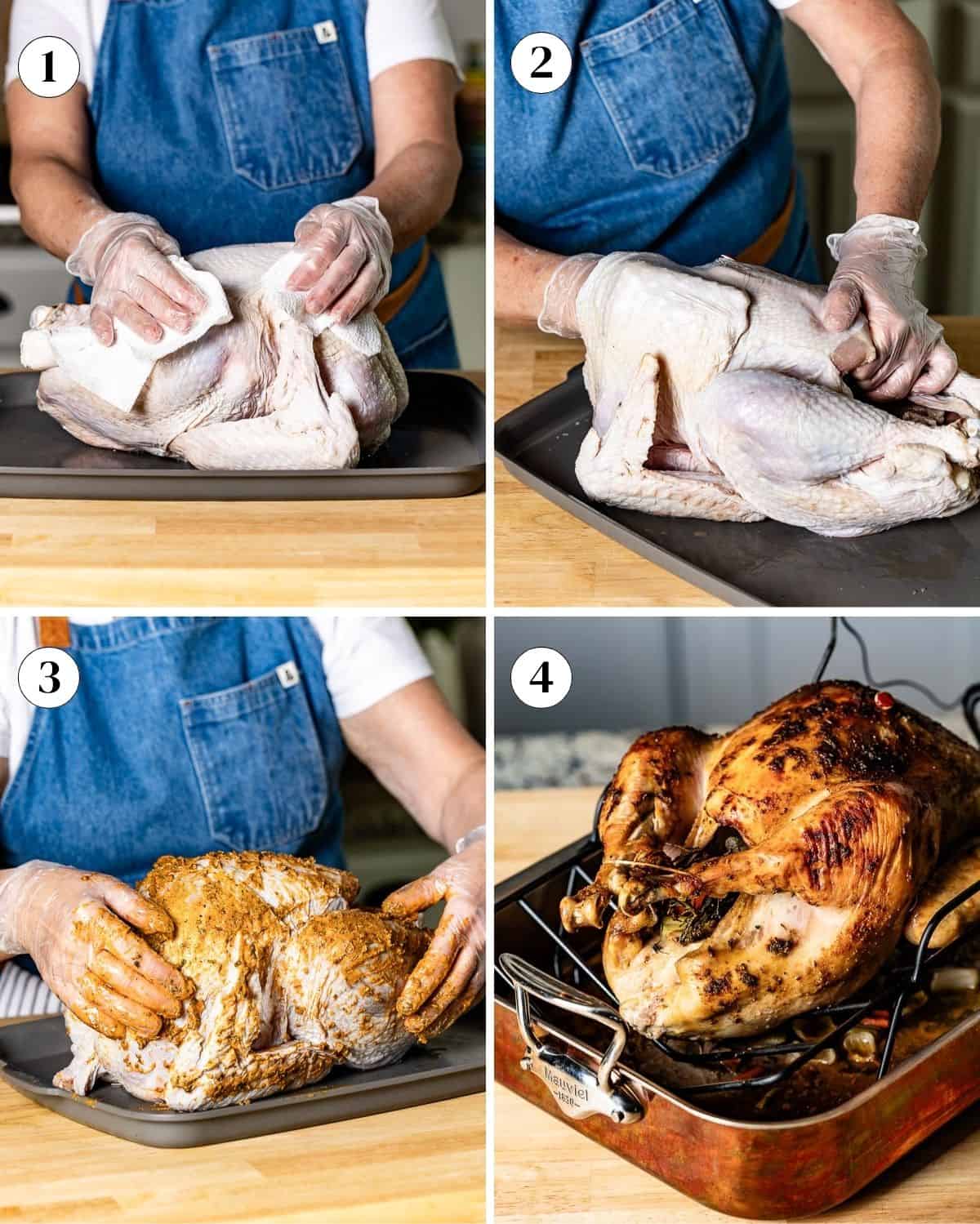
Step 1 – Rest and dry the turkey: Let your turkey rest at room temperature for about an hour before you start. This is critical because cold skin is rigid and prone to tearing, but a rested bird’s skin will loosen up and be much more forgiving.
Set your turkey on a clean cutting board and pat the skin dry with paper towels on all sides. This will help the butter stick better and ensure that it crisps up beautifully in the oven.
Step 2 – Loosen the skin: Locate the neck opening and gently slide your fingers between the skin and meat to loosen it.
If you feel resistance, stop immediately. Instead of forcing separation, gently wiggle your fingers so that it is loose enough to push the butter under the skin.
Step 3 – Apply the butter: Take about four tablespoons of your turkey butter herb rub and spread it under the skin, focusing on the breast and thighs.
Spread the rest over the outer skin, massaging it evenly over the entire bird.
Don’t worry about it being perfect, as the butter will melt while the turkey roasts.
How much compound butter do I need for turkey?
Over the years of using this compound butter when making my Thanksgiving turkey, I learned that 8 tablespoons (1 stick or 4 ounces) is enough for a bird that is up to 12 pounds, which is about 2/3 tablespoon per pound. For a larger bird, you can easily multiply the recipe. If your turkey is between 12 and 18 pounds, multiply the ingredients by 1.5 times.
For a turkey breast (about 6 lbs), half of this herb butter mix is enough. That is exactly how I use it in my Roasted Turkey Breast recipe.
Step 4 – Roast the turkey: Place the prepared turkey in a roasting pan with aromatics such as onions, carrots, and celery. Then follow my Butter Herb Roasted Turkey for the full roasting instructions.
Compound Butter vs. Dry Rub: Which is Best for Your Turkey?
I’ll be honest, when it comes to seasoning the whole bird, this turkey compound butter recipe is my go-to. However, it is not the only way. If you are wondering whether to use this herbed butter or opt for my Homemade Turkey Rub, the choice comes down to your goal:
- Choose Compound Butter for:
- Maximum Moisture and Juiciness: The fat melts beneath the skin, self-basting the white meat throughout the long cooking time, which is key to a tender breast.
- Golden-Brown Skin: The butter is spread over the skin, which helps brown the turkey beautifully and develop a rich, buttery flavor.
- Make-Ahead Simplicity: You can prepare this compound butter days in advance, saving time on Thanksgiving day.
- Choose a Turkey Dry Rub for:
- Ultra-Crispy Skin: A dry rub acts as a dry brine, helping to draw moisture from the skin and give you an extra-crispy exterior.
- Convenience & Speed: If you are short on time and need a quick way to add seasoning, the dry rub is much faster to apply than the compound butter.
FAQs
It’s best to butter the turkey right before roasting. Applying the butter just before it goes in the oven helps the skin get crispy while the meat stays juicy and tender throughout cooking.
If the butter isn’t spreading easily, it’s usually because the turkey skin is damp or the butter is too cold. I like to take the turkey out of the fridge about 1 hour before roasting and pat the skin completely dry with paper towels before adding the butter.
I’ve found it’s best to spread the butter under and over the skin rather than inside the cavity. That way, it melts evenly and keeps the skin golden instead of soggy.
Compound Butter for Turkey (Garlic Herb)
Ingredients
- 4 oz unsalted butter, 1 stick – at room temperature
- 1 tablespoon fresh rosemary, finely minced or 1 teaspoon dried rosemary
- 1 tablespoon fresh thyme, finely minced or 1 teaspoon dried thyme
- 1 teaspoon fresh sage, finely minced or ⅓ teaspoon dried sage
- 2 cloves fresh garlic, finely minced or pressed
- ½ teaspoon lemon zest
- 1 teaspoon kosher salt
- ½ teaspoon black pepper
Instructions
- Place the softened butter, rosemary, thyme, sage, garlic, lemon zest, kosher salt, and pepper in a bowl. Mix until well combined using a fork.
- You can use it right away, or you can turn your compound butter into a log. If you are not using it right away, transfer the butter mixture onto a piece of parchment paper or stretch film and shape it into a log.*
- Wrap it tightly so it holds its shape. Transfer it to the fridge and let it rest for at least 3 hours.
Notes
- Yields: This recipe makes 8 tablespoons (4 ounces) of compound butter, which is enough for a turkey up to 12 pounds. If your bird is larger, you can multiply the recipe and vice versa. The calorie information below is for one tablespoon.
- *If it is too soft, you might have to chill it in the fridge for 30 minutes before rolling
- Make Ahead and Storage: Prepare the butter as directed, then shape it into a log and wrap it tightly in parchment or plastic wrap. I like to do a double wrap (plastic wrap followed by an airtight container) to keep it fresh and prevent it from picking up any fridge odors. It will keep well in the refrigerator for up to 5 days.
- Freezing: Follow the same wrapping steps and store the butter in a freezer-safe bag or container for up to 3 months.
- Thawing: When you are ready to use it, thaw it in the refrigerator overnight, then take it out an hour before using so it softens enough to spread.
- Leftovers: Use any leftover compound butter on steak, roasted vegetables, or warm bread.
Nutrition
Nutrition information is automatically calculated, so should only be used as an approximation.











Wanted to try this in anticipation for Thanksgiving. The flavor is amazing and it was so easy to make. I will definitely be making this and keeping a stash in my freezer. What a great recipe for anyone who loves butter! And – the roasted turkey with this is outstanding! Thanks for sharing!
This is music to my ears Monica. Thanks for taking the time to leave a review.