
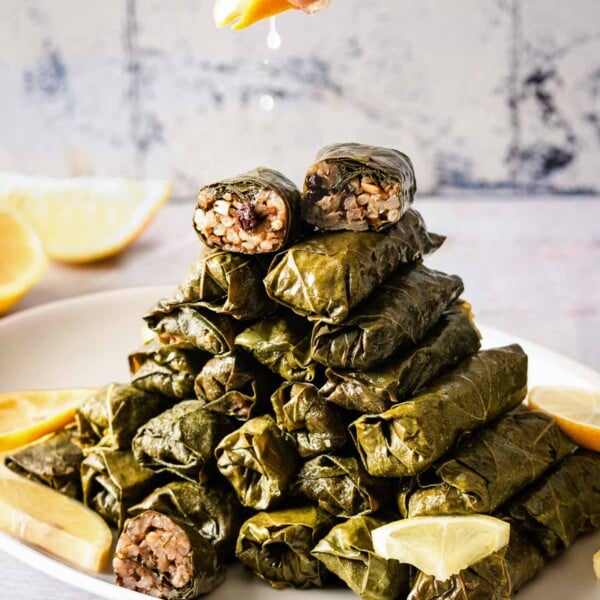

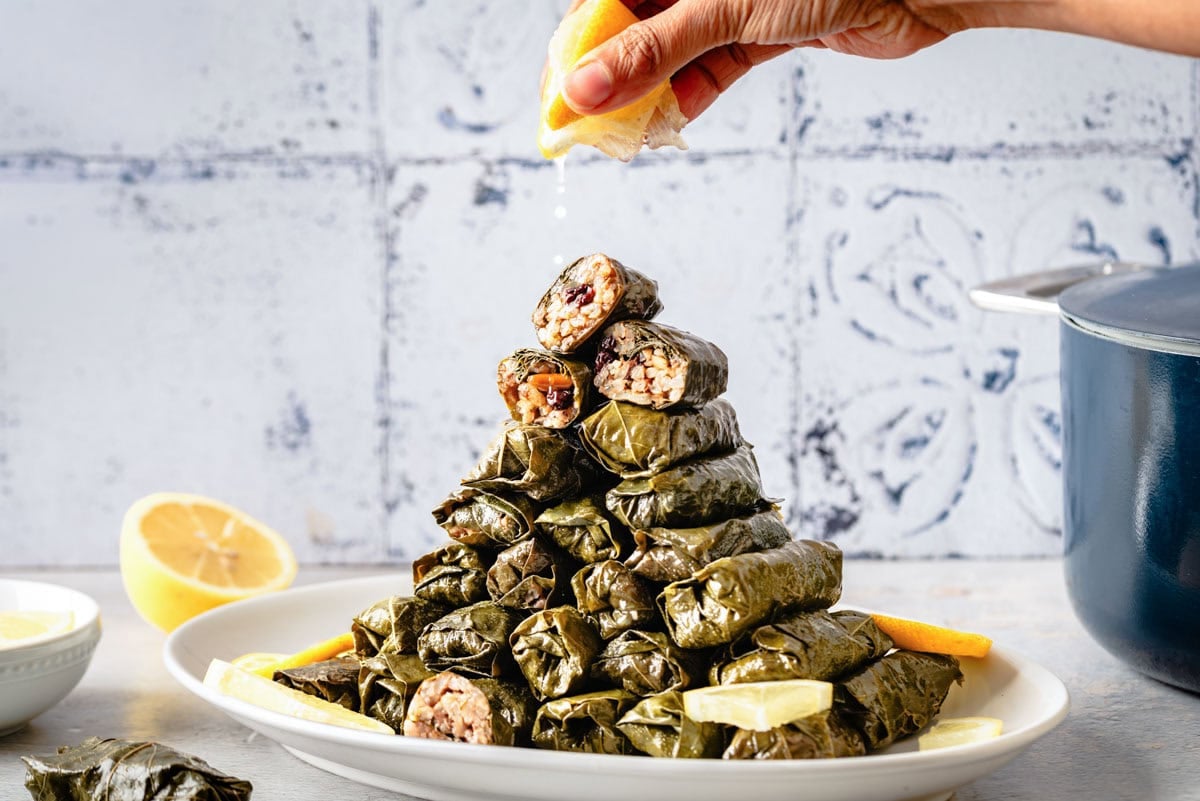
My mother’s version of this recipe lives on a torn piece of paper. I recently found it tucked away in an old cookbook and made it exactly as she wrote it, then adjusted it slightly with the ingredients I have here in the US to achieve the same taste.
I have already shared her stuffed grape leaves with meat and rice. This is the vegetarian version we made when she wanted an appetizer she could serve cold or at room temperature, and that is not a coincidence.
This vegetarian stuffed grape leaves recipe, or as we call it, zeytinyagli dolma, belongs to a category of dishes we call “zeytinyağlı”, cooked in olive oil and mostly served cool rather than hot off the stove. Lebanese, Greek, and Egyptian cuisines have their versions too. They are close cousins with their own names; they differ slightly but follow the same principle.
A Few Ingredient Notes
You can find the full list of ingredients with exact measurements in the recipe card. Below are my notes on the ingredients that need a bit more explanation to help you succeed, even if it is your first time making it.
Anything not mentioned is pretty straightforward.
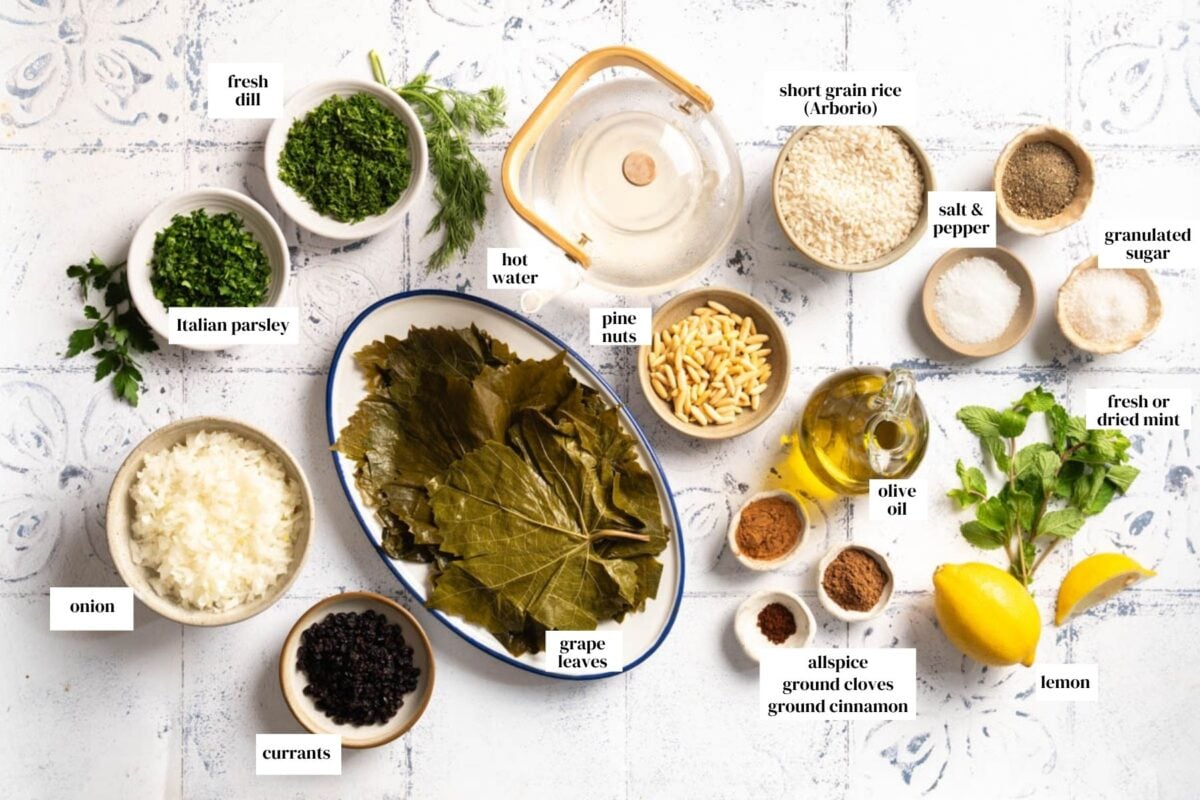
Jarred grape leaves: I tested this recipe with three brands, and they all worked well. The main difference was the brine’s saltiness. My favorite was Orlando, which most big grocery stores carry, but it is also available online.
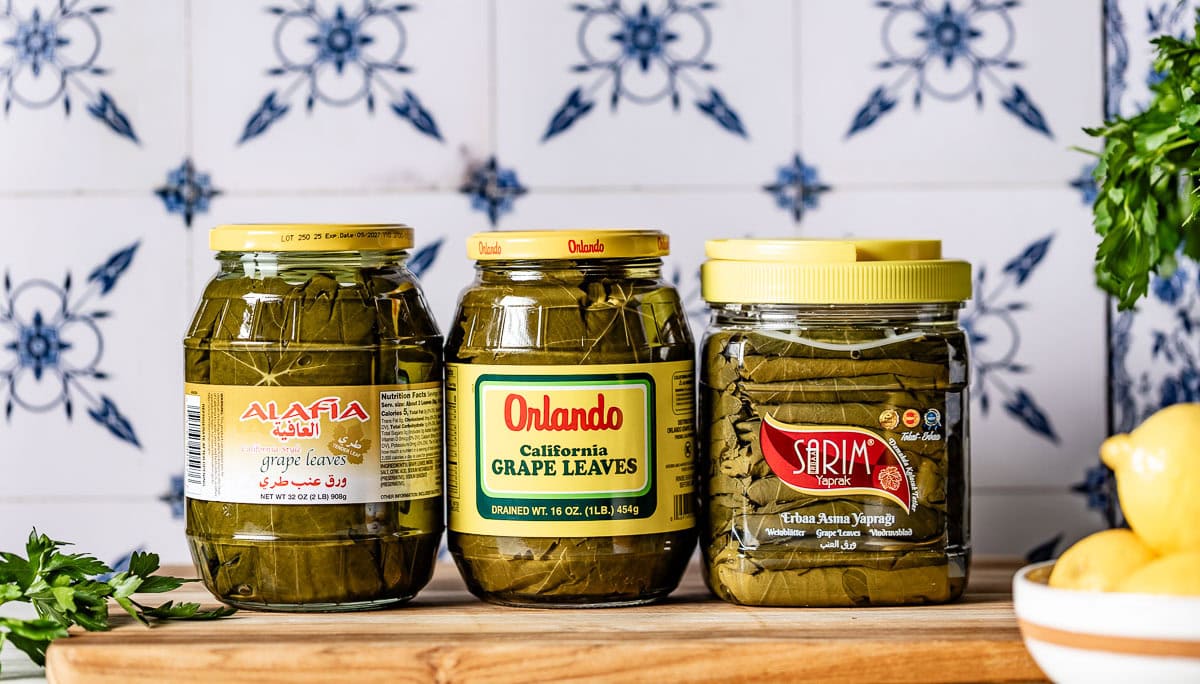
No matter the brand, the important thing is to check the saltiness. Taste a torn leaf. If it is too salty for your liking, rinse it under tap water. Some people even recommend soaking them, but truth be told, none of the brands I tried were salty enough to need soaking.
Rice: This recipe is traditionally made with a short-grain rice variety called Baldo, which can be hard to find here in the US. The closest substitute in taste and texture I found is Arborio. It expands the same way and makes a substantial filling, thanks to its high starch content.
While I strongly recommend short-grain rice, you can use long-grain (enriched) rice if that is all you have. However, keep in mind the cooking time may be slightly shorter, and the dolmas will not puff up quite as much.
Should I rinse the rice before adding the filling? I know some people prefer not to wash their rice before cooking, but for this recipe I recommend rinsing it to remove the excess starch.
How To Make Vegetarian Stuffed Grape Leaves
No matter how you put it, rolling 60-65 grape leaves is a labor of love, the same way my mother turned it into an afternoon activity with her neighbors instead of a chore. Here is how we do it:
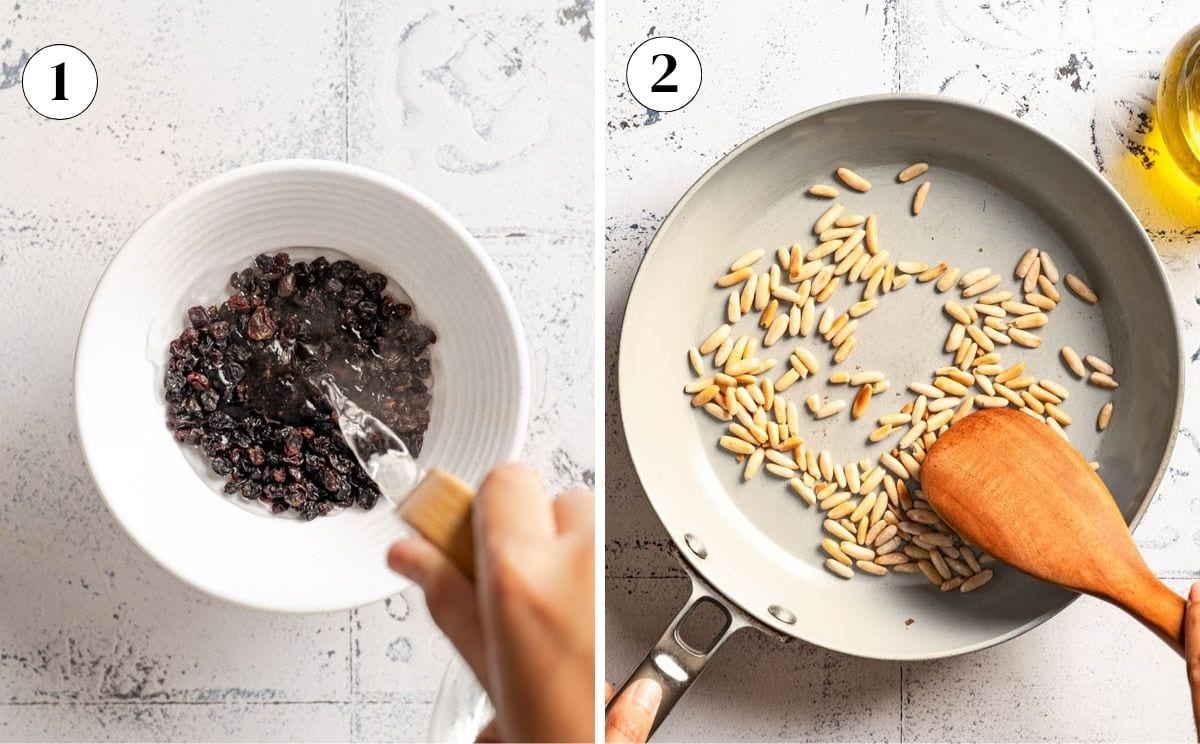
Step 1 – Place the currants in a bowl, pour hot water over them, and let them soak while you work on the rest of the ingredients.
Step 2 – Heat a large skillet over medium heat, add the pine nuts, and sauté for 3 minutes, until lightly browned. This happens quickly, so watch closely and keep stirring.
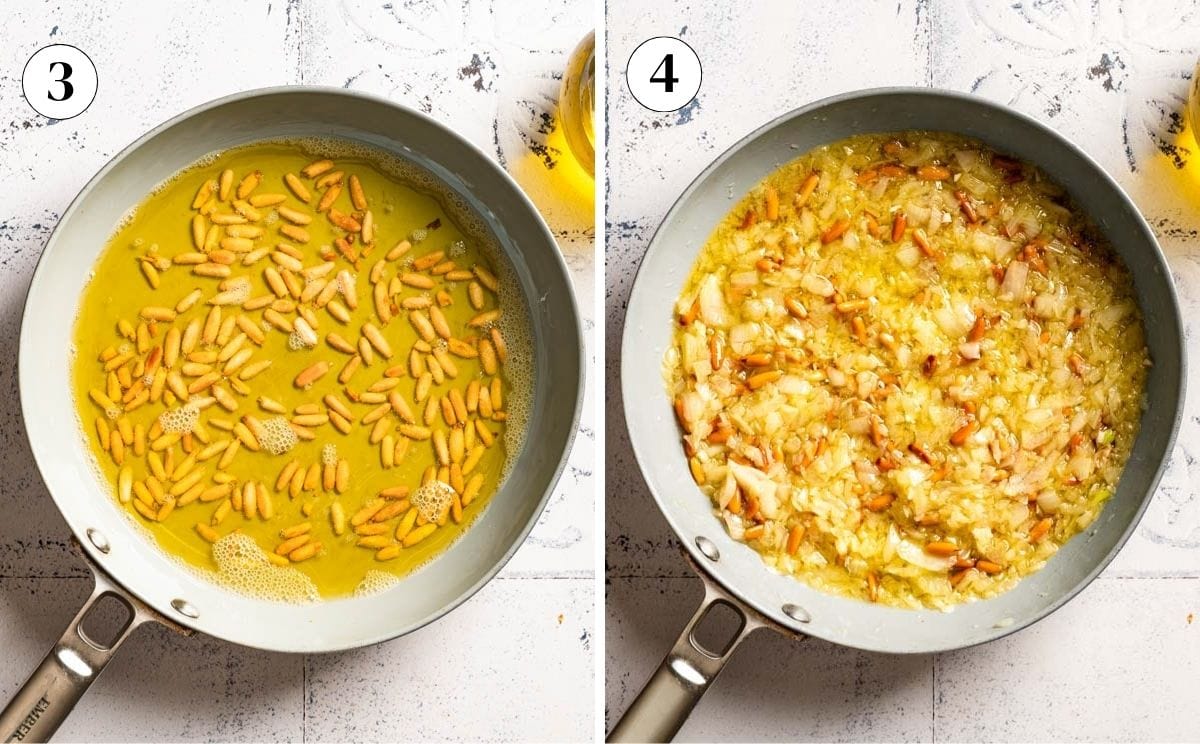
Step 3 – Add the olive oil and cook for 3-4 minutes. As it heats, the pine nuts will continue to brown. Stir often to prevent them from burning.
Step 4 – Stir in the onion and cook for 6-7 minutes, or until lightly browned. As they cook, the onions will be swimming in the oil, and that is intentional. The goal here is to flavor the oil so it infuses the rice as it cooks.
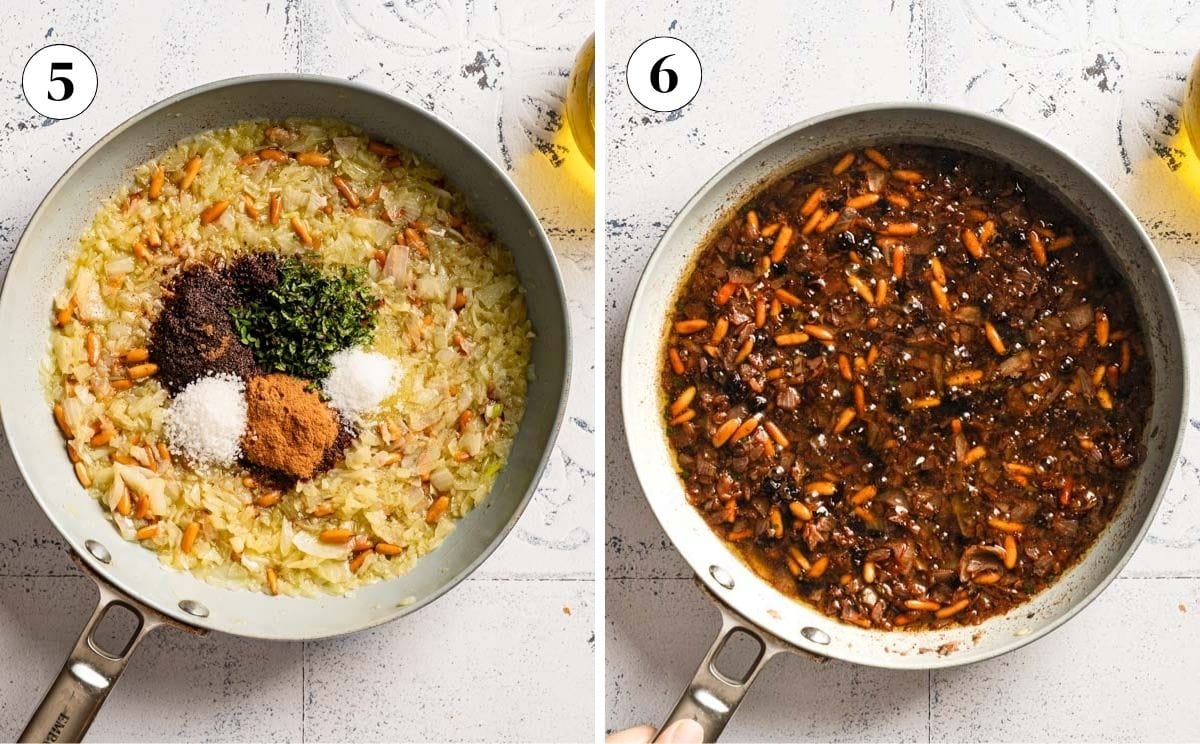
Step 5 – Add the spices and cook, stirring constantly, until combined.
Step 6 – Stir in the soaked currants and their liquid.
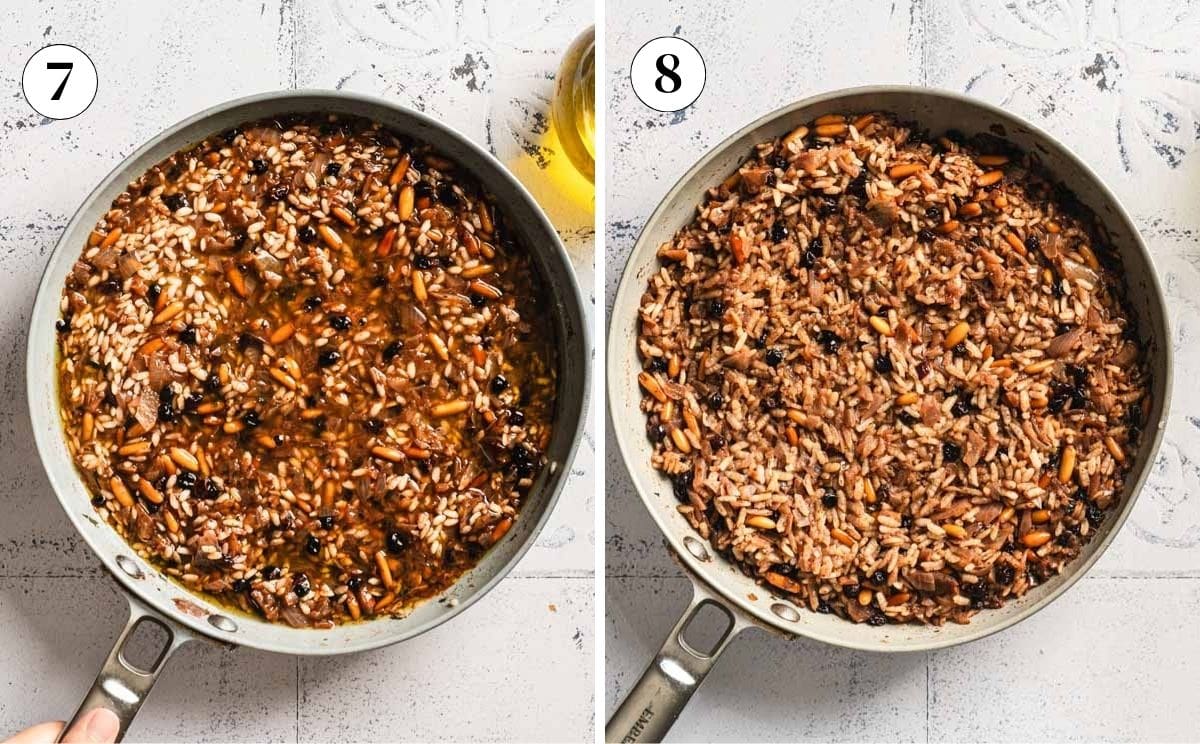
Step 7 – Add the rice and ½ cup of hot tap water. Put the lid on, bring to a boil, then reduce the heat to medium-low. Simmer until all of the liquid is absorbed, about 15 minutes.
At this stage, the rice will not be fully cooked, and this is normal. Remember, we will continue cooking the filling after we stuff the leaves.
Step 8 – Turn the heat off and let the filling cool for an hour. Stir in the parsley and dill to combine.
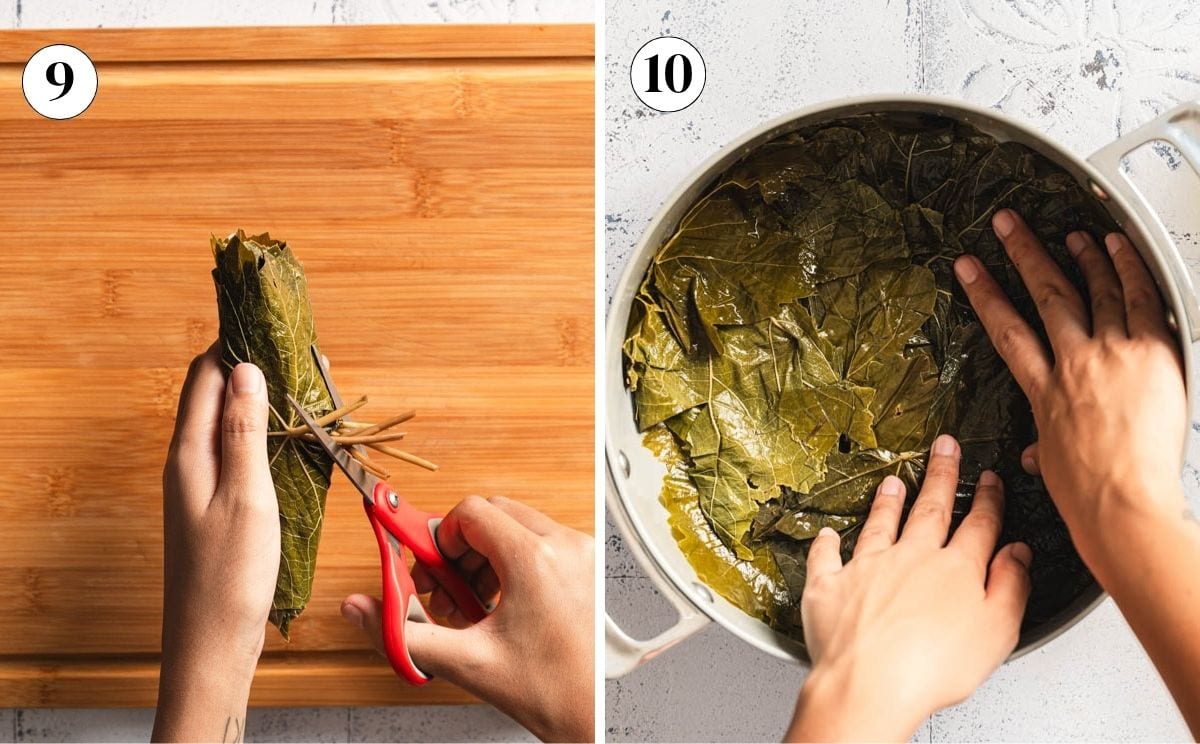
Step 9 – While the filling cools, remove the grape leaves from the jar and rinse them in a colander under warm tap water for 1 minute.
You can remove the stems one by one, but I like to use my mom’s shortcut instead. Align the stems of a handful of leaves (7 to 8 stems) and trim them all at once with kitchen shears. Repeat for the remaining leaves.
Place them in a colander set in a bowl and let them drain.
Step 10 – Set aside a handful of torn leaves. Brush the bottom of a 10-inch pot (with a tight-fitting lid) with olive oil and line the bottom with those leaves.
They act like a barrier between the pot and the heat and prevent the bottom layer from burning.
Should I line the bottom of the pot with vegetables? You do not have to.
If you are unfamiliar, some versions of this meatless stuffed grape leaves recipe add a layer of sliced potatoes on top of the leaves lining the pot. The idea is to protect the bottom layer of dolmas and absorb any excess liquid.
After testing this recipe several times, I did not feel the need to line the bottom with anything else. Since the rice is partially cooked and the stuffed grape leaves cook over low heat for a relatively short time, lining the bottom with leaves alone was sufficient.
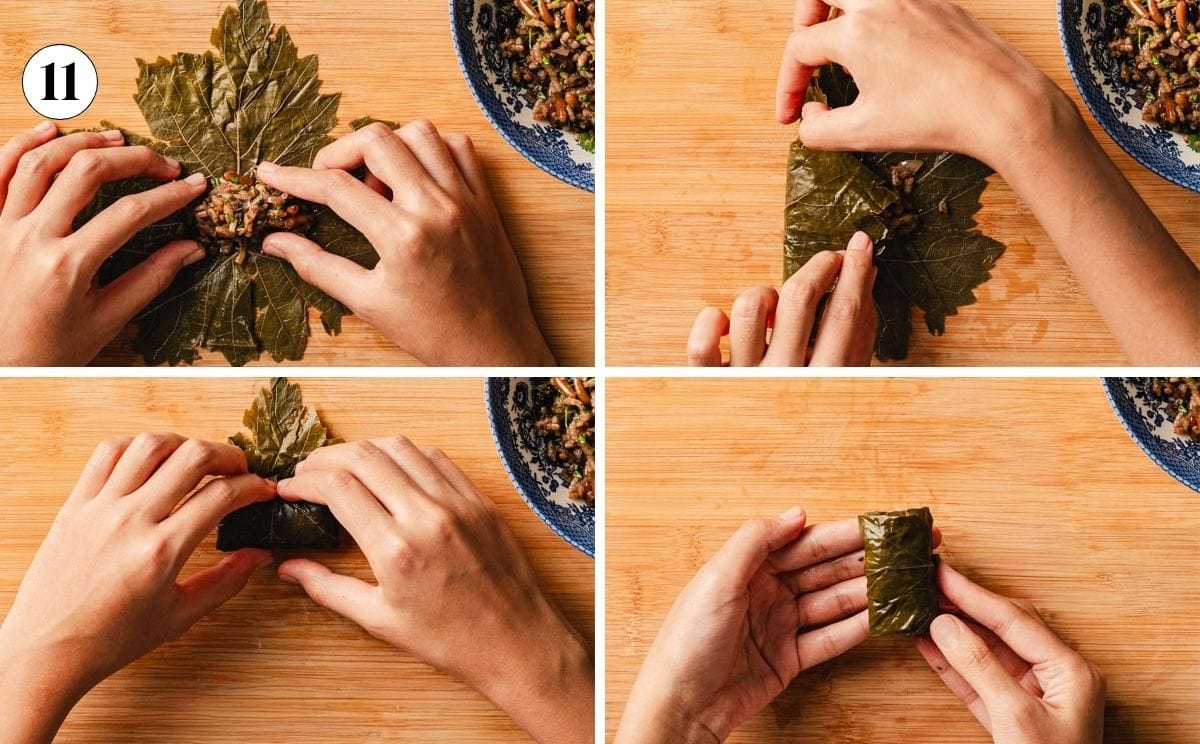
Step 11 – To roll, place a grape leaf shiny side down on a cutting board. Place a small amount of filling in the center, near the stem end.
I use about 1 to 1 ½ teaspoons of filling for a 6-inch leaf. If yours is larger, you can go up to 2 teaspoons.
Fold the sides over and roll from bottom to top. Place seam side down in the pot.
A note on managing the leaf-to-filling ratio: A 16-ounce jar of grape leaves gives you about 70 leaves. Once you set aside the torn ones, you are left with 60-65 leaves to roll.
The variable here is the leaf size, which is why ending up short on filling or extra is a real concern.
My fix is to adjust how much filling you use as you get close to the end. Once I have about 10 to 12 leaves left, I divide the remaining filling into equal portions so I don’t run out or end up with leftovers.
A note on how tight to roll: This is more of a personal preference. In Türkiye, some people insist that stuffed grape leaves should be thin as a pencil (using less than 1 teaspoon of filling per leaf). Others, depending on the region, prefer them thicker.
I like mine on the thicker side, so every bite has a bit of currants and pine nuts.
That said, one rule matters no matter which you prefer: do not roll it too tight. The rice still needs room to expand during the final cooking, and if you roll it too tightly, it could easily tear.
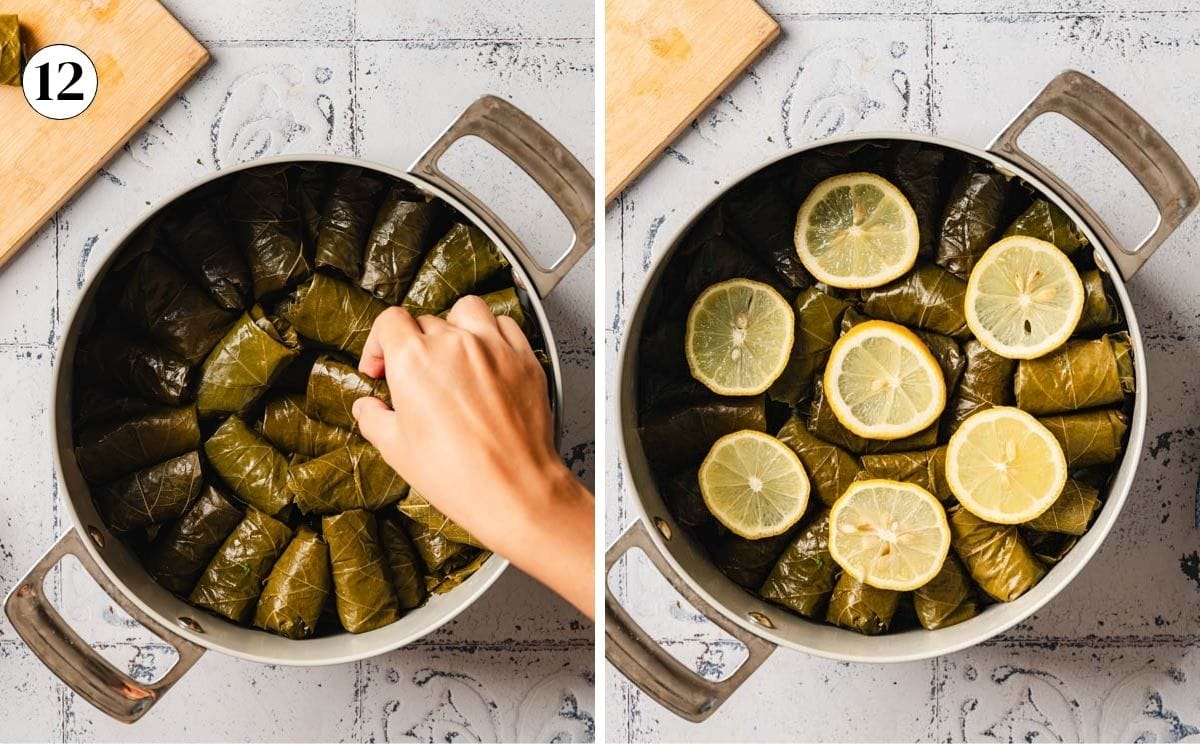
Step 12 – Repeat the same process until you run out of leaves. Arrange them in a spiral pattern with about 30 to 32 dolmas per layer. Scatter lemon slices on top.
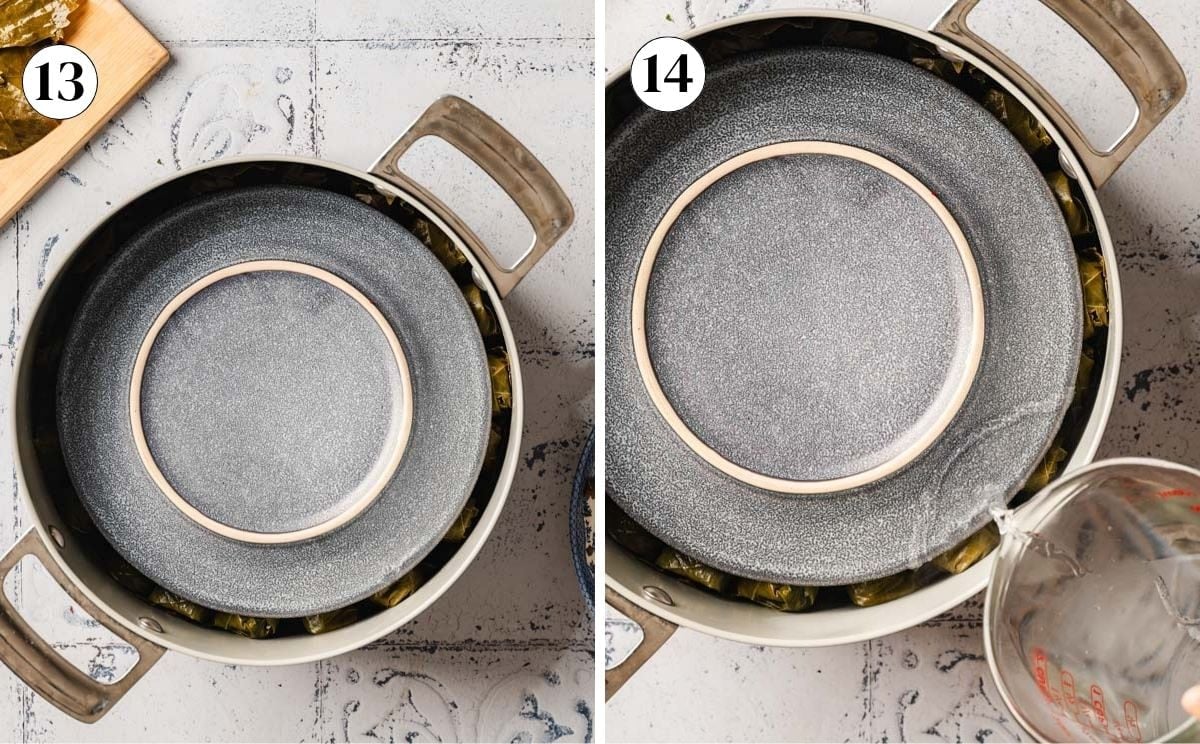
Step 13 – Place a small inverted plate over the stuffed grape leaves to keep them in place.
Should you add lemon juice to the cooking liquid? It is a personal preference.
While researching this recipe, I saw that Lebanese versions add lemon juice either in the filling or the cooking liquid.
My mom never did, so I stuck to her version. Instead, she served it with plenty of lemon wedges so you can adjust it to your liking.
Still, if you want yours with lemon juice, I would substitute ¼ of the cooking liquid with lemon juice.
Step 14 – Slowly pour water over the leaves, turn the heat to medium, cover, and bring to a boil. Then reduce the heat to low and simmer until most of the liquid is absorbed, about 30-35 minutes.
Pro tip: Keep a close eye on it and check it a few times, especially towards the end, to ensure there is enough water in the pot to prevent the bottom layer from burning.
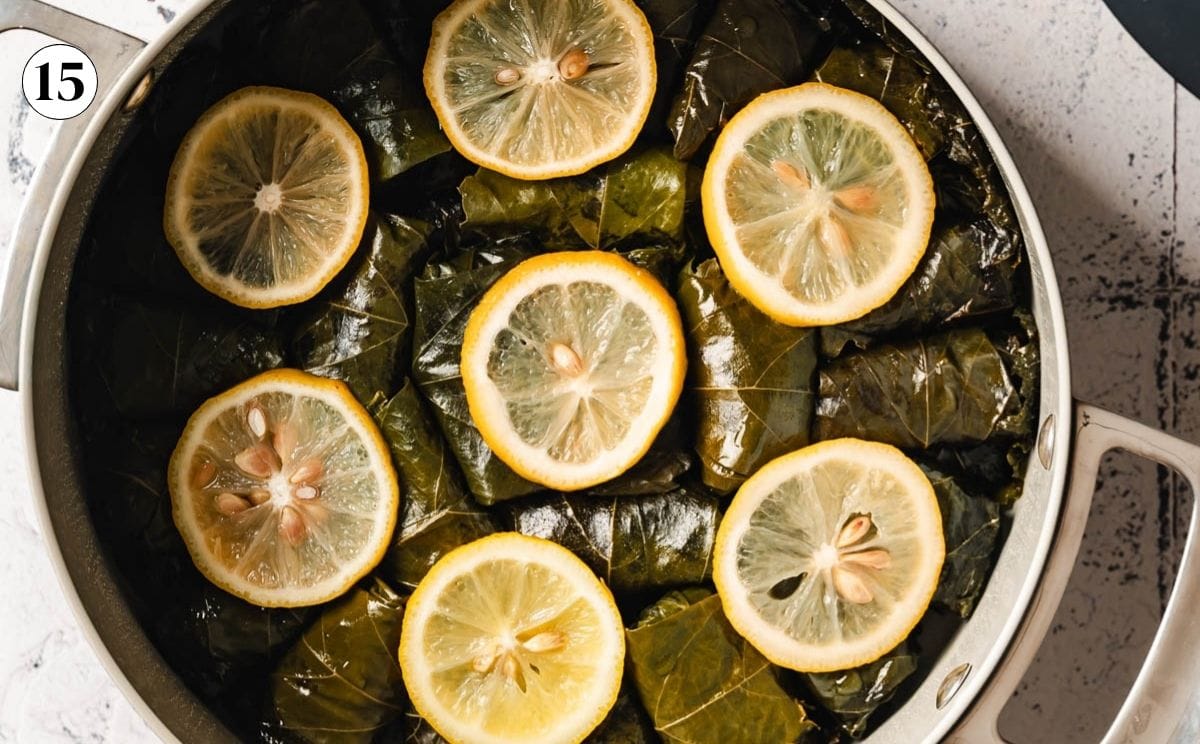
Step 15 – Once the cooking time is up, turn off the heat and let it cool to room temperature, which takes about 4 to 5 hours.
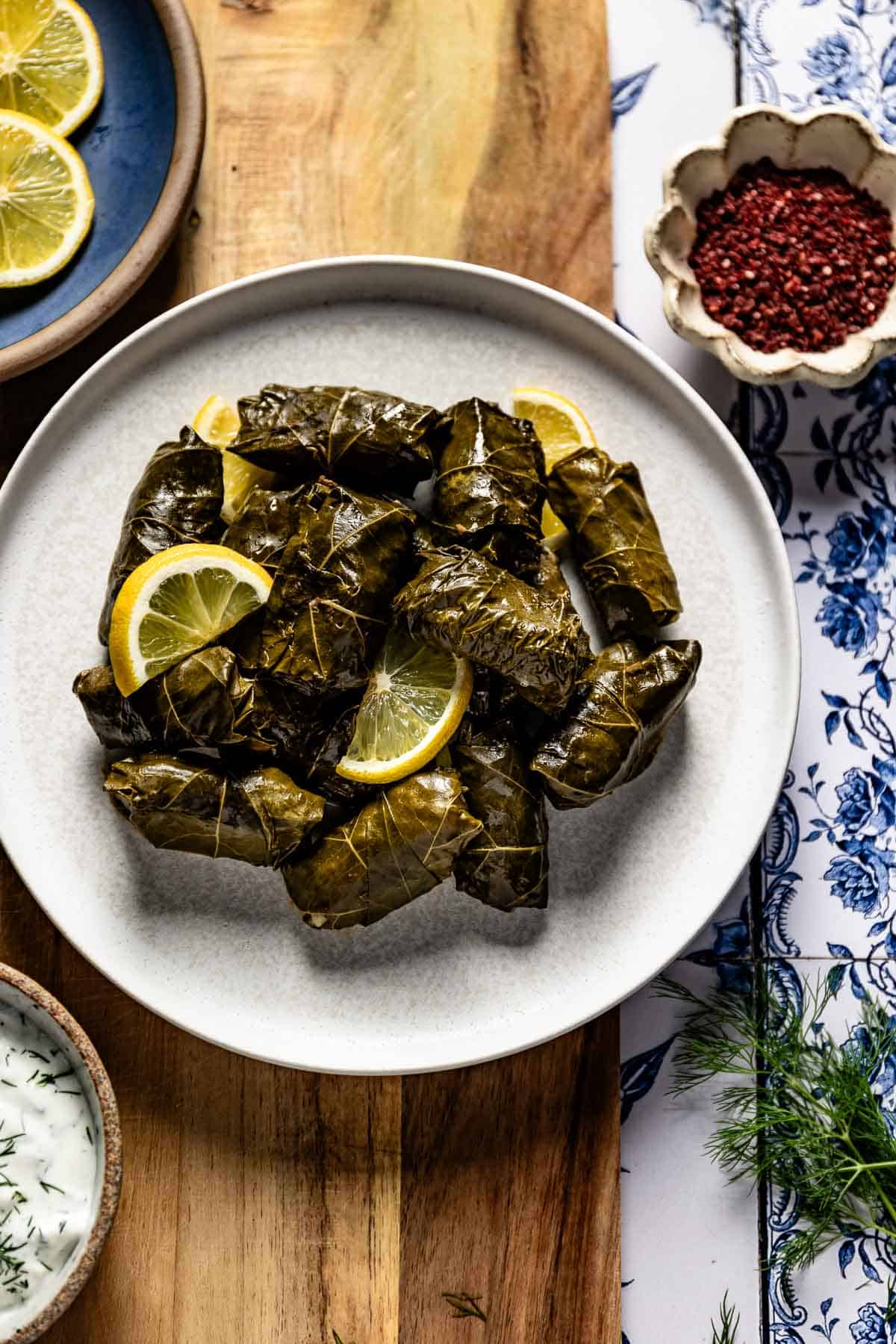
You can enjoy it right away with lemon wedges on the side, or do what my mom did and let it rest in the fridge overnight so the flavors can meld, then enjoy it cold the next day.
Storage and Freezing Instructions
Storage: Once dolmas have cooled, arrange them carefully in an airtight container, rather than piling them in. A little care goes a long way here, because we want them to be snug so they won’t fall apart when you go back for more.
Freezing: You can freeze this dish, but if I am being honest, freshly cooked stuffed grape leaves taste better than the frozen-and-thawed version.
That said, if you have to, I would recommend freezing them following the steps below:
- After you roll the grape leaves, arrange them in a single layer on a baking sheet instead of arranging them in the pot. Cover them tightly with plastic wrap to prevent freezer burn.
- Flash freeze them for 3-4 hours or overnight. Once frozen, arrange them in a freezer-safe container. Cover it tightly with a lid and freeze for up to 3 months.
- Thaw them in the fridge overnight. When you are ready to cook, arrange them in a pot and cook as the recipe says.
I do not recommend freezing them after they are cooked. Since the rice is already cooked once, it turns mushy rather than tender after thawing.
Vegetarian Stuffed Grape Leaves (Zeytinyağlı Dolma)
Ingredients
- 3 tablespoons currants
- ¼ cup hot water
- 3 tablespoons pine nuts
- ¾ cup extra virgin olive oil, plus more for the pot
- 1 large onion, chopped finely
- 2 teaspoons allspice
- ¼ teaspoon ground cloves
- 1 tablespoon ground cinnamon
- 1 tablespoon dried mint, or fresh chopped mint leaves
- 1 tablespoon granulated sugar
- 1 teaspoon kosher salt
- ¼ teaspoon black pepper
- 1 cup Arborio (short grain rice), rinsed and drained
- ¼ cup fresh Italian parsley, chopped finely
- ¼ cup fresh dill, chopped finely
- 16 oz jar grape leaves
- 4 slices lemon, plus more for serving
- 2 cups hot water
Instructions
- Place currants in a bowl and add hot water. Set it aside.
- Heat a large skillet over medium heat. Add pine nuts and cook, stirring frequently, until lightly browned, for 3 minutes.
- Add olive oil and let it cook for 3-4 minutes. As it warms, the pine nuts will continue to brown, and you will start seeing the oil bubble. Stir frequently to prevent them from burning.
- Add the onion and cook until softened, stirring often, and lightly browned, about 6-7 minutes.
- Stir in the allspice, ground cloves, ground cinnamon, dried mint, sugar, kosher salt, and black pepper. Cook, stirring constantly, until everything is mixed.
- Add the soaked currants with their liquid, stirring to combine.
- Stir in the rice along with ½ cup hot (tap) water. Bring to a boil, put the lid on, reduce the heat to medium-low, and simmer for 15 minutes, or until all the liquid is absorbed. At this point, we are not fully cooking the rice; it should be about 75% cooked.
- Turn the heat off and let it cool (with the lid on) for 1 hour.
- Add the parsley and dill and stir to combine.
- While it cools, remove the grape leaves from the jar, place them in a colander, and rinse them under warm tap water for 1 minute.
- Working in groups of 7 to 8 leaves, align the stems and trim them all at once with kitchen scissors. Repeat until you run out of leaves.
- Pick out a few of the torn leaves and set them aside.
- Drizzle the bottom of a large pot with a tablespoon of olive oil, then line the bottom with the torn leaves.
- To roll, lay one grape leaf shiny side down on a cutting board. Place 1 to 1½ teaspoons of filling in the center, near the stem end, and shape it into a 1½- to 2-inch cylinder. Fold the sides over the filling and roll from bottom to top. The finished roll should be approximately 2 to 2½ inches long. Place seam side down in the pot.
- Repeat the process with the remaining grape leaves, filling the pot in a spiral pattern. You should have about 30 to 32 dolmas per layer in a 10 or 12-inch pot, which should give you 2 layers in total. If needed, you can do a third layer.
- Scatter the sliced lemon over the top and place a small inverted plate directly over the dolmas to keep them in place.
- Pour hot (tap) water over the dolmas, turn the heat to medium, put the lid on, bring to a boil. Once boiled, turn the heat down to low and simmer for about 30-35 minutes, or until most of the liquid is absorbed.
- Turn the heat off and let it cool to room temperature, which takes about 4 to 5 hours. You can serve it then, or better yet, let it rest in the fridge overnight and serve it cold the next day.
Notes
Nutrition information is automatically calculated, so should only be used as an approximation.










Love this, thanks Aysegul. We really enjoyed it.
This makes me so happy Alexandra. Thanks for coming by and taking the time to leave a review.