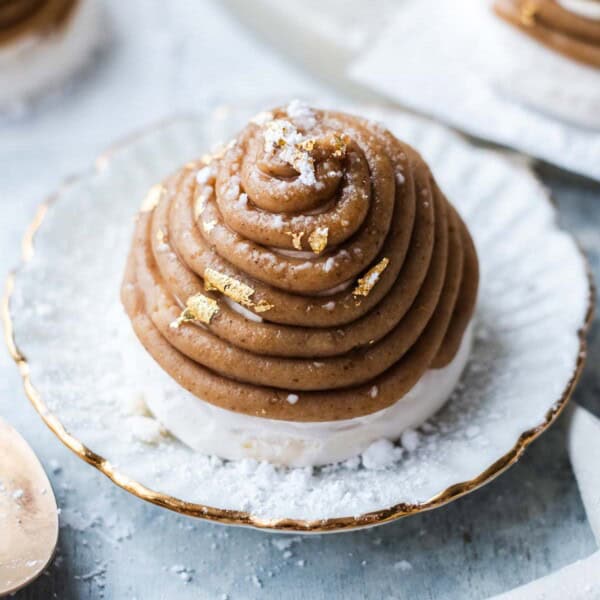

While it is a slightly more hands-on recipe than you may be used to here on Foolproof Living, I believe the finished chestnut Mont Blanc is well worth the effort. The combination of crisp meringue, sweetened cream, and the nutty notes in the chestnut puree is divine.
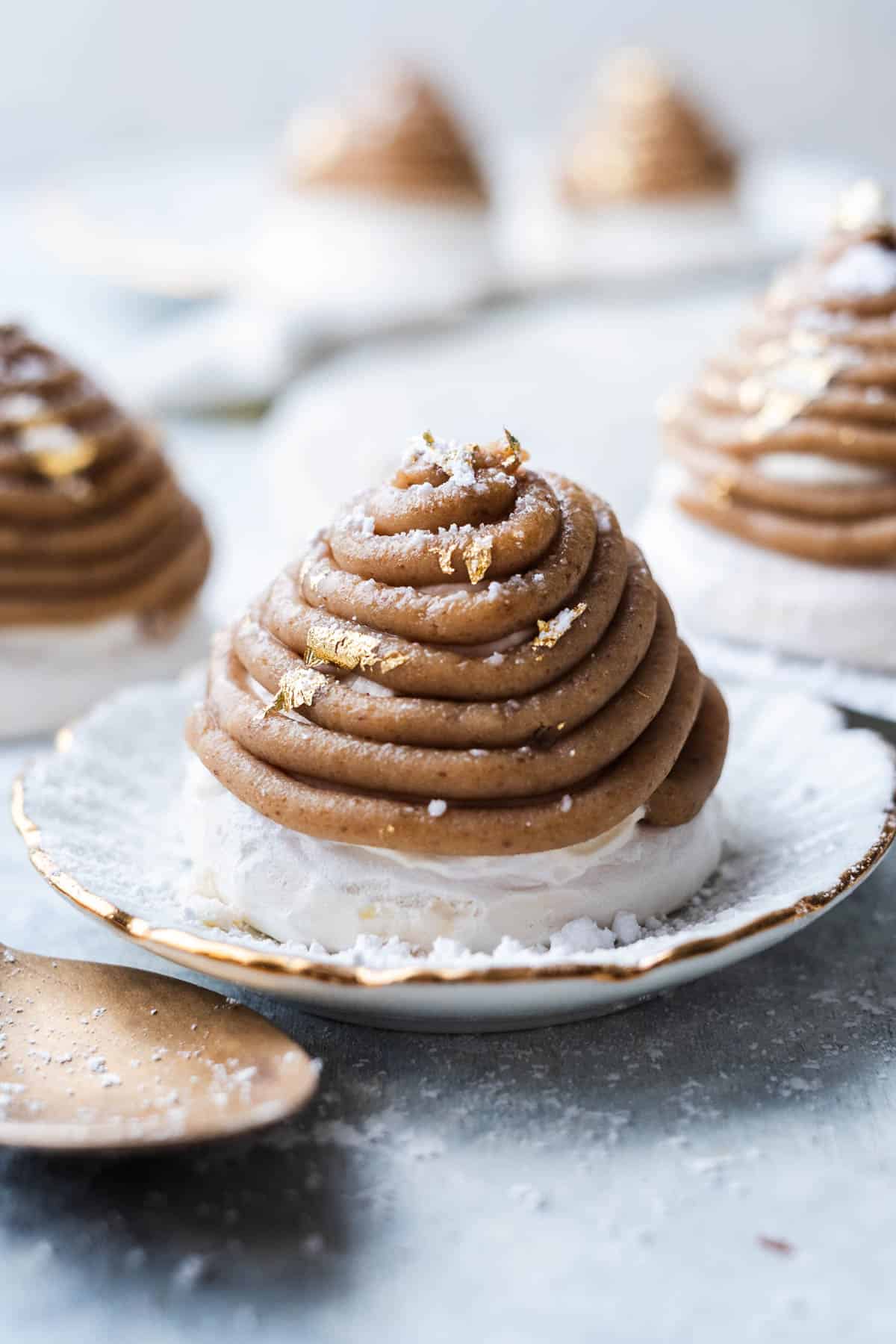
What is Mont Blanc dessert made of?
My recipe for Mont Blanc is split into three separate components. I’ve listed the ingredients needed for each part of the recipe below. Each requires a short list of easy-to-find ingredients.
Meringue Ingredients:
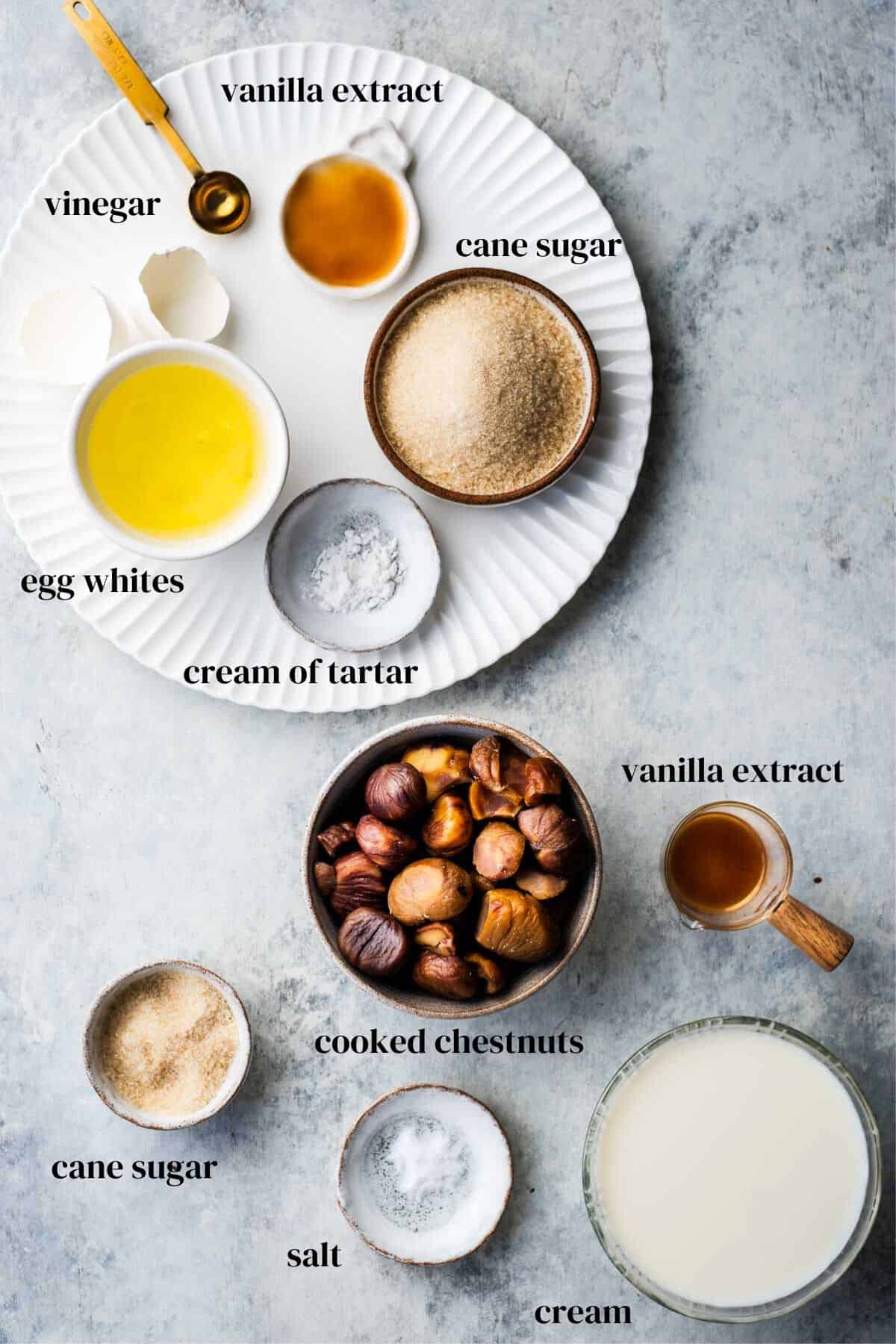
Egg whites: You’ll need two large egg whites to make enough for ten individual servings of this French Mont Blanc dessert. It is best to separate the egg whites from the yolks when the eggs are cold. This will help you keep them out of the whites, which is essential for a proper meringue. Then let the whites come to room temperature before using them.
Cane sugar: I used cane sugar in this recipe, but you can also swap in granulated sugar.
White vinegar and cream of tartar: Use both for a quicker, more stable meringue. You can swap the vinegar for freshly squeezed lemon juice.
Vanilla extract: Just a touch adds sweetness and flavor to the meringue discs.
Chestnut Puree Ingredients:
Chestnuts: I am using store-bought peeled and cooked chestnuts, which are readily available and reduce prep time by skipping roasting and peeling. But if you’d like to cook the chestnuts yourself, I recommend boiling fresh chestnuts to make the puree.
Can I use chestnut cream? While testing this recipe, I noticed that some versions incorporate store-bought chestnut cream (a popular brand is Clement Faugier) to thin out the puree. However, since chestnut cream can be hard to find in the US, I opted to make my own puree from scratch using only chestnuts.
Milk: I used whole milk in this recipe and recommend sticking to full-fat dairy here rather than skim milk.
Kosher salt: Kosher salt’s granule size is key here, so I recommend not swapping in table salt.
Cane sugar: I used cane sugar in this recipe, but you can also use granulated sugar.
Vanilla extract: If you’d like a richer flavor than extract, feel free to swap in half of a whole vanilla bean with the seeds scraped out.
Whipped Cream Ingredients:
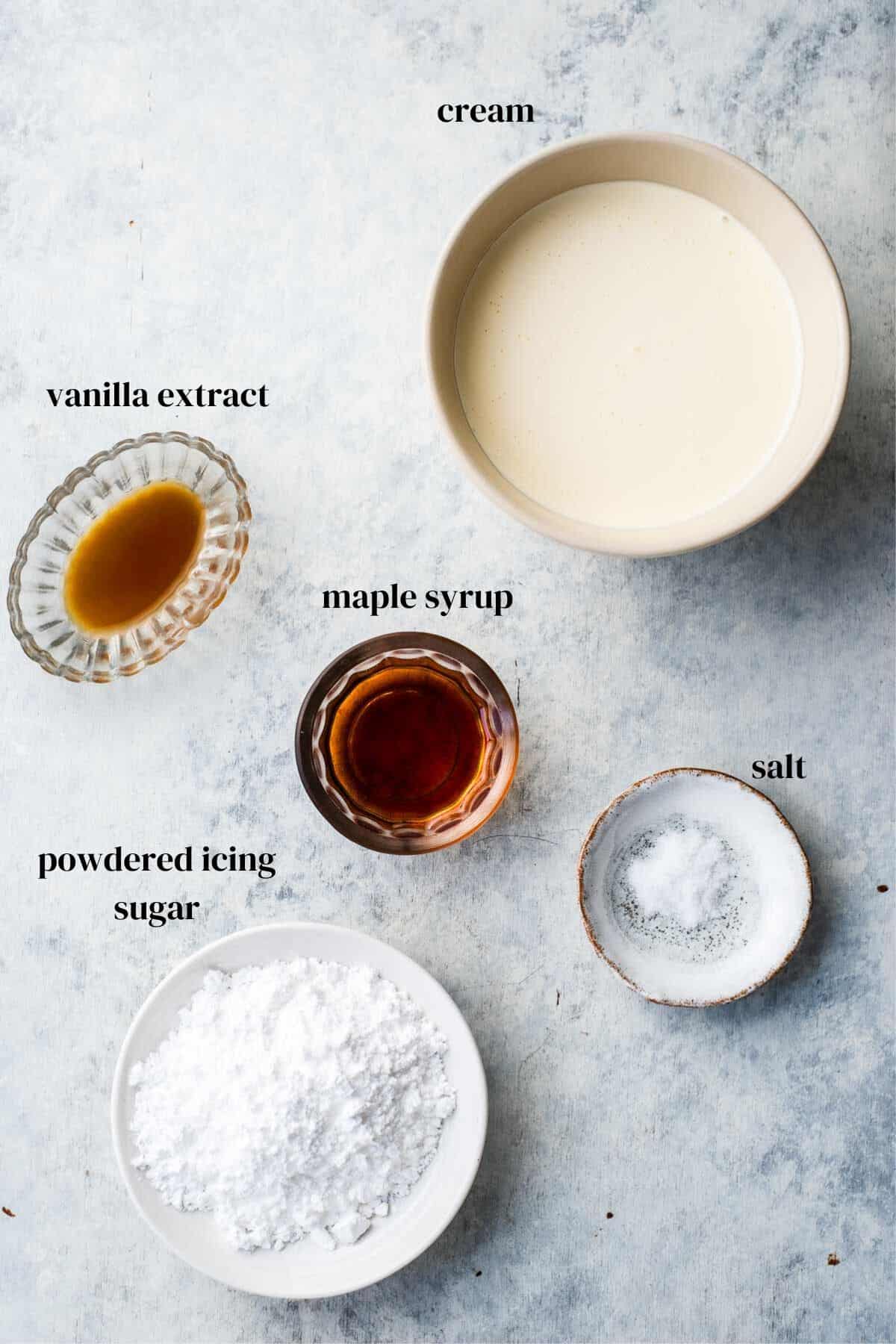
Heavy cream: You can use either heavy cream or whipping cream in this recipe. The cream must be cold to whip successfully, so I recommend taking it out of the fridge right before using it.
Maple syrup: Two tablespoons are enough to sweeten the cream. Make sure to use proper maple syrup rather than maple flavoring. The taste is far superior and perfectly complements the chestnut flavors.
Vanilla extract and kosher salt: Use both in the whipped cream. If you prefer a richer flavor than extract, feel free to swap in half of a whole vanilla bean with the seeds scraped out.
Mont Blanc Dessert Finishing Decor Ingredients (Optional):
Powdered (confectioners’) sugar: Traditionally, Mont Blanc is dusted with powdered sugar over the domed chestnut puree strands. The confectioner’s sugar adds sweetness, making this dessert resemble the highest snowy mountains in the Alps.
Edible gold leaf: It is optional, but if you’d like to add a pop of color to this decadent dessert, you can decorate the finished dessert with pieces of gold leaf (affiliate link).
How To Make Mont Blanc Dessert?
While the process below might look intimidating, I’ve covered all the detailed steps to walk you through it. After all, this is one of the most iconic chestnut desserts of all time, and I hope that after reviewing each component below, you will see it’s not that difficult.
Make The Meringue
Start by making the meringue, as it takes the most amount of time. Make sure your bowl, whisk and utensils are clean, dry, and grease-free. Any residue can keep the egg whites from whipping to the necessary voluminous peaks. Below are the steps to making the meringue:
- Get your oven ready: Preheat your oven to 200 degrees F. (93 degrees C.) Line your baking sheet with parchment paper.
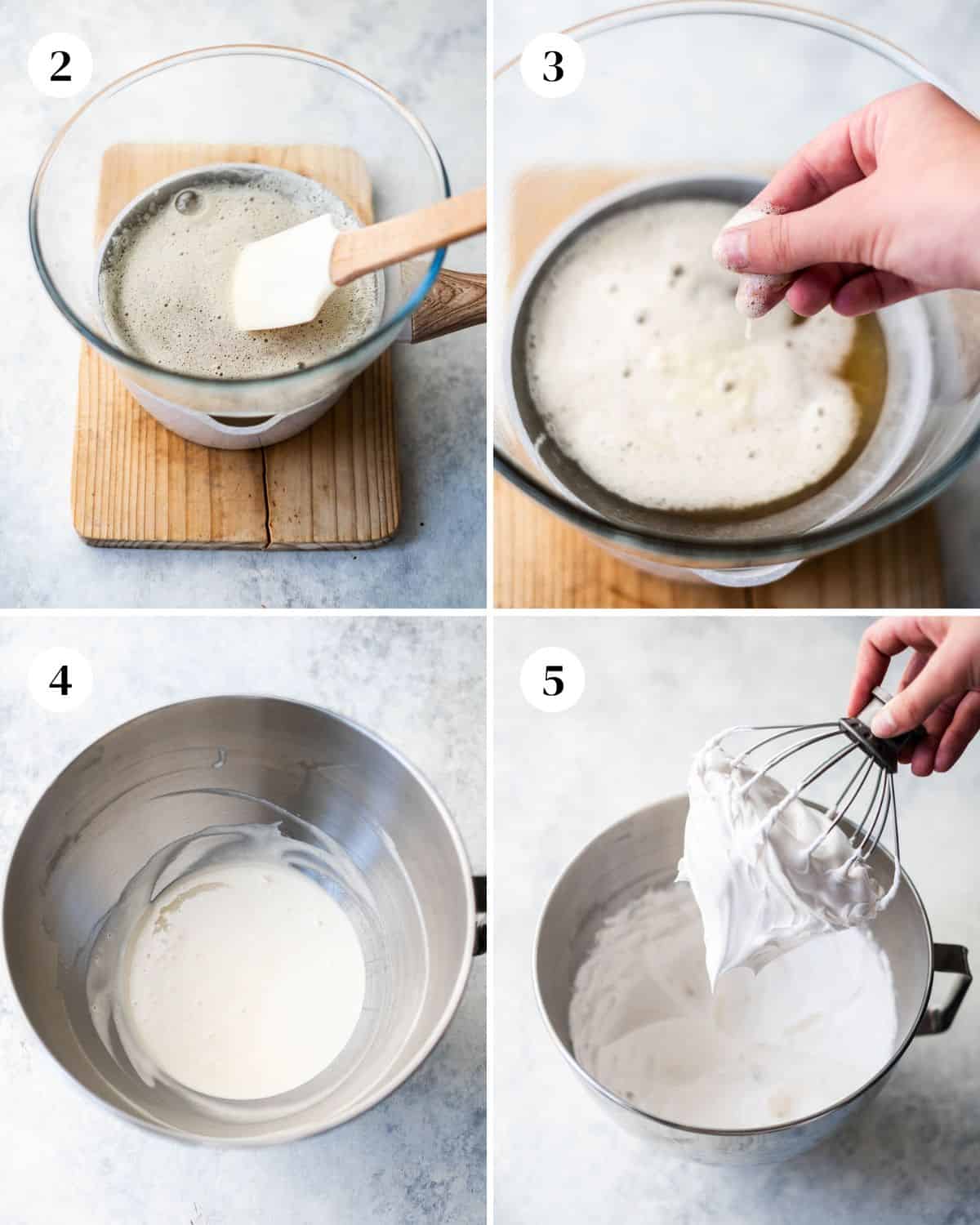
- Create a bain-marie: A bain-marie is essentially a double boiler, so if you have one, feel free to use it here. Otherwise, place a bowl over a pan of simmering water. Just make sure the bowl doesn’t touch the water.
- Dissolve the sugar in warmed egg whites: Add the egg whites and sugar to the bowl and stir continuously with a rubber spatula. Scrape down the sides as you go to ensure all of the sugar is blended into the mixture. Keep stirring until the sugar has completely dissolved and no grains are left, about 4 to 6 minutes. You can test this by rubbing some mixture between your fingers, or when the mixture reaches 160 degrees F. (71 degrees C).
- Whisk the egg mixture: Add the egg white mixture to a stand mixer’s bowl and whisk on medium to low until foamy. Then add the vanilla extract, cream of tartar, and vinegar.
- Whip into peaks: Turn the speed up to medium-high and whip until it’s cooled, voluminous, and glossy. When the whisk is lifted out, the mixture should stand in stiff peaks.
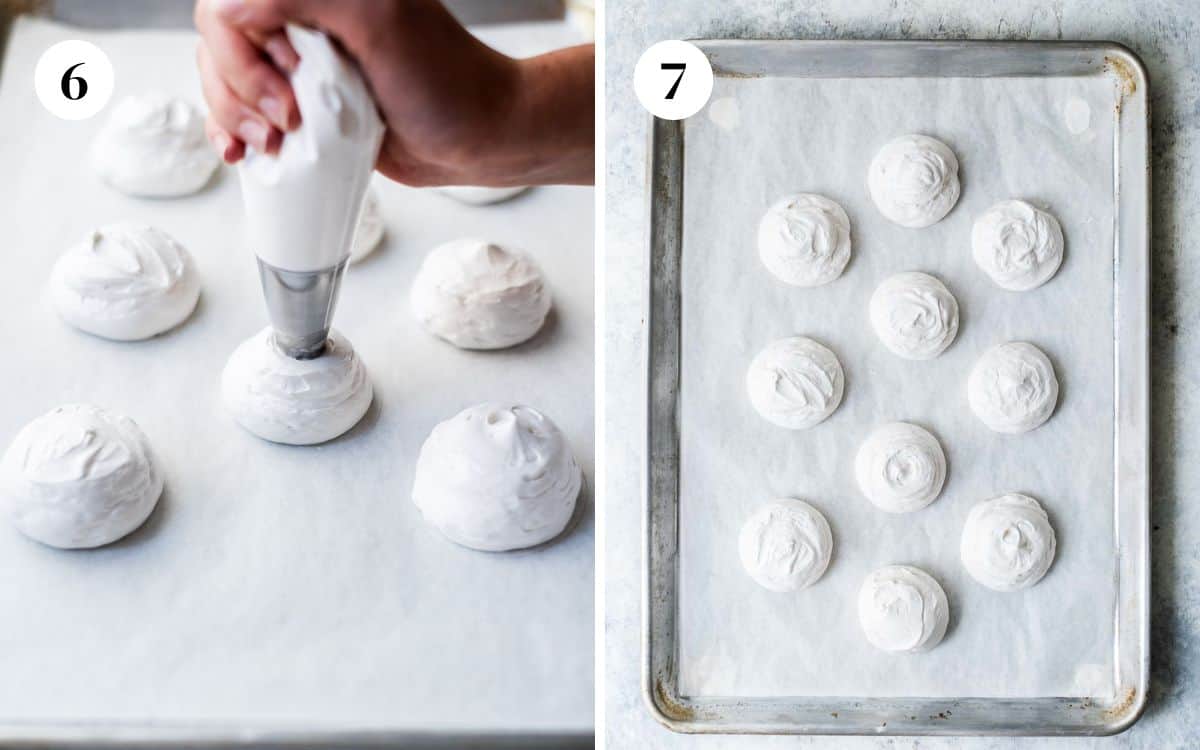
- Pipe the meringue: Spoon the meringue into a piping bag fitted with a large round tip (affiliate link). You can also cut the end off a Ziploc bag, leaving a roughly 1” diameter hole. Pipe ten meringue rounds onto a parchment paper-lined baking sheet. The discs should be about 2 inches in diameter and 1.5 inches tall, in a cone shape. Use an offset spatula (or the back of a spoon) to clean them up if necessary.
- Bake the meringues: Transfer the tray to the oven and bake for 1 1/2 hours. Do not open the door at any point, and do not be tempted to crank up the heat to speed up the process. Otherwise, the meringues will only brown and taste burnt.
When done, remove the meringues from the oven and let them cool thoroughly (at least 30 minutes). In the end, they should be fully cooled and crisp to the touch.
Make the Chestnut Puree
It is best to make the chestnut puree while the meringues are baking. Below are the basic steps of making chestnut puree. You can learn more about it in my chestnut puree recipe if you need more information.
- Soften the chestnuts: Add the chestnuts, milk, sugar, vanilla extract, and salt to a saucepan over medium-high heat. Bring to a boil, then reduce the heat and simmer on medium-low for 20 to 30 minutes, or until the milk has reduced to 2/3 cup and the chestnuts are tender. Keep a close eye on it and stir it occasionally (more often toward the end).
- Strain: Pass the mixture through a strainer, reserving the reduced milk mixture. Let the chestnuts and milk cool for 10 minutes.
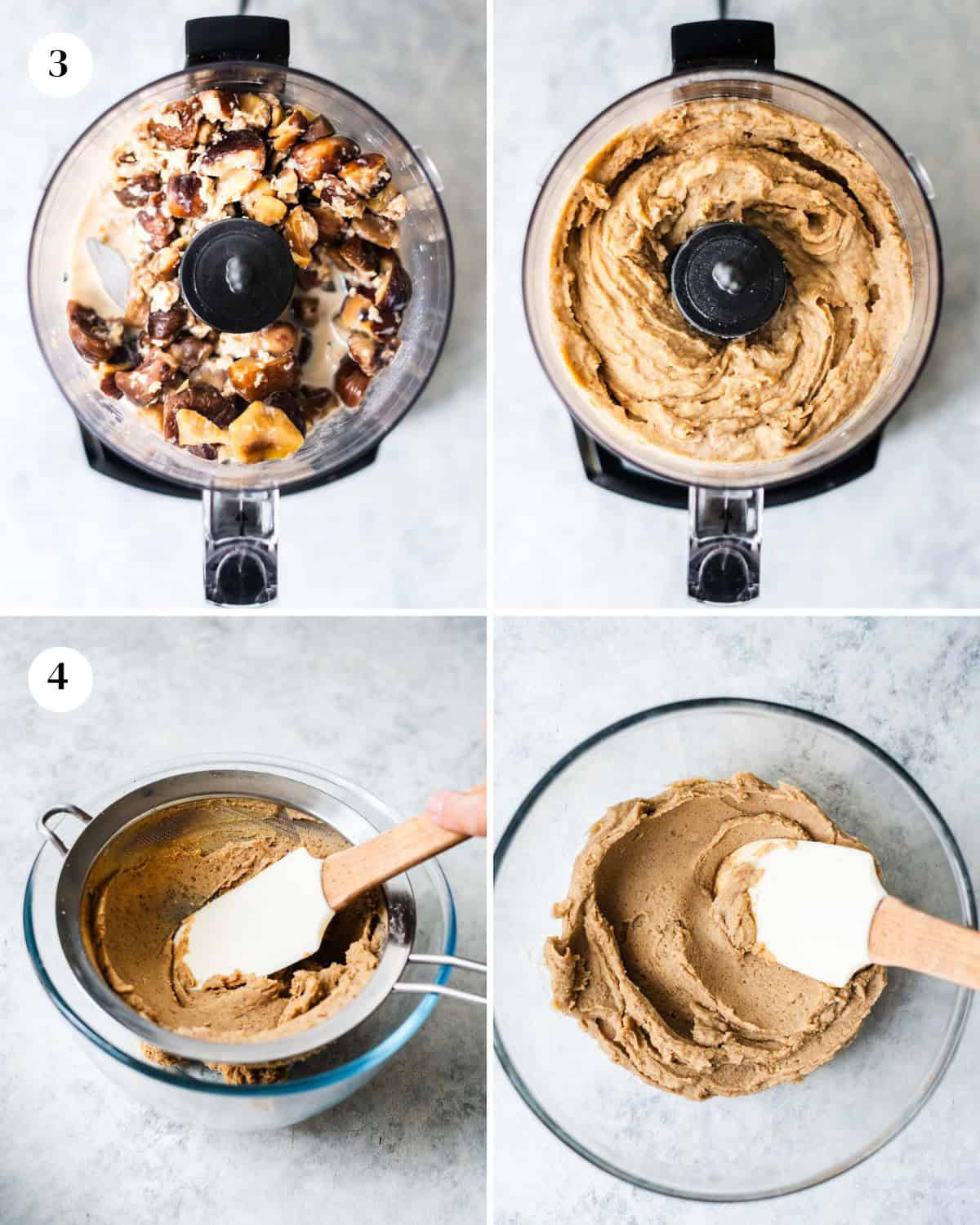
- Puree the chestnuts: Add the softened chestnuts to the bowl of a food processor along with ½ cup of the reserved milk mixture. Blend until smooth. Add more milk, if necessary, in one tablespoon increments until you have a perfectly smooth, pipeable consistency.
- Pass the puree through a sieve: Since I’ll pass the puree through the piping tip to turn it into “vermicelli”, it is imperative that the puree has no lumps. The piping tip is so small that any lumps will get stuck.
Therefore, while it may seem like an extra step, pressing it through a fine-mesh sieve is best for a beautifully smooth chestnut puree. I’ll then cover it and let it rest at room temperature to cool completely.
Make The Whipped Cream:
While it is not traditional, I use my maple whipped cream for this chestnut Mont Blanc dessert recipe. That said, you can use a more traditional whipped cream made with confectioner’s sugar instead.
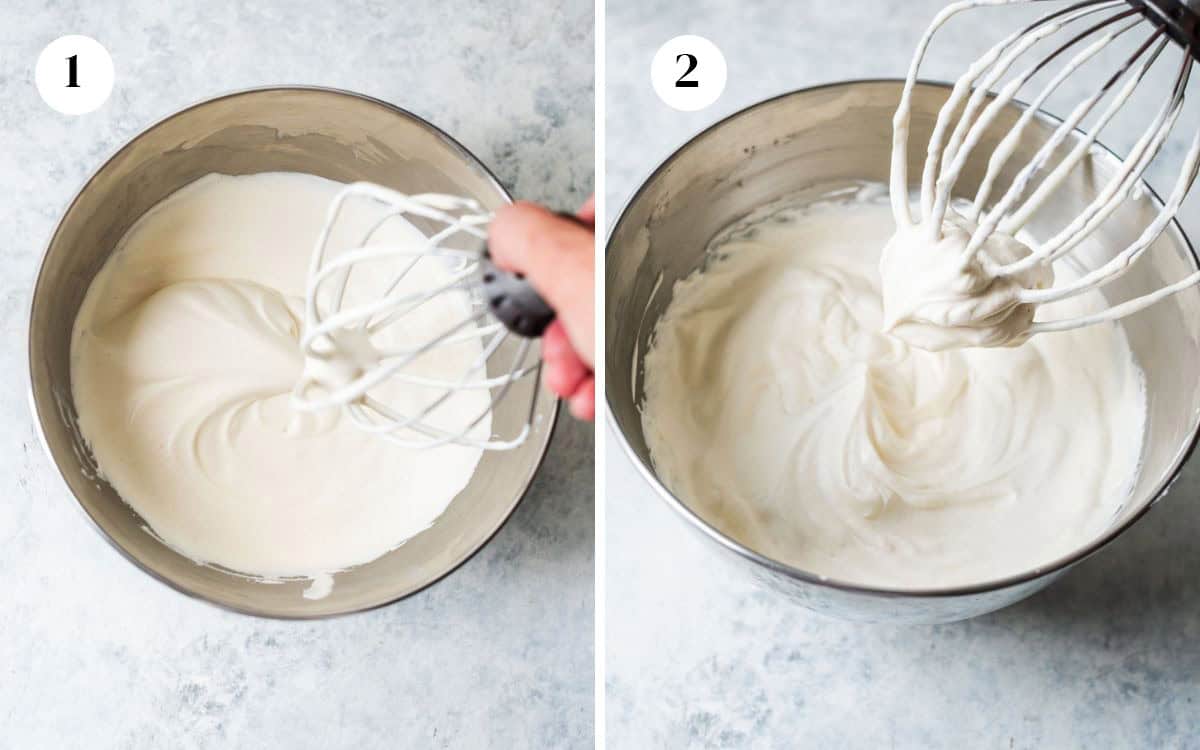
- Gather the ingredients: Add heavy cream, maple syrup, vanilla, and salt to the bowl of your electric mixer fitted with the whisk attachment.
- Whip the cream to firm peaks: Start whisking on medium-low until the cream has soft peaks, about 1 minute. Then turn the mixer up to medium and continue whisking until the cream forms a firm peak and holds its shape.
- Cool: Refrigerate until ready to assemble your Mont Blanc.
The Assembly
Assemble the Mont Blancs right before serving. The meringue will soften from the cream’s moisture if left for too long.
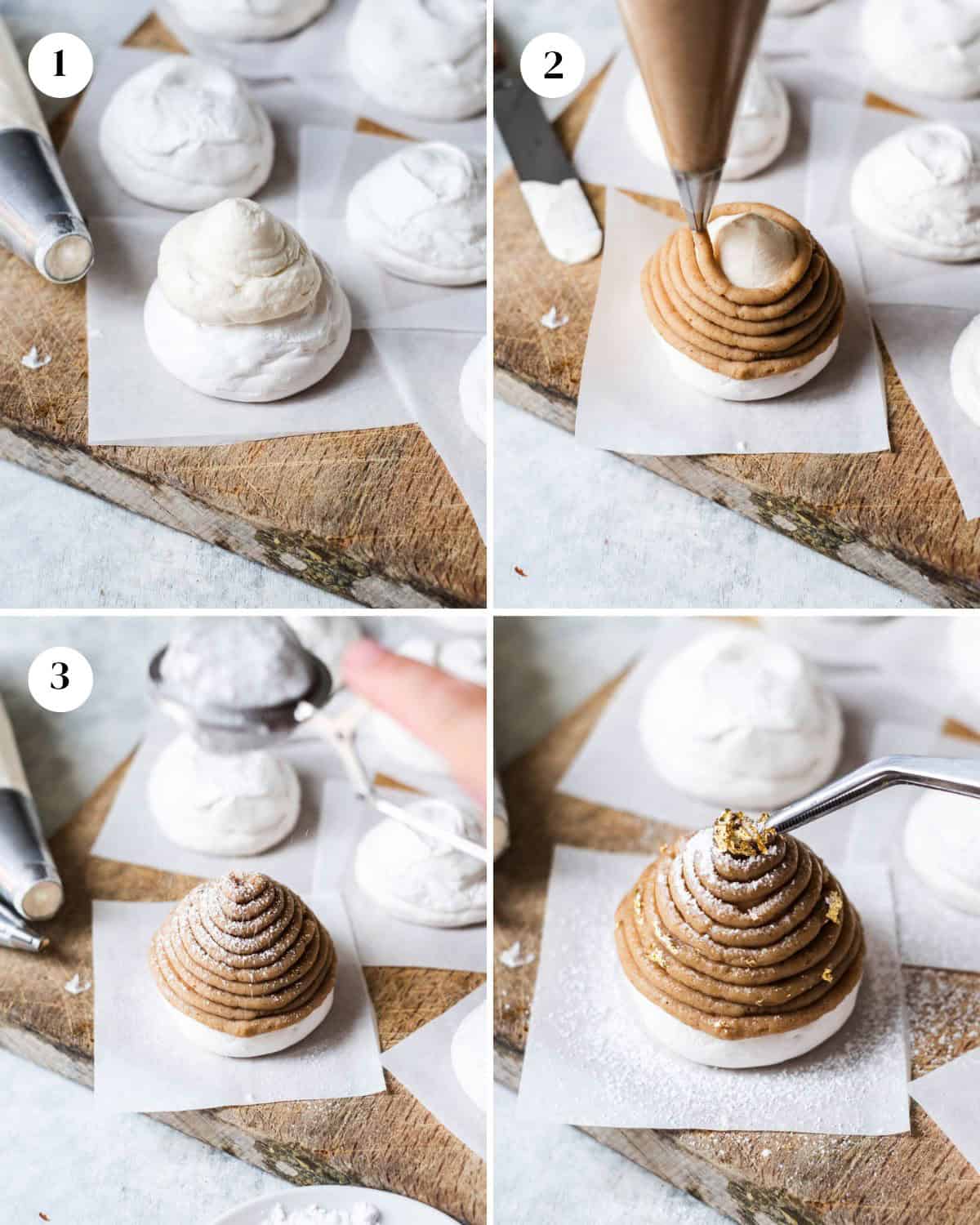
- Pipe cream onto meringues: Place the meringues onto a serving platter. Spoon the maple whipped cream into a piping bag fitted with a medium piping tip. Pipe the cream onto the meringue. The shape of the meringue with cream on top should resemble a mountain’s peak.
- Pipe on chestnut puree: Spoon the chestnut puree into a piping bag fitted with a small piping tip (affiliate link) and pipe the puree around the whipped cream in overlapping circles, starting from the bottom, until it’s completely covered. This is called chestnut vermicelli; the thinner your piping tip, the thinner the strands.
Take your time here, as piping the chestnut puree is the main wow factor of this dessert. Don’t worry about it being perfect. Do your best to create the highest mountain you can. It is totally fine for it to look rustic. - Decorate: Dust the top of the meringue liberally with powdered sugar (for white mountains) and decorate it with flakes of edible gold leaf, if preferred. Alternatively, sprinkle broken-up meringue (or grated chocolate) over the top. Serve immediately.

FAQs
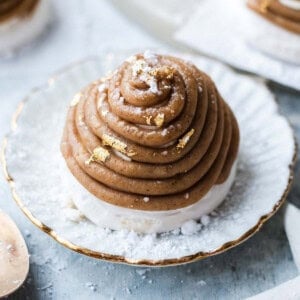
Mont Blanc is a French dessert created in the 19th century in Paris. It’s made by layering a disc of meringue with a dome of cream. Strands of sweet chestnut puree encase the outside of the cream and are dusted in powdered sugar to create the visual effects of mountain peaks.
Monte Bianco dessert is the Italian variation of Mont Blanc with a few minor differences. While both versions feature sweetened chestnut puree, the Italian version usually includes rum (or other liqueurs) and cocoa powder.
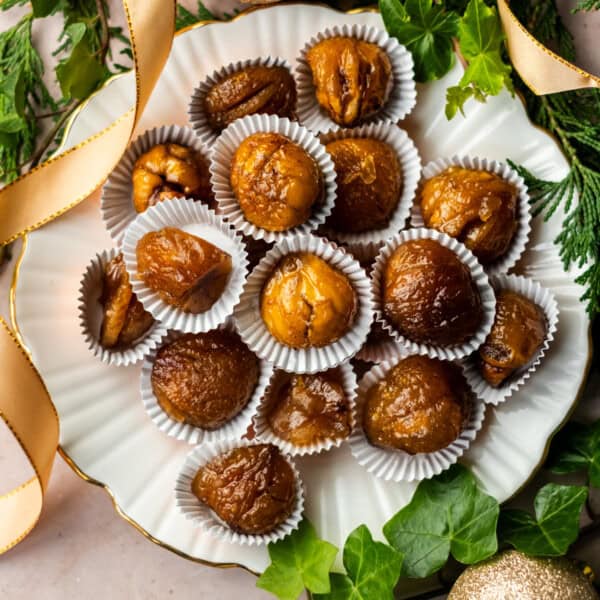
Other Chestnut Recipes


If you make this recipe, I would greatly appreciate it if you could take a minute to rate it and leave a comment below. It is a great way to support this website and help those planning to make it. Also, if you took pictures, I’d love to see them. Share your creations on Instagram using #foolproofeats so I can share them with the Foolproof Living community.
This post may contain affiliate links. If you purchase through these links, I may earn a small commission, at no additional cost to you.
Mont Blanc Dessert Recipe
Equipment
Ingredients
For The Meringue
- 2 large egg whites, at room temperature
- 6 tablespoons cane sugar, or granulated sugar
- ½ teaspoon vanilla extract
- ¼ teaspoon cream of tartar
- ¼ teaspoon white distilled vinegar, or lemon juice
For The Chestnut Puree
- 1 ½ cups chestnuts, cooked peeled – storebought
- 1 ½ cups whole milk
- 2 tablespoons cane sugar, or granulated sugar
- 1 teaspoon vanilla extract, or ½ vanilla bean (seeds scraped)
- Pinch kosher salt
For The Maple Whipped Cream
- 1 cup heavy cream, cold (or whipping cream)
- 2 tablespoons maple syrup
- ½ teaspoon vanilla extract, or ½ vanilla bean (seeds scraped)
- 1/8 teaspoon kosher salt
To Decorate
- ¼ cup powdered sugar
- Edible gold leaf, optional
Instructions
To Make The Meringue:
- Preheat the oven to 200°F (93°C). Line a baking sheet with parchment paper.
- On the stovetop, bring a saucepan with a few inches of water to a simmer. Add the egg whites and sugar into a clean metal or glass bowl and place it over the pan of water to make a double boiler. Be careful that the water does not touch the base of the bowl.
- Using a rubber spatula, gently and continuously stir the egg whites and sugar mixture, scraping down the sides and bottom of the bowl. Stir until the egg whites are warmed thoroughly and the sugar crystals have dissolved. This takes about 4 to 6 minutes. Test this by rubbing some of the mixture between your thumb and forefinger. The mixture should be warm to the touch, and you should not feel any sugar grains. If you do, it needs a little longer. Alternatively, a temperature probe should read 160°F (71°C) for a more accurate reading.
- Remove the bowl from the heat and pour the mixture into the clean bowl of a stand mixer fitted with a whisk attachment. Alternatively, use a handheld electric whisk. Whisk on medium to low until the egg whites are foamy. Add in the vanilla extract, cream of tartar, and vinegar.
- Increase the speed to medium-high and whisk until the mixture has cooled significantly. The meringue should be voluminous and glossy, and when the whisk is removed, you should get stiff peaks.
- Spoon the meringue into a piping bag fitted with a large plain piping tip, and pipe ten 2-inch round meringues* in a swirling motion so they end up approximately 1.5 inches tall on the tray in a cone shape. Once piped, you can use an offset spatula to clean them up, if necessary. With any remaining meringue, pipe little meringues that can be used as decoration or enjoyed separately.
- Bake the meringues for 1 ½ hours or until they are crisp. Remove the tray from the oven and leave to cool thoroughly (for at least 30 minutes). Or, if you have the time, leave it in the oven to cool thoroughly.
To Make The Chestnut Puree:
- Add chestnuts, milk, sugar, vanilla extract, and salt to a saucepan set over medium-high heat on the stovetop.
- Bring liquid to a boil, reduce heat, and simmer on medium to low heat, stirring occasionally, for 20-30 minutes or until the milk has reduced to 2/3 cup and the chestnuts are tender. Towards the end, stir more frequently to prevent the liquid from scorching on the base and to break up the chestnuts.
- Place a mesh strainer over a bowl and strain the chestnuts from the liquid, keeping it for later. Allow the chestnuts and liquid to cool for ten minutes or so.
- Transfer the semi-cooled chestnuts to the bowl of a food processor, adding ½ cup of the reserved liquid. Process until pureed, stopping and scraping down the base and sides a few times.
- If necessary, add more of the reserved liquid (in one-tablespoon increments) until a smooth, pipeable consistency is achieved that will hold its shape.
- Press the chestnut puree through a fine mesh sieve to remove any remaining lumps and ensure the puree is extra smooth. Cover until ready to assemble.
To Make the Maple Whipped Cream:
- Add all of the ingredients to the bowl of a stand mixer fitted with a whisk attachment. Whisk at medium-low speed until it reaches soft peaks, about 1 minute.
- Increase the speed to medium and whip until firm peaks form. Cover and refrigerate until you are ready to assemble.
To Assemble:
- Arrange meringues onto a serving platter.
- Spoon whipped cream into a piping bag fitted with a medium plain piping tip.
- Pipe whipped cream onto the meringue in a cone shape. Smooth the cream with a spatula, if necessary.
- Spoon the chestnut puree into a piping bag fitted with a small plain piping tip. Set it aside.
- Pipe the chestnut puree around the whipped cream in overlapping circles, starting from the bottom and going around until the entire cone is covered.
- When ready to serve, dust with powdered sugar and decorate with edible gold leaf, if preferred.
Notes
- Meringues: Make them the night before and let them cool in the oven overnight.
- Chestnut puree: Make it a day in advance and store it in the refrigerator. Let it come to room temperature before piping.
- Whipped cream: I recommend whipping the cream right before assembly because if you make it ahead, it will deflate and lose its soft, airy texture by the time you are ready to assemble.
Nutrition
Nutrition information is automatically calculated, so should only be used as an approximation.