
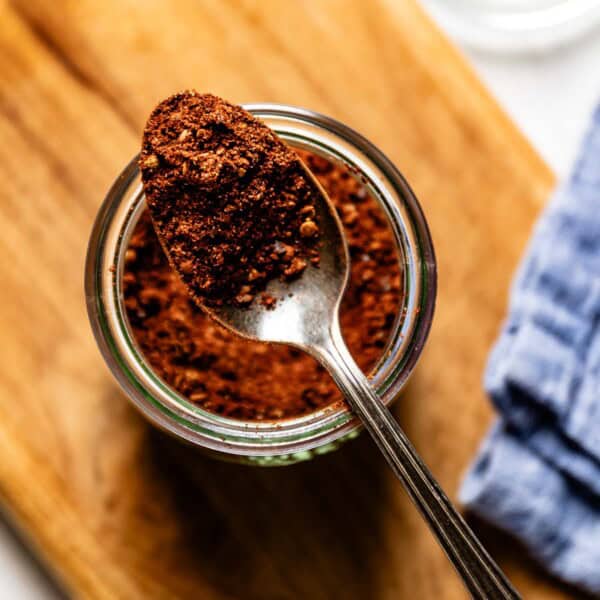


If you go to the store to buy harissa powder, you will see it advertised in many different ways. I have seen it sold as “harissa spice blend,” “harissa seasoning,” or “harissa spice mix.”
Having purchased storebought versions many times, I can tell you that they are essentially the same thing; a spicy, aromatic seasoning made from a mixture of dried chili peppers and a few other spices.
Harissa is native to Tunisia, but it has spread worldwide and is now available everywhere. I knew about it from cooking Yotam Ottolenghi’s recipes, but I became much more interested after ordering CAVA’s harissa chicken, salad dressing, and even pita chips.
After making my Homemade Harissa Recipe, I created this spice blend to use as a dry rub. Shortly after, I realized that I can make Harissa Paste from Powder when I am short on time.
The storebought versions are fine, but a homemade spice blend tastes truly superior. Below, I cover everything you need to know: ingredients you will need, how to make it, and ways to use it.
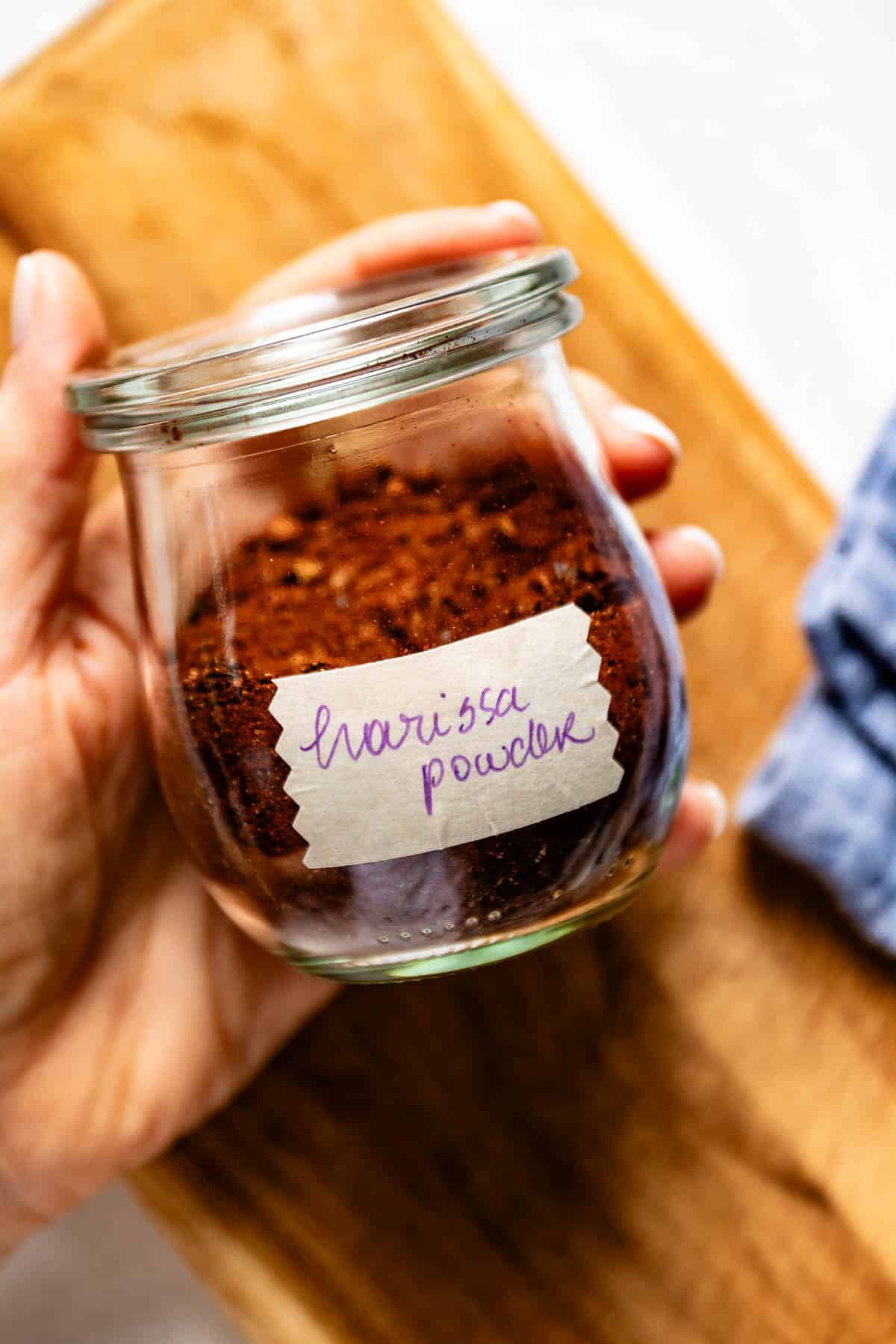
What is in Harissa Powder – Ingredient Notes
Here are a few helpful notes on the ingredients that need guidance, including the best chilis to use, classic spices, and a couple of optional add-ins.
You can find the full list and measurements in the recipe card below. Anything not mentioned here is pretty straightforward.
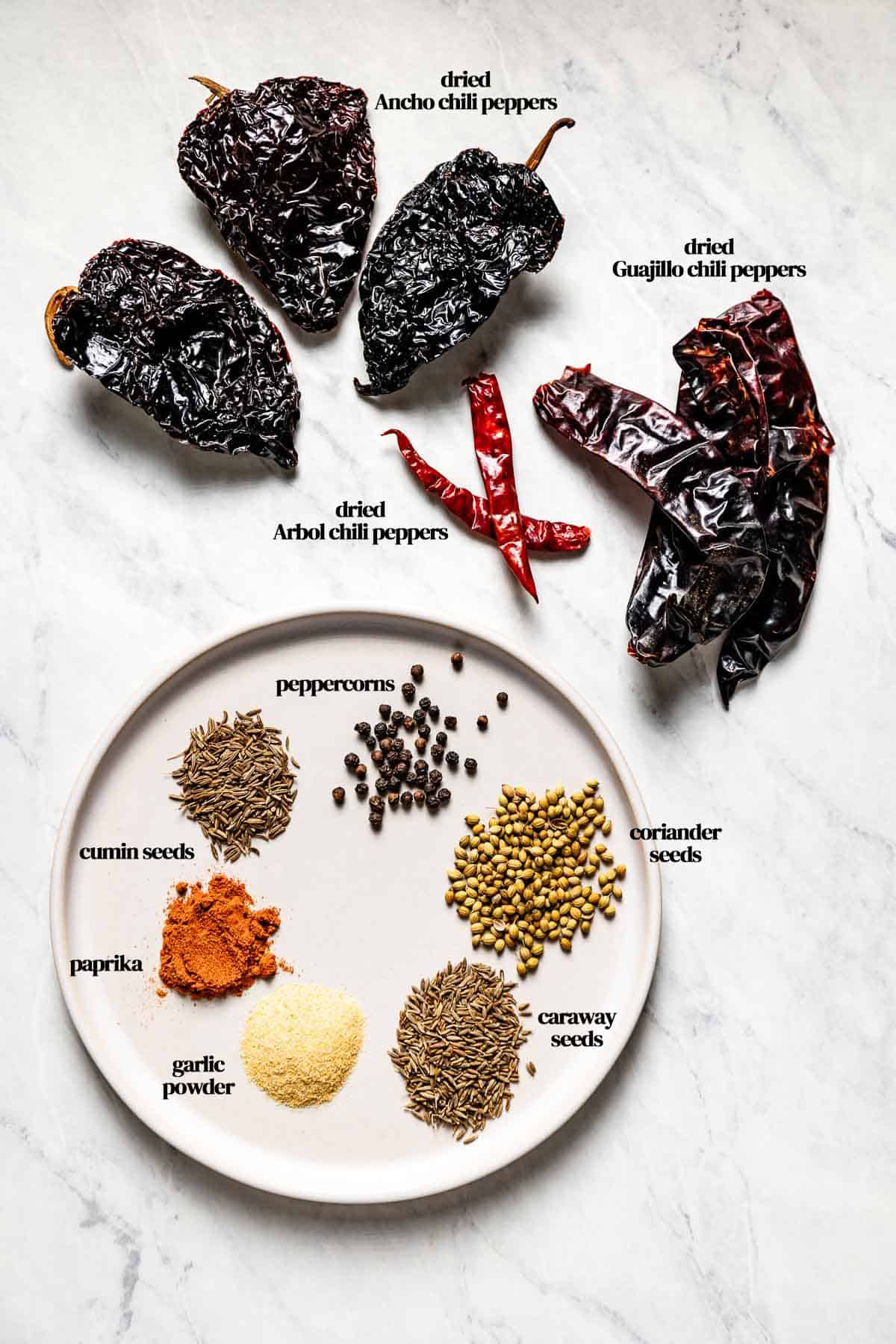
Dried chilies: This harissa seasoning recipe works with any dried chili pepper, so you can customize it to your taste and heat preference.
My favorite combination includes ancho, guajillo, and de arbol chilies. I usually buy this trio of chile peppers online, but you can also find them in the “Mexican” or “Latin” section of your local grocery store.
That said, you can also use New Mexican dried chilies that tend to have a milder flavor.
No matter which chilies you use, during my recipe testing, I found that 7 to 8 chilies of various kinds give you the most earthy and complex harissa seasoning.
Spices: I use cumin seeds, coriander seeds, caraway seeds, and peppercorns, which are all classic harissa spices. Whole spices are ideal since I grind everything in the food processor. If you can, I highly recommend buying organic spices.
Seasonings: I use smoked paprika for a bit more smoky flavor and garlic powder for greater depth and complexity.
How about salt? I do not use salt in my harissa spice blend recipe. Leaving it out gives me better control over the amount of salt in the dish I’m making, without the risk of making it overly salty.
Optional add-ins: I wanted this recipe to be an all-purpose seasoning, so I chose not to add any flavorings, such as rose petals or lemon peel, often found in some storebought versions.
That being said, if you want, you can achieve a similar result by adding ½ teaspoon of crushed, food-grade rose petals or lemon peel to my recipe below.
How to Make Harissa Powder
All you need is a skillet, a good food processor, and 20 minutes to make this recipe. Below are step-by-step instructions:
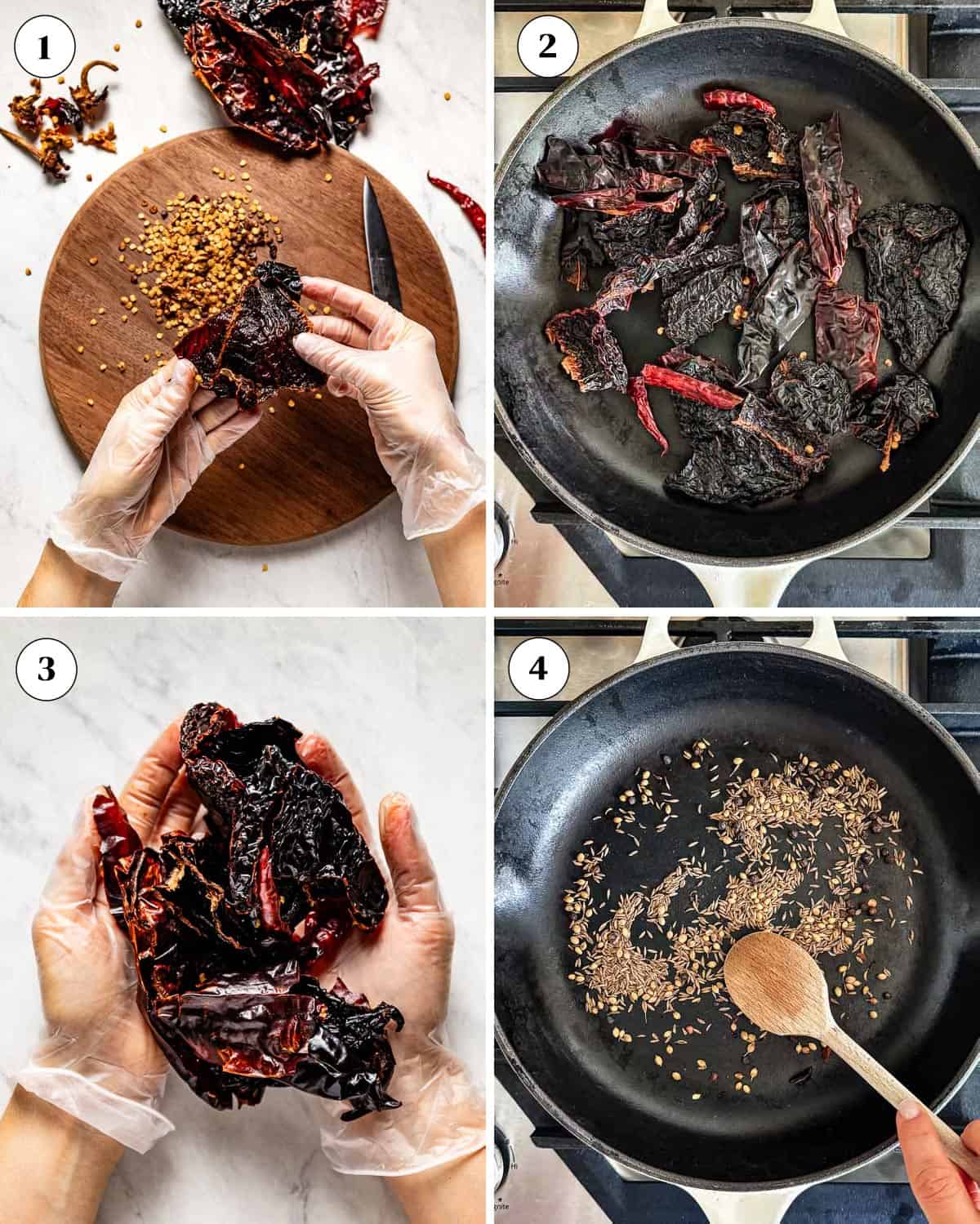
Step 1 – Prepare the chilies: Remove the stems and seeds of the ancho, guajillo, and de arbol chili peppers. Then, chop them roughly.
If you prefer a spicier blend, leave some seeds intact; otherwise, remove them all.
Wear gloves: Chili peppers may cause a burning sensation after direct contact. If you do not have gloves on hand, wash your hands thoroughly afterward.
Step 2 – Toast the peppers: Heat a cast iron skillet over medium heat and add the chopped chilies. Stir constantly to avoid burning, and toast until thoroughly dried (4 to 6 minutes).
To test whether the chilies are ready, see whether they “crack” or “snap”. When they do, you can remove them from the pan.
Step 3 – Cool the chilies: Transfer the toasted chili peppers to a plate to cool down for 5-10 minutes.
Step 4 – Toast the seeds: Add the peppercorns, cumin seeds, coriander seeds, and caraway seeds to the heated skillet. Cook them for 1 to 2 minutes, stirring frequently, then remove them from the pan. Set them aside to cool for a few minutes.
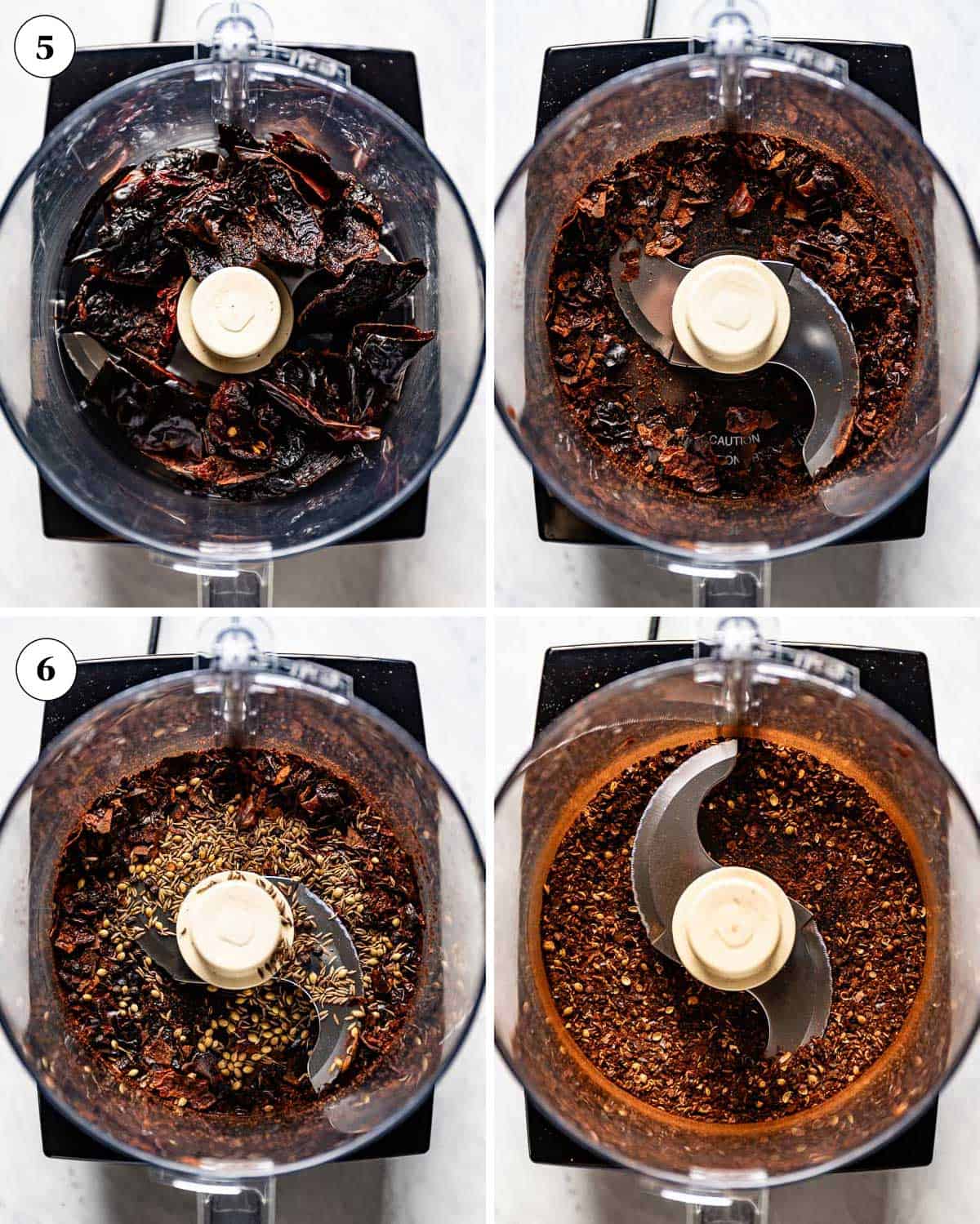
Step 5 – Process the peppers: Transfer the cooled chili peppers to your food processor bowl fitted with the blade attachment. Pulse the processor 7 to 10 times until the chilies break down. You can also use a spice grinder.
Step 6 – Add the toasted seeds: Add the toasted seeds to the bowl. Continue blending, scraping down the processor bowl as needed, until the ingredients reach a powder-like consistency and are fully incorporated.
This step should take 1 to 2 minutes, depending on your food processor’s power. Once you reach your desired consistency, add the smoked paprika and garlic powder and pulse 2 to 3 more times.
Step 7 – Store: Scrape the powder into an airtight jar or container and store it at room temperature for up to 6 months.
Ways to Use Harissa Spice Blend
Because of its bold flavor and broad versatility, harissa spice works for many recipes. Below are just a few of my favorite dishes harissa seasoning can be used for:
- Salad dressing: Make my harissa vinaigrette dressing (famously used when making CAVA Bowls) to season and elevate any salad recipe. Or, for a zestier option, add a teaspoon to my Yogurt Salad Dressing and Lemon Salad Dressing.
- Roasted vegetables: Sprinkle a few teaspoons over your veggies before roasting them in the oven for a smoky flavor, as I did in my Harissa Roasted Carrots.
- Seasoning for meat and seafood: Harissa spice makes a great dry rub for chicken, beef, fish, and lamb. In particular, you can use this seasoning for classic Middle Eastern dishes, like my Baked Chicken Kabobs, Roasted Turkey Tenderloin, and Grilled Rack of Lamb.
- Dips: Transform this seasoning into a crowd-ready dip by adding it to my creamy Mediterranean Hummus or making Harissa Aioli. You can even add harissa powder to ketchup for spicy, complex depth.
- Marinades: Make a simple marinade by whisking a tablespoon (or more) of this harissa spice blend with extra virgin olive oil and lemon juice or use it any of my meat marinades like my Shrimp Marinade, Yogurt Chicken Marinade, or even Mahi Mahi Marinade to infuse your meat with rich, flavorful notes.
- Grains and rice: I love adding this spice blend to dishes like couscous, rice, and rich pilafs like my Chicken Herb Pilaf.
- Eggs: I add harissa powder to season savory breakfast recipes like scrambled eggs and shakshuka for a spicy morning start.
- Soups and stews: Add a teaspoon to any soup or stew recipe to infuse it with rich, aromatic spice. I especially love it in my Eggplant Beef Stew and Chicken Chili.
FAQs
What is the closest spice to harissa?
Suppose you don’t have harissa spice but still want the same aromatic, spicy taste. In that case, I recommend blending chili powder, smoked paprika, ground cumin, ground coriander, and garlic powder.
Though not identical, this mix strikes a similar balance between fragrant heat and the earthiness of harissa powder. Or, if you need a condiment-like consistency, you can even try sriracha sauce for a store-bought, chili-based substitute.
Where to buy harissa powder?
After trying several store-bought brands, I recommend purchasing either New York Shuk’s Fiery Harissa or Whole Foods Organic Harissa Seasoning (which is a little milder). These premade harissa blends will work in a pinch, though I find my homemade recipe more flavorful and customizable.
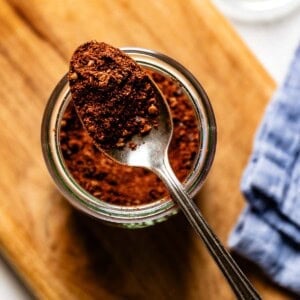
Harissa Powder Recipe
Equipment
Ingredients
- 8 dried chili peppers, we used a combination of Ancho, Guajillo, and De Arbol chili peppers
- 1 ½ teaspoons cumin seeds
- 1 ½ teaspoon coriander seeds
- 1 teaspoon caraway seeds
- ½ teaspoon peppercorns
- 1 teaspoon smoked paprika
- 1 teaspoon garlic powder
- 1 teaspoon kosher salt, optional*
Instructions
- Remove the stems and deseed the chili peppers. Give them a rough chop.
- Heat a cast iron skillet on medium-high heat. Add the peppers and toast for 4-6 minutes or until thoroughly dried. Stir frequently to avoid burning. To test for doneness, you should feel the chili pepper “crack” or “snap.”
- Place the toasted peppers on a plate to cool while working on the rest of the ingredients.
- Add the cumin, coriander, caraway seeds, and peppercorns to the heated skillet and toast, stirring frequently, for 1-2 minutes. Remove from the pan and set aside to cool.
- Place the cooled chili peppers in the bowl of a food processor fitted with the blade attachment (or you can use a spice grinder*). Pulse the processor 7-10 times to break down the dried chilies. Add the toasted cumin, coriander, caraway seeds, peppercorns, and salt if using. Continue processing until the mixture is pulverized to a powder consistency, scraping down the processor bowl to incorporate all the ingredients. Depending on your food processor, this takes about 1-2 minutes. Finally, add the smoked paprika and garlic powder and pulse 2-3 times to fully incorprate the spices.
- Place the powder in an airtight container and store it in a cool and dark place for up to six months.
Notes
- Yields: This recipe makes about ⅓ cup of harissa seasoning, depending on pepper size. The values below are for the full recipe.
- If using a spice grinder: Add the cooled chili peppers, one tablespoon at a time, and pulse until a powder forms. Add the toasted cumin, coriander, caraway seeds, and peppercorns. Continue grinding until it reaches a powder-like consistency. Add the smoked paprika and garlic powder if using. Grind for 5 seconds.
- Adding salt: When I make homemade spice blends, I usually use very little or no salt. This way, I can salt my food separately and easily gauge how much salt I use in my dish. Feel free to omit it or use more as needed.
- Storage: To store this harissa spice mix recipe, first transfer it to an airtight container. Then, store it in a cool, dry place (such as a pantry or kitchen cabinet) for up to six months.
- Fumes: Proper ventilation is essential when cooking chili peppers. The fumes from these chilies may irritate your eyes, nose, and mouth, so I highly recommend opening windows, turning on your kitchen’s range hood, and/or using portable fans to improve air circulation.
Nutrition
Nutrition information is automatically calculated, so should only be used as an approximation.










I’d like to substitute the dried chiles for ground guajillo / ancho / cayenne powder that I already have on hand. Any suggestions on how much to use? Maybe a tablespoon or two to equal 7-8 whole chiles?
Thanks,
Cat
Hello Cat,
I think 2 to 2 and a half tablespoons of guajillo and ancho (of each) is a good place to start. However, depending on how hot your cayenne is, I would use a lesser amount of cayenne. Perhaps, 1 teaspoon? Still, if you are a fan of heat use as much as you want.
Hope this helps.