
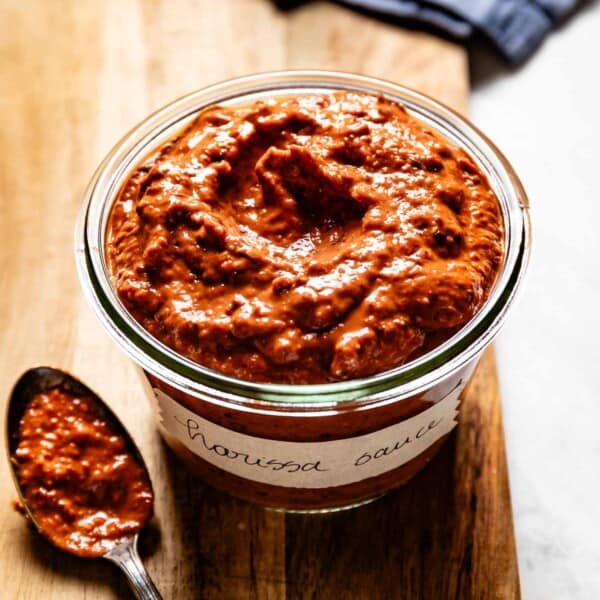

What Is Harissa?

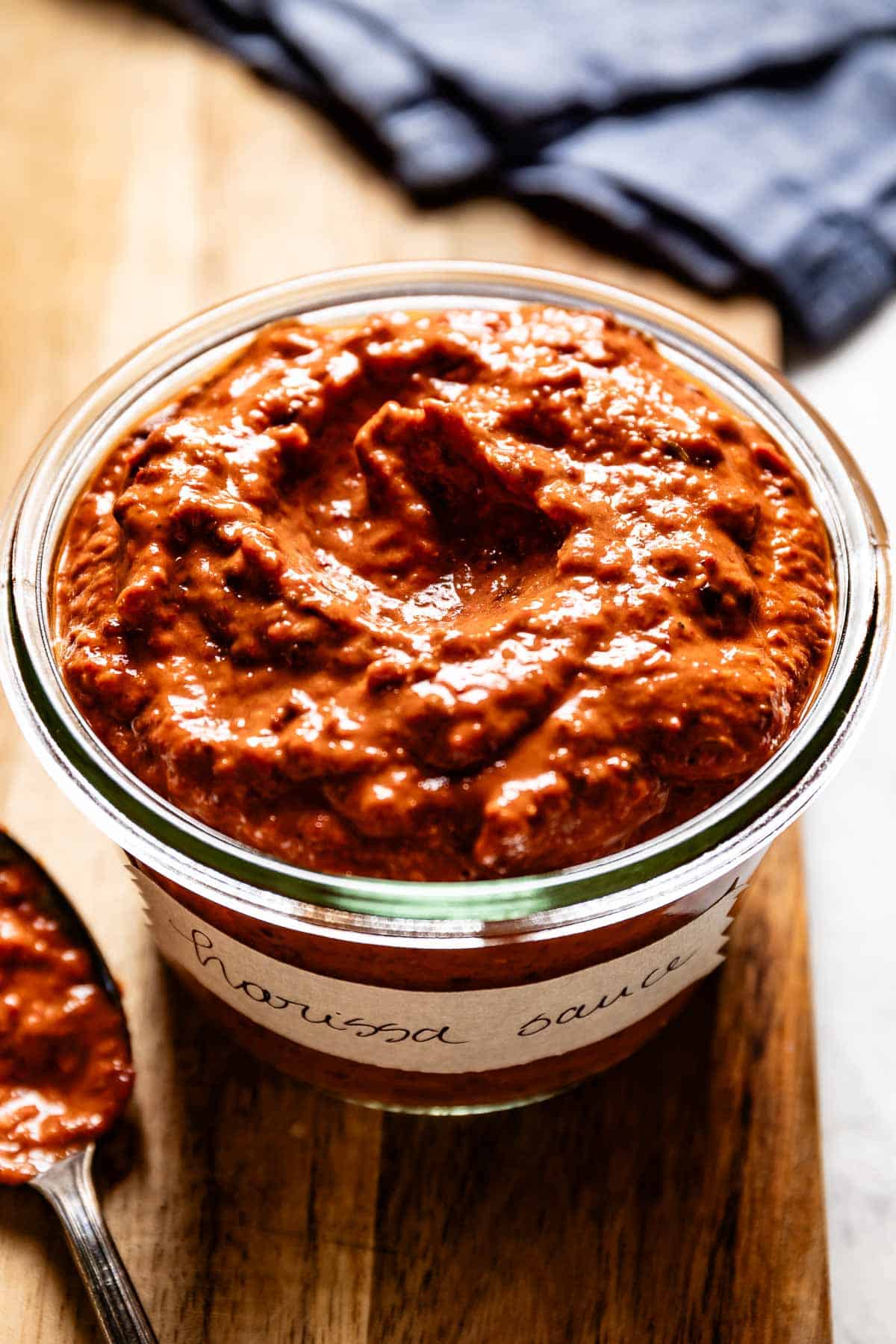
Harissa is a smooth, spicy condiment that originated in Tunisia. Sometimes referred to as “Tunisian ketchup” or “harissa paste,” this bold, red sauce includes a basic mixture of dried chilis, warm spices, tomato paste, garlic, olive oil, and lemon juice. This mix results in a delicious blend of hot, smoky, and mildly tangy flavors.
Since then, harissa has spread to nearby countries, like Morocco, Jordan, and Algeria, and it is now a staple in North African and Middle Eastern cuisine.
My love for harissa started many years ago, cooking my way through Yotam Ottolenghi’s cookbooks. Back then, I always bought a jar from the store instead of making my own.
Things changed once I started going to CAVA and became a little obsessed with their harissa chicken bowls. That is when I decided to make a batch to see how it compared to the storebought versions, and it turned out to be way easier than I thought.
I have not bought a jar since. Once you make your own, I am confident that you will feel the same way.
Harissa Ingredients Notes
You only need a handful of ingredients to make this harissa sauce recipe.
I have included the full list of ingredients and measurements in the recipe card below. Below are a few helpful notes on the ingredients that you might need guidance with:
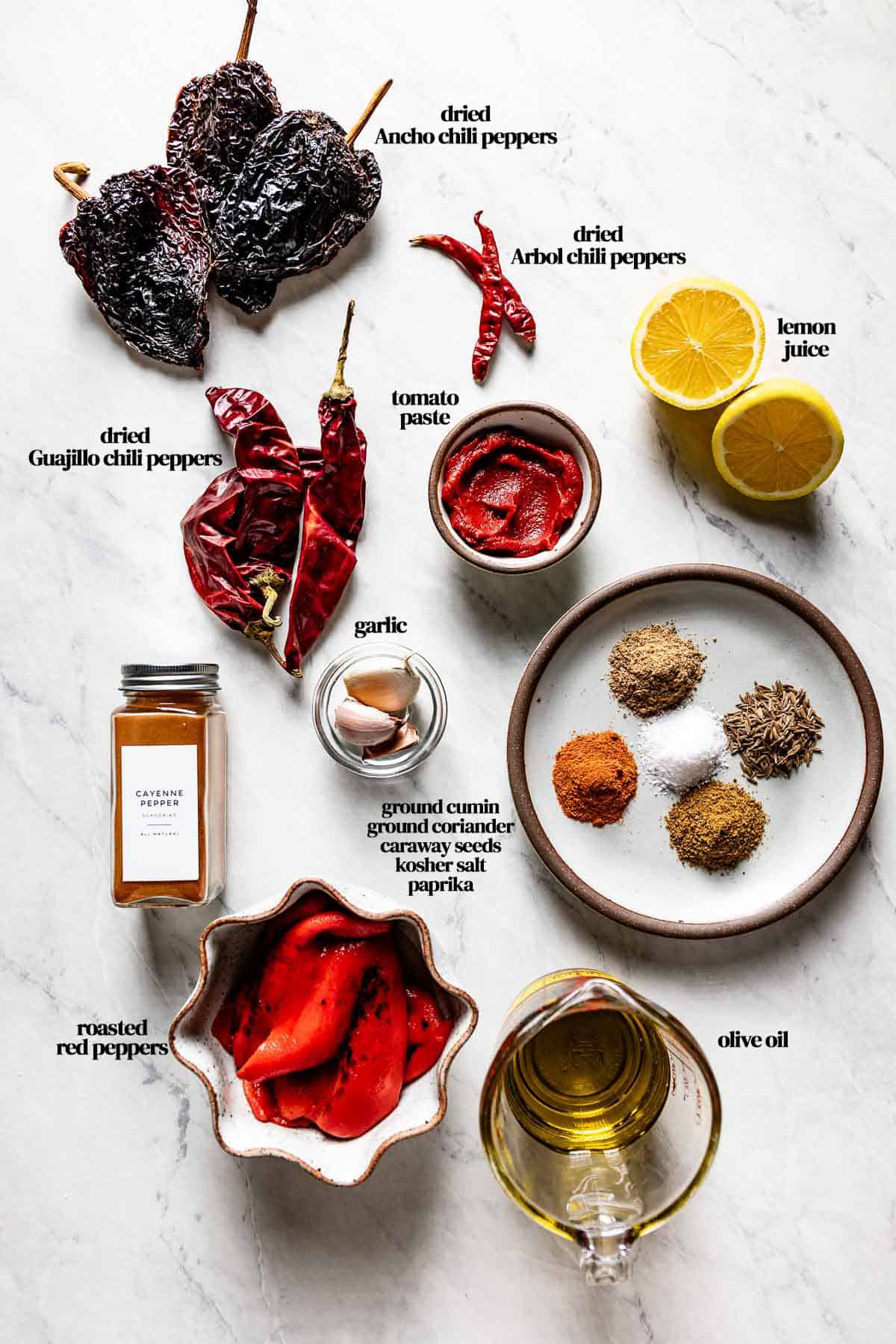
Dried chilies: I prefer using a mix of guajillo, ancho, and de arbol chilies in this recipe for their balanced heat and complexity.
I recommend using 7 to 8 dried peppers of different kinds. You can find dried chilies at your local grocery store, or purchase them online if you prefer.
Adjusting spice levels: One common question people ask about harissa is how spicy it is. When buying from the store, the label usually lists the heat level, but when making it at home, it depends on the chilies you use.
My recipe here is a mild-tasting harissa, but you can easily adjust it according to your taste buds:
- To make it spicier, use more of the spicier Mexican chilies (like chile de arbol), leave some of the seeds in, or add ¼ teaspoon (or more) cayenne pepper or red pepper flakes.
- For a sweeter harissa sauce, use New Mexico chilies, which are a milder variety. You can also add 2 tablespoons of honey, taste, and adjust to your preference.
I encourage you to start with my harissa recipe here and experiment with the blend of chilies you use to reach your ideal spice level.
Spices: Ground cumin, ground coriander, and caraway seeds are essential to this harissa sauce recipe’s warm, fragrant heat.
I prefer using pre-ground spices in this mixture to save time, but you can use whole spices. If using whole spices, toast them in a cast iron skillet for 3 to 5 minutes and grind them with a spice grinder or mortar and pestle.
Roasted red peppers: You will need 2 whole roasted red peppers. I usually opt for a jarred version, draining the juices before using, but you can also roast them at home for a fresher, smokier taste.
Seasonings: I find that a simple mix of kosher salt and Spanish paprika is enough for a savory, bright flavor. Smoked paprika will also work if you prefer a more robust smokiness.
Olive oil: A generous amount of good-quality olive oil is what carries the flavor, but it also makes the harissa sauce looser. During my recipe testing, I found that ⅓ cup of olive oil is a good place to start, then adjust from there. If you prefer a thicker, paste-like consistency, use a bit less oil.
Lemon juice: I always use fresh lemon juice for a vibrant, citrusy flavor.
How to Make Harissa Sauce?
It is easy to make harissa paste worthy of a North African restaurant in your own kitchen. With the step-by-step instructions below, you can prepare this condiment in under an hour:
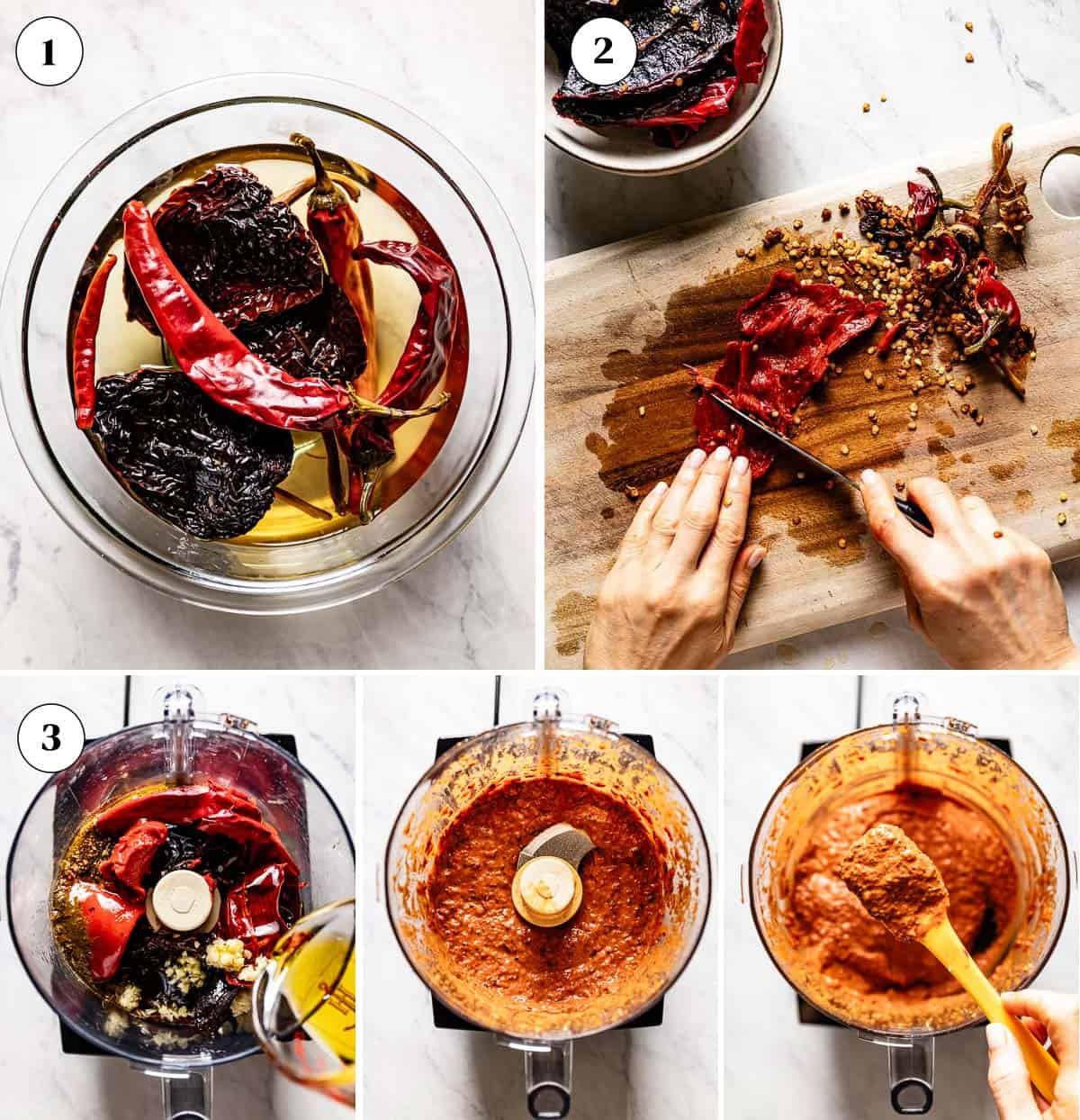
Step 1 – Rehydrate the chilies: Place the dried chiles in a medium-sized bowl, add boiling hot water, and place a weighted bowl on top to keep the chilies submerged. Alternatively, you can cover it with plastic wrap. Let the chilies steep in the water for 30 minutes.
Step 2 – Deseed the chili peppers: Once the chilies rehydrate, remove them from the water and remove their stems and seeds. If you prefer a spicier blend, you can keep some of the seeds in the peppers.
Pro tip: Wear gloves when working with chili peppers to avoid the burning sensation from the chili’s spicy compound, capsaicin. If you do not have gloves, wash your hands thoroughly afterward.
Short on time? You can skip the soaking and deseeding of the peppers and make harissa using harissa powder. You can make your own harissa spice blend or buy it from the store.
Step 3 – Blend the ingredients for harissa: Place the rehydrated harissa peppers in your food processor bowl (or a blender, depending on what you’re using). Then, add the ground cumin, coriander, caraway seeds, roasted peppers, garlic, kosher salt, Spanish paprika, tomato paste, lemon juice, olive oil, and cayenne pepper. Pulse the mixture until smooth.
Pro tip: As with any recipe, taste your sauce before serving and adjust the seasoning as needed. If the recipe you are planning to use it in already includes salt, keep that in mind when adding harissa sauce. You may need to reduce the salt in your harissa to avoid over-seasoning your final dish.
Step 4 – Enjoy: Use your harissa chili paste in your desired recipe or store it in an airtight container in the fridge if you plan to use it later. I find that this DIY harissa sauce is better the next day.
How to Use Harissa Paste in Recipes?
Wondering how to use harissa sauce in everyday cooking? In this section, you will find all my favorite dishes with harissa sauce—sandwich spreads, marinades, salad dressings, and beyond!
- Marinade: Add a tablespoon (or two) to my Yogurt Chicken Marinade and Shrimp Marinade for heat and depth of flavor, or use it as a base and make my Grilled Harissa Chicken.
Additionally, you can add a tablespoon (or two) of honey to your harissa and use it as a marinade for chicken or spread it over salmon. I love the sweet-and-spicy combination so much that I recreated CAVA’s Harissa Honey Chicken and use it in my version of the Copycat CAVA Bowls recipe. - Soups and stews: You can use harissa paste in place of tomato or chili paste. In particular, I love adding it to full-bodied dishes like Quinoa Stew, Vegan Chili, and Beef Stew.
- Pasta sauce: For a spicy kick, stir a quarter cup of this condiment into your favorite tomato-based pasta sauce.
- Spread for sandwiches, pizza, and flatbread: I love using this Mediterranean hot sauce as a spread for easy weekday lunches, like sandwiches and flatbreads.
- Dip: Add a spoonful to plain Greek yogurt to create a quick dipping sauce. You can even mix it with Hummus for a creamy, hot classic no one can resist. You can also make it a part of your next mezze platter by serving it with other Middle Eastern dips like my Babaganoush and Muhammara recipe.
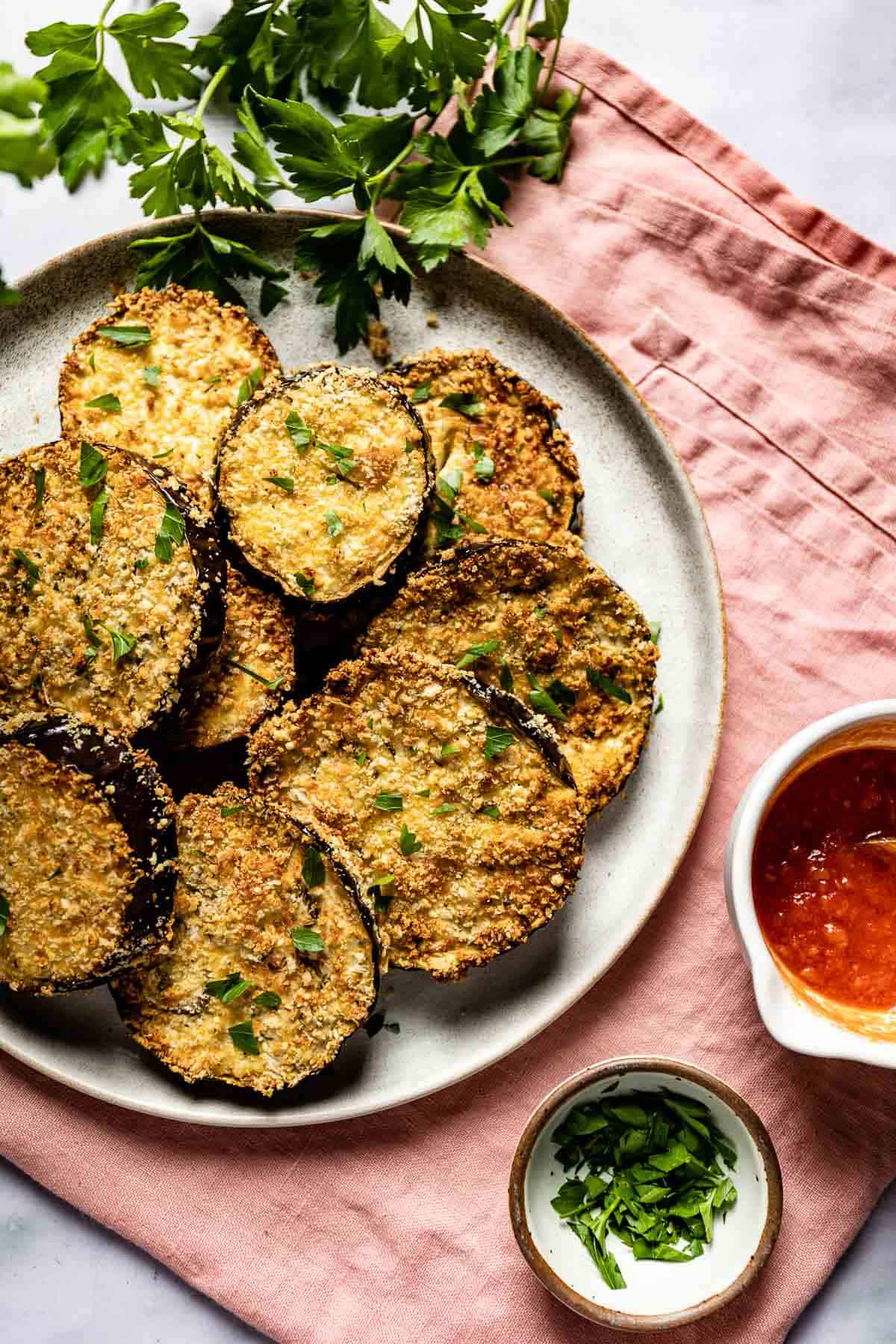
- Roasting vegetables: Because it’s such a flavorful, smooth sauce, hot chili pepper paste is an excellent condiment to drizzle over roasted veggies. I especially love pouring it over a hearty plate of Roasted Butternut Squash or Roasted Eggplant for an extra-bold side.
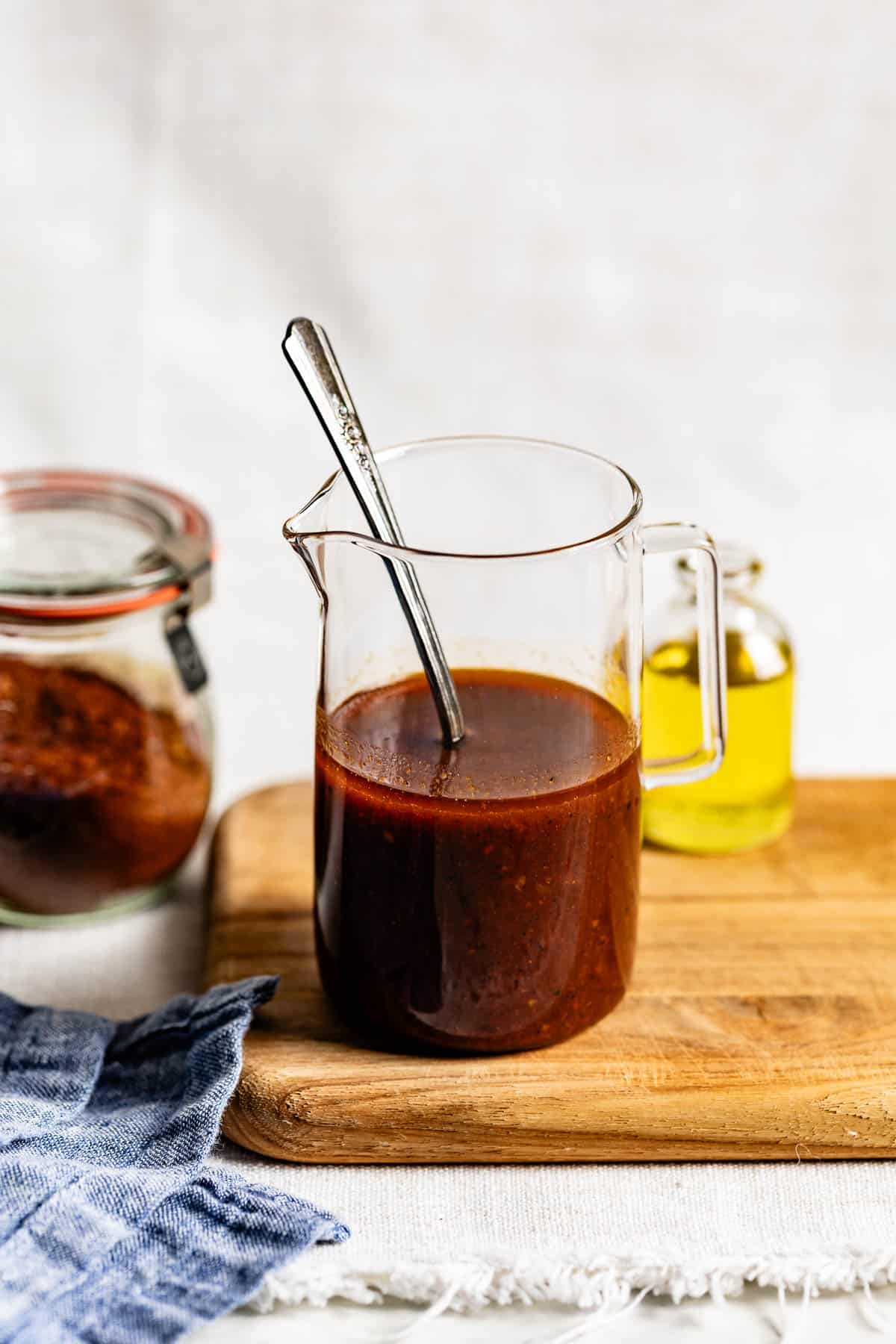
Alternatively, you can also spread it over vegetables before roasting, as I did in my Roasted Harissa Carrots recipe. - Salad Dressing: This harissa hot sauce recipe is a flavorful condiment and a fantastic base for salad dressings. With a few simple ingredients, you can even make a tangy yet hot Harissa Vinaigrette.
- Grains: Give a little kick of spice to bulgur, quinoa, or couscous by mixing in a couple of tablespoons in the cooking liquid.
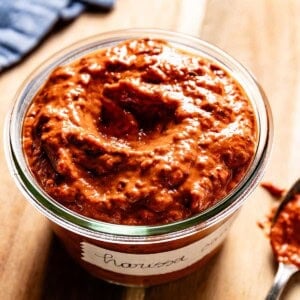
Harissa Sauce Recipe
Ingredients
- 8 dried chilis, I used 3 guajillo chili peppers, 3 Ancho chili peppers, and 2 Arbol chili peppers*
- 1 cup boiling water
- 1 ¼ teaspoon ground cumin
- 1 ¼ teaspoon ground coriander
- 1 teaspoon caraway seeds
- 2 whole roasted red peppers, from jarred – drained
- 3 garlic cloves
- 1 teaspoon kosher salt
- 1 teaspoon paprika, you can use sweet Spanish paprika or smoked paprika
- 1 tablespoon tomato paste, optional
- 3 tablespoons lemon juice
- ⅓ cup extra virgin olive oil
- ¼ teaspoon cayenne pepper, optional
Instructions
- Place the dried chilies in a medium-sized bowl and add the boiling water.
- Place a small plate on top to keep the chilies submerged and to rehydrate them. Let them steep for 30 minutes, and then drain.
- Remove the stems and deseed all the chili peppers. You can remove all of the seeds or keep some for added heat, depending on your preference.
- Place the chili peppers in the food processor (or blender). Add the ground cumin, coriander, caraway seeds, roasted red pepper, garlic, kosher salt, paprika, tomato paste, lemon juice, olive oil, and cayenne pepper.
- Pulse until pureed and smooth.
- Place in an airtight container and refrigerate if not using right away.
Video
Notes
- Yields: This recipe makes approximately 1 cup of harissa. The values below are for the whole recipe.
- *Dried chilies: Use this recipe as a starting place, but feel free to use different types of dried chilies to make this sauce.
- Storage: To store your harissa sauce, transfer it to an airtight container or jar and store it in the refrigerator for 2-3 weeks. I also recommend pouring a thin layer of olive oil over the top of the sauce before storage to prolong its shelf life, as this layer will help limit exposure to oxygen and bacteria.
- Freezing: This red harissa recipe can be frozen for up to one month in an airtight, freezer-safe container. For easier portion sizes, pour your sauce into an ice cube tray, freeze until solid, and then transfer the individual cubes into a Ziplock bag.
- Thawing: To thaw frozen harissa, place it in the fridge overnight or until ready to use.
- A note on consistency and texture: In its original Tunisian form, harissa has a smooth and thick consistency. However, harissa has since taken on other commercialized forms, like “harissa sauce” (which has a thinner, sauce-like texture) and “harissa paste” (which is thicker and less liquidy). Though these terms technically refer to the same thing, you can still adjust the consistency by adding more or less olive oil, depending on your desired thickness. During my recipe testing, I compared my homemade version to commercial brands (like Trader Joe’s Harissa, NY Shuk, and Mina ) and thought ⅓ to ½ cup of olive oil was a good place to start, but again, feel free to adjust it to your taste buds.
Nutrition
Nutrition information is automatically calculated, so should only be used as an approximation.











This turned out better than the ones I usually buy at the store. Good recipe.
This is music to my ears Andres. Thank you so much for taking the time to leave a review.
Excessively complex and includes types of chillies that are not found in the Middle East. If you want a classic recipe, look at Otto Lenghi
Hello Henrietta,
Thank you for sharing your perspective. You are right that traditional harissa originates from North Africa (Tunisia specifically) and uses regional dried chilies that can be hard to find in the US.
Since most of my readers are based here, I used widely available dried chilies like guajillo, ancho, and de arbol, which give you a similar depth and heat profile. The post notes that you can swap in different chilies based on what you have access to, so if you can find more traditional varieties, I would encourage you to use them. As for Ottolenghi, I am a big fan of his work too! I am sure his version is wonderful.