
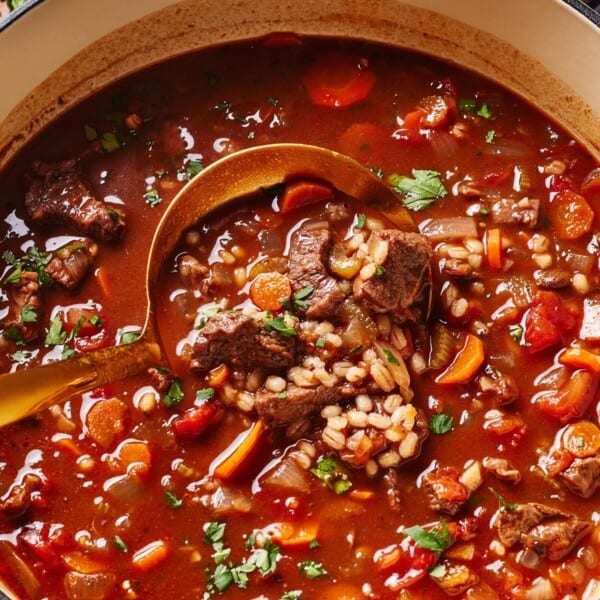

Why This Version Succeeds Where Other Recipes Fall Short

A big pot of beef soup on the stove is one of the coziest things during the colder months, and beef and barley soup is a true classic.
The problem is that many versions end up with mushy barley, dry beef, or a soup that’s either too thick or a little bland.
Over the last few years, I’ve made it my mission to develop a recipe that avoids those exact issues. After many tests, I am here with my version of the best beef and barley soup. Here are the reasons why:
- Chuck roast stays tender during a long simmer. I cut a whole chuck roast myself (instead of buying precut stew meat made up of odds and ends of leftover cuts), so the pieces cook evenly, stay juicy, and taste consistent throughout the soup.
- Barley is added later (after the meat is browned and veggies cooked) to prevent it from turning mushy. It gets just enough time to cook through while keeping a nice texture.
- A splash of apple cider vinegar keeps the soup from tasting bland. It balances the richness of the beef and the earthiness of the barley.
- Simmering with the lid slightly ajar helps control thickness. Keeping the lid ajar lets excess moisture escape slowly so the soup thickens naturally without becoming gluey or overly dense.
Ingredients for Beef Barley Soup
While you can find the full list of ingredients in the recipe card below, here are a few helpful notes to guide you as you prepare the soup and make it your own.
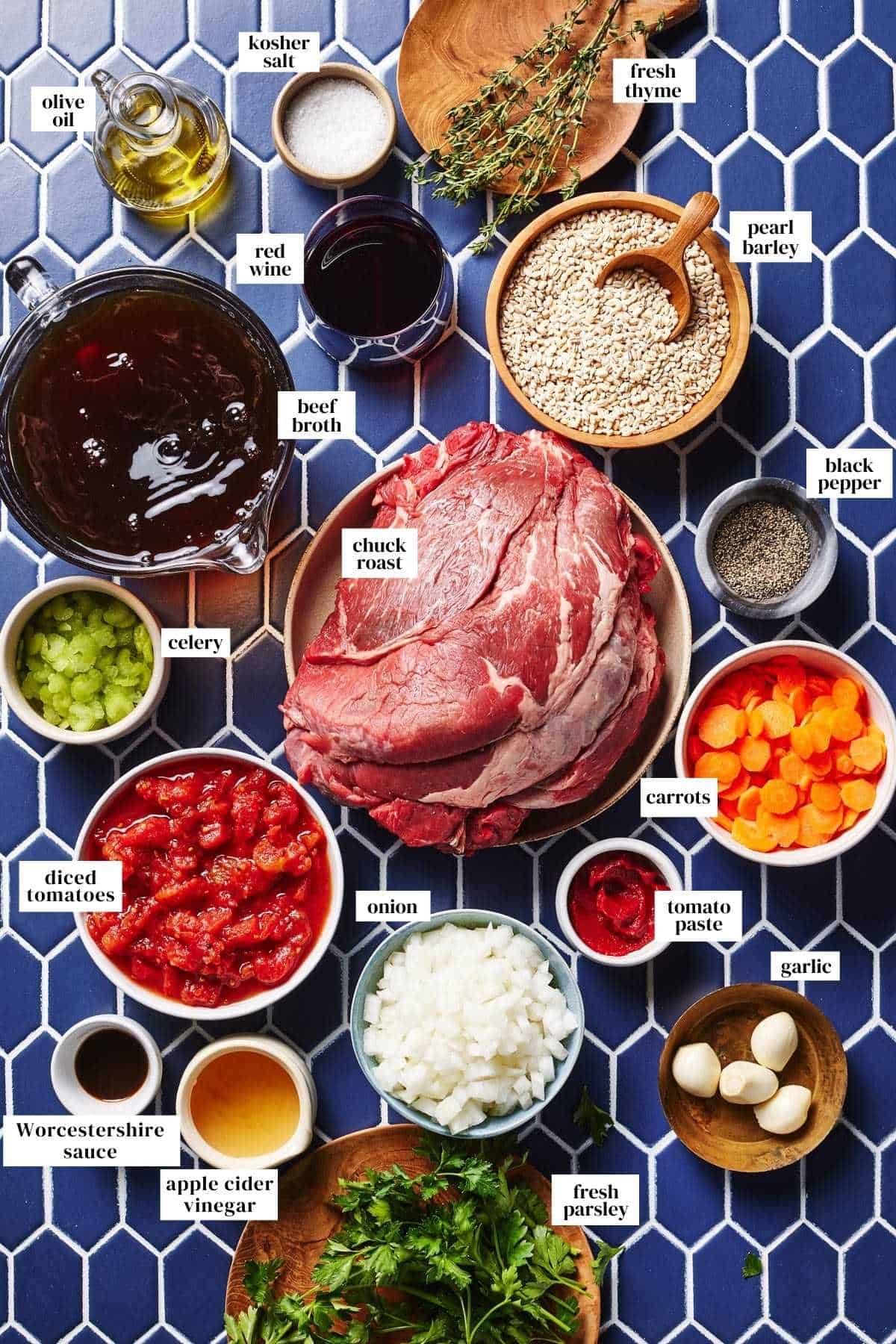
Choosing The Right Meat
Chuck roast: Chuck roast is my go-to cut for beef barley soup because it is well-suited for longer cooking times. Cut from the shoulder, it contains plenty of connective tissue that slowly breaks down as the soup simmers, resulting in fall-apart tender, rich bites of beef.
Wouldn’t it be better (and more time-saving) to buy already-cut stew meat instead? It might seem easier to buy pre-cut stew meat, and yes, it does save you a few minutes.
But I still like to cut my own because most store-bought stew meat is usually a mix of different cuts that cook at different times. Some pieces turn tender while others stay tough.
Starting with one cut, like chuck roast, and cutting it into ½-inch cubes yourself helps everything cook evenly and stay tender.
Vegetable oil: You can use olive oil or any neutral oil, such as avocado oil, to sear the meat. The goal is to use an oil with a higher smoke point so the beef browns properly without burning.
For the Soup + Tips on Buying Barley
Pearl barley: When shopping for barley, be sure to choose pearl barley rather than hulled barley. Pearl barley differs in that its outer bran layer is removed, allowing it to cook more quickly and develop a tender, slightly chewy texture that works especially well in soups and stews.
Hulled barley can be used, but it takes much longer to cook.
Vegetables: We are using chopped onion, carrots, and celery, the classic combination of veggies that pretty much any meat soup recipe like this uses. As you are chopping them, take your time to cut them into even pieces so they cook evenly.
Beef broth: You can use homemade beef stock or buy it from the store. If you choose to use store-bought, get low-sodium beef broth so you can easily control the salt level in your soup.
Selecting Your Broth: For the richest flavor, I recommend choosing a beef broth that lists real beef bones or beef stock as the first ingredient rather than “beef base” or artificial flavorings.
I tested this recipe with Kettle & Fire, and it worked beautifully.
Alternatively, you can use chicken stock. I have also tested this recipe with my homemade chicken stock, and while the color was slightly lighter, the soup was still delicious and satisfying.
Red wine: A medium-bodied red wine, such as Pinot Noir or Merlot, enhances the soup’s subtle, earthy flavor.
Can I make this soup without alcohol? Yes, for an alcohol-free barley beef soup recipe, you can substitute an equal amount of beef broth for wine.
Diced tomatoes: I use one 14-ounce can of diced tomatoes (unsalted) to add just a hint of acidity and subtle sweetness to the soup without overpowering it.
Worcestershire sauce: This classic seasoning adds a subtle umami depth to the soup. Its savory, slightly tangy notes help balance the richness of the beef.
Fresh herbs: I use a few sprigs of fresh thyme, tied together with kitchen twine so they are easy to remove before serving. I also add a handful of fresh chopped parsley at the end for a vibrant finish. You can use dried herbs in a pinch, but I would use no more than a teaspoon of dried thyme as a substitute.
Apple cider vinegar (optional): While optional, a splash of an acidic ingredient, such as vinegar or lemon juice, is my secret move to take this beef and barley soup from good to great. It adds a nice tang that helps balance the rich flavors of the beef and earthy flavors of all the veggies in the soup.
How to Make Beef Barley Soup (Step-by-Step)
This homemade beef barley soup comes together in one pot, making it both simple to prepare and easy to clean up. I highly recommend having all your ingredients ready before you start. Here is how I make it:
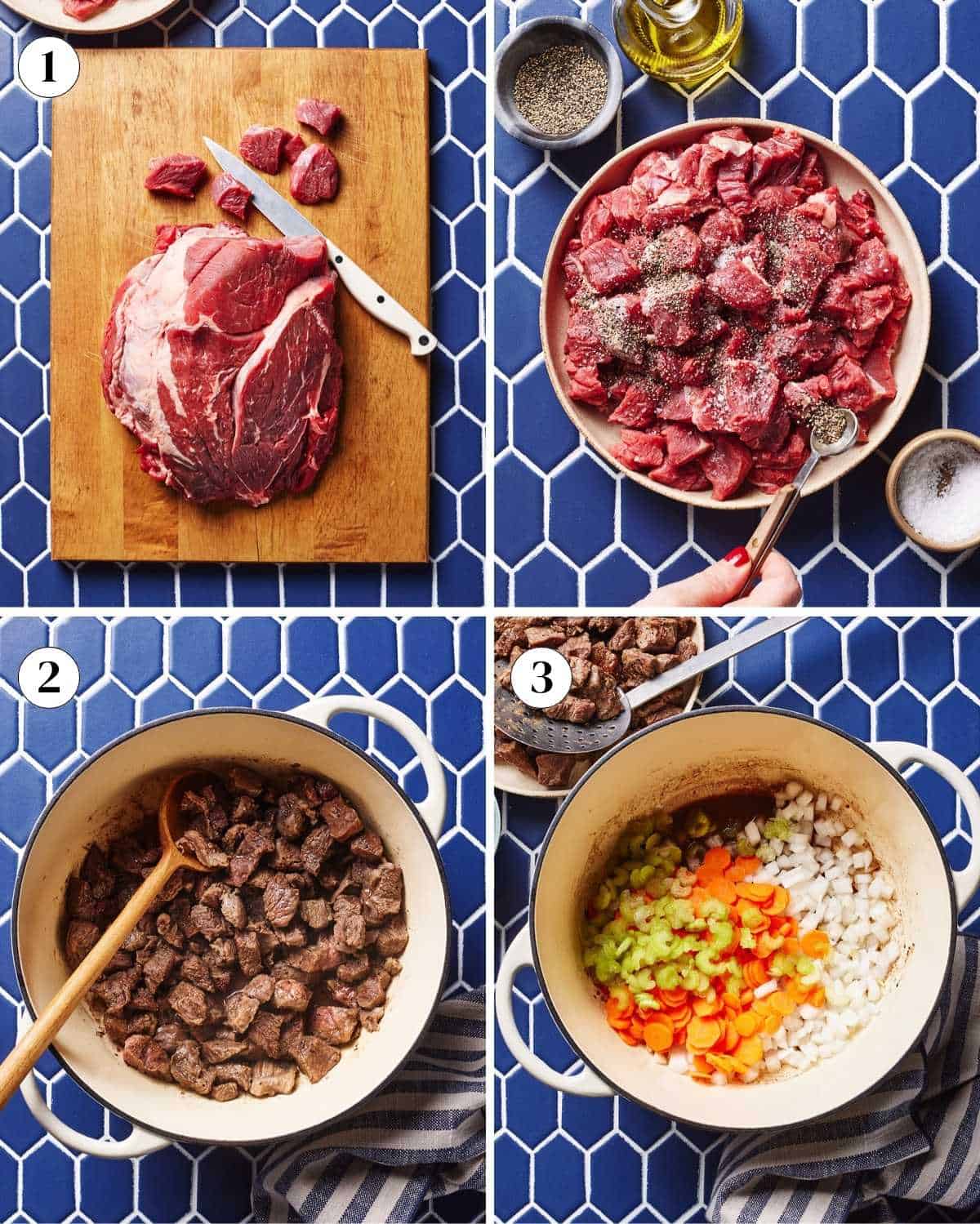
Step 1 – Prepare the beef: Using a sharp knife, cut the meat into ½-inch cubes. You can cut them larger (about 1-inch cubes) if you prefer more stew-sized meat in your soup. It is a personal preference.
Then, pat the beef really well with paper towels on all sides so it browns instead of steaming, which is what gives you that deep, rich base in the soup. Once it’s dry, season all sides with salt and pepper so every piece is properly seasoned from the start.
Step 2 – Sear the meat: Heat the oil in a large Dutch oven (at least 5.5 quarts) over medium-high heat until it shimmers. Add the beef in an even layer. Since we’re using a large Dutch oven with a rather large surface area and the beef is cut into small pieces, we can add all the meat at once.
Spread it out in an even layer as much as possible. Let it cook undisturbed for a minute or two before stirring, which gives it a chance to brown, which is imperative for building that rich meat flavor that this soup is known for.
But wait, there is so much liquid in the pan? During my recipe testing, I quickly found out that at this stage, the meat releases some of its juices as it cooks, and that’s okay.
As you let it cook and stir, some of it cooks off, and the meat starts to brown. The key is to continue stirring every few minutes so all sides get a chance to brown. It takes about 6-10 minutes (depending on your meat), so be patient.
Also, keep in mind that they will shrink as they cook.
Once done, transfer the now-seared beef to a plate and cover it with foil to keep it warm. Do not wash the pot!
Step 3 – Cook the vegetables: Using the same large pot, add the diced onion, sliced carrots, and sliced celery. Cook them over medium-high heat, stirring frequently, for about 10 minutes, or until they soften and start to release their natural sweetness.
Pro Tip: I usually don’t add extra oil at this stage since chuck roast is well-marbled and leaves enough fat in the pot to cook the vegetables. That said, if the pot looks dry, feel free to add a tablespoon of olive oil to help them sauté evenly.
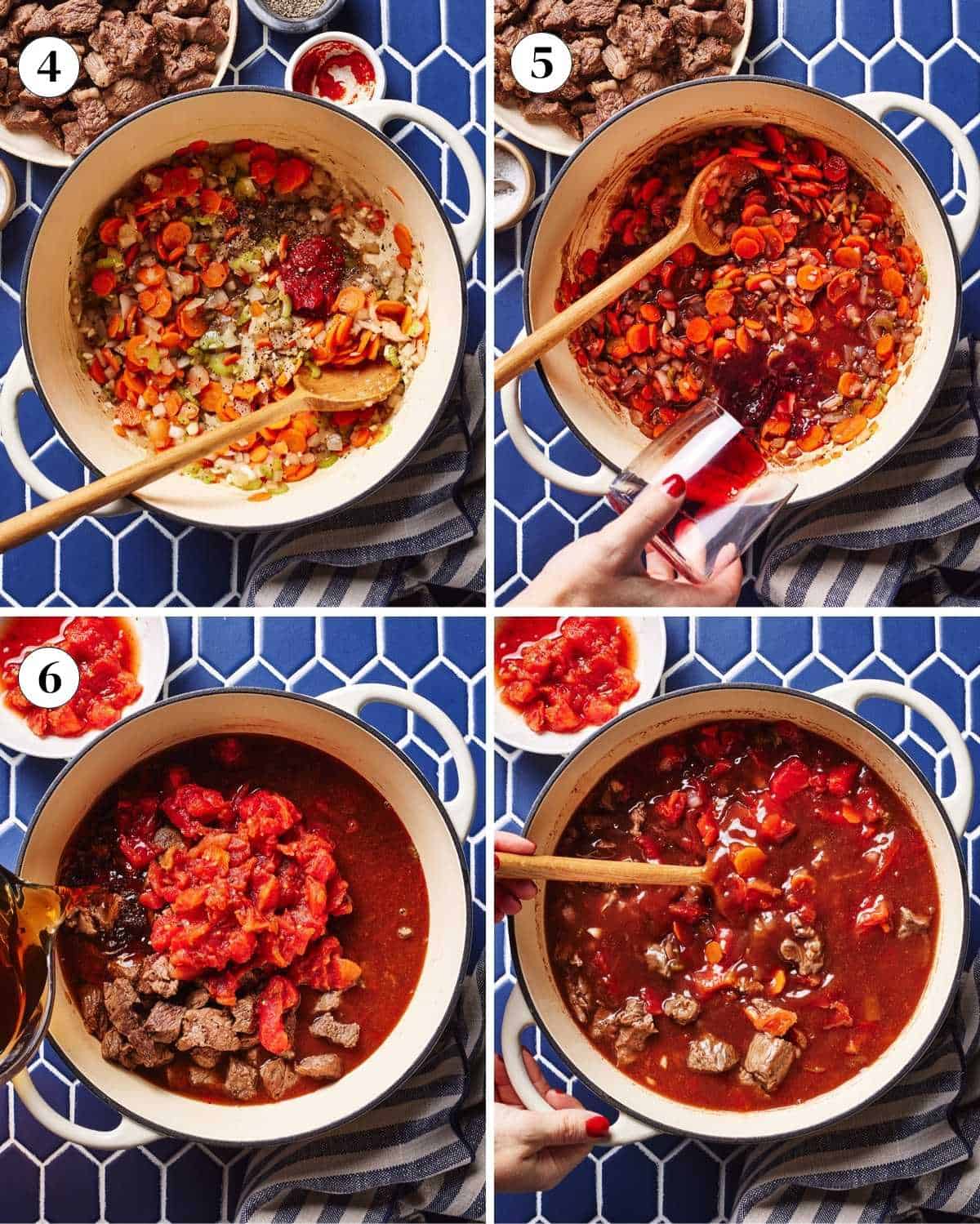
Step 4 – Add the aromatics: Add the minced garlic and sauté for about 30 seconds, just until fragrant. Keep an eye on it, as garlic can burn quickly. Stir in the tomato paste, salt, and black pepper and cook, stirring constantly, for about 1 minute.
Step 5 – Deglaze the pot: Pour in the red wine, then use a wooden spoon to gently scrape up the browned bits from the bottom of the pot. Those bits hold a lot of flavor, and the wine helps lift them while adding depth to the soup.
Let it simmer for a minute or two, so some of the alcohol cooks off and further concentrates before we move on to the next part.
Step 6 – Add the broth: Return the seared beef to the pot along with any juices collected on the plate (those juices are pure flavor, so don’t skip them). Add the beef broth, diced tomatoes, and the thyme sprigs tied together with kitchen twine.
Give everything a good stir, then reduce the heat to medium-low. Let the soup simmer, partially covered, for 30–45 minutes, allowing the beef to slowly tenderize while the flavors come together.
Step 7 – Add barley and finish cooking: Stir in the pearl barley and Worcestershire sauce, and let it simmer until the barley is tender, about 45-55 minutes.
You’ll notice the barley absorbs liquid as it goes, so check on the soup and give it a stir about every 15 minutes to prevent it from sticking to the bottom. The barley is ready when it’s tender but still has a slight bite.
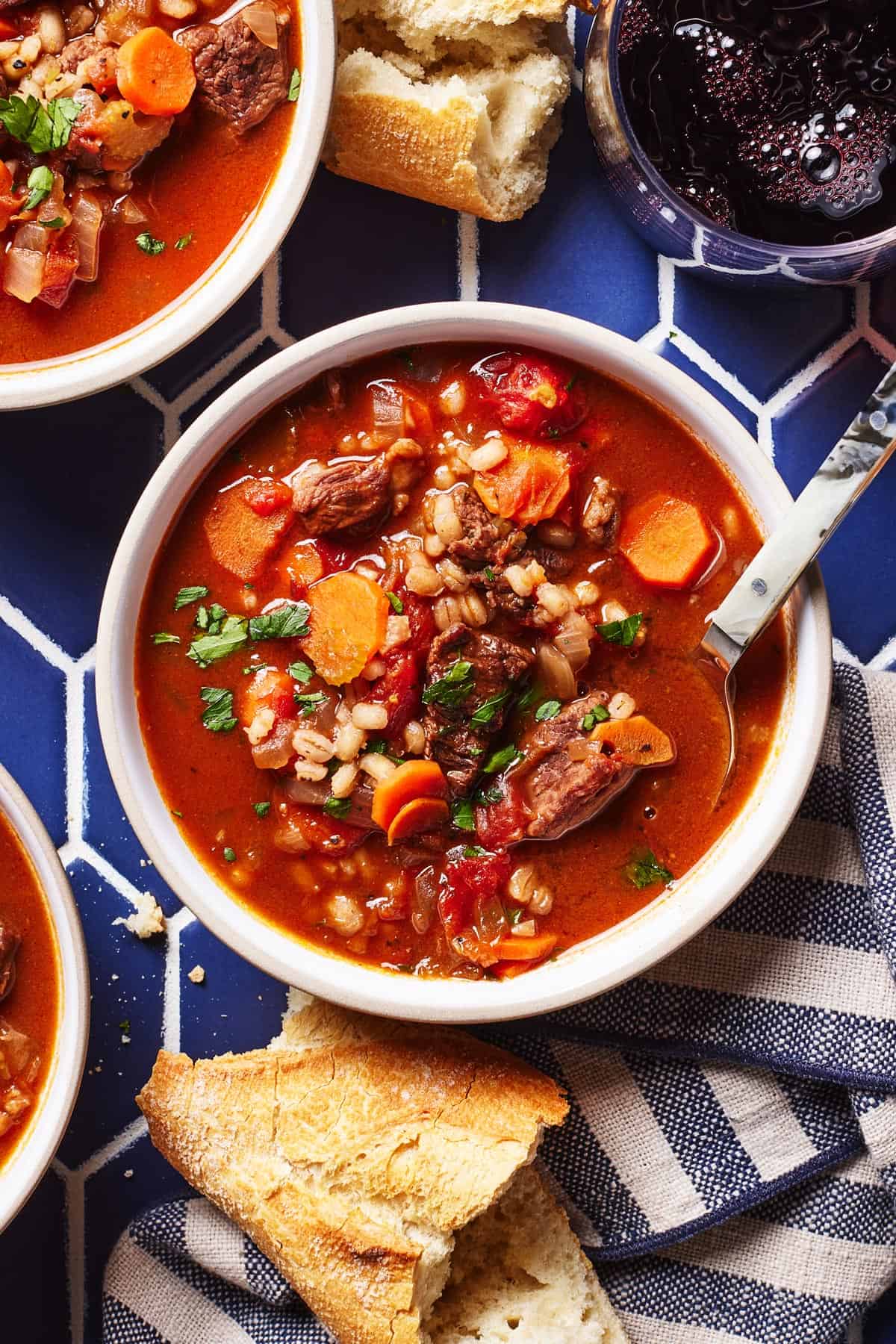
Step 8 – Season and serve: Remove the thyme bundle and stir in a splash of apple cider vinegar. Give it a taste and adjust the seasoning as needed, then finish with a sprinkle of fresh parsley and serve while hot.
Expert Tips for the Best Beef Barley Soup Recipe
Making beef barley soup doesn’t have to be complicated, but a few small details can make a big difference in the final result. These are the tips I rely on every time to make sure the soup turns out just right:
Keep an eye on the consistency: As the soup simmers and the barley cooks, you might notice the liquid reducing quite a bit. This is completely normal. I usually keep the lid slightly ajar to minimize evaporation. You can also move the pot to the simmer burner (or to the smallest heat source on your stove top) and/or add more water or broth as needed.
Add warm broth, not cold: If you need to thin the soup while it’s cooking or reheating, use warm water or warm beef broth. Adding cold liquid can slow down the cooking process and affect the overall texture.
Check the barley packaging: While pearl barley typically takes about 45-55 minutes to cook, different brands can vary slightly. It’s always a good idea to check the package and use the texture as your guide; the barley should be tender but still have a bit of bite.
Taste at the end: The flavors concentrate as the soup cooks, so it’s best to do your final seasoning right before serving. A quick taste at the end lets you adjust salt or add a splash of acid if needed.
Beef Barley Soup Recipe
Equipment
Ingredients
For The Meat:
- 2 lbs chuck roast
- 1 teaspoon kosher salt
- ½ teaspoon ground black pepper
- 2 tablespoons vegetable oil, such as olive oil or avocado oil
For The Soup:
- 1 onion, 340g/3 cups, roughly chopped
- 3 carrots, 180g/1 ½ cups, peeled and sliced thinly
- 2 stalks celery, about 1 cup, sliced thinly
- 4 garlic cloves, finely minced
- 3 tablespoons tomato paste
- 1 teaspoon kosher salt
- ½ teaspoon ground black pepper
- ½ cup red wine
- 7 cups beef broth, plus more as needed
- 1 14- ounce can diced tomatoes
- 3-4 sprigs fresh thyme, tied with kitchen twine
- 1 cup pearl barley
- 1 tablespoon Worcestershire sauce
- 2 tablespoons apple cider vinegar, optional
- ½ cup fresh parsley, roughly chopped plus more for garnish
Instructions
- Using a sharp chef’s knife, cut 2 lbs of chuck roast into ½-inch cubes. Pat them dry using a sheet of paper towel.
- Season the cubed beef with 1 teaspoon kosher salt and ½ teaspoon of black pepper on all sides. Set aside.
- Heat two tablespoons of olive oil in the Dutch oven over medium-high heat until it shimmers.
- Add the beef cubes and brown them on all sides for about 6-7 minutes, about a minute or two per side. Transfer them onto a plate, cover it with aluminum foil, and set it aside. Do not wash the pot.
- Add 3 cups chopped onion, 1 ½ cups of carrots, and 1 cup celery to the pot and cook on medium-high heat, until softened, stirring frequently, for about 10 minutes.
- Add the 4 minced cloves of garlic and cook for 30 seconds.
- Add 3 tablespoons of tomato paste and cook, stirring constantly for about a minute or so. Season with 1 teaspoon of kosher salt and ½ teaspoon of black pepper.
- Stir in ½ cup of red wine and scrape any brown “bits” at the bottom of the pot using a wooden spoon.
- Add the browned beef (with all the juices), 7 cups of beef broth, one 14-ounce can of diced tomatoes, and 3-4 sprigs of fresh thyme. Give it a stir, place the lid ajar, and bring it to a boil. Then, turn the heat down to medium-low and let it simmer for 30-45 minutes or until your meat is fully cooked and tender.
- Next, stir in 1 cup pearl barley and 1 tablespoon of Worcestershire sauce.
- Let it simmer, with the lid ajar, for 45-55 minutes, keeping a close eye on it and stirring occasionally, until the pearl barley is tender but has a slight “bite”.
- Turn the heat off, remove the thyme bundle, and stir in 2 tablespoons of apple cider vinegar if using. Taste for seasoning and add more if necessary.
- Add ½ cup of chopped fresh parsley and serve right away.
Video
Notes
- Yields: This recipe makes about 11-12 cups of soup, enough to serve 6 adults. The nutritional information below is per serving.
- Consistency of the soup: As the soup simmers, you’ll see some of the liquid evaporate, resulting in a thicker soup. I recommend keeping the lid slightly ajar while simmering to prevent too much liquid from evaporating. This helps maintain the soup’s rich flavor without diluting it. Still, you can add more broth or water for a thinner consistency. However, be sure to add warm liquid to keep the soup’s temperature consistent.
- Storage and freezing: You can store the leftovers in an airtight container in the fridge for up to 4-5 days and in the freezer for up to 3 months. Just be sure to bring it to room temperature before storing it. Thaw it overnight in the fridge.
- Reheating: Transfer the leftovers to a saucepan, add a cup (more or less) of water or broth, and warm on medium heat, stirring regularly.
- Slow cooker beef and barley soup: If you’re looking for a more hands-off approach, or want to make it ahead, you can cook this soup in your crockpot. The process is similar but with a few key differences. Simply:
- Sear the meat, set it aside, sauté the vegetables, and cook the wine while scraping up those browned bits.
- Store the meat and veggies separately in airtight containers in the fridge overnight.
- In the morning, transfer everything to a slow cooker, along with the rest of the ingredients. Cook it on low for 7-9 hours or high for 4-5 hours until the meat is tender. If you can, stir it a few times during the process.
- When done, stir in the apple cider vinegar and parsley right before serving.
Nutrition
Nutrition information is automatically calculated, so should only be used as an approximation.
Storage, Freezing, and Reheating
One of the great things about this vegetable beef barley soup is that it tastes even better the next day as the flavors develop and meld, so you can make a big pot as a part of your meal plan and enjoy it throughout the week.
Here is how I do it:
Storing leftovers: Let the soup cool to room temperature, then transfer it to an airtight container. It will keep well in the refrigerator for 4-5 days. As it sits, the soup will thicken since the barley continues to absorb liquid. When reheating, add a splash of broth (or water) to thin it out.
Freezing: Once it comes to room temperature, transfer it to freezer-safe containers and freeze for up to 3 months. When you’re ready to enjoy it, thaw it overnight in the fridge for the best texture and flavor.
Reheating: To reheat, transfer the soup to a saucepan and warm it over medium heat, stirring occasionally. Since it thickens as it sits, add a small amount (no more than ¼ cup) of water or beef broth as needed to loosen it.
Pro-Tip for Meal Prepping: If you are making this as a part of your meal prep, I recommend slightly undercooking the barley (about 5 minutes). This way, it will reach perfect tenderness during reheating.
Variations & Substitutions
What I love most about this recipe for beef barley soup is that it is easily adaptable with whatever you have on hand. Here are some substitution and variation ideas to make this soup your own:
Other types of beef: When it comes to meat choice, you have options:
- Other cuts: Instead of chuck roast, you can also use boneless short ribs, beef shank, or brisket, all of which work for slow cooking.
- Beef stew meat: You can use pre-cut packaged beef stew meat from most grocery stores, but be sure to check that it’s sourced from the same cut, such as chuck roast, rather than a mix of random trimmings from different leftover cuts. Doing so ensures that you end up with evenly cooked meat with a similar texture and taste.
- Ground beef: You can use ground beef for a quick and easy beef barley soup. This version, often called hamburger barley soup, allows you to skip the longer cooking time required for tougher cuts. Simply sauté the ground beef (hamburger meat), then cook the vegetables in the same pot.
- Already cooked (leftover) beef: If you have some leftover roast, prime rib, or beef tenderloin, you can cut them into bite-sized chunks and use them in this veggie beef barley soup. Since the leftover meat is already cooked, you can skip sautéing it at the beginning and add it when you add the broth.
Additional vegetables: Parsnips, turnips, mushrooms, peas, green beans, or leeks would all be delicious additions. And if you want to sneak in some greens, you can stir in a handful of baby spinach or even kale at the very end.
Spices: While I kept the recipe simple with salt and pepper, you can enhance the flavors and bring warmth to your soup by adding a small amount of ground cumin, ground coriander, sweet paprika, and a few bay leaves. These additions add depth to the broth without overpowering the overall flavor.
FAQs
Barley usually turns mushy if it’s added too early or cooked for too long. Pearl barley needs time to soften, but it should still have a slight bite. To avoid this, add it after the beef has had time to tenderize and keep an eye on the simmer so it doesn’t overcook.
The best cuts of beef for beef barley soup are those that can handle longer cooking times, such as chuck roast, short ribs, beef shank, or brisket. These cuts contain connective tissue that breaks down as the soup simmers.
If you are using pearl barley, it typically takes about 45-55 minutes to cook in soup. The exact timing can vary slightly by brand, so it’s best to check the packaging for exact timing and use its texture as your guide.
No, there’s no need to cook the barley beforehand. Pearl barley is added uncooked and cooks directly in the soup, absorbing flavor from the broth as it softens.
Yes, but keep in mind that quick-cooking barley has a much shorter cooking time, usually 10-15 minutes, since it’s partially pre-steamed. If using it, add it toward the end of cooking to prevent it from becoming overly soft or mushy.
What to Serve With Beef Barley Soup
While this barley vegetable beef soup is excellent on its own, here are my favorite pairings:
- Bread: Serve it with a loaf of crusty bread such as sourdough, our No Knead Artisan Bread, or even my 15-minute Air Fryer Garlic Bread to soak up all the juices.
- Salad: A light side salad, such as our Greek Cucumber Salad or Spring Mix Salad, gives a refreshing contrast to the rich soup.
- Red wine: Pair it with a glass of Pinot Noir or Merlot for a restaurant-quality dinner at home.
Other Beef Soup Recipes You Might Like
It is no secret that beef soups and stews are the classic winter comfort food. If you are in need of more inspiration, here are a few more recipes:
- Freezer favorite: If you love slow cooker meals, try my Crockpot Vegetable Beef Soup. It’s a set-it-and-forget-it version of classic vegetable beef soup, made with similar ingredients. It’s great for meal prep and freezes well.
- An Old-Fashion Classic: For a quicker but similar soup, try my Vegetable Beef Soup is an old-fashioned favorite that comes together in under an hour.
- Weekend Meal Prep Favorite: If you’re in the mood for a cozy weekend supper, my Eggplant Beef Stew is a slow-simmered stew with pull-apart beef and a rich sauce.
This post may contain affiliate links. If you purchase through these links, I may earn a small commission, at no additional cost to you.












I could never get beef barley soup right before. The barley always sank to the bottom and turned mushy. Then I tried adding it later, and it finally worked. I cannot believe I did not think of that sooner.
I also do not think I will buy pre cut stew meat again. I did not love the idea of cutting the meat myself, but it was worth it. The pieces cooked evenly and stayed nice and tender. This is not a fast recipe, but on a cold winter night, it feels like the best thing to eat.
This is music to my ears Huri. Thank you so much for sharing your experience and taking the time to leave a review.
I tried this on Saturday and omg was it good!! The best part is we had leftovers for Sunday. It was quite simple to make and sooo delicious and filling. I paired it with a few slices of sourdough, would 10/10 recommend.
This is music to my ears Victoria. Thanks for coming by and taking the time to leave a review.