
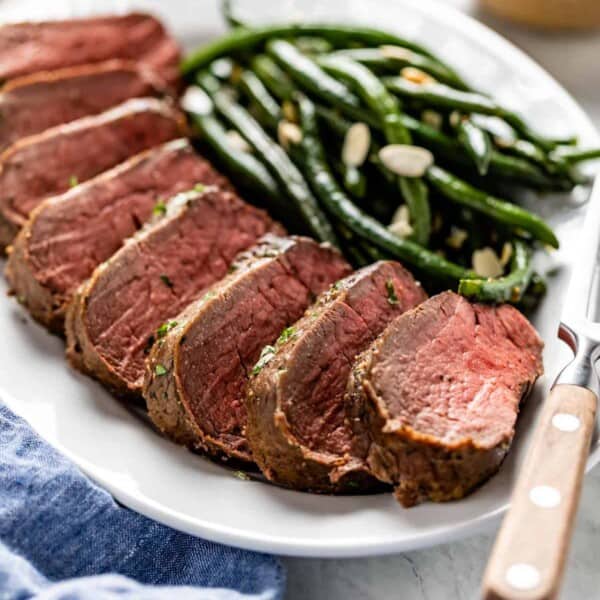
Why This Reverse Sear Beef Tenderloin Works

For a long time, I was intimidated by cooking beef tenderloin. It is such an expensive cut that I was always worried that I would overcook or undercook it. It is embarrassing to admit that I have had many instances where it was perfectly browned on the outside while the center stayed raw.
Most traditional methods start with high heat and then lower the temperature, which can work, but there is still a good chance of overcooking or not cooking the middle enough.
That is exactly why reverse searing changed everything for me. If you are not familiar, Reverse searing is a two-part method in which you begin cooking using one tool, such as an oven, and finish with another, such as a stovetop.
In this reverse-sear beef tenderloin recipe, the tenderloin first cooks in a low-temperature oven (225 °F to 300 °F), so it reaches the exact doneness you want without guessing. Then, a quick sear on the stove gives it a deep brown crust without changing the inside. It is more forgiving; you do not have to hover over it, and the results are evenly cooked from edge to center.
Here is why it works:
- Edge-to-edge pink: Initial slow roasting in a low-temperature oven brings the inside to your exact doneness without overcooking it.
- Full control: Since we cook the meat in a low-heat oven, you have a wider window to reach your preferred level of doneness.
- Better crust: The oven air dries the meat’s surface, and then a quick sear in a hot skillet gives you a perfectly browned crust.
This method is simple, reliable, and grounded in science, first popularized by cooks like J. Kenji López-Alt. Once I learned this method, making beef tenderloin stopped feeling risky and started feeling doable.
If you are ready to try this method, consider this your guide. I will walk you through everything you need to know, from tying the beef properly to choosing the right temperature and how long to cook it, to searing it, and serving suggestions for a showstopping dinner.
Ingredients for Reverse Sear Beef Tenderloin Recipe
Yes, beef tenderloin is a special cut of beef and will require a visit to your local butcher, but the rest of the ingredients are most basic pantry staples.
I listed the full list of ingredients with exact measurements in the recipe card below, but here are a few helpful notes from my recipe testing:
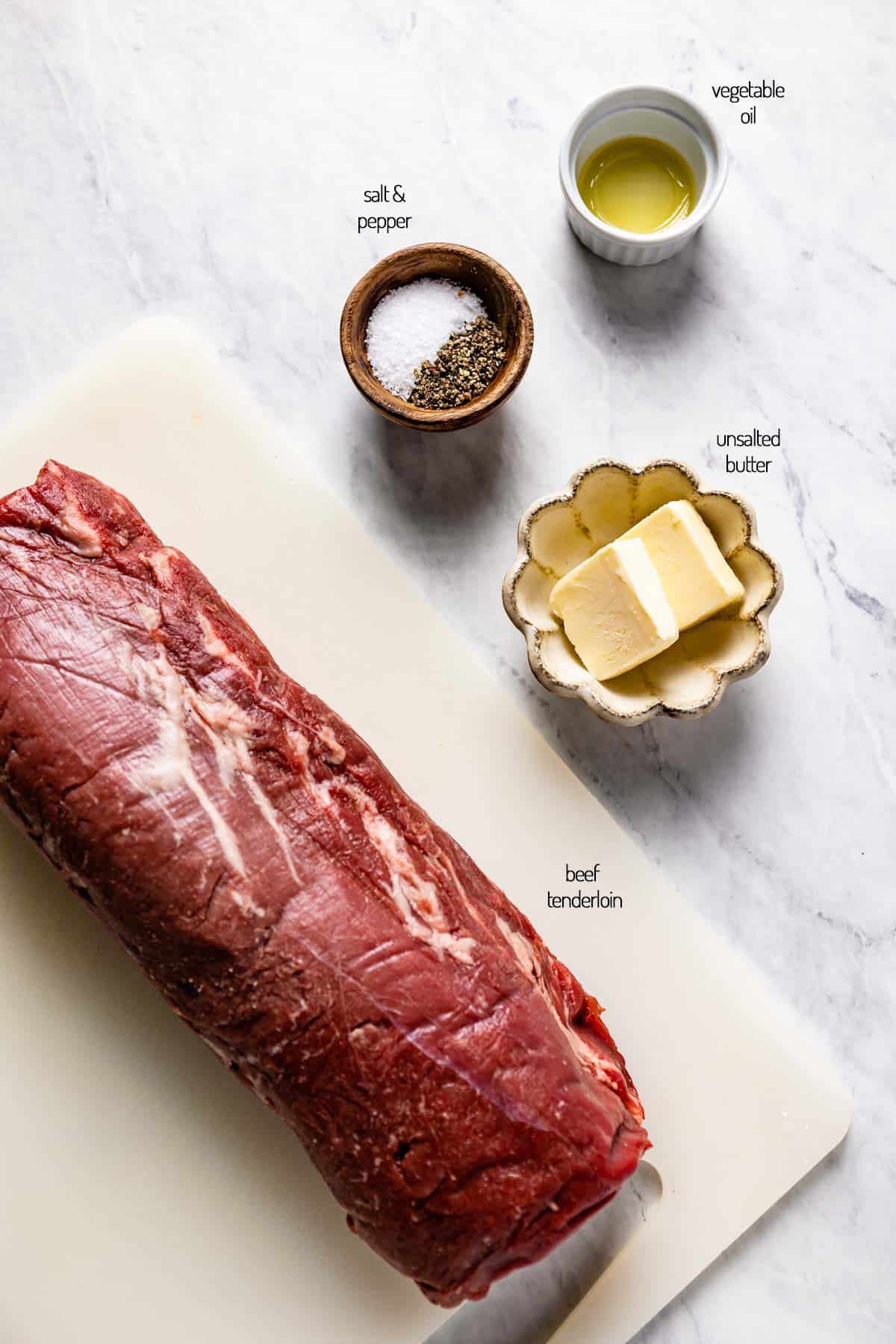
Beef tenderloin: When shopping for it, you may see this cut labeled “Chateaubriand”. It is the same thing.
A trimmed, center-cut beef tenderloin is ideal because it cooks evenly. If it is not trimmed, you can do it yourself using a sharp knife, but I usually ask the butcher to remove the silver skin and excess fat for me.
How much beef tenderloin should I buy? For a main course, a good rule of thumb is to plan for ½-pound (8 ounces) of meat per person. The 2-pound center-cut roast I have here yielded 8 1 ½-inch slices, with 2 slices of beef tenderloin per person, comfortably feeding 4 adults.
Salt & Pepper: I keep the seasoning simple with salt and pepper, because this luxurious cut does not need much to shine.
A note on salt: I used Diamond kosher salt, which tends to be less salty. If you are using Morton’s kosher salt (another nationwide brand) or table salt, use half as much salt.
Still, if you prefer a more herb-forward seasoning, you can use my prime rib seasoning, made by mixing thyme, rosemary, garlic powder, and salt. It is a great all-purpose beef seasoning that would work well in this recipe.
Unsalted Butter: I use unsalted butter so I can control the amount of salt, but salted butter can be used as well. It is imperative that it is at room temperature so that you can easily spread it over the meat.
Garlic (optional): I use a couple of cloves of Roasted Garlic to flavor the butter for my Roasted Garlic Butter, which I spread over the meat after it is cooked (right before serving). However, you can use garlic powder if you prefer a milder flavor. If you are short on time, you can skip the garlic and use plain butter instead.
Oil: A neutral, high-smoke-point oil like avocado oil, clarified butter (AKA ghee), or canola oil gives you an even sear without burning. I would recommend avoiding olive oil here because it can smoke too quickly during the hot sear.
Equipment You Will Need
Sheet Pan fitted with a wire rack: Do you need one? No, but would it be nice? Absolutely, yes, because a wire rack elevates the meat, allowing heat to circulate as it cooks.
Thermometer: The foolproof way to check doneness is using a thermometer. I prefer a probe thermometer for this recipe, as you can leave it inserted in the meat and it will alert you when the meat reaches your desired temperature. Alternatively, you can use an instant-read thermometer.
Kitchen Twine: This is non-negotiable for keeping the roast in a uniform shape from start to finish. Tying the beef ensures it doesn’t spread out, which is the key to getting that consistent, even cook.
How to Reverse Sear Beef Tenderloin (Step-by-Step)
At first, reverse searing might sound like some complicated method, but in reality, it is just a fancy term for cooking the meat in two stages (first in the oven and then on the stovetop).
Follow the steps below to get the best reverse-seared whole beef tenderloin of your life that is evenly cooked from top to bottom with a rich, brown crust:
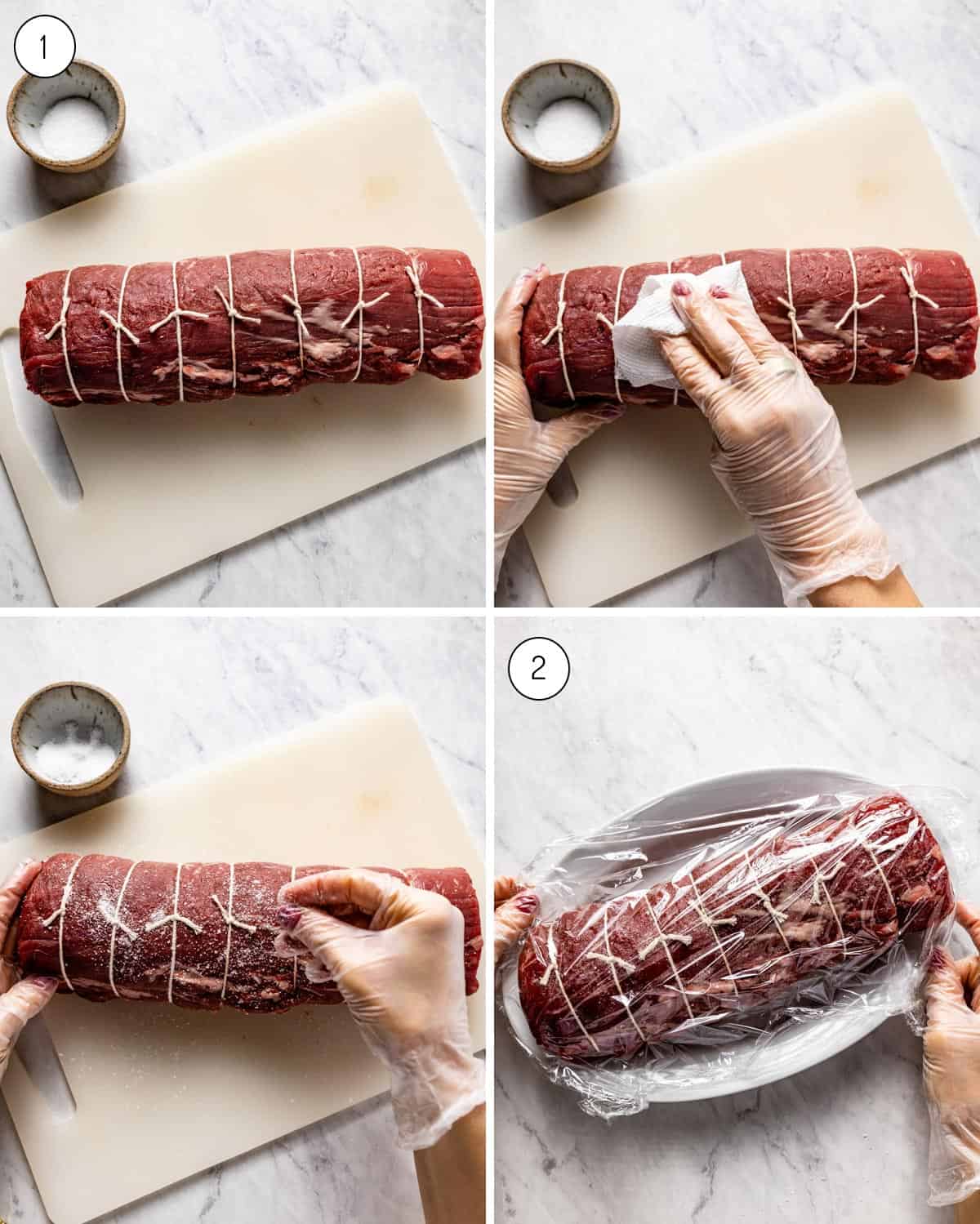
Step 1 – Tie and season the tenderloin: Using kitchen twine, tie the beef tenderloin crosswise at 1½-inch intervals. This is an important step because it helps the tenderloin preserve its shape during cooking, allowing it to cook evenly.
Using a sheet of paper towel, pat the meat dry. Then season it with kosher salt on all sides.
Step 2 – Let it rest: Place it on a plate, cover lightly with stretch film, and allow it to rest at room temperature for 1 hour. This resting period is important because it allows the salt to penetrate into the meat and ensure a perfectly seasoned meat. It also helps bring the meat close to room temperature before putting it in the oven.
It is optional, but an overnight rest is ideal for the ultimate crust. The extra time spent in the fridge helps draw out the moisture, ensuring a much better sear.
If you can plan ahead, you can do this overnight or for up to 2 days. After tying and salting the tenderloin, place it, uncovered, on a wire rack in a sheet pan, then refrigerate it.
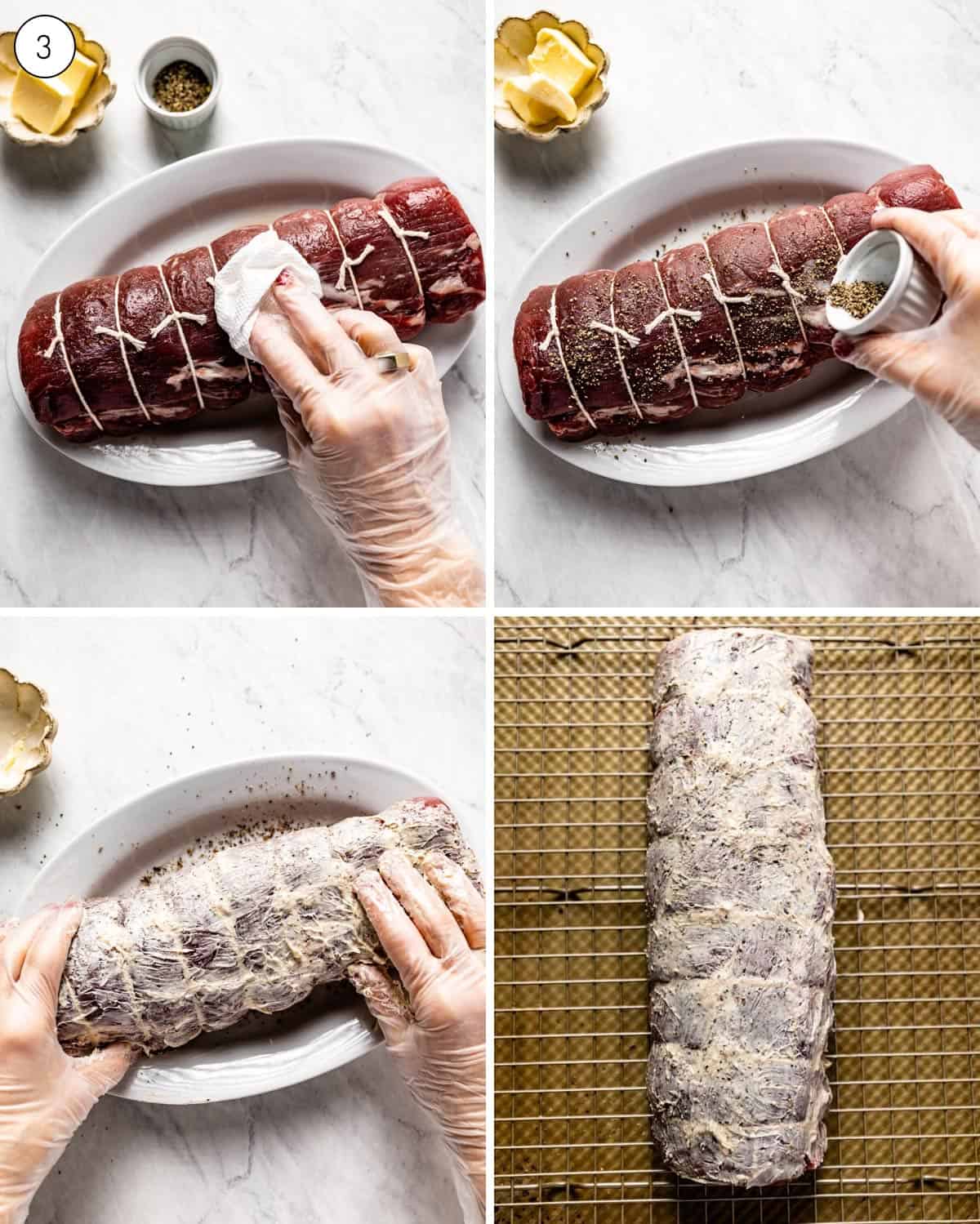
Step 3 – Prep for roasting: Preheat your oven to 300°F (150°C) and set a wire rack over a sheet pan.
Once the tenderloin has rested, pat it dry again to remove any excess moisture. Season with black pepper, then spread the butter over all its sides.
Pro Tip: If you have one, I highly recommend inserting a probe thermometer into the meat, as it will eliminate the need to rely on time and will alert you when the meat reaches your desired temperature.
I like to insert the tip into one end of the meat as far as it goes so the whole probe is in the meat.
If you do not have one, you can use an instant-read thermometer following the timing below.
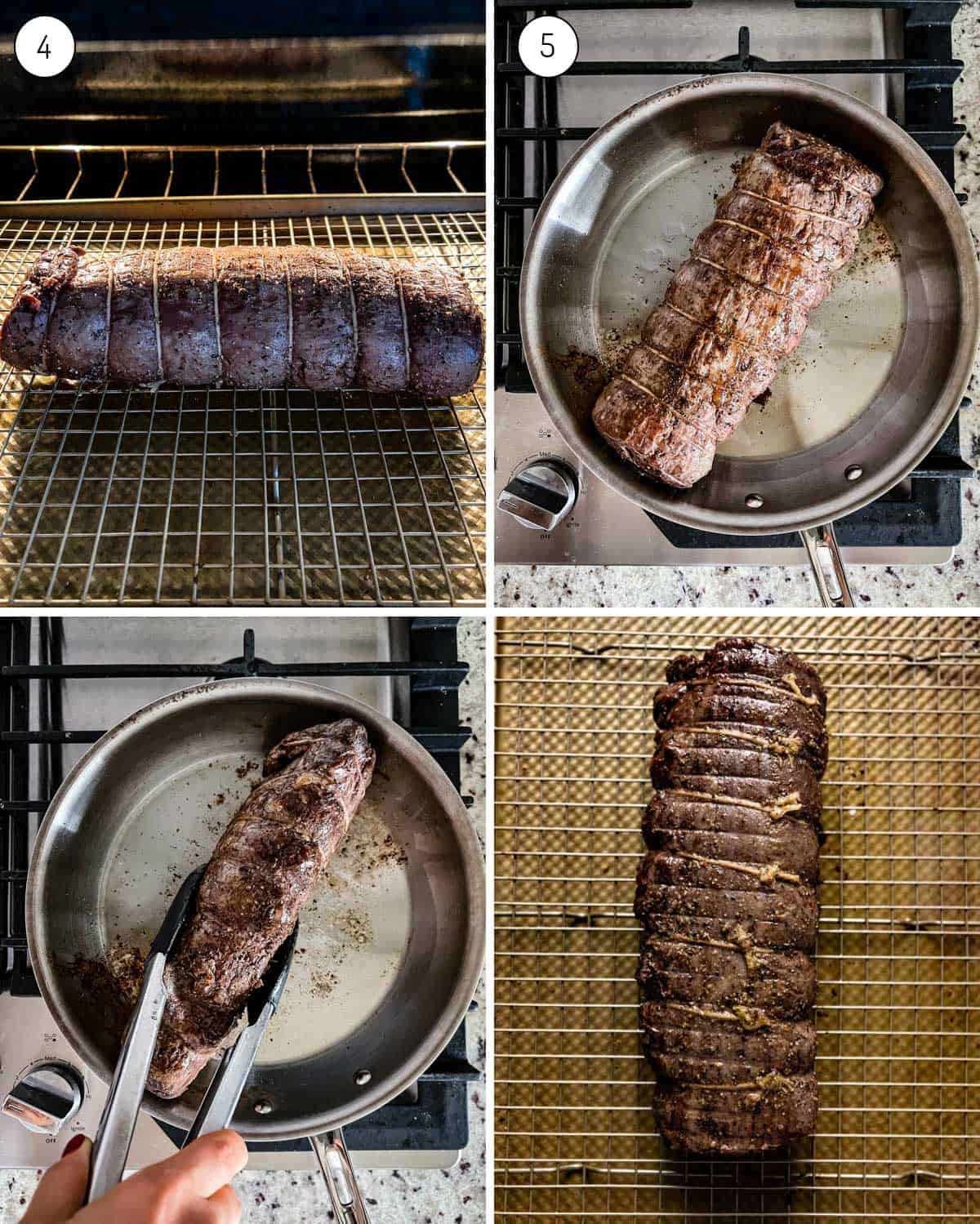
Step 4 – Roast: Place the tenderloin on the wire rack and cook according to your preferred doneness.
How long does it take to cook a 2-pound beef tenderloin?
- Rare: Roast for 45 to 55 minutes, or until the internal temperature reaches 125°F (52°C).
- Medium-rare: Roast for 55 to 65 minutes, or until the internal temperature reaches 135°F (57°C).
- Medium: Roast for 65 to 75 minutes, or until it reaches 145°F (63°C).
Be sure to flip the roast halfway through to keep the center-cut beef tenderloin evenly cooked.
Once ready, remove the roast from the oven and let it rest for 5-10 minutes. Since it was in such a low-heat oven, it does not need to rest for a long time.
Beef Tenderloin Temperature Guide (Reverse Sear Chart): Reverse searing gives you the most control over doneness, but temperature still matters. Use the chart below to choose the internal temperature that matches your preferred texture.
These temperatures reflect the final internal temperature after resting, when the meat has finished carryover cooking.
| Doneness | Pull Temperature (Remove from Oven) | Final Internal Temp (After Rest) | Notes |
|---|---|---|---|
| Rare | 115°F (46°C) | 125°F (52°C) | Soft, bright red center |
| Medium rare (recommended) | 120−125°F (49−52°C) | 135°F (57°C) | Best texture with a dark pink center |
| Medium | 135°F (57°C) | 145°F (63°C) | Firmer but still tender |
| Medium-Well | 145°F (63°C) | 155°F (68°C) | Mostly browned with a hint of pink |
Pro Tip: If you are using a probe thermometer, set your alert to 5–10°F (3–6°C) below the final temperature since the tenderloin will continue to warm up as it rests.
Otherwise, if you are using a digital thermometer, you can check doneness by inserting it in the thickest part of the roast.
Step 5 – Sear on all sides: Heat oil in a cast-iron skillet over medium-high heat until the oil is shimmering or almost smoking.
This is important because our goal is to get a quick sear on the outside, and if the skillet is not hot enough, we might risk cooking it for too long and, as a result, increase the internal temperature.
Once the oil is smoking hot, add the tenderloin and sear for 1 to 2 minutes per side (about 5 to 8 minutes total) until you get a deep brown crust.
Be patient here, let the hot skillet do the work. Do not move the meat too often and rely on visual cues. I like to check it after a full minute to see if it has a nice crust before turning.
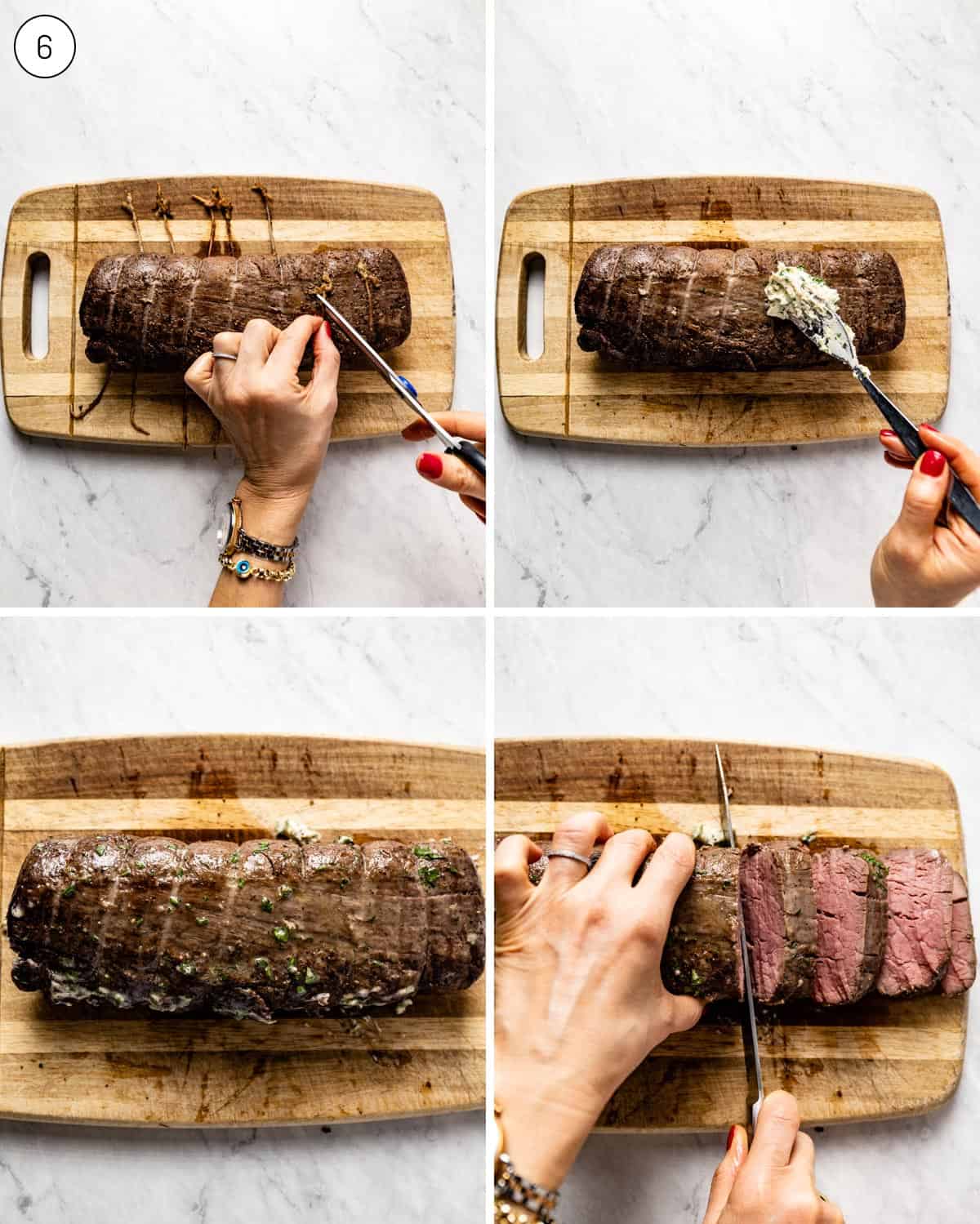
Step 6 – Rest and serve: Transfer the reverse-seared tenderloin to a cutting board, remove the kitchen twine, and spread it with butter (or roasted garlic butter, if using). Let it rest, uncovered, for 10 to 15 minutes so the juices stay inside.
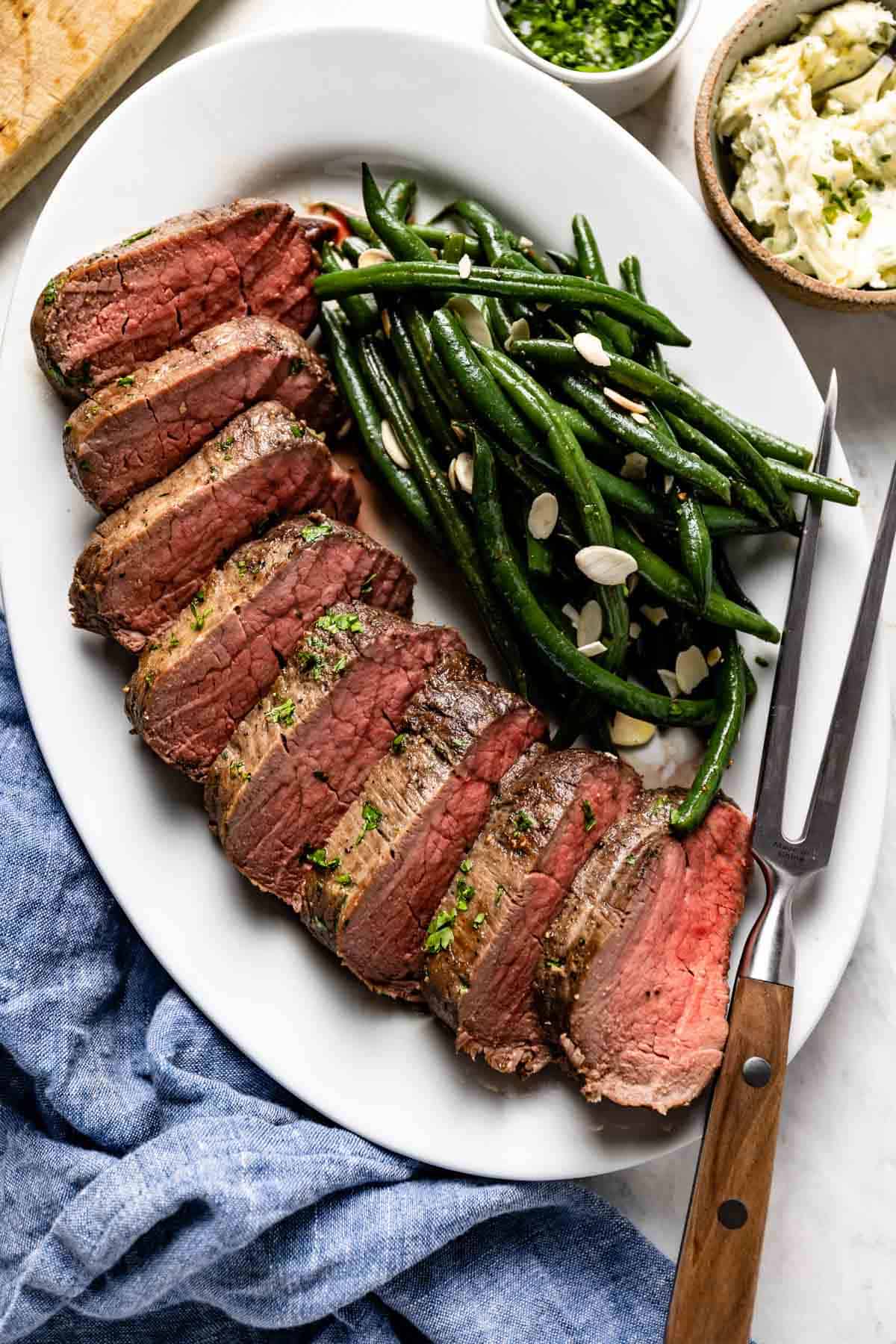
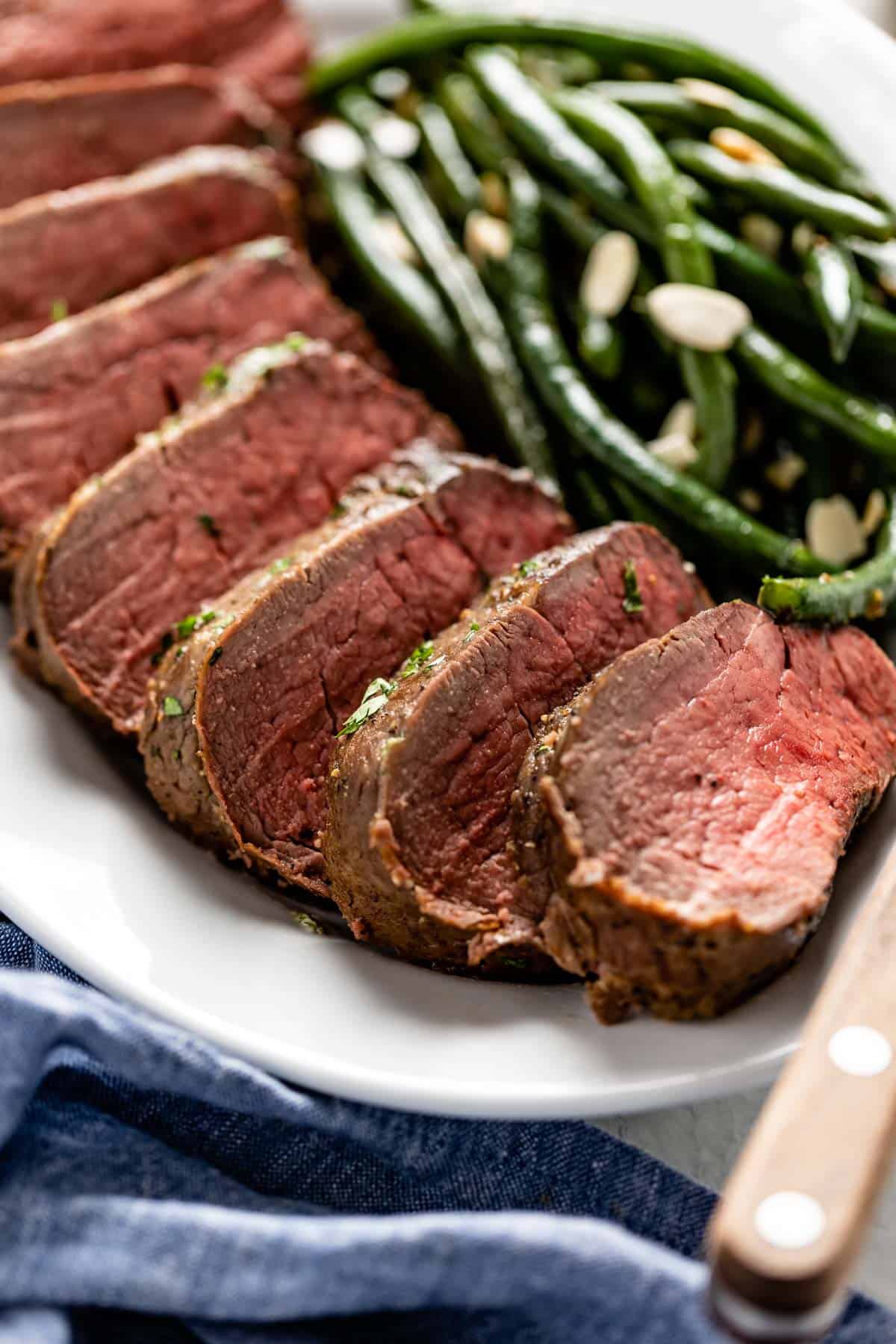
When ready to serve, slice the meat into ½-inch thick slices. Serve while still warm.
Expert Tips for the Best Reverse Sear Beef Tenderloin
Trim the silver skin: If your tenderloin still has silver skin or thick connective tissue attached, take a moment to remove it, or ask your butcher to do it for you. It’s a small step that makes a big difference in how evenly the meat cooks and how tender each slice turns out.
Tie the roast: A quick tie with butcher’s twine every 1½ inches helps the tenderloin keep its shape. This will keep the thinner ends from overcooking and ensure the whole roast cooks evenly from edge to center.
Don’t skip “the room temperature” rest: Let the meat sit on the counter for a full hour before roasting. This ensures the center isn’t ice-cold when it hits the oven, leading to much more even doneness.
Pat the meat dry: Before you season or sear, make sure the surface is nice and dry. This helps the butter stick and gives you that beautiful, golden crust we all love.
Handling larger roasts: If your beef tenderloin is larger than 2 lbs., I recommend cutting it into 2 lb. pieces and roasting them side-by-side on a wire rack. Any loin 4 lbs. or greater won’t sear properly, so this slicing step will help your meat cook on the stovetop.
Don’t cover the tenderloin beef with tin foil while resting: Once you remove the roast tenderloin from the stovetop, there’s no need to cover it with aluminum foil. Covering the meat will trap heat, raise the beef tenderloin’s temperature, and potentially overcook its pink center.

Reverse Sear Beef Tenderloin Recipe
Ingredients
- 2 pounds beef tenderloin, preferably center-cut aka Chateaubriand
- 2 teaspoons kosher salt *1, or 1 teaspoon table salt
- 1 teaspoon black pepper
- 4 tablespoons unsalted butter, at room temperature (divided)
- 1 tablespoon vegetable oil, such as avocado oil
Instructions
- Using kitchen twine, tie beef tenderloin crosswise at 1 ½ inch intervals.
- Pat dry with paper towels on all sides. Sprinkle it evenly with kosher salt. *2
- Transfer onto a plate, cover it with stretch film and let it sit on the counter at room temperature for one hour.
- Preheat oven to 300°F (150°C). Place a wire rack in a sheet pan and set it aside.
- Pat dry the now-rested beef tenderloin. Sprinkle it with black pepper and spread it with butter on all sides, ensuring it's evenly distributed. Transfer it onto the wire rack.
- Roast for 45-55 minutes or until the thickest part of the meat registers 125°F (52°C) (for rare) on a digital thermometer, or 55-65 minutes or until the internal temperature is 135°F (57°C) (for medium-rare). Be sure to flip the roast halfway through the roasting process.
- Remove from the oven and let it rest 5-10 minutes, uncovered, on the counter.
- Heat oil in a large skillet (or a cast iron skillet) over medium-high heat until smoking hot. Sear tenderloin on all four sides for 1 to 2 minutes on each side (for a total of 5 to 8 minutes) until browned.
- Transfer the seared onto a cutting board and spread with the remaining 2 tablespoons of butter. Let it rest, uncovered, for 10-15 minutes.
- Remove kitchen twine and slice it in ½-inch thick slices. Serve.
Video
Notes
- Yields: This reverse sear tenderloin recipe yields between eight to nine 1½-inch pieces. If you serve two slices per person, you should be able to feed four people using this recipe.
- *1 Salt: This recipe uses Diamond Kosher Salt (affiliate link.) If you are using Morton’s kosher salt, table salt, or sea salt, please use half the amount listed in the recipe card below.
- *2 Overnight rest: If you have the time, at this stage, you can transfer the meat to a sheet pan fitted with a wire rack and store it in the fridge, uncovered, overnight or for up to 2 days.
- Store: Bring the sliced meat to room temperature. Then, place it in the fridge in an airtight container for up to four days.
- To reheat:
- Remove the sliced tenderloin from the fridge and let it reach room temperature (10-15 minutes).
- Meanwhile, preheat the oven to 275°F (135°C).
- While the oven heats, place the tenderloin slices on a sheet of aluminum foil and drizzle them with a few tablespoons of cooking juices or beef stock. Wrap the beef loosely, fully covering each slice.
- Roast the wrapped tenderloin in the preheated oven for 10-15 minutes or until the meat’s internal temperature registers 135°F (57°C) with a meat thermometer.
- Let it rest for 5 minutes, unwrap, and serve.
- Roasted Garlic Butter: In an earlier version of this recipe, I used my roasted garlic butter to coat the meat after searing. I removed it because it is an extra step. Still, if you prefer that way, you can make a batch of my Roasted Garlic Butter to use as the final butter coating.
Nutrition
Nutrition information is automatically calculated, so should only be used as an approximation.
How to Store and Reheat Leftovers
This reverse-sear beef tenderloin is so tender and flavorful that you will want to enjoy every slice, and proper storage will keep it tasting just as good the next day.
- Store: Bring the sliced meat to room temperature. Then, place it in the fridge in an airtight container for up to four days.
- To reheat: When reheating, the goal is to warm the meat gently without overcooking it and to maintain the crusty exterior and a soft pink interior. So, to reheat:
- Remove the sliced chateaubriand from the fridge and let it reach room temperature (10-15 minutes).
- Meanwhile, preheat the oven to 275°F (135°C).
- While the oven heats, place the meat on a sheet of aluminum foil and drizzle it with a few tablespoons of cooking juices or beef stock. Wrap the beef loosely, fully covering each slice.
- Roast the wrapped tenderloin in the preheated oven for 10-15 minutes or until the internal temperature of the meat registers 135°F (57°C) with a meat thermometer.
- Let it rest for 5 minutes, unwrap, and serve.
Pro tip: If you prefer not to use aluminum foil, wrap your beef with parchment paper before adding a layer of foil.
FAQs
Yes! Dry brining beef tenderloin is an easy way to remove excess moisture and add flavor to the meat. I recommend salting right after pat-drying the raw beef tenderloin thoroughly.
You can prep the roast (trim and tie) and salt it 48 hours before. If you have to cook it a day in advance, you can cook it to your desired temperature, bring to room temperature, and then store it in the fridge in an airtight container. You can reheat it using my low-oven method.
Yes. If yours is bigger than 2 pounds, I recommend cutting it into 2-pound sections and roasting them side by side on the wire rack. Smaller pieces cook more evenly and fit better in a skillet for searing. And when it comes to searing, I would recommend doing it one at a time.
Two pounds of meat should be enough for four adults, with each person getting ½ pound of beef tenderloin.
What to Serve with Beef Tenderloin
You can pair your reverse-sear tenderloin roast with a variety of simple sides, sauces, and vegetables to build the perfect dinner menu. Whether you are cooking for a special occasion or planning what to serve with beef tenderloin for your Christmas dinner, these recipes round out the meal beautifully:
Sauces: You can use store-bought horseradish cream sauce, but why not make it at home? My Homemade Horseradish Sauce takes 5 minutes to make, and if you prefer a lighter version, my Horseradish Yogurt Sauce tastes just as good.
Potatoes: No celebratory dinner feels complete without potatoes. My Yukon Gold Mashed Potatoes or my Rosemary Mashed Potatoes are both perfect sides. If you are serving this for a holiday meal, you can also browse my full collection of Holiday Potato Recipes for roasted, crispy, buttery, or cheesy options to match any menu.
Salads: A fresh salad helps balance the richness of the tenderloin. My Warm Goat Cheese Salad adds creaminess and crunch, while this Beet and Goat Cheese Salad brings color and earthy sweetness to the table.
Vegetables: Simple vegetable sides always complement beef tenderloin. Try my Garlic Butter Green Beans for something quick, Roasted Asparagus for a classic pairing, or these Maple Balsamic Brussels Sprouts for a slightly sweet, caramelized contrast.
Soups: If you want to start the meal with something cozy, serve a bowl of Chestnut Soup or my Shiitake Mushroom Soup, both of which work beautifully before a tenderloin dinner.
Stuffing: If you are serving this for your Christmas dinner, then I highly recommend my Chestnut Stuffing.
Other Special Occasion Beef Recipes
If you enjoyed this beef tenderloin, I think you might like these other restaurant-quality dishes that are just as reliable and impressive.
- If you want another showstopping centerpiece, my Reverse Sear Prime Rib is always my go-to. I used the same two-step cooking method to get perfectly cooked, juicy prime rib every time.
- If you prefer individual steaks, my Reverse Sear Filet Mignon is another foolproof recipe that applies the same technique but takes less than half the time.
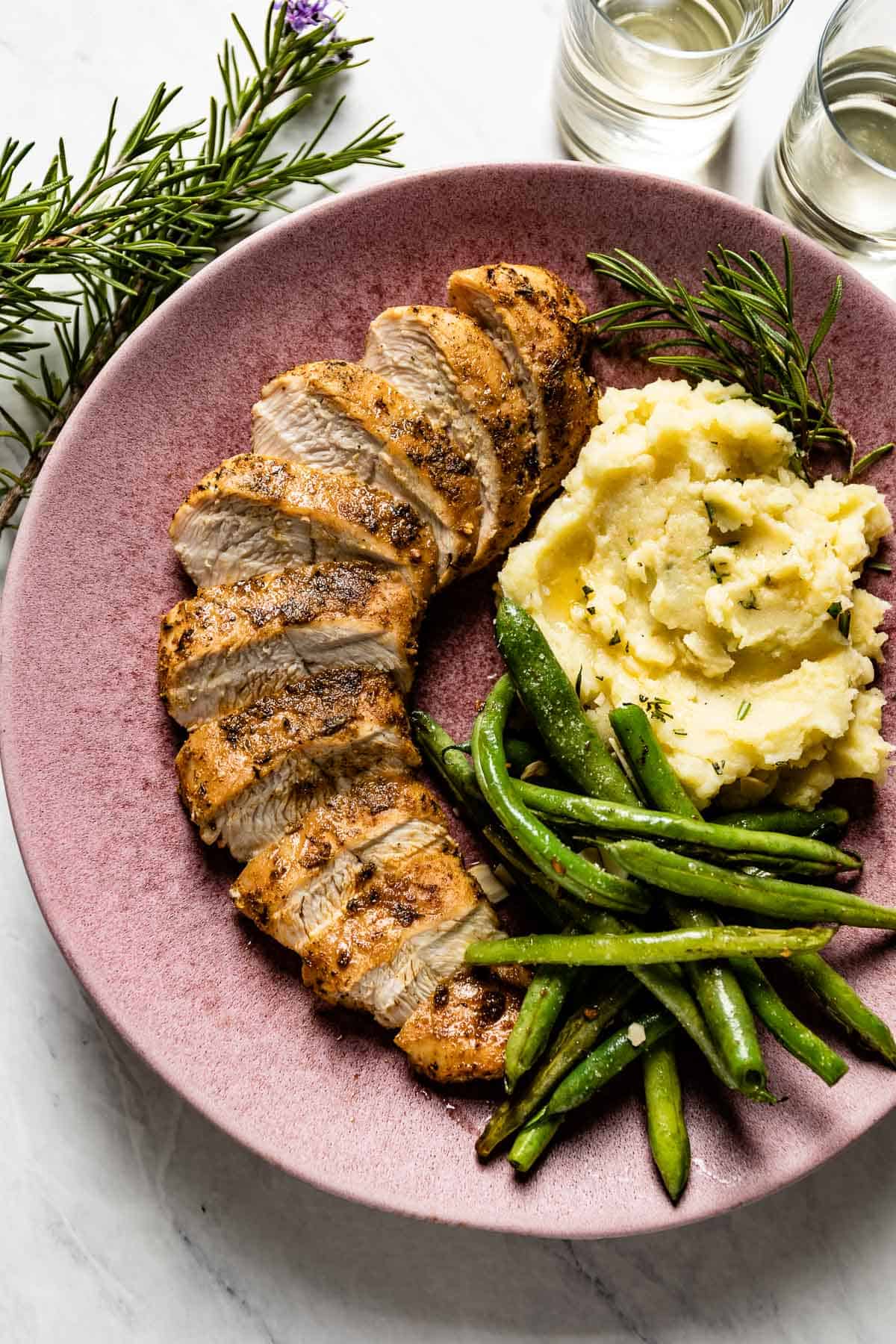
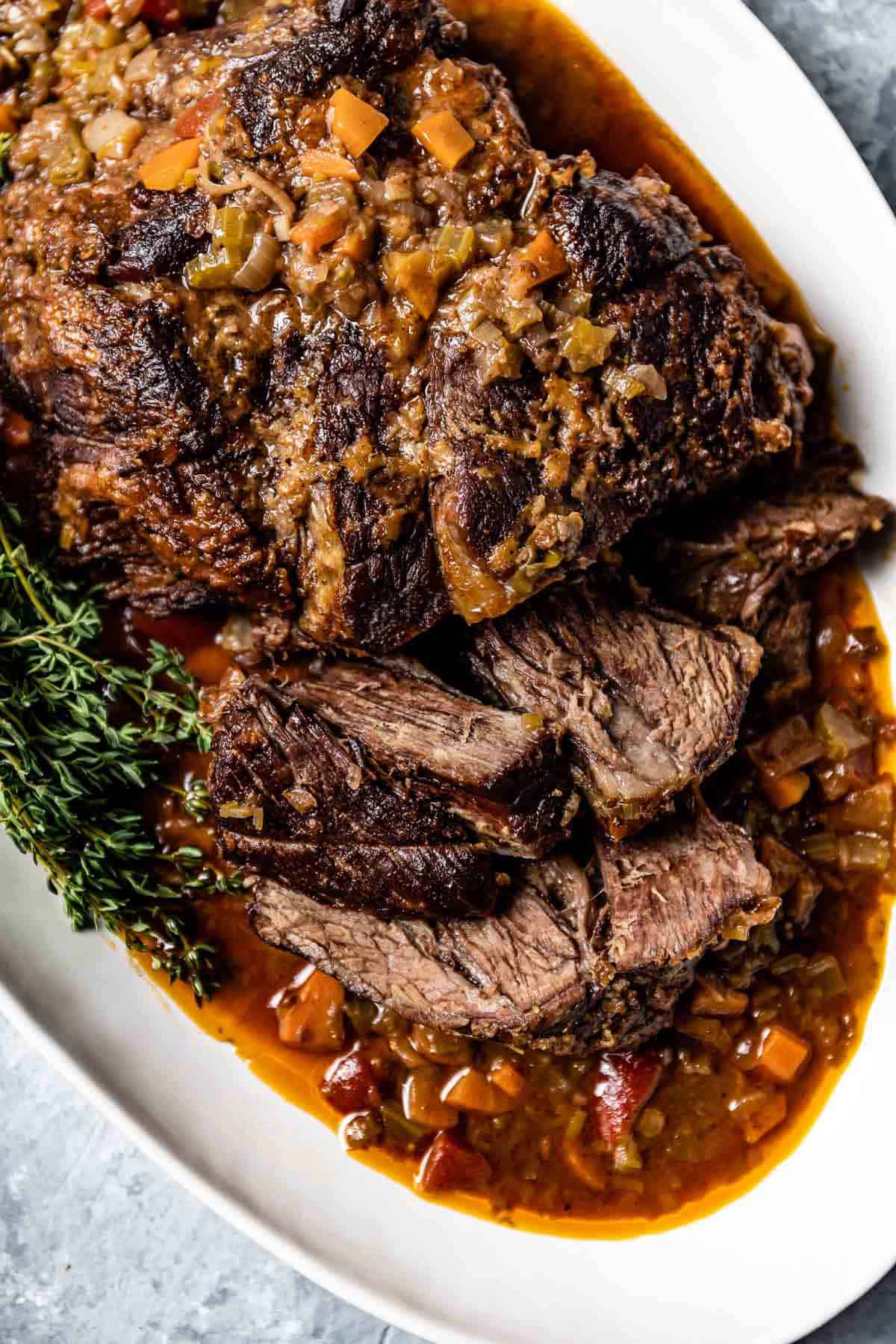
- If you want something cozy but still elevated, my Pressure Cooker Pot Roast is a great option that delivers deep, slow-cooked flavor in a fraction of the time.
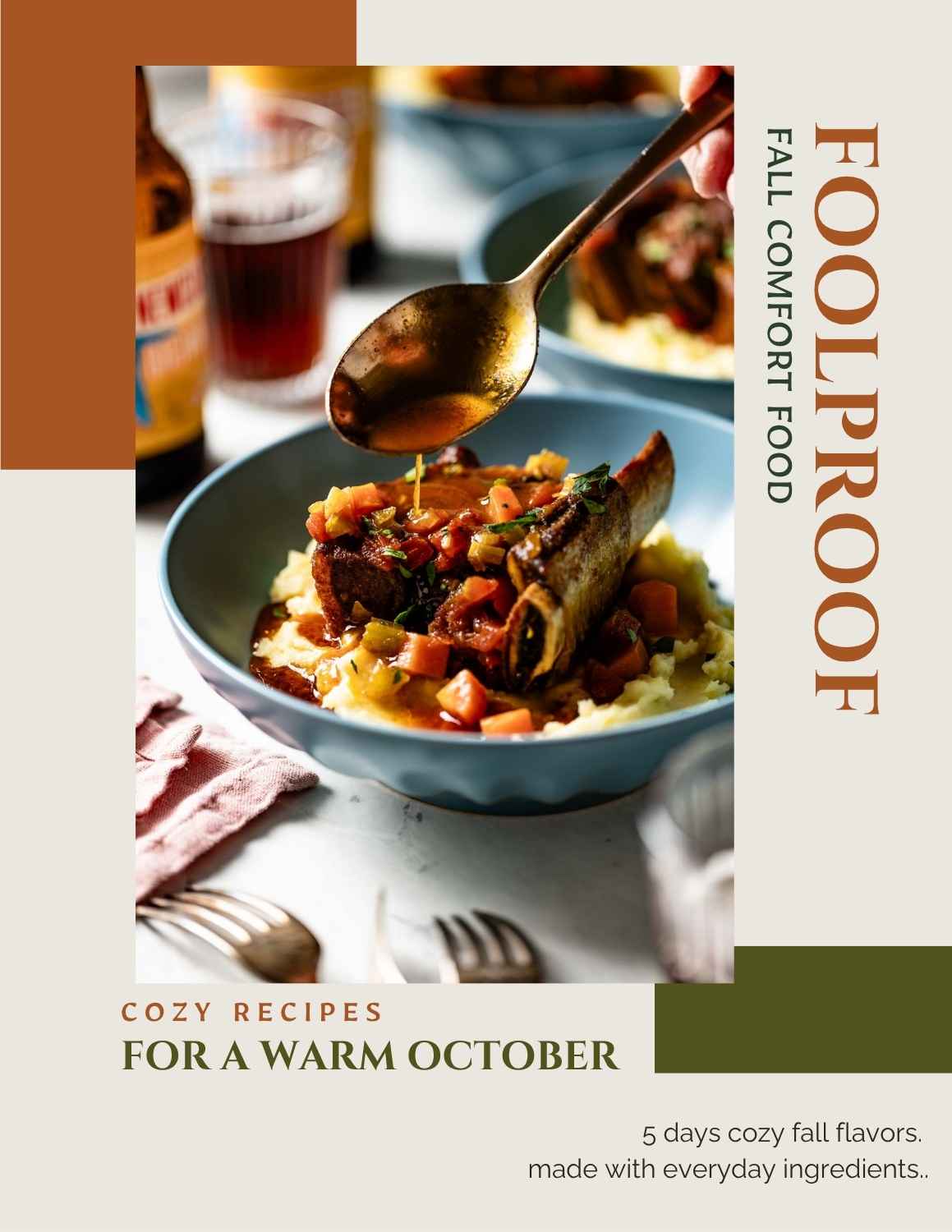
- If you’re in the mood for something rich and savory, try my Braised Short Ribs in Beer. The meat slowly cooks in a mixture of spices, aromatics, and beer until it becomes fall-apart tender with very little hands-on time.
This post includes Amazon links, and as an Amazon Associate, I may earn commissions if you make a purchase using my links at no cost to you.











The reverse beef tenderloin turned out perfect everybody raved about it. Thank you so much!
I am so happy to hear that. Thanks for coming back and taking the time to leave a review.
I wanna cook it the day before Christmas Eve put it in the fridge and then take it out and warm it up for Christmas day. Can I do this?
Hello Rob,
You sure can. Just be sure to cool it down before storing. You can learn how to store and reheat in the post above.
Still, if there is any way I can help please do not hesitate to ask.
Happy holidays.
Wow 🤩
This was easy to follow and came out great. It became our family favorite instantly. 💕
My go to bible for roasting or baking is “ Joy of Cooking” since ‘95, but I’m glad that I tried this. Of our 4lbs tenderloin, I smothered one of the halves with the garlic butter from the recipe and the other with Boursin Garlic Herbs Cheese. Both were great.
I’ll try the prime ribs next time.
Of course, I’ve shared the recipe with others.😊 Thank you!!!
YAY! YAY! This is music to my ears Yasuko. I love the idea of using Boursin cheese!
Thanks for coming by, sharing your experience and taking the time to leave a review.
The best tenderloin we’ve ever made! To be able to get the temperature exactly right during the roasting process is key and then just sear it off at the end! Fabulous recipe and I have shared with many friends already! Thank you! 🙂
Amy,
This is truly music to my ears. I am so happy to hear that you enjoyed this roasted beef tenderloin recipe. Thanks so much for sharing your experience and taking the time to come back and leave a review.
Cheers!