
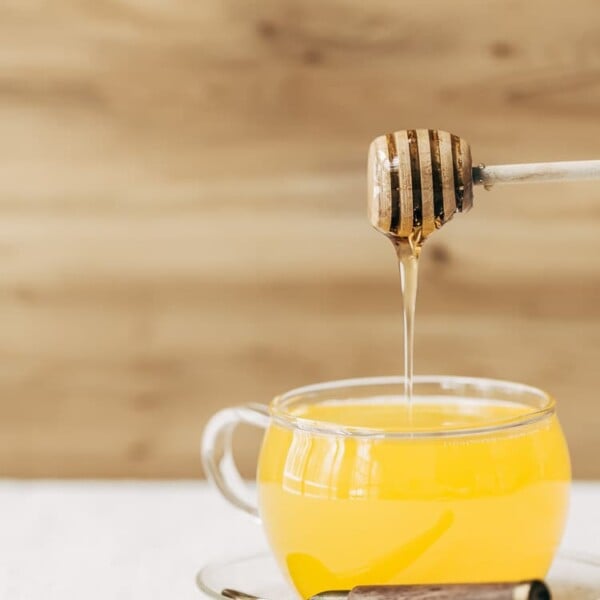

Please note that I am a home cook, not a doctor or a health professional. This recipe is part of my personal routine and is not intended as medical advice.
10+ Years and 3 Climates: Why I Swapped Store-Bought Turmeric Tea Bags for This Daily Ritual

My obsession with fresh ginger and turmeric didn’t start in a health food store; it started during my years living in the Caribbean. Growing up in the Mediterranean, these roots weren’t part of my daily cooking, so this tea was my very first time incorporating them into my life.
When we moved to Vermont after the Caribbean, it became a staple to help me get through the brutally cold, long winters. Even now, living in Atlanta, Georgia, I still drink it daily during the colder months.
After many years of making and serving this drink, I’ve learned why the homemade turmeric and ginger tea is better than the tea bags you’d buy at the store:
The “Science” is included: To actually benefit from curcumin (the good stuff in turmeric), you need black pepper and a drop of fat. My recipe uses the ratio I’ve perfected over the last decade, so you can actually reap the benefits.
Fresh is better: Nowadays, most supermarkets sell fresh ginger and turmeric in the produce section. And using them in recipes requires no new skills; just a quick chop and you’re 90% done.
It’s cheaper: You aren’t paying for fancy packaging or marketing. Fresh roots are much more affordable and offer a much better flavor than dried tea.
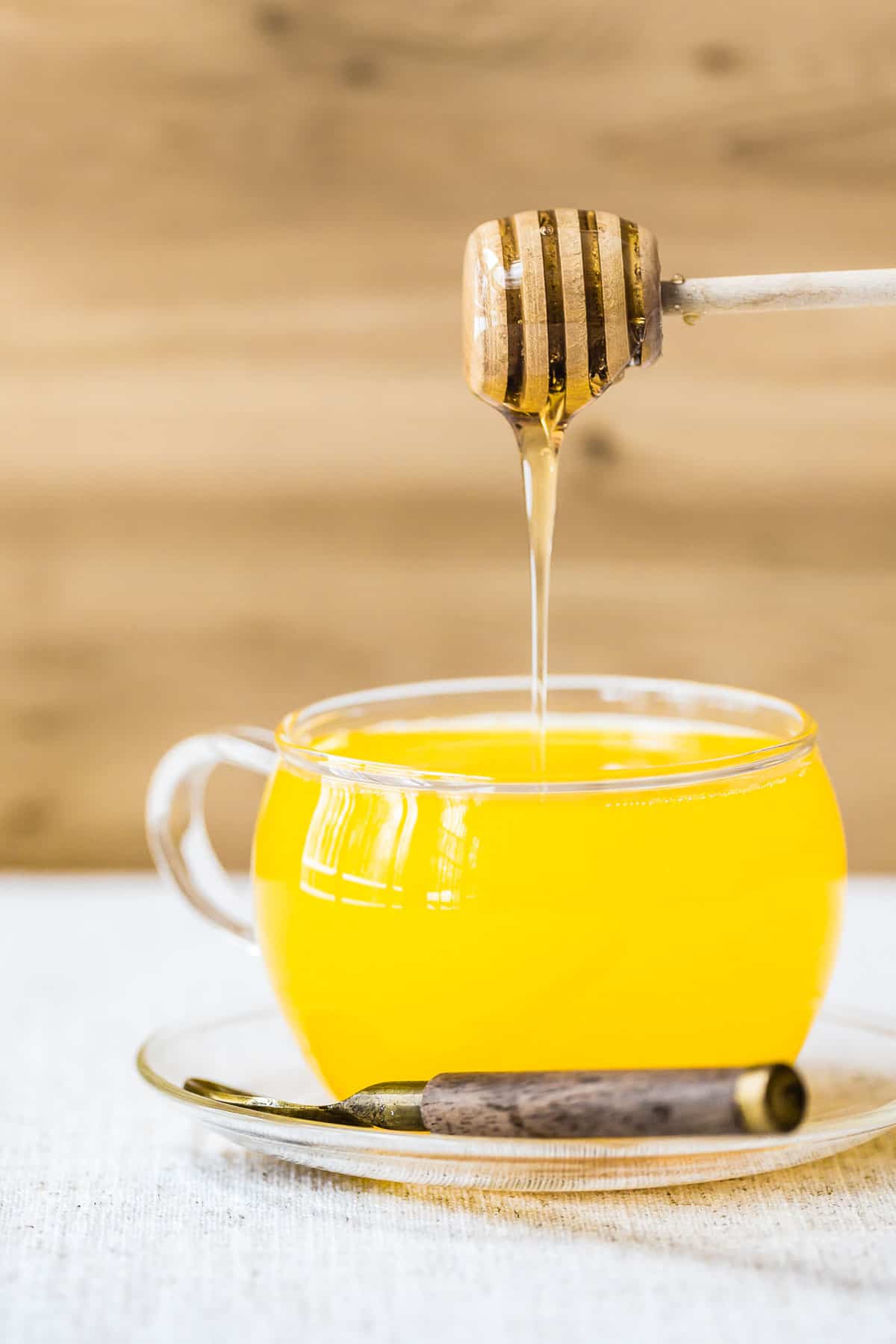
Ingredients For Turmeric and Ginger Tea
The ingredient list for this ginger and turmeric tea is pretty short. While you can find the exact measurements in the recipe card below, here are a few helpful notes from my recipe testing to help you get the best results.
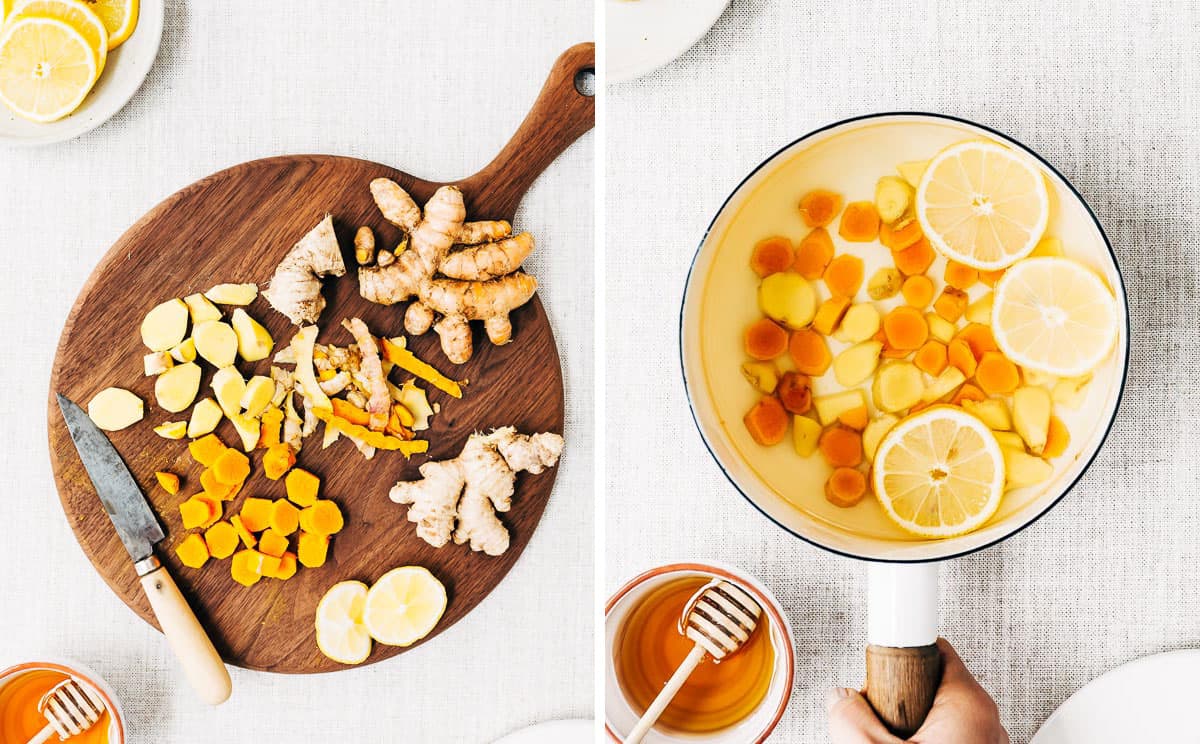
Fresh turmeric: I am using fresh turmeric root, sliced into small pieces. Peeling is optional, especially if you are using organic turmeric root, but make sure to rinse it well under cold tap water before cutting.
Fresh ginger: I am using fresh ginger root, cut into small pieces. Peeling is optional here as well. If the ginger is organic, a good rinse is often enough; otherwise, peel it with the edge of a spoon before slicing.
Black pepper: Turmeric contains a compound called curcumin. On its own, curcumin is difficult for our bodies to absorb. Piperine, a compound found in black pepper, helps with curcumin absorption when paired with a small amount of oil.
However, please keep in mind that you only need a pinch. And in case you are wondering, you will not taste the black pepper in your ginger turmeric tea.
Coconut oil: Turmeric is oil-soluble, which is why a small amount of fat is often added when using it. You only need a small amount, literally ⅛ of a teaspoon. The Ayurvedic tradition usually uses ghee (clarified butter), but any neutral oil, such as coconut or avocado oil, works just as well.
Sweetener: I usually sweeten this tea with honey, but you can use any sweetener you like, such as maple syrup or regular granulated sugar.
A word of caution when using honey: If you watch the how-to video in the recipe card below, you’ll see that I add honey into the pot. And if you read the comments below the video, you’ll see many people saying the same thing.
That was a bad move on my part, because boiling honey (at excessive heat) destroys its beneficial properties and can alter its flavor. If you are using honey, add it to your mug right before serving.
Lemon slices: Since I prefer to add sliced lemons with the skin on, I usually buy organic lemons free of pesticides.
Optional Add-Ins
The recipe I share here is meant to be a quick and easy one, but I often change it up with one of the following optional additions:
Cinnamon: Use a small amount (¼ teaspoon) of ground cinnamon, or, for a milder flavor, add a cinnamon stick to the pot.
Orange peel: Add a few slices to the pot as it simmers to infuse the tea with citrus flavor.
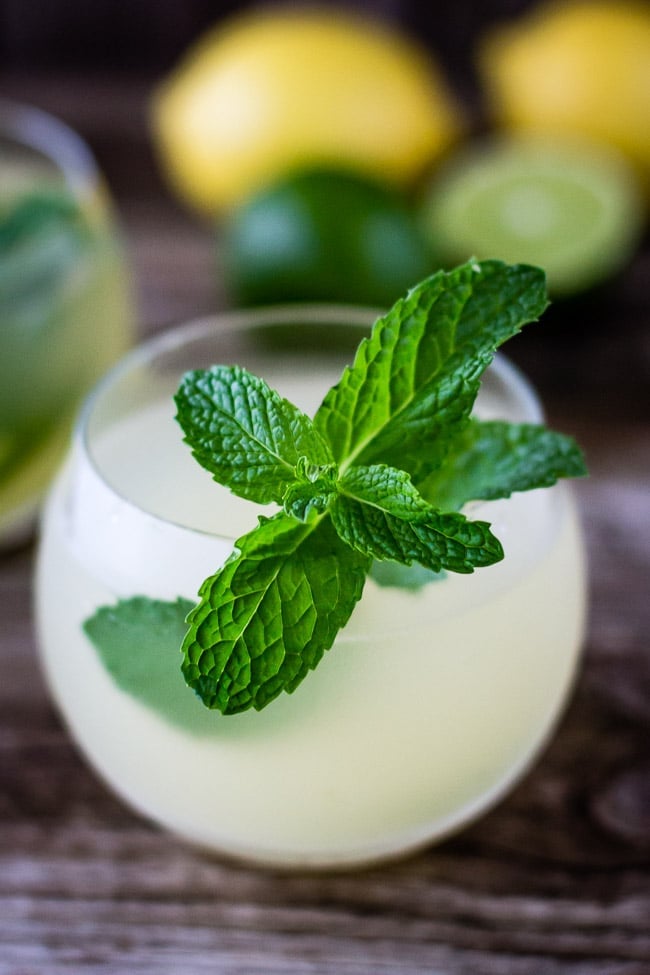
Fresh mint: When I serve this cold during the summer months, I usually add a few leaves from my garden. It is not only a great garnish but also makes it more delicious.
How to Make Ginger Turmeric Tea
This recipe for ginger turmeric tea is truly easy, with just a few quick steps. You can serve this homemade turmeric and ginger tea warm during the colder months and cold during the summer. Here is how I make it:
Step 1 – Add everything to the pot: Place the chopped ginger and turmeric into a small saucepan, add a few slices of lemon, and cover it with water.
A word on the amount of ginger and turmeric roots I use: I listed the exact amounts below, but you can use more or less to make a stronger or milder tea. The same thing goes for the water. I recommend starting with the ratios below and adjusting them to your own liking.
Step 2 – Bring it to a gentle simmer: Cover the saucepan and simmer the mixture gently over medium heat for about 8-9 minutes. As soon as it reaches a boil, take it off the heat.
Let the tea steep for about 5 minutes, which gives the ginger and turmeric time to infuse without dulling the flavor or making it bitter.
Step 3 – Strain and sweeten: You can serve this drink warm or cold. Below are the steps for each method:
- To serve it warm: Strain the homemade ginger and turmeric tea through a fine-mesh strainer into a mug before serving. If you’d like to sweeten it, add honey or your favorite sweetener at the very end, once the tea is off the heat.
- Serve it cold: To make an Iced Ginger Turmeric Tea, brew the tea as directed, then let it cool to room temperature before serving over ice. I usually like to brew it a little longer so the flavor doesn’t get diluted when it is poured over ice.
When serving it cold, I like to add a few extra lemon slices and a bit more sweetener. You can sweeten it while it is still warm, or use store-bought simple syrup or my Homemade Honey Simple Syrup, which mixes smoothly into cold drinks and works especially well here.

Expert Tips
Protect your hands and surfaces: Fresh turmeric root stains easily and can discolor hands, cutting boards, light countertops, and even clothing. I recommend wearing gloves to protect my hands and using a sheet of parchment paper or a paper towel when chopping it to protect my cutting board.
Cut the roots small: Slicing the ginger and turmeric into small pieces helps them infuse more evenly into the water, giving you better flavor without needing a long boil.
Using a teapot: If you prefer not to use the stovetop, this tea can also be made in a glass teapot with an infuser. Roughly chop the washed turmeric and ginger, place them in the infuser with a few lemon slices and a pinch of ground black pepper. Pour hot water over everything and let it steep for about 5 minutes. Once poured into a cup, sweeten to taste.
Using ground turmeric and ground ginger: My intention when sharing this recipe was to show you how to make a turmeric-and-ginger tea with fresh roots. However, I understand that sometimes it is not possible to get your hands on them.
While it won’t taste the same, in a pinch, you can use turmeric powder and ground ginger. For 1 inch of turmeric root, I usually use ½ teaspoon of its dried version. The same amount works for ground ginger as well.
Listen to your body: While this tea is a daily ritual for me, everyone is different. If you’re new to consuming fresh turmeric or ginger, start with a milder version and, as always, consult a professional, especially if you have any medical concerns or are taking medications.

Turmeric Ginger Tea Recipe
Ingredients
- 1 ½ inch turmeric root, cut into small pieces
- 1 ½ inch ginger root, cut into small pieces
- 3-4 slices lemon, plus more for serving
- Pinch black pepper*
- Honey, optional (or any sweetener of your choice)
- 1/8 tsp coconut oil*, or ghee
- 4 cups filtered water
Instructions
- Place chopped turmeric root, ginger root, lemon slices, black pepper, oil and water in a small saucepan over medium heat.
- Put the lid on and bring it to a boil. This takes about 7-8 minutes. As soon as it boils, remove from the heat and let it steep for 5 minutes.
- When ready to serve, strain it into glasses.
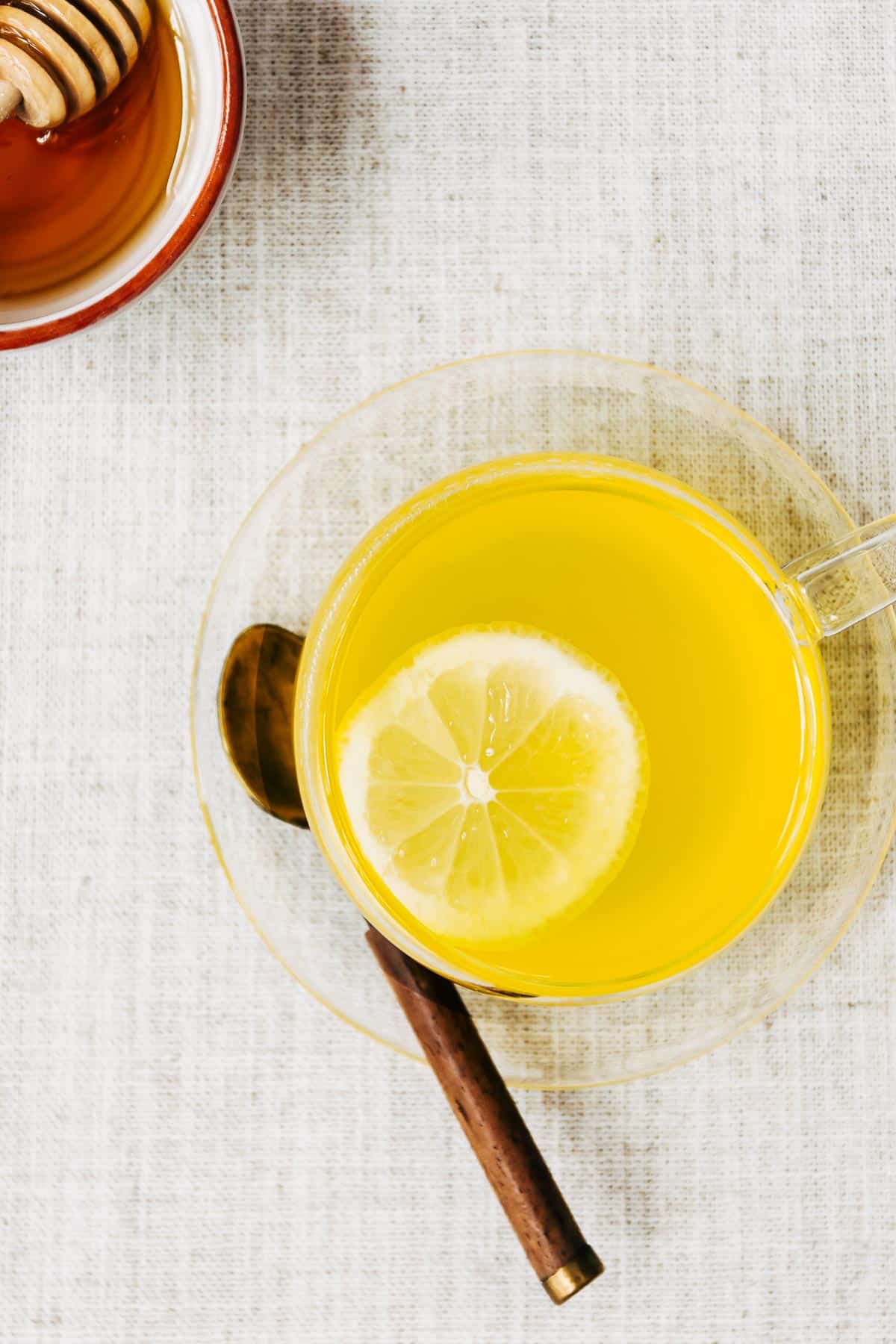
- If using, add some honey to sweeten. Serve with a slice of lemon.
Video
Notes
- Yields: This makes 4 cups of tea, and the nutritional values below are per serving.
- My intention with this recipe was to make a tea with fresh roots, but in a pinch (if you can’t get your hands on fresh turmeric), you can use dried turmeric powder. For every 1 inch of turmeric root, I usually use ½ teaspoon of its dried version.
- If you have any leftovers, feel free to place them into a jar, cover them tightly with a lid, and keep them in the fridge up to 4-5 days.
- You can serve this drink cold, but it is best to add the honey while it is still hot so it dissolves more easily.
Nutrition
Nutrition information is automatically calculated, so should only be used as an approximation.
How to Store and Reheat
This ginger tea with turmeric is easy to make ahead and keeps well, which makes it great for enjoying throughout the week. I often make a batch, enjoy some right away, and save the rest for later.
Here is how I usually store and reheat it:
Storage: Once the turmeric and ginger tea has cooled to room temperature, strain it and transfer it to an airtight container. Store it in the refrigerator for 3-4 days.
Reheat: Gently reheat the curcuma ginger tea in a small saucepan over low to medium heat until warmed through. There’s no need to bring it back to a boil. You can also reheat it in the microwave, if preferred.
Other Fresh Turmeric Recipes You Might Like:
If you enjoy using fresh turmeric root in recipes and want a few more easy ways to include it in your everyday routine, here are a few more recipes you can try:
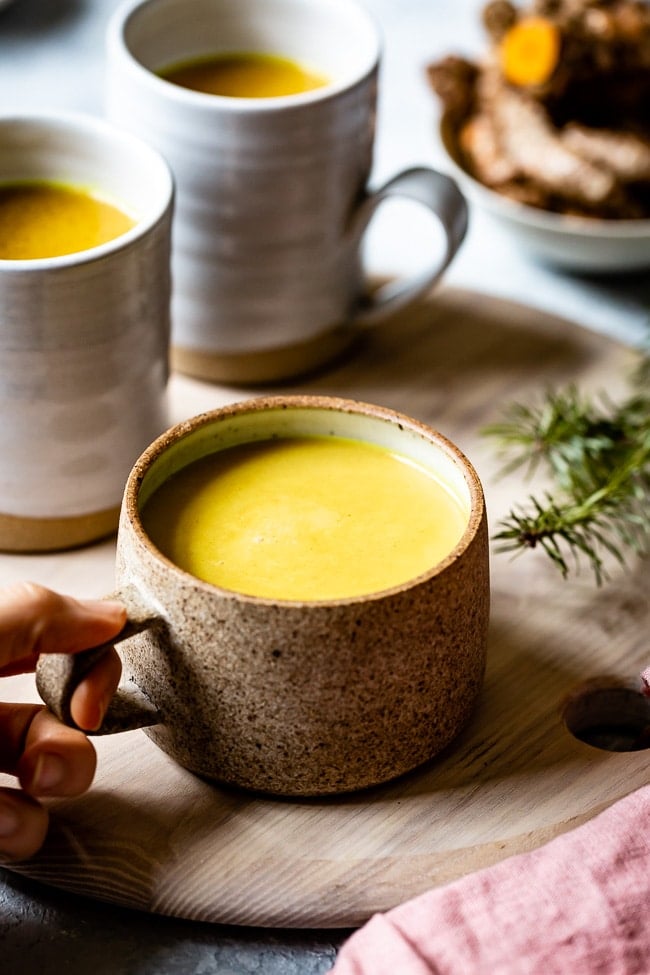
- Another Ayurvedic Drink: This 10-Minute Turmeric Golden Milk is a creamy, latte-style drink that is made with similar ingredients and offers a smooth, gently spiced taste.
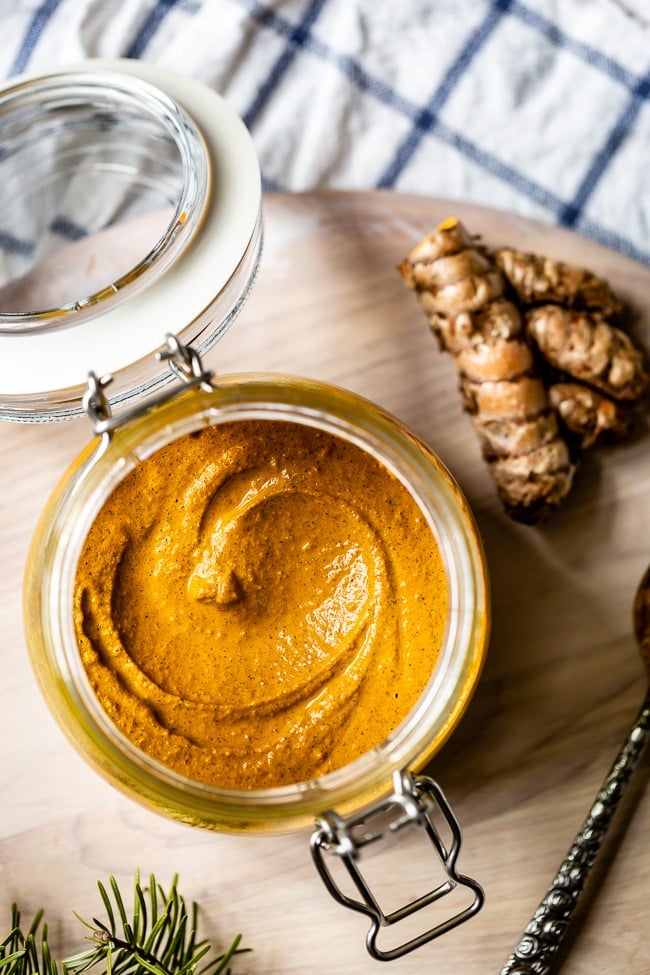
- Prep a Versatile Staple: This Homemade Turmeric Paste is a great make-ahead recipe to keep on hand. You can use it in golden milk, curries, soups, or smoothies, and it’s a simple way to cook with turmeric on a moment’s notice.
- Blend It Into Your Smoothies: These Turmeric Smoothie Recipes show how easy it is to use fresh or ground turmeric in smoothies. They’re simple, naturally sweetened, and can be enjoyed year-round.
This post may contain affiliate links. If you purchase through these links, I may earn a small commission, at no additional cost to you.











Would cinnamon be a welcome addition to this
I think so but I would recommend starting with a very small amount.
Love this! How long can it stay in the fridge for?
Glad you liked it. I’d say for about 4-5 day in an airtight jar.
thank you!!!!! i didnt know the oil tip. just a FYI, i add honey when its cool since it is toxic when boiled. thanks again for making this