
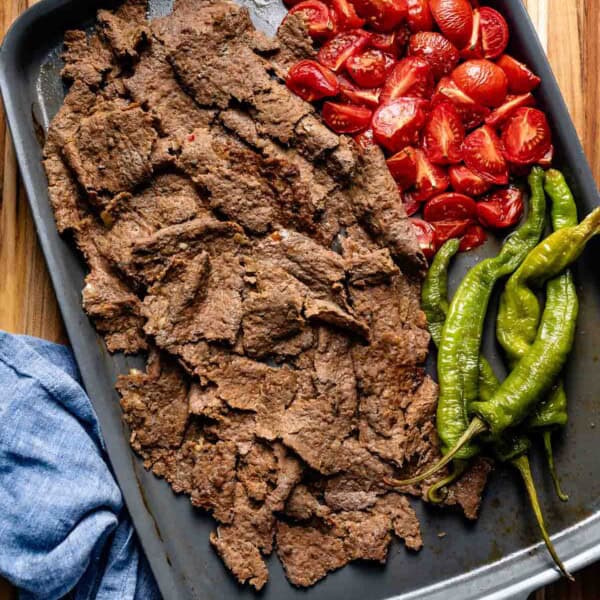

Turkish cooking has been having a moment on social media, and I love seeing it finally get the attention it deserves. First, it was the Turkish Pasta trend; now, it is this homemade doner kebab.
These shortcuts are clever because they make dishes that have been around forever feel doable on a weeknight with ingredients most people already have. The rolling technique you see everywhere was first shared by Mezemike, and it took off for a reason.
For me, this recipe hits close to home. I grew up in Bursa, Turkiye, where the authentic version of this dish, Iskender Kebab, was invented. So even though we never made it using this method, I immediately understood why people loved it. It captures the spirit of the dish in a much more doable way without a trip to Turkiye.
My goal here is simply to walk you through this shortcut in a clear and honest way, with a few tips to help you get as close to the real thing as possible in your own kitchen.
Ingredients You’ll Need
The ingredients for this Turkish doner kebab are simple and easy to find. You can find the full list of ingredients with exact measurements in the recipe card below, but here are a few helpful notes on a few ingredients from my testing:
Doner meat ingredients:
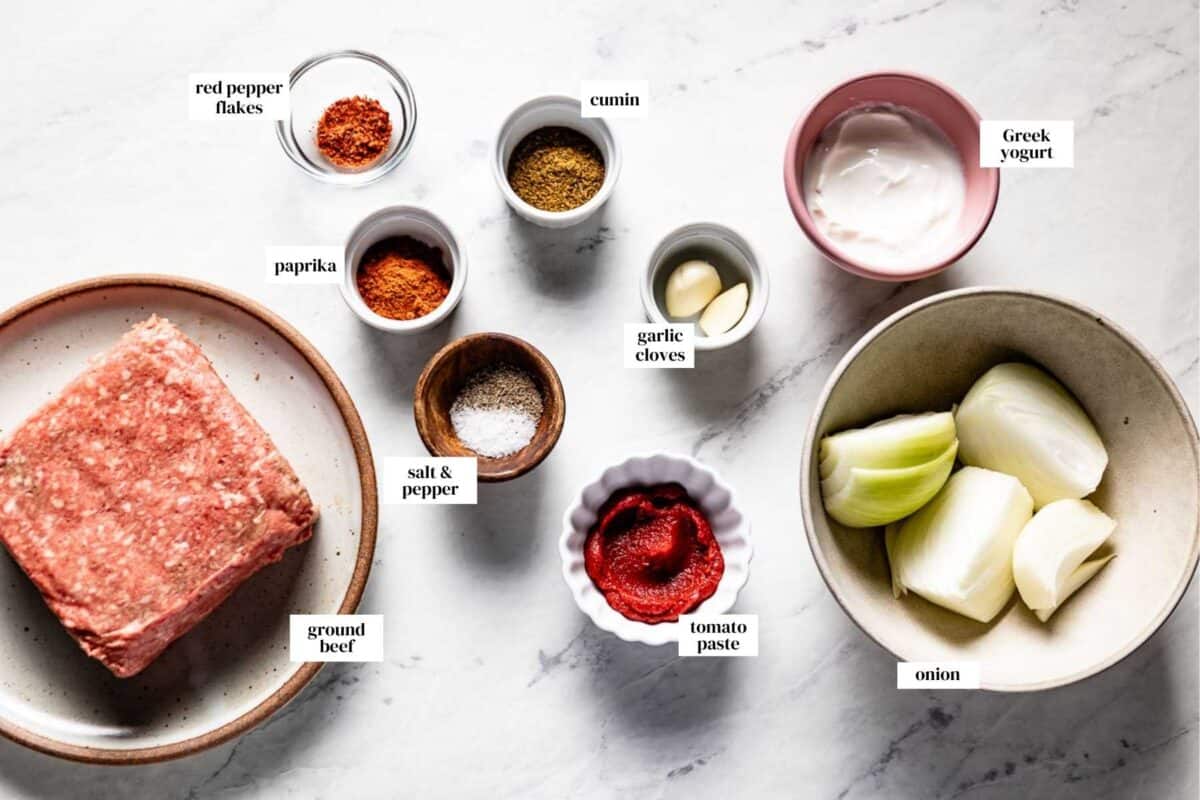
Onion: While many viral versions use only the juice, I prefer using the whole onion, as it helps tenderize the meat, keeps it moist, and adds the depth that real doner has. To get it extra fine, I blend it into a puree, along with the garlic.
If you don’t have a food processor, a box grater would work well too. Use the large holes to grate the onion, and reserve the juices.
Ground beef: It goes without saying that fat is flavor, so it is key here. I recommend using 85/15 ground beef for the best texture and taste. The shortcut doner kebab recipe uses ground beef, but in Turkey (depending on the region), it’s usually made with lean lamb.
If you want to get as close as possible to the real deal, use ground lamb to make a lamb doner kebab. Lamb is the classic choice for traditional Turkish doner. Or alternatively, if you want to ease into it, you can try 50% ground beef and 50% ground lamb.
Greek yogurt: Yogurt tenderizes the meat and keeps it moist. I tested this recipe both with full-fat yogurt and 2%. While both work, the texture is richer with the full-fat kind.
Spices: The classic doner meat seasoning includes ground cumin, paprika, and red pepper flakes. If you want to get as close to the real thing as possible, I would also recommend adding a pinch of dried oregano.
For the vegetables:
Roasting vegetables like tomatoes and peppers is optional, but they are the traditional accompaniment to doner kebab, whether you wrap the meat in lavash or serve it with rice.
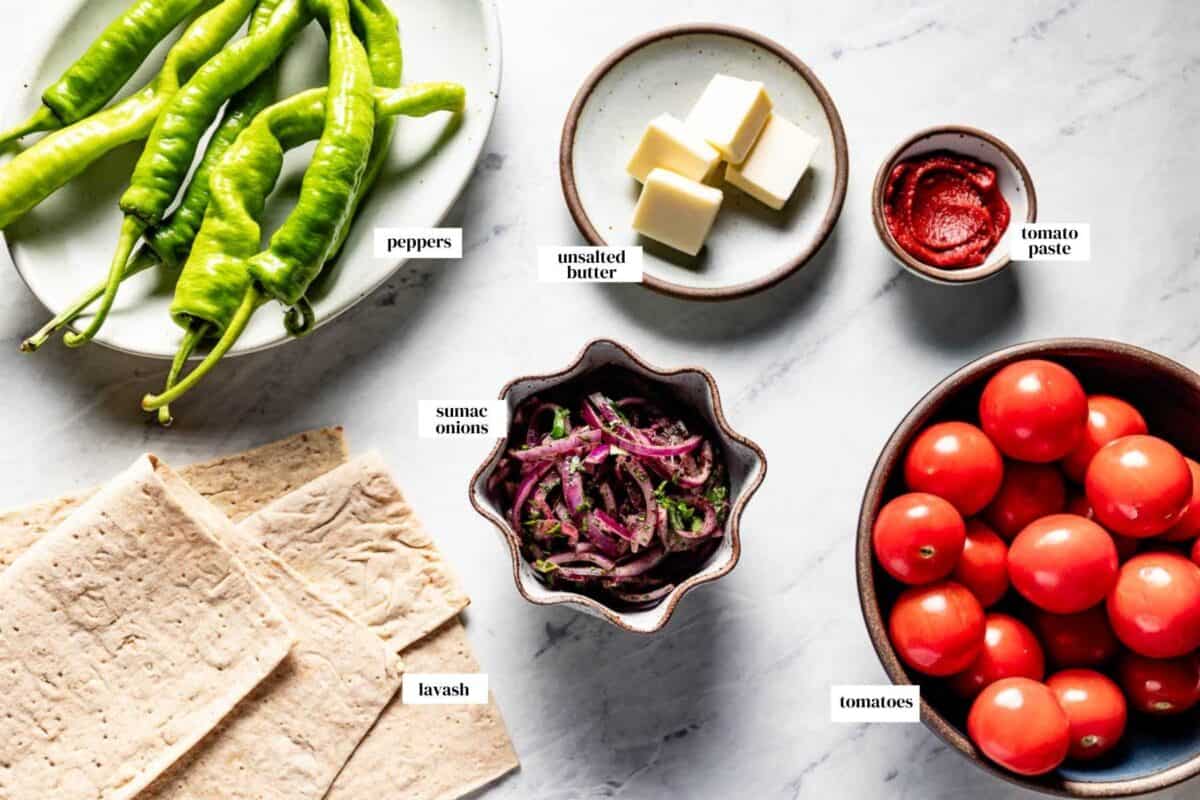
Tomatoes: You can use any tomato variety. If using larger tomatoes, quarter them so they roast evenly and are easier to tuck into the wrap (aka dürüm) later on.
Green peppers: Any long, green pepper works here. Traditional Turkish doner shops use sivri biber, which are mild and have a thinner skin. But because I can’t find them here in the US, I usually use Anaheim peppers or jalapeños. If you’re sensitive to heat and using jalapeños, I recommend removing the seeds before roasting them.
For the Sauce:
Most versions of the viral recipe don’t include this sauce, but I can’t, in good conscience, publish this recipe on my site without sharing it with you. If you ask me, the sauce is a must, and you just need 2 ingredients.
Butter: I am using unsalted butter so I can better control the seasoning. If all you have is salted butter, simply add a little less salt to the sauce.
Tomato paste & water: Use any brand of tomato paste (domates salcasi) you like. While not traditional, I sometimes change it up and use hot/mild red pepper paste (biber salcasi) for a spicier sauce.
For Serving:
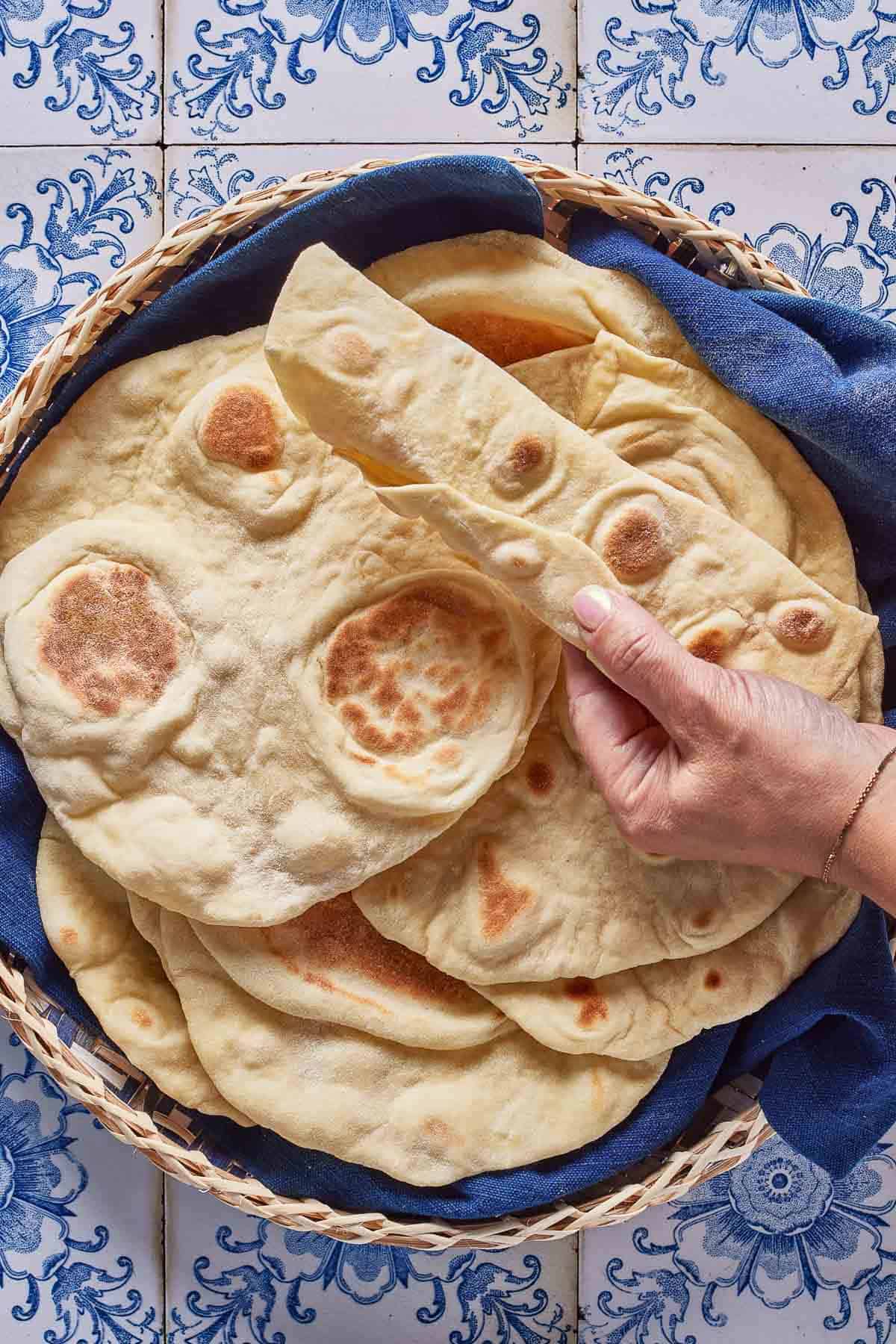
Lavash bread: The classic bread used for wrapping meat is lavash. You can make lavash at home or buy it at the store. Here in the US, my favorite brand is Joseph’s, but I also like Trader Joe’s.
Alternatively, you can stuff the meat in Pita Bread (in its pockets) to create a similar “sandwich” feel.
Sumac Onions: Optional, but I cannot imagine serving any type of Turkish kebab without them. It takes just a few minutes to put together and is essential to make it taste authentic.
How to Make This Viral Turkish Doner Kebab
Okay, there is a reason why this shortcut doner method has taken over social media. It gives you the same tender, well-seasoned meat you’d find in Türkiye, but in a quicker way you can easily make in your own kitchen for a weeknight dinner.
Here’s how to make it:
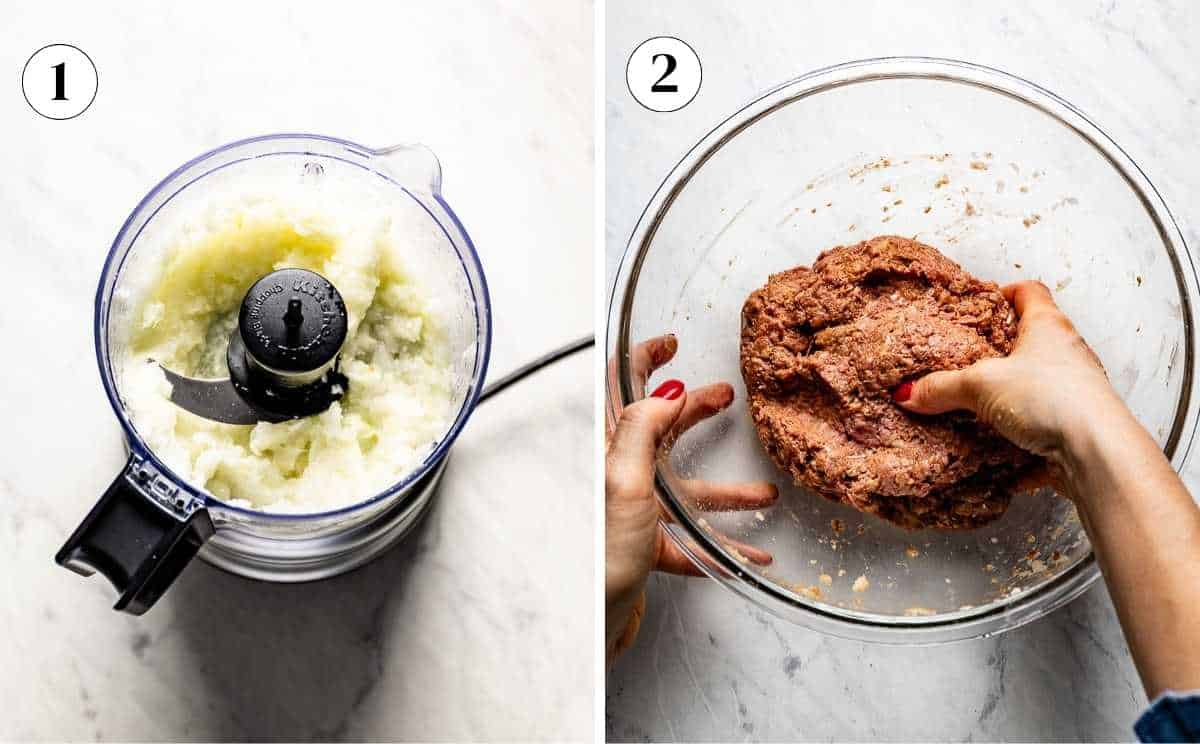
Step 1 – Prep the oven and aromatics: Start by preheating your oven to 400°F (204°C). While it heats, add the onion and garlic to your food processor and blend until smooth and pureed.
Don’t strain out the liquid; that moisture is what keeps the meat juicy and helps everything bind together.
Step 2 – Mix the meat: Transfer the onion mixture to a large bowl and add the ground beef, tomato paste, yogurt, and spices. Using your hands, mix until everything is thoroughly combined for about 1-2 minutes. It should be well mixed, so you get a bit of each flavor in every bite.
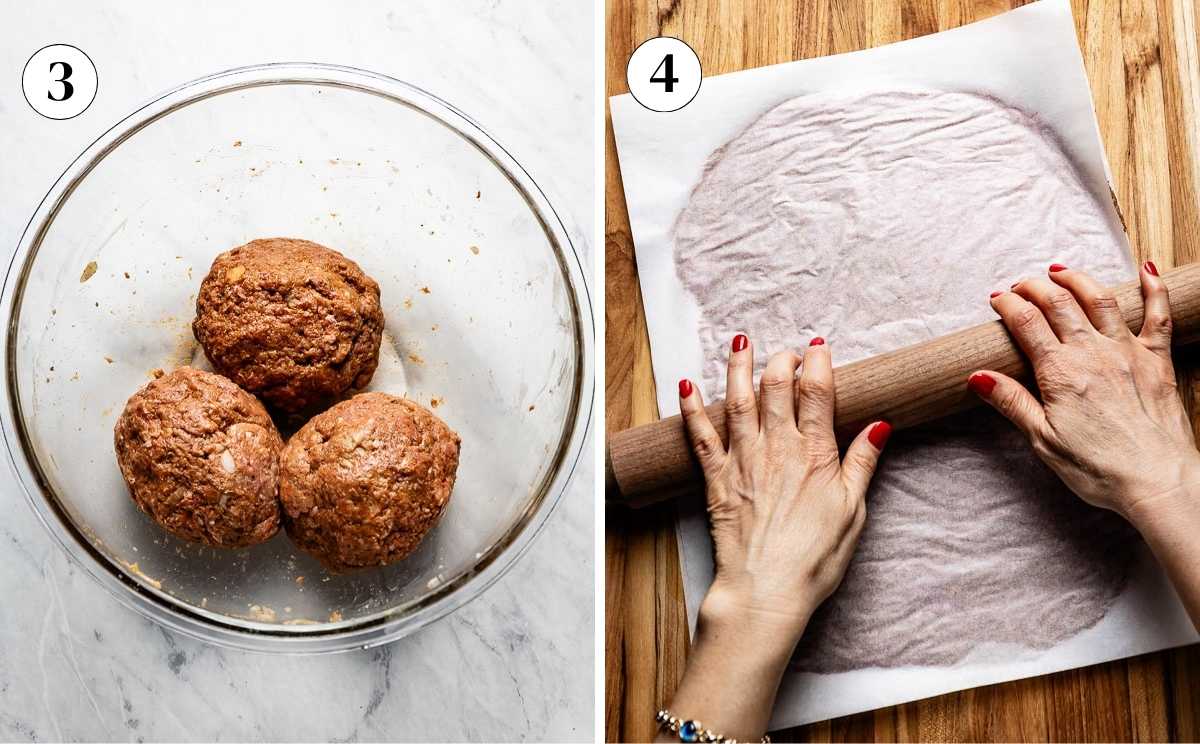
Step 3 – Divide and shape the mixture: Once the meat is mixed, divide it into three equal pieces. During my initial testing of this recipe, I divided it into 4 portions, which worked well, but I felt the rolled doner was a bit thinner than I would like after cooking.
That said, you can do either 3 or 4 pieces. It is more a matter of personal preference.
Step 4 – Roll the meat into a sheet: Place one piece of meat in the center of a 12×16 sheet of parchment paper, then place another sheet on top. Use a rolling pin (or your hands) to gently press it into an even rectangle. You want an even layer that’s neither too thin nor too thick.
Sometimes the meat pushes out of the sides of the parchment. Don’t worry, just tuck it back in so it’s not as thin, and keep going.
Pro Tip: Some of the videos I’ve seen on social media make it look so easy to roll out to a perfect rectangle. During my testing, I learned that the shape didn’t matter. Instead, the important thing was to roll the meat evenly on the parchment paper.
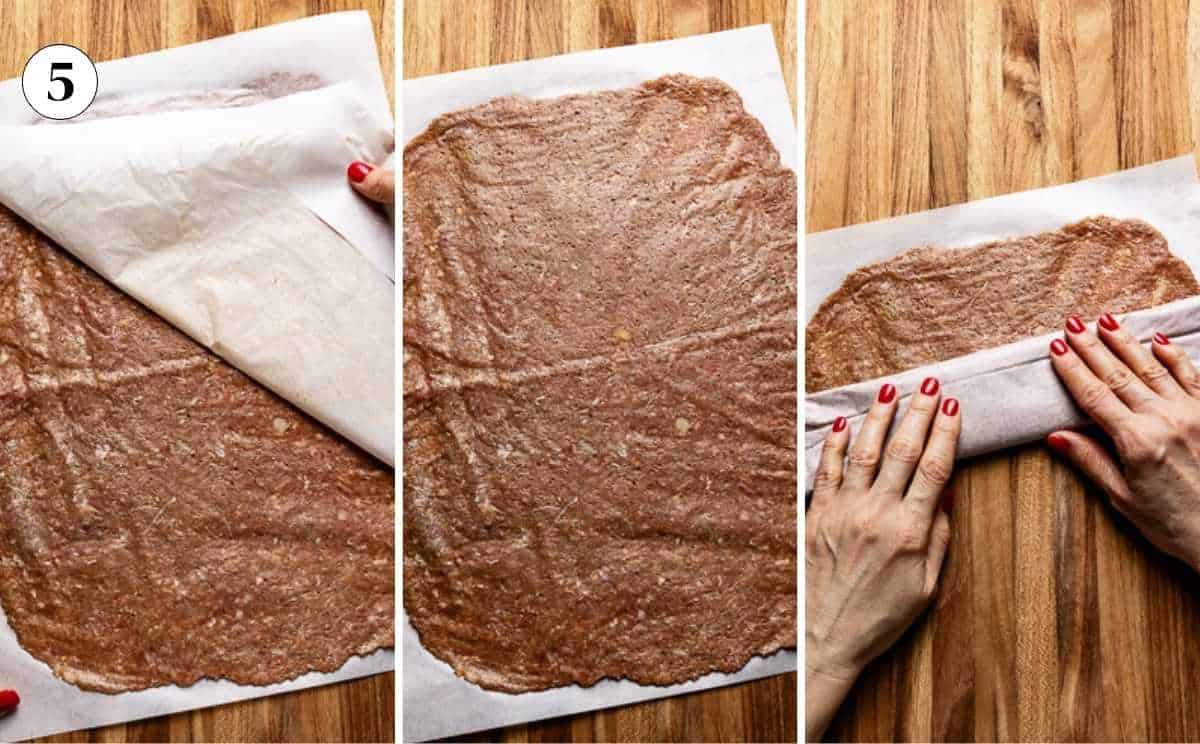
Step 5 – Roll it into a log: Remove the top parchment sheet. Now, starting from the short end closest to you, roll the meat tightly (with the bottom parchment still attached).
Transfer the rolled log to a sheet pan and repeat with the remaining pieces.
Pro Tip: Watching the videos on social media, you’ll likely see people roll the meat (like you are rolling cinnamon rolls) or fold it onto itself. As long as it is evenly rolled, both methods would work.
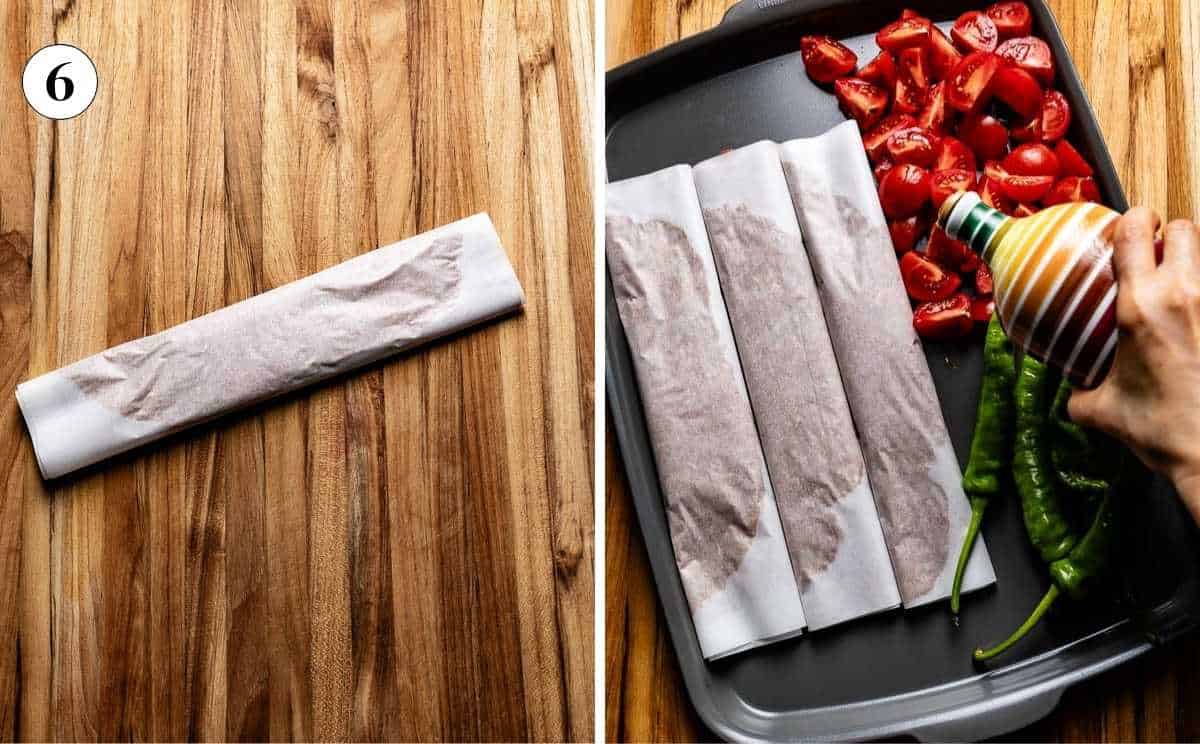
Step 6 – Add the vegetables: Once all three logs are on the pan, add the quartered tomatoes and whole peppers to the same pan (onto the side) and drizzle them with olive oil and a little kosher salt.
Step 7 – Bake: Bake everything for about 15-20 minutes. When it’s done, the meat should look lightly browned, and the vegetables should be softened.
Remove the pan from the oven and let everything cool for 5 minutes or just enough that you can unroll it without burning your hands.
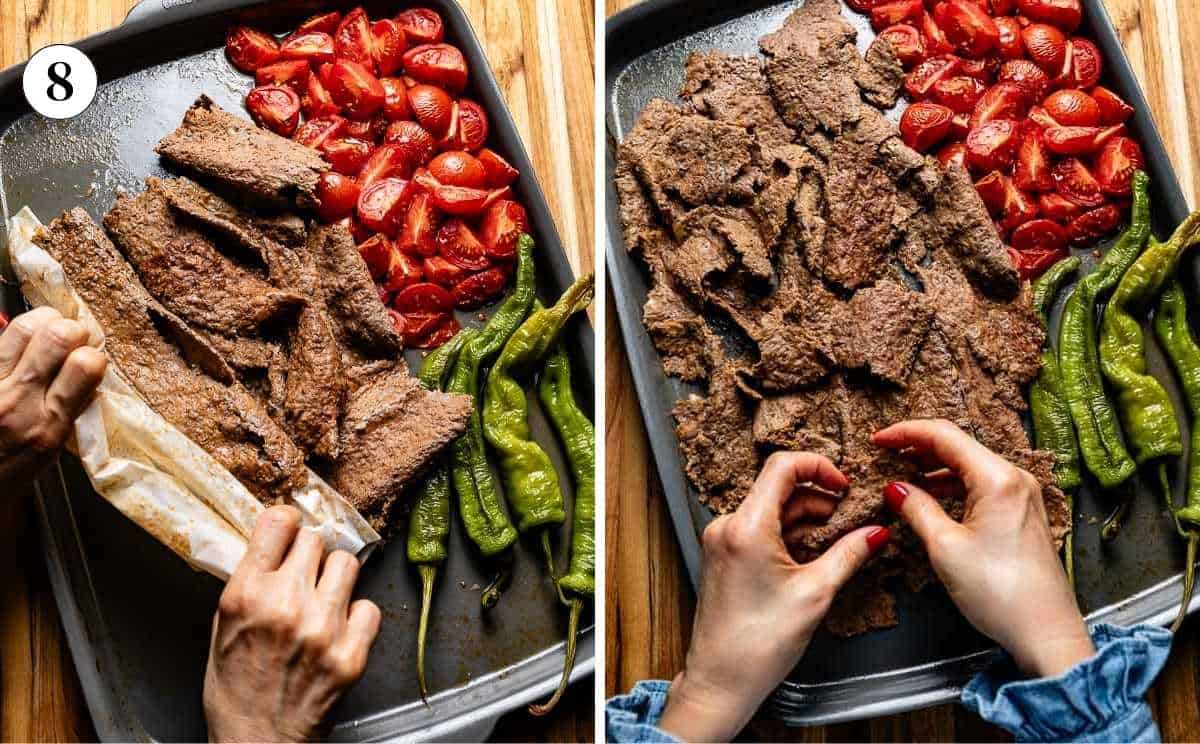
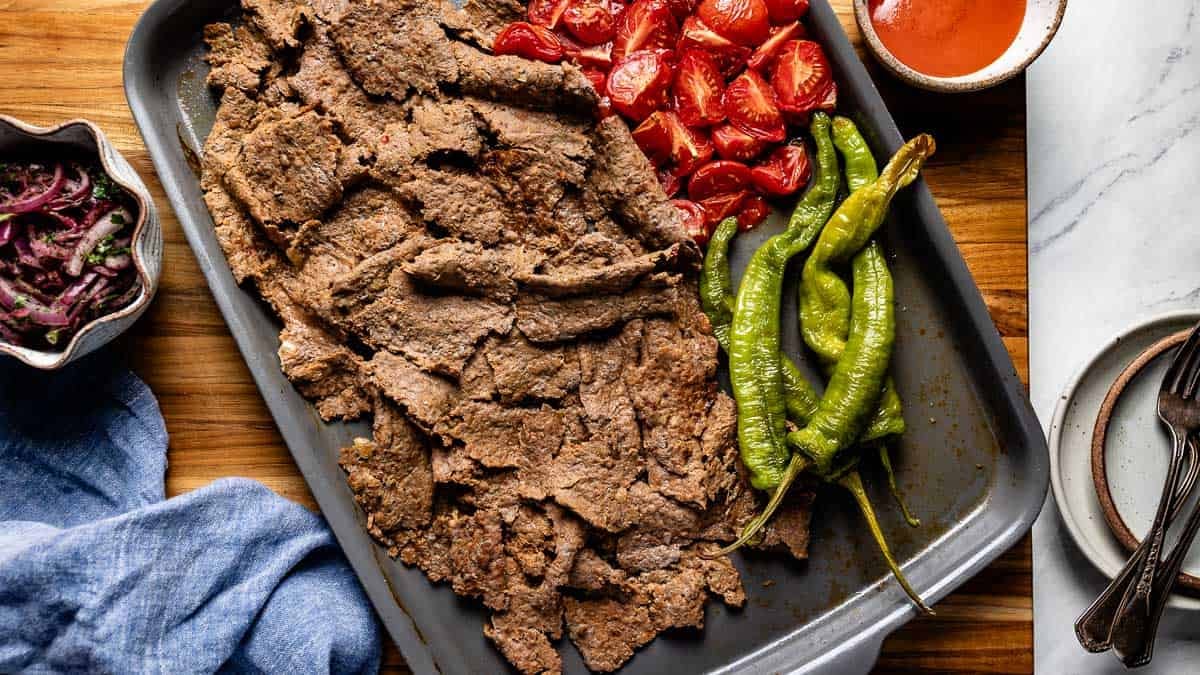
Step 8 – Tear the meat: Unroll each piece gently, then tear the meat into strips by hand. I don’t strip them down too small, just into large chunks.
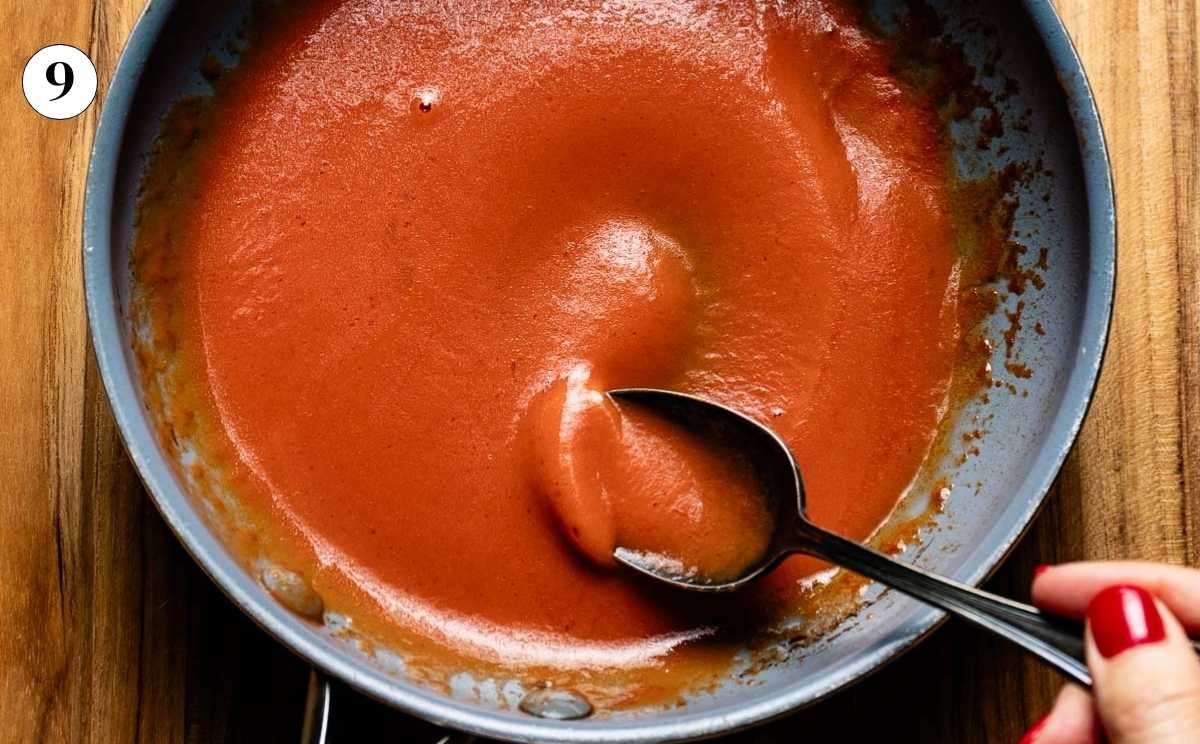
Step 9 – Make the tomato-butter sauce: Start by melting the butter in a small saucepan. Then, stir in the tomato paste using a fork (or even a whisk). At first, it will look a bit curdled, which is normal. Once cooked for 20-30 seconds, whisk in some hot water to achieve a more sauce-like consistency.
Pro Tip: Use hot (tap) water here; cold water will make the sauce harder to combine. Let it come to a gentle boil, then take it off the heat.
Expert Tips From My Turkish Kitchen
After testing this recipe multiple times (and growing up eating the real Turkish version), I’ve learned that a few small details make all the difference between a doner that tastes flat and one that tastes like it came straight from a shop in Türkiye. Here’s what helped the most:
Warm your bread: Your wrap is only as good as your bread, and there is nothing better than warmed lavash (or pita). You can quickly warm it in the oven or on a dry skillet, or simply set it on top of the warm meat for a minute to soften (and soak up a bit of the juices on top).
Even thickness when rolling: When you’re pressing the meat between the parchment sheets, you don’t want it paper-thin. We are aiming for even thickness so it cooks properly and stays juicy. If the meat spills out the sides of the parchment, just tuck it back in. Using a rolling pin makes it easier, but your hands work just as well.
Use sturdy parchment paper: Not all parchment paper is the same. Thinner parchment becomes soggy, tears easily, and makes rolling a lot harder. A sturdier brand helps the meat keep its shape, especially if you plan to refrigerate the logs overnight. I used 12×16 parchment sheets, and they held up beautifully.
Don’t overbake it: The meat cooks surprisingly fast. About 15-20 minutes is usually the perfect amount of time, and baking it any longer can dry out the meat. It should be tender enough to tear into strips.
Also, I’ve seen people put the doner meat under the broiler after unrolling it to make it “crispy”. Personally, I did not think that it was necessary as doner is supposed to be served tender and softer than crispy.
Brush and sear the wrap: This is an optional step, but if you have a few extra minutes, for a restaurant-style finish, you can brush the outside of the lavash with a little tomato-butter sauce and sear it in a skillet for 30-60 seconds or place it in a turned-off (but still warm) oven to warm it up a bit while you are assembling the rest of the wraps.
Viral Doner Kebab Recipe
Equipment
- Joseph's Lavash If you prefer a store bought option
Ingredients
For The Doner Meat
- 1 onion, medium-sized/peeled and cut into large chunks
- 2 cloves garlic, peeled
- 1 lb ground beef, 85/15
- 1 tablespoon tomato paste
- 2 tablespoons Greek yogurt, full-fat or no fat (both would work)
- 1 teaspoon ground cumin
- 1 teaspoon paprika
- ¼ teaspoon red pepper flakes, optional
- 1 teaspoon kosher salt
- ½ teaspoon black pepper
For The Vegetables
- 3 tomatoes, quartered / medium sized
- 2 green peppers
- 1 tablespoon olive oil
- ¼ teaspoon kosher salt
- ⅛ teaspoon black pepper
For The Sauce (optional)
- 4 tablespoons unsalted butter
- 2 tablespoons tomato paste
- ¼ cup hot water
- ¼ teaspoon kosher salt
For Serving (optional)
- 4 pieces lavash bread, or pita bread
- ½ cup Sumac Onions
Instructions
- Preheat the oven to 400 °F (204°C).
- Place the onion and garlic in a food processor and pulse until fully chopped/pureed. Place it in a large bowl.
- Into that same bowl, add in the beef, tomato paste, Greek yogurt, ground cumin, paprika, red pepper flakes, salt, and pepper.
- Using clean hands, mix well until thoroughly combined.
- Divide the mixture into 3 equal pieces*.
- Grab a large sheet of parchment paper and place one of the pieces in the middle. Place another sheet of parchment on top and, using a rolling pin (or your hands), roll it out into a rectangle. Do your best to make it as even as possible.
- Remove the parchment paper on top. Starting from the bottom with the short side facing you, roll the meat (with the parchment paper) onto itself in 2-inch increments until complete. Transfer it to a large sheet pan.
- Repeat the same process for the remaining pieces.
- Move the rolled meat to the side and add the tomatoes and peppers to the same sheet pan. Drizzle them with olive oil and season with salt and pepper.
- Transfer it to the oven and bake for 20 minutes.
- When done, unfold the rolled meat and tear it into large pieces.
- To make the sauce, melt the butter in a small saucepan over medium heat. Add the tomato paste and water and mix until combined. Cook until it comes to a boil and remove from the heat.
- To make “durum”, lay a piece of lavash on a cutting board and spread it with a tablespoon of tomato sauce. Add a handful of meat on top, along with some roasted tomatoes and peppers, and a handful of sumac onions (if using).
- Drizzle it with more tomato sauce and gently roll it up from the bottom, tucking the filling in as you go.
- Repeat the same process for the remaining lavash bread and doner meat. Using a sharp knife, cut it in half and serve.
Video
Notes
- Yields: This recipe makes 4 doner kebab wraps ideal for serving four adults. The nutritional values below are per serving.
- Storing leftovers: If you know you’ll have leftovers, I recommend storing all components of the recipe separately in airtight containers. If stored in the fridge, they should be good for up to 3-4 days.
You can store the wraps as well, but I recommend consuming them in the next day or two. You can reheat in a low-heat (300°F) oven until warmed to your liking. - Some versions of this recipe divide the doner meat mixture into 4 pieces (instead of 3 as I did) for 1 pound of ground meat. During my testing, I thought the doner meat made with 4 pieces was too thin to my liking, but either way would work.
Nutrition
Nutrition information is automatically calculated, so should only be used as an approximation.
How To Serve Doner Kebab?
You made the doner meat, roasted the veggies, and have the most delicious, silky tomato-butter sauce ready. Now it is time to serve. And if you want the full Turkish experience, pour yourself a cold Ayran, the simple salted yogurt drink we serve with every kebab dish.
The good news is that you have a few options:
Make A Wrap (aka dürüm):
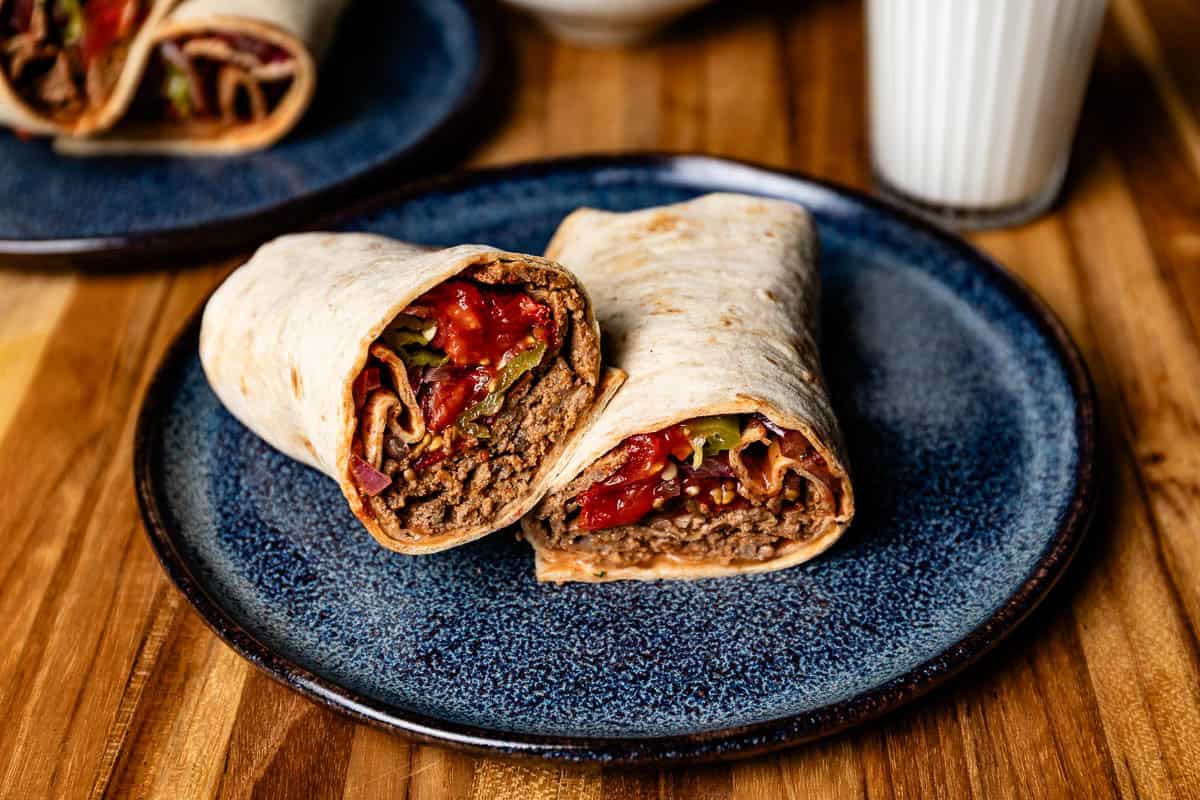
This is how they serve it in the viral videos, and, quite honestly, this is how you would find it in Turkey if you buy it from a street vendor. It is called dürüm and is usually made by rolling the meat in lavash bread.
To assemble, place a warm piece of lavash bread on a cutting board and spread it with a generous spoonful of the tomato sauce.
Add a handful of the doner meat, some roasted peppers and tomatoes, and a spoonful of Sumac Onions. Drizzle it with a tablespoon of the tomato sauce.
Roll the lavash tightly, tucking the filling in as you go. Slice in half, then serve immediately with extra sauce on the side.
Pro Tip: If you prefer something sturdier or don’t have lavash on hand, you can use store-bought or Homemade Pita Bread or any of your favorite flatbreads instead.
Iskender-Inspired Plate:
I grew up in Bursa, where doner kebab is often served Iskender-style. It uses the same ingredients you already prepared, but the assembly gives it a completely different feel.
If you want to serve your doner meat this way, place torn pieces of warm pide bread on a plate, drizzle with tomato sauce, pile the meat on top, and finish with more sauce.
Serve it with a dollop of creamy yogurt on the side, along with the roasted peppers and tomatoes.
With Rice:
Depending on the region, especially when you eat doner kebab in a restaurant, it often comes with rice, a few French fries, and some pickles on the side. After it is assembled, the tomato sauce is poured over the meat and rice, turning it into a simple yet just as delicious meal.
If you want to serve it that way at home, I highly recommend making my Vermicelli Rice to keep it as close to the real thing as possible.
How to Make Ahead, Store, Freeze, and Reheat
Make ahead: You have a few great make-ahead options:
- Prep the rolls the day before: You can fully roll the meat logs ahead of time and refrigerate them until you’re ready to bake. The only thing to keep in mind is the parchment paper. Some get soft and wet easily, so choose a good-quality one to help the logs hold their shape overnight. I like this precut parchment paper that is not only sturdy enough but also easy to roll.
- Prep the meat mixture ahead: If you’d rather roll it fresh the next day, simply mix the meat mixture, transfer it to an airtight container, and refrigerate. This resting time allows the aromatics to mingle and develop even further.
Pro Tip – Make the sauce fresh: The tomato-butter sauce only takes a few minutes to make and tastes best when made right before serving. I do not recommend making it ahead of time for the best results.
Storage: If you know you will have leftovers, store the meat, sauce, and roasted vegetables separately. They all keep well in the fridge, in an airtight container, for 3-4 days. This helps the texture stay closer to its fresh state.
If not, as long as stored in an airtight container, the rolls will still hold up nicely and keep well in the fridge for 1-2 days.
Freezing: You can freeze the doner meat in two easy ways:
- Freezing raw rolled logs: Simply wrap each roll tightly in stretch film (or place it in an airtight freezer-safe container) and freeze for up to 2 months. When you’re ready to enjoy, thaw it overnight in the fridge, then bake as directed.
- Freezing the cooked meat: After baking, tear the meat, let it cool completely, and freeze it in an airtight container or freezer bag. For the best texture, reheat it in a skillet rather than in the microwave.
Reheating: If you store the meat separately from the rest of the ingredients, you can warm it up in a skillet over medium heat with a splash of water or a little butter. I would recommend avoiding the microwave, as it tends to dry out the meat and make it chewy.
If you have leftover sauce, warm it up in a skillet and add a little warm water to thin it out.
FAQS
Yes, you can. Just keep in mind that in this recipe, more fat equals more flavor. If you are choosing to use chicken or turkey, choose dark-meat ground chicken or dark-meat ground turkey to replicate the rich flavors doner kebab is known for.
Not exactly. Traditional doner is made on a vertical spit and slowly roasted for hours. This version is a shortcut that went viral online because it captures the spirit of doner in a way that’s easy to make at home.
All three are sliced, seasoned meats cooked on a rotating spit, but the spices and toppings vary depending on the part of the Mediterranean/Middle East they are served:
– Döner is Turkish. Compared to shawarma and gyro, it is less seasoned, usually made with beef or lamb, and served with tomato sauce, savory yogurt, and grilled vegetables.
– Shawarma (Middle Eastern) is heavily spiced with ground turmeric, clove, cinnamon, and cardamom. It is traditionally made with chicken and beef.
– Gyro (Greek) includes dried oregano, garlic, and Mediterranean herbs, and is typically served with tzatziki. It is usually made with chicken or beef.
I don’t recommend it. The parchment is what helps the meat hold its shape as it bakes. Without it, the logs won’t roll tightly, and the meat can spread or fall apart.
Yes, just make sure the rolls fit inside your air fryer basket. Cook them at 400°F (204°C) for about 15 minutes. Be sure to check it around the 12th-minute mark, as air fryers tend to cook faster than ovens.
Other Turkish Recipes You Might Also Like
If you enjoyed this homemade doner kebab recipe, here are a few more Turkish recipes I think you’ll love:
- If you’re craving something bold and spicy, my Adana Kebab is as close to the authentic version as you can get at home. It’s the traditional lamb kebab I grew up eating, and this homemade version still captures the rich, smoky flavor of the original.
- For a comforting and simple weeknight dinner, my Turkish Stuffed Eggplant is a classic. The roasted eggplant with the garlicky tomato-beef filling makes it one of the most iconic dishes in Turkish cuisine.
- And if you want something quick and nostalgic, try my Turkish Meatballs. Made with just a couple of simple ingredients, they’re the meatballs I grew up eating in Turkey.
This post may contain affiliate links. If you purchase through these links, I may earn a small commission, at no additional cost to you.












I prepared this with ground lamb and upped the spices per your suggestion to an earlier comment. With a thickish cacık instead of the tomato sauce (a personal preference) it was perfect!
That sounds fantastic. Thanks for coming by and taking the time to leave a review Sebastian.
Ground lamb and cacık? Now that is a proper Turkish spread! So glad you made it your own and that it turned out perfectly. That sounds absolutely delicious to me. Thank you for sharing!
Thanks for the recipe. First time making kebab. Love the smell of the spices ☺ I pan-fried them though 🤐
Oh, that’s interesting. Thanks for sharing.
Can you help and advise why my meat was completely drained of its juices and cooked / leaked all over my pan? Meat was quiet dry because it all rendered out:(
Hello Nicole,
Thank you for sharing this and I am sorry to hear it happened.
The most likely culprit is the fat content of the ground beef. Do you remember the fat content of your ground beef?
My recipe calls for 85/15 specifically because higher fat ratios (like 80/20) will render out much more during baking and leave you with a drier result. If you used a fattier blend, that would explain the liquid pooling on the pan.
The second thing to check is the thickness of your rolls. If they were rolled too thin, the meat cooks faster and loses moisture more quickly. The goal is an even layer that is neither too thin nor too thick.
In both scenarios, the best thing to do is to check it a bit earlier than 15 minutes.
I hope this helps.
This meal is a huge hit in our house! I like letting the meat mixture sit for a few hours to overnight to maximize the flavor before rolling it out. The sauce and peppers are delicious. Thank you for the recipe! 🙂
I am so happy to hear that you enjoyed this recipe Sarah. Thank you so much for coming by and taking the time to leave a review.
My son made these per my request. He did both versions, lamb and beef. I was amazed how perfect these turned out….delicious and just like pictured. We preferred the beef version. The grass feed lamb was quite gamey, but still tasted good. Flavors were subtle and blended well with each other. He will make again!
This is music to my ears Zina. Thanks so much for sharing your experience.
PS: I usually mix ground lamb with beef (50/50) to tame the gamey flavors of lamb. I highly recommend trying that version too.
I made this exactly according to the recipe. I have to say it was….ok. Wouldn’t make it again. I found the flavour rather bland compared to my local doner place. I like the idea of it, but need to search for a recipe with bolder flavours. The sauce was awesome though
Hi Greg,
Thank you for sharing your honest feedback! I’m glad you enjoyed the sauce.
Regarding the flavor, it’s important to note that this recipe is designed as a weeknight-friendly shortcut, rather than a traditional Turkish Döner. To get that authentic, deep flavor of a traditional Turkish Döner kebab, you typically need hours of marinating with a lot more spices, layered meat on a vertical rotisserie, and a high ratio of rendered animal fat.
Let’s be honest, those elements aren’t always practical for a quick home dinner.
For this version, I stayed true to the viral recipe and intentionally kept the spices more on the conservative end to make it approachable for a wide range of palates.
However, if you’re looking for that ‘restaurant-level’ punch, you can easliy customize it according to your tastebuds. Below is where I would start:
Increasing the spices: Use 1/4 teaspoon more of the cumin, paprika, and one or two more minced fresh garlic. Perhaps, add some ground coriander and Urfa chili in there as well.
Marinating: Letting the meat sit with the spices for several hours (or overnight) to helps flavors to meld.
Add more fat (just like they do in restaurants): Using a higher-fat ground meat (perhaps 80/20 ratio) or adding a bit of oil or butter to mimic the richness of the spit-roast.
I appreciate you giving it a try, and I hope these tweaks help you find that bolder flavor profile you’re looking for!
Made this for dinner tonight along with your recipes for lavash bread and sumac onions. Turned out absolutely great, wouldn’t change a thing. Cooking times and proportions were right on the money. I’ll be making this again and again.
This is music to my ears Barney. I am thrilled to hear that you liked it. Thank you so much for coming by and taking the time to leave a review.
I truly appreciate it.
Aysegul
Oh my lord! I am officially addicted to this.. I made these last night and they are the most divine tasting, quick, easy, low fuss, low mess, simple and delicious meal I have made. These are going to be on rotation in my meal plan from now on!
Hello Nicole,
I am thrilled to hear that you liked it. I, too, make it all the time and it is just the best easy weeknight dinner.
Thanks so much for coming by and taking the time to leave a review.
I’ve seen so many versions of this viral doner kebab online, but being Turkish, I have to say, I’ve never seen one that’s so traditional, so flavourful and so exactly like what you would find in Turkey. Thank you for sharing. My taste buds are hooked, and this is definitely going into our weekly menu 😋
I am thrilled to hear that you liked it Melis. I, too, was so surprised how good it tasted. What a fun and clever trick, isn’t it?
Thanks for coming by and taking the time to leave a note.
I don’t know much about Turkish cooking which was why I was hesitant to try this recipe after seeing it all over social media. It looked so good I couldn’t resist. This recipe was AMAZING! So easy to follow and gave me the results I was seeing all over my feed. 10/10 recommend!!
This makes me so happy to hear. Thanks for coming by and taking the time to leave a review.