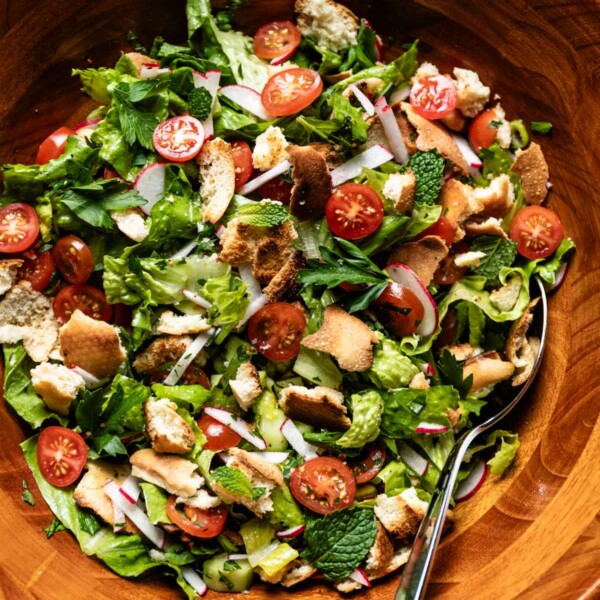
What is Fattoush

Fattoush is a Levantine chopped salad created to use up leftover bread, which is why you will also see it called Lebanese bread salad. The modern version uses leftover pita, toasted or fried until crisp, for a welcome crunch against all the fresh vegetables.
The salad itself is a simple mix of tomatoes, cucumbers, and radishes with plenty of fresh mint and parsley. What sets fattoush apart is the dressing: olive oil, lemon juice, sumac, and pomegranate molasses come together for the bright, tangy flavor the dish is known for.
In case you were wondering: it is pronounced fa-TOOSH (rhymes with ‘smoosh’).
In our house, this is a summer staple. I make it the day after I bake a batch of homemade pita, when tomatoes are at their peak. And it is never really served on its own, because fattoush is one of the best salads to pair with kebabs, which in this Turkish household are the menu du jour all summer long.
As with any simple recipe, technique is everything, and here it comes down to the bread.
Most fattoush recipes lose the crunch by adding the pita too early, undercooking it, or slicing it too thick. My method fixes all three, so every bite stays crisp, instead of being a soggy mess.
Fattoush Salad Ingredients
You can find everything at your local grocery store, though a summer farmer’s market will get you better, locally grown vegetables if you have one nearby.
I list exact measurements in the recipe card below. Here are a few notes to help you shop and prepare to make the salad.
For The Salad
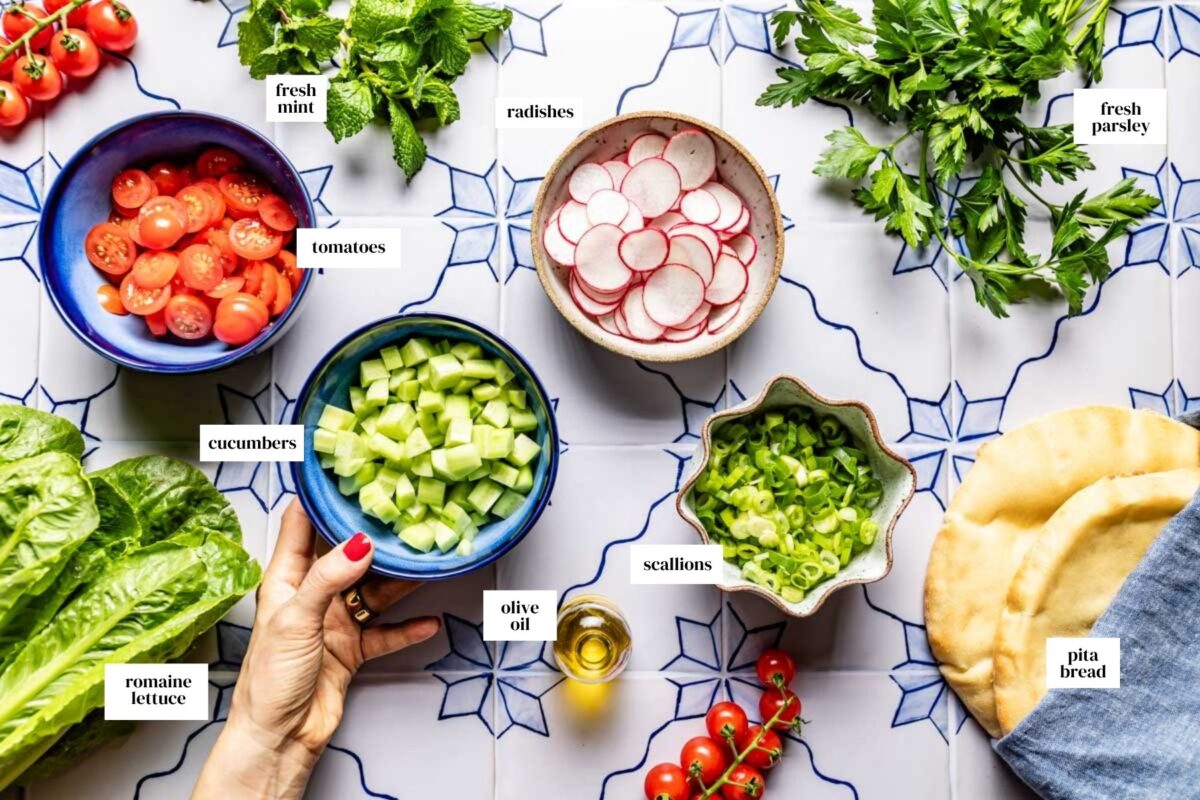
Pita: You can make pita at home or buy it from the store. Look for the thin, pocket-style pita, which crisps up best when frying or baking.
Romaine lettuce: Wash the leaves under cold water, then dry them thoroughly so the dressing can coat them rather than slide off.
Cucumbers: I like sweet, crunchy Persian cucumbers here, but English cucumbers work too. If you leave the skin on, taste it first to make sure it is not bitter. Slice thinly or cut into small chunks; both work.
Tomatoes: Cherry tomatoes are my summer pick for their sweetness, but any tomato works. Just cut them into even pieces.
Green onions: I use thinly sliced green onions for their mild flavor, but red onions work too.
Radishes: Red radishes are the classic choice for the traditional Fattoush salad. I slice them thin, stack the slices, and cut them into sticks so they distribute evenly through the salad, which helps minimize their bitter taste.
Fresh herbs: Parsley and mint are traditional, but I also love adding dill. Mix and match as you like.
For The Dressing
The fattoush salad dressing keeps things simple at its core: extra virgin olive oil, lemon juice, and garlic. Two ingredients are worth knowing more about, especially if you are new to fattoush:
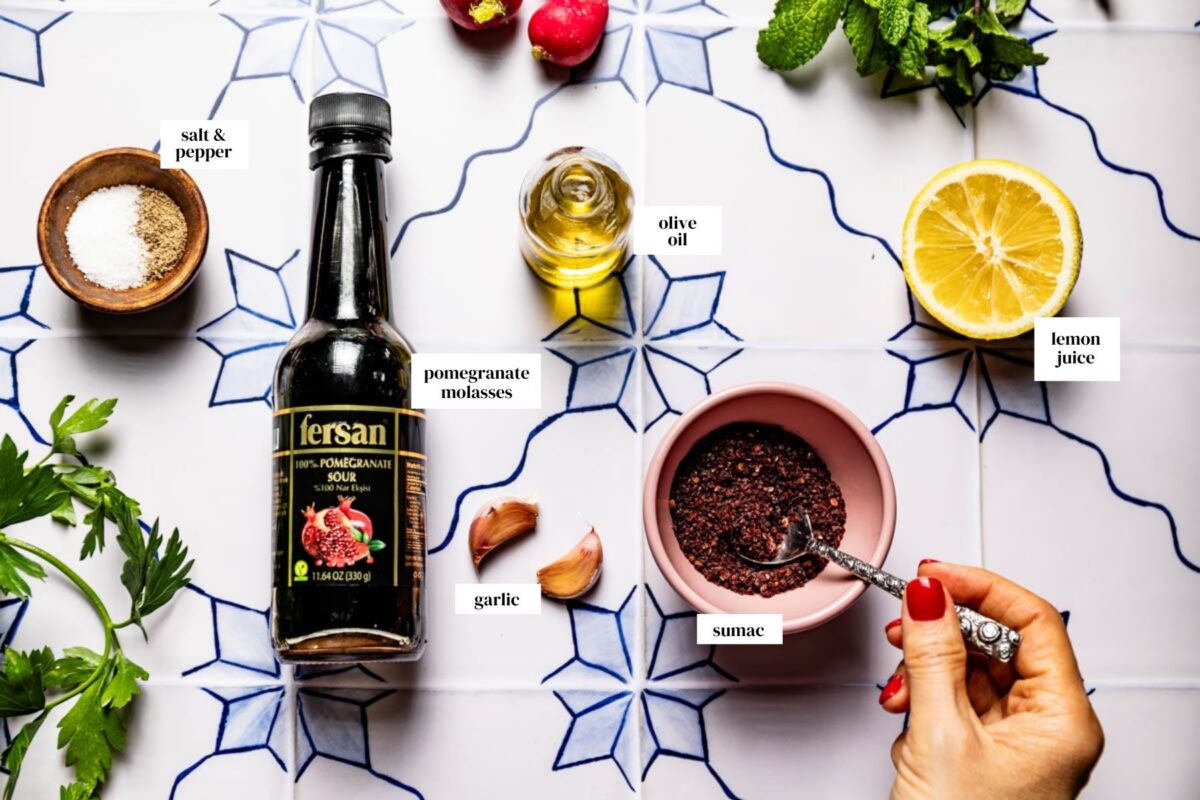
Sumac: Made from dried, ground sumac berries, it looks a little like red pepper flakes but tastes nothing like them, tart and lemony rather than spicy. It is the signature flavor of fattoush, and hard to replace, so it is worth seeking out.
Find it in the Middle Eastern or spice section of most supermarkets, at spice shops, or online.
Pomegranate molasses: Made by boiling pomegranate juice into a thick syrup, it adds a deep, sweet-tart flavor that sets this dressing apart from a plain lemon vinaigrette.
Find it in the Middle Eastern section of the supermarket or online. When shopping for it, look for a brand that uses no added sugars.
It is worth buying if you can, but if you do not have it, you can leave it out or use the easy substitution below.
Substitute for Pomegranate molasses: Mix 1 tablespoon of honey, agave, or maple syrup with 1 teaspoon of lemon juice to replicate a similar flavor. It will not have the deep, fruity sweet-tang that pomegranate molasses is known for, but it comes close.
How To Make Fattoush Salad
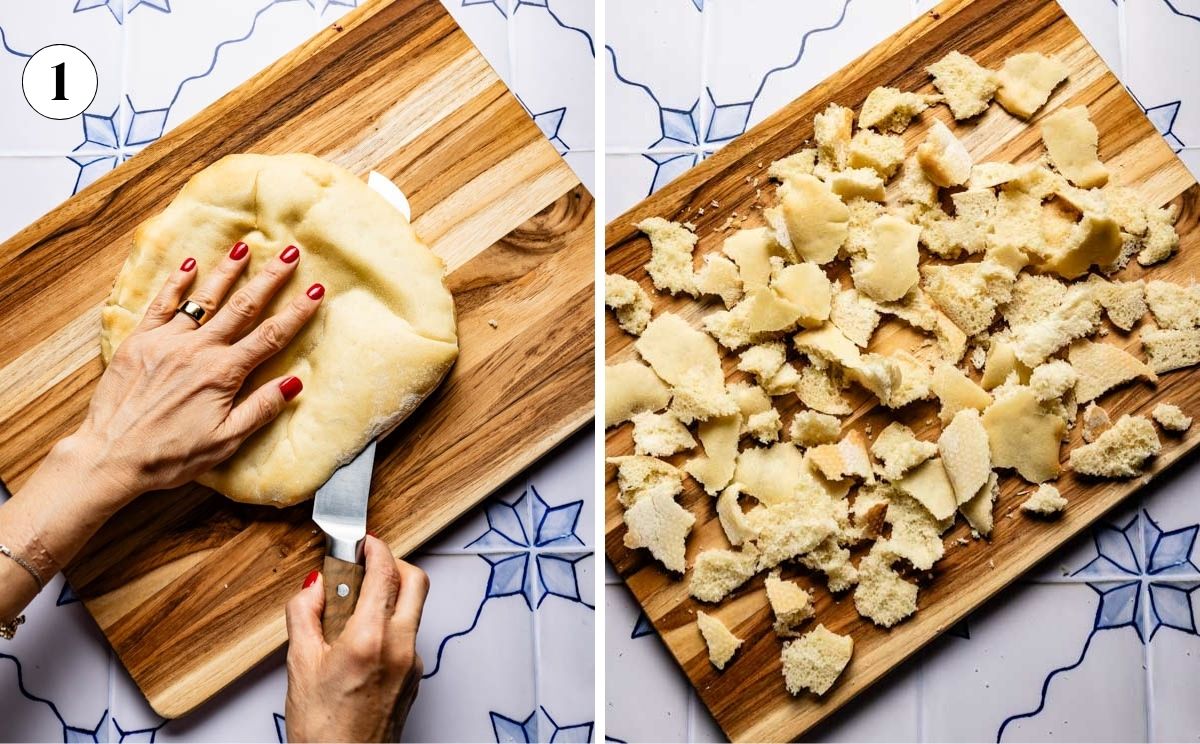
Step 1 – Prepare the pita: Most recipes go straight to cutting or tearing the pita into pieces. The problem is that thick pieces soak up a lot of oil when you fry them.
Instead, I split each pita open along the pocket seam into two thin rounds by hand or with a serrated knife. Then cut them into large pieces, or tear them the traditional way for a more rustic look.
Thinner bread means more contact with the pan, so you get a potato-chip crisp without much oil.
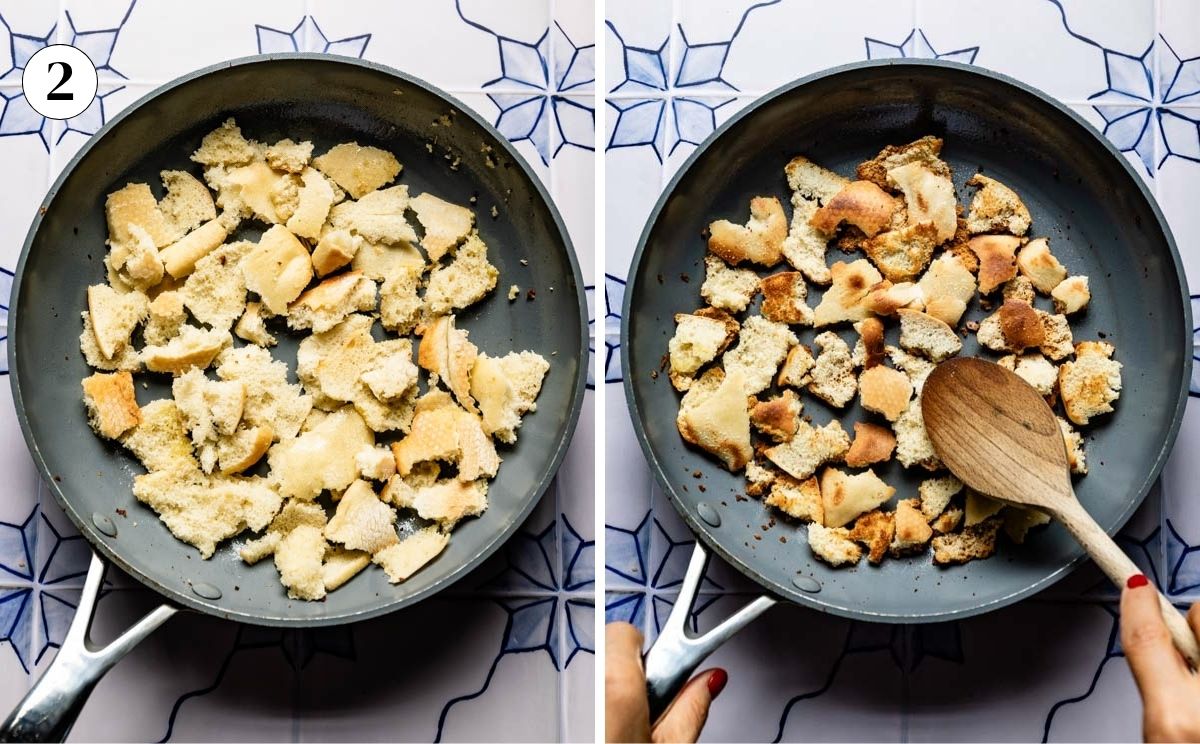
Step 2 – Fry the bread: Heat a tablespoon of olive oil in a large skillet over medium heat. Once shimmering, add half the pita and fry, tossing often, for about 5 minutes, until lightly golden.
Frying in two batches keeps the pan from crowding and crisps the bread evenly in less oil. Keep a close eye on it and stir often to ensure even browning, then transfer to a plate.
Repeat with the second batch, season with salt, and set aside.
Prefer to bake instead? Follow my Homemade Pita Chips recipe for the oven-baked version.
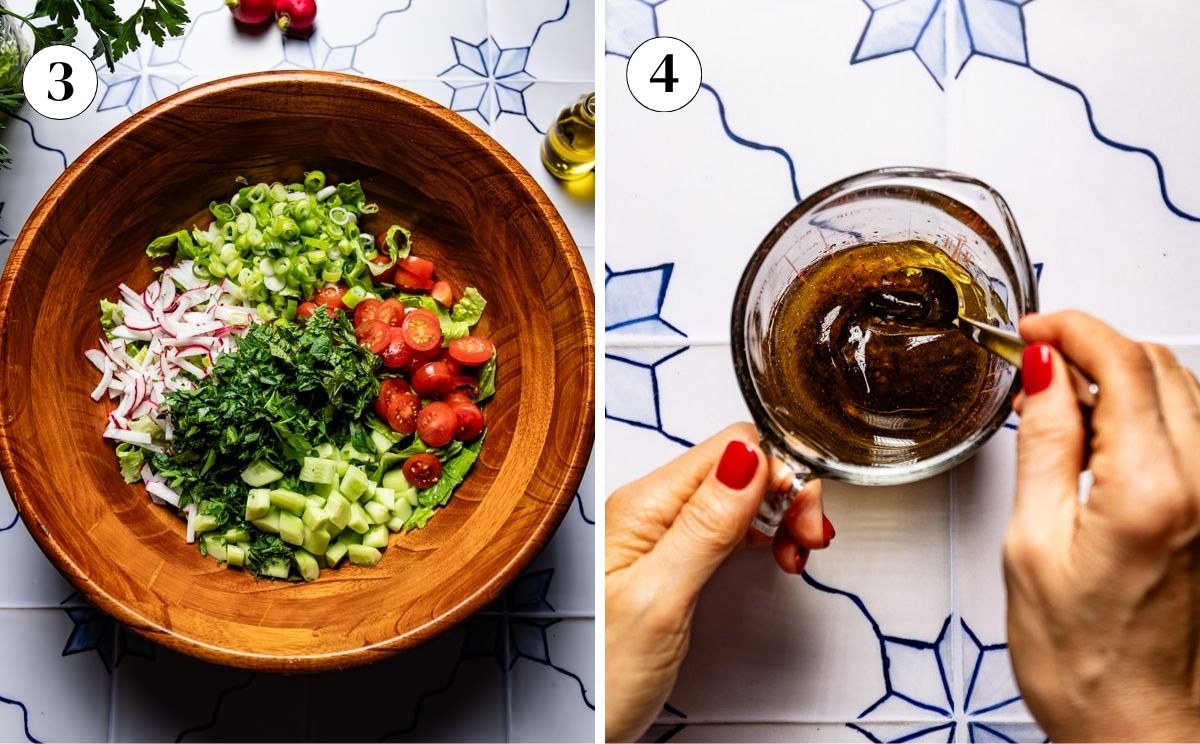
Step 3 – Make the salad: Into a large salad bowl, add chopped romaine, cucumbers, cherry tomatoes, green onions, radishes, fresh mint, and parsley.
Step 4 – Make the dressing: Whisk together the olive oil, lemon juice, pomegranate molasses, garlic, sumac, salt, and pepper until fully combined. Taste and adjust.
Other ways to use this dressing: It’s not just for fattoush. It is a classic Middle Eastern dressing, so it is just as good drizzled over a simple plate of tomatoes and cucumbers. A few readers have even told me they use it to marinate chicken.
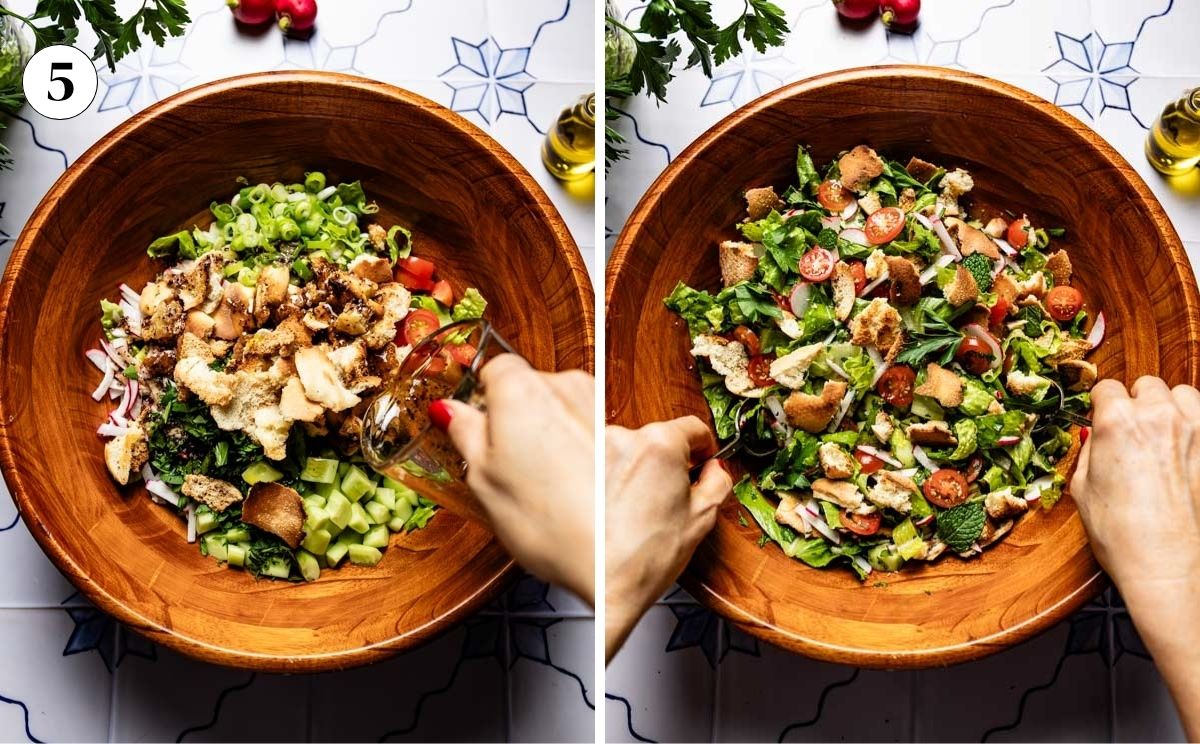
Step 5 – Drizzle, Toss, and Serve: Right before serving, add the fried pita to the salad, drizzle with the dressing, and toss well.
Pro tip: Add the pita at the very last minute. Once it hits the wet dressing and vegetables, it starts to soften, so the later it goes in, the crisper every bite stays.
How To Make Ahead and Store Leftovers
Make ahead: You can make the fattoush dressing a day or two ahead, shake it in a mason jar, and keep it in the fridge.
The pita can also be fried or baked a day in advance and stored in an airtight container on the counter.
On the day you are serving, cut the vegetables and assemble the salad as written.
Storage: This salad is truly best on the day it is served.
That said, leftovers can be kept in an airtight container in the refrigerator for 2 to 3 days. The pita will soften as it sits, but the salad still tastes delicious.
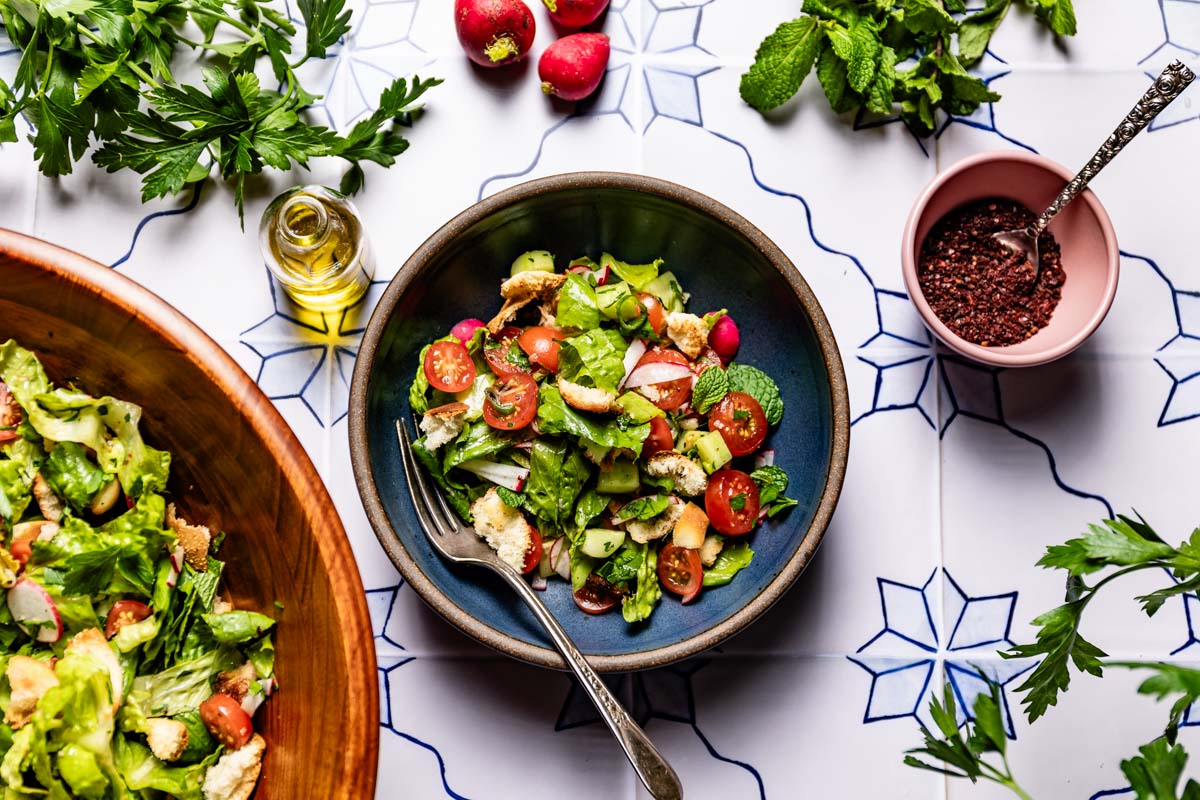
What To Serve with Fattoush
In Turkish and Levantine homes, fattoush is rarely served on its own. It makes a wonderful side to almost any Mediterranean or Middle Eastern main. A few of my favorite pairings:
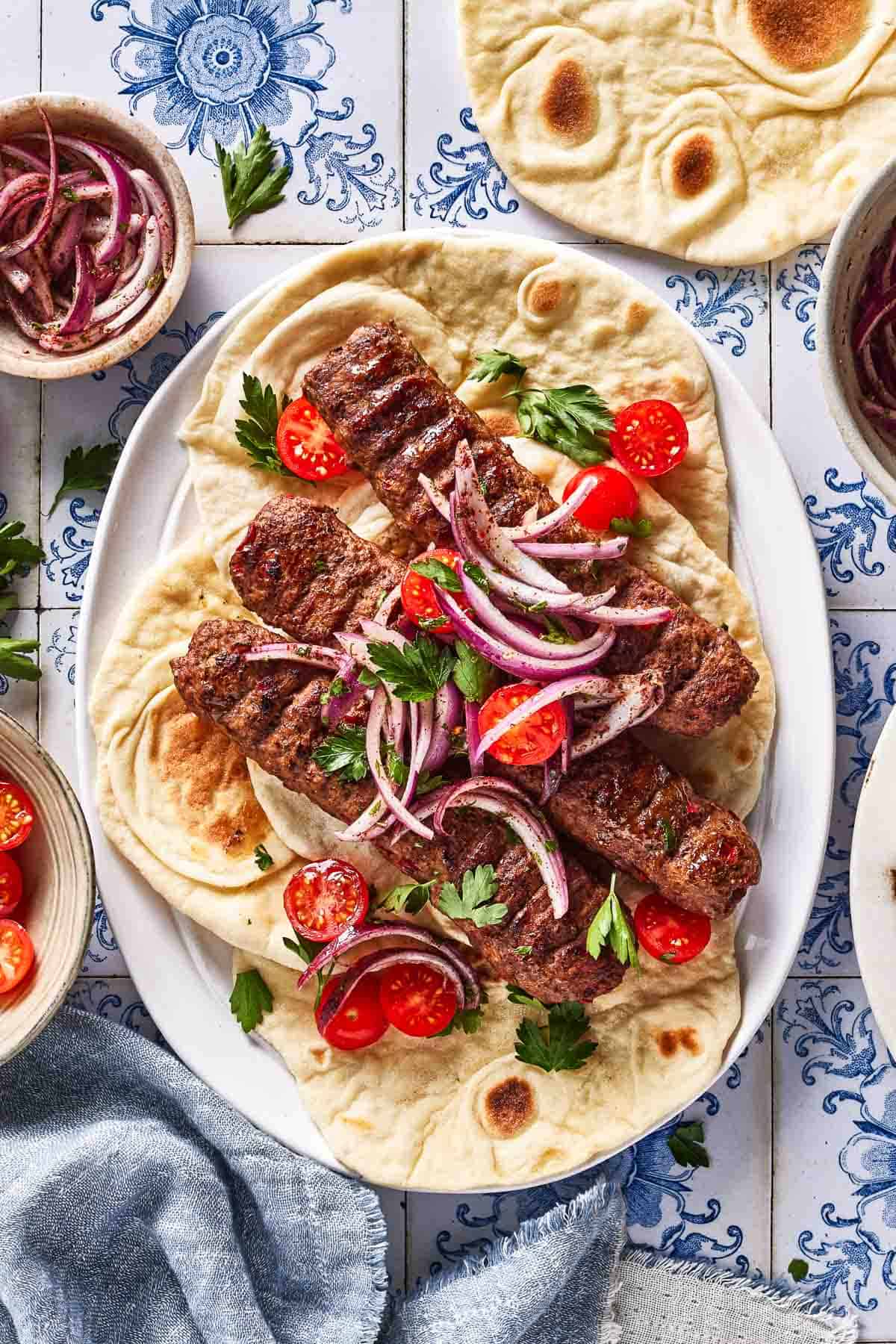
Kebabs: Fattoush is the perfect partner for kebabs; its sweet-tangy taste balances all that rich, spiced meat. Serve it with Turkish Adana Kebab, Shish Taouk, or Beef Kofta Kebabs.
Grilled chicken: For a quick weeknight dinner, top your fattoush with grilled chicken to make it a chicken fattoush salad. Use my Harissa Grilled Chicken if you want a little more heat.
Seafood: Pair it with my Grilled Shrimp Skewers, or serve it alongside Roasted Branzino for an easy weeknight dinner.
Lamb: Fattoush and lamb are as classic as it gets. I love it with my BBQ Rack of Lamb through the warmer months.
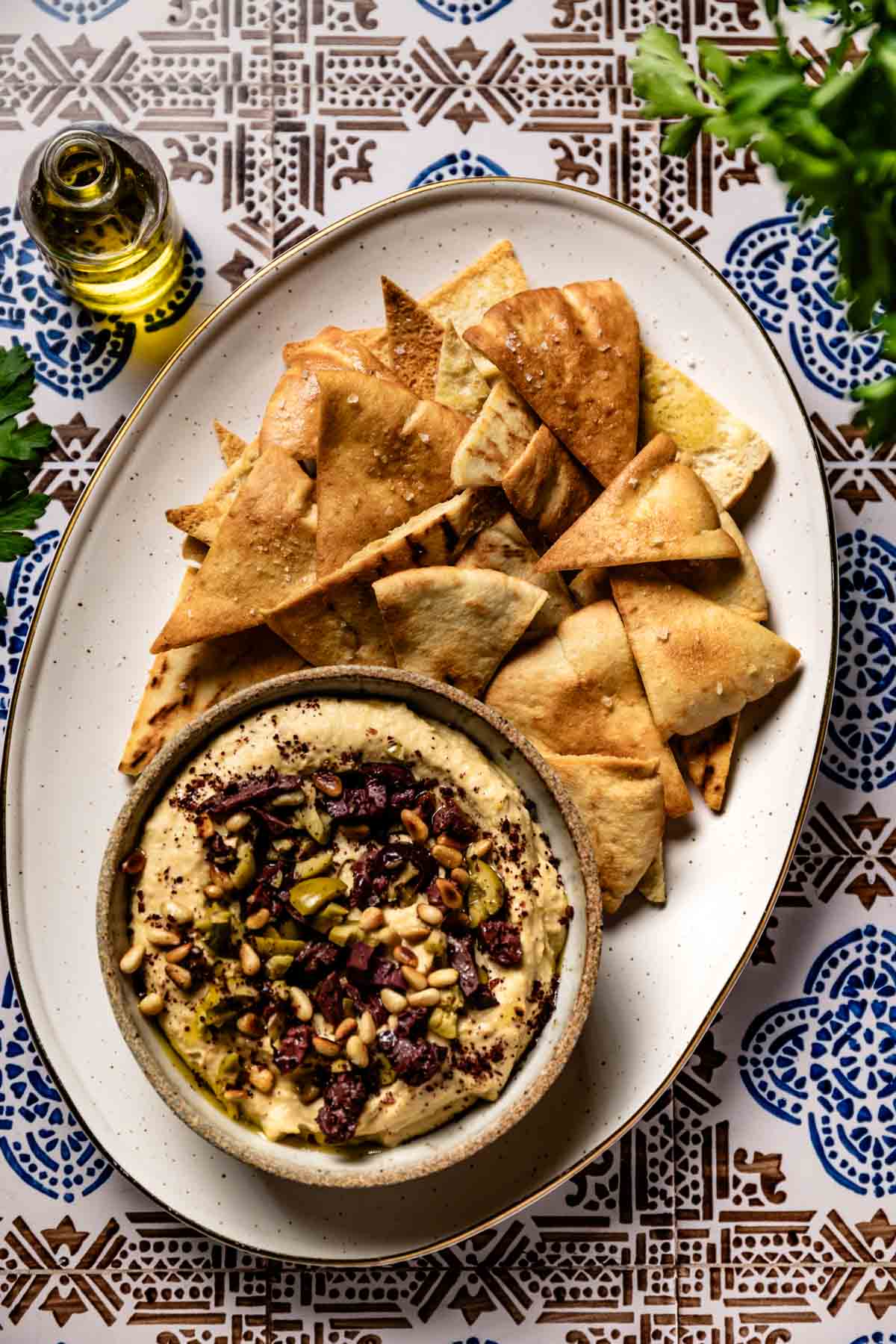
Mezze: To serve it the traditional way, make it part of a mezze spread alongside classics like Hummus, Babaganoush, and Muhammara.
Other Mediterranean Salads You Might Also Like
Fattoush is a classic, but it is far from the only Mediterranean salad worth keeping in your rotation. A few I make often:
- My Shepherd’s Salad is Türkiye’s most popular summer salad and a great way to use up ripe tomatoes.
- Tabbouleh is the classic parsley and bulgur salad, the one to make when you have a big bunch of fresh herbs to use.
- For something simple, my Greek Cucumber and Tomato Salad strips it back to the essentials, no herbs or bulgur, just crisp vegetables and a good dressing.
This post may contain affiliate links. If you purchase through these links, I may earn a small commission, at no additional cost to you.
Fattoush Salad Recipe
Ingredients
For The Bread
- 2 pitas
- 2 tbs olive oil, divided
- ½ tsp kosher salt
For The Salad
- 1 head romaine lettuce, rinsed and cut into 1-inch strips
- 3 Persian cucumbers, or 1 English cucumber (peeling is optional), sliced thinly
- 1 cup cherry tomatoes, cut in half
- 4 stalks green onions, or ½ cup thinly sliced red onion
- 5 red radishes, cut into thin slices or matchsticks
- ½ cup fresh mint leaves, chopped
- ½ cup fresh parsley leaves, chopped
For The Dressing
- ¼ cup extra virgin olive oil
- 3 tbs lemon juice, freshly squeezed
- 1 tbs pomegranate molasses, read notes for substitution
- 1 clove garlic, minced
- 1 tsp sumac
- ½ tsp kosher salt, more to taste
- ¼ tsp ground black pepper
Instructions
- Using a knife, split each pita open along the pocket seam into two thin rounds, keeping one hand flat on top to steady it. Then tear into bite-sized pieces.
- Heat 1 tablespoon olive oil in a large skillet over medium-high heat until shimmering.
- Add half of the pita and fry until crisp, stirring often, about 5 minutes or until lightly browned.
- Repeat with the remaining 1 tablespoon of olive oil and torn pita bread.
- Season the now-fried pita bread with salt and set it aside to cool while working on the salad ingredients.* (baking instructions are in the notes below)
- Place chopped romaine, cucumbers, cherry tomatoes, green onions, radishes, mint, and parsley in a large salad bowl and set it aside.
- Place olive oil, lemon juice, pomegranate molasses, garlic, sumac, salt, and pepper in a small bowl and whisk until thoroughly incorporated. Taste for seasoning and adjust according to your taste buds.
- Right before serving, add the crisp pita and drizzle everything with the dressing. Toss to combine. Serve immediately with more sumac on the side.
Notes
- Yields: This recipe makes about 7-8 cups of salad, ideal for serving as a side dish for 6 adults. The nutritional values below are per serving.
- Substitution for Pomegranate molasses: Mix a tablespoon of honey, agave, or maple syrup with a teaspoon of lemon juice to replicate a similar flavor. It will not have the deep, fruity sweet-tang that pomegranate molasses is known for, but it comes close.
- Can I make pita chips in the oven? You sure can. Heat oven to 400°F. Brush 2 whole pitas with a tablespoon of olive oil on both sides, cut each into 8 triangles, spread on a baking sheet, and bake for 8 to 10 minutes, tossing halfway.
Nutrition
Nutrition information is automatically calculated, so should only be used as an approximation.