
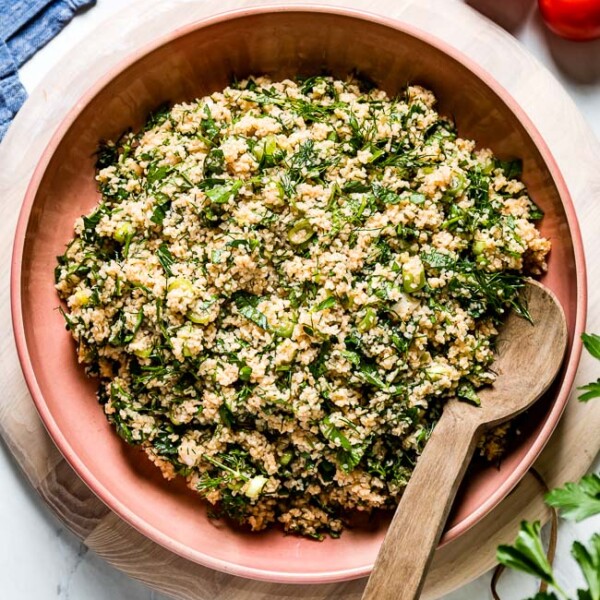


You cannot talk about Turkish cuisine without mentioning bulgur wheat. And you cannot speak about bulgur recipes without mentioning tabouleh, also known as Middle Eastern Parsley salad. It is that simple.
I grew up in Türkiye, where bulgur was a staple in our house. Like in many Turkish homes, it was my mom’s everyday starch, the side she reached for to round out a main dish.
In summer, when the herbs were in abundance, and it was too hot to cook much, she made tabbouleh a few times a week. It was the side dish of the season, and I made it at her elbow more times than I can count.
Years later, when I moved to the US, I learned that most people here think of tabbouleh as Lebanese. But in Türkiye, it has always been a household staple, and one of the best ways to use up the freshest herbs of summer.
This is the version I grew up eating, the one my mom called kisir.
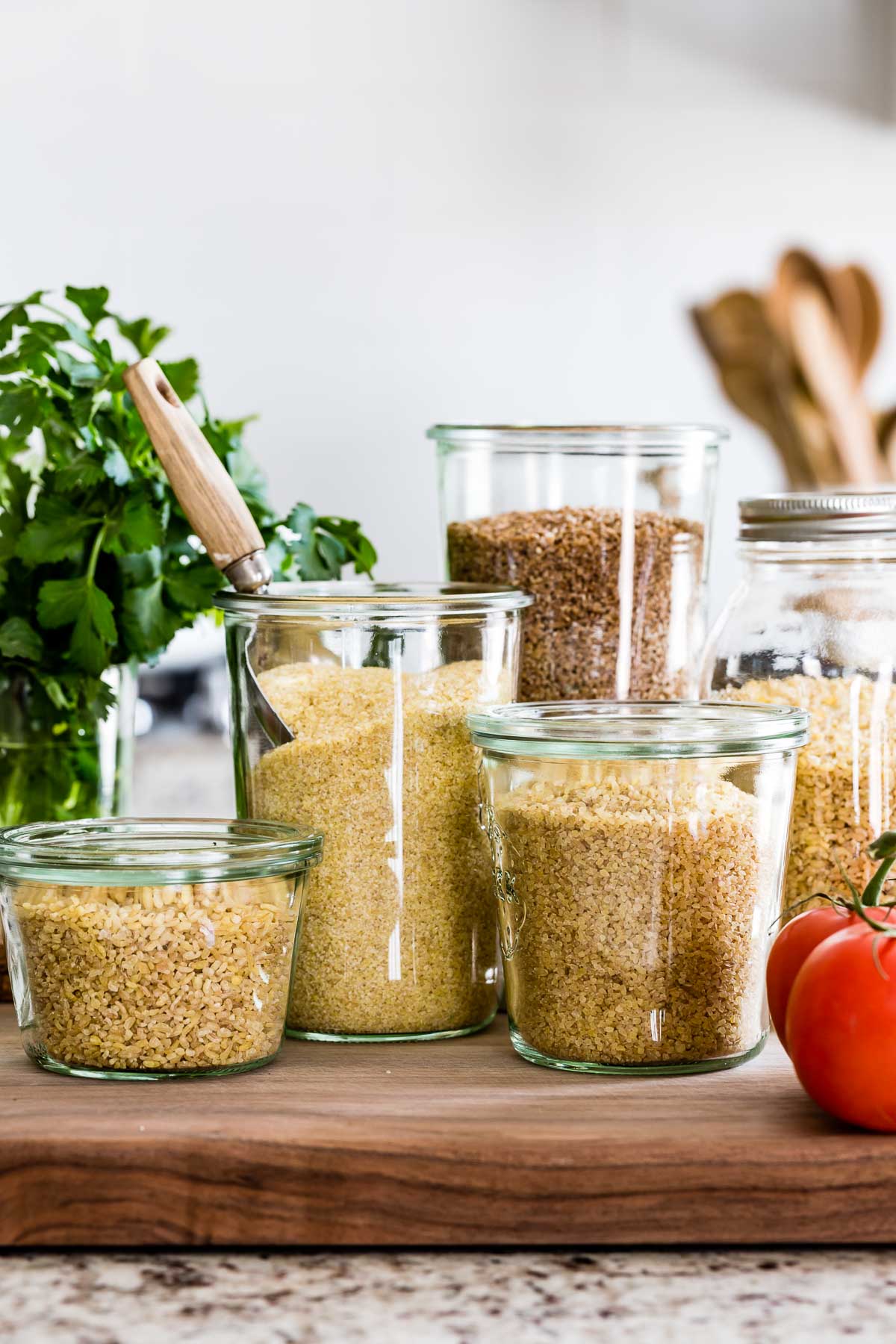
If you are new to cooking with bulgur and need a refresher, be sure to check out the posts I wrote on Types of Bulgur and How To Cook It based on the type you are using.
In today’s post, I will share everything you need to know about making tabbouleh salad, including but not limited to:
- The origin of it
- Ingredients you will need
- The procedure with step-by-step how-to photos,
- Variations
- And my mom’s tips for the best tabouli recipe.
What Is It & Where Is It From
Tabbouleh, also known as tabouli and tabouleh salad, is a fresh herb (mostly made with fresh parsley and mint) salad made with fine bulgur (parboiled cracked wheat). It is mainly served as a meze or a side dish similar to other Middle Eastern recipes like Tzatziki sauce and Mediterranean hummus.
Tabbouleh comes from the Levant, the stretch of the Eastern Mediterranean that includes Syria, Lebanon, Israel, Palestine, Jordan, Türkiye, and Iraq.
I cannot claim to know every version, but I can tell you that in this part of the world, some take on a herb-and-bulgur salad shows up on tables all summer long. The one I know is this Turkish one, made the way my mom made it.
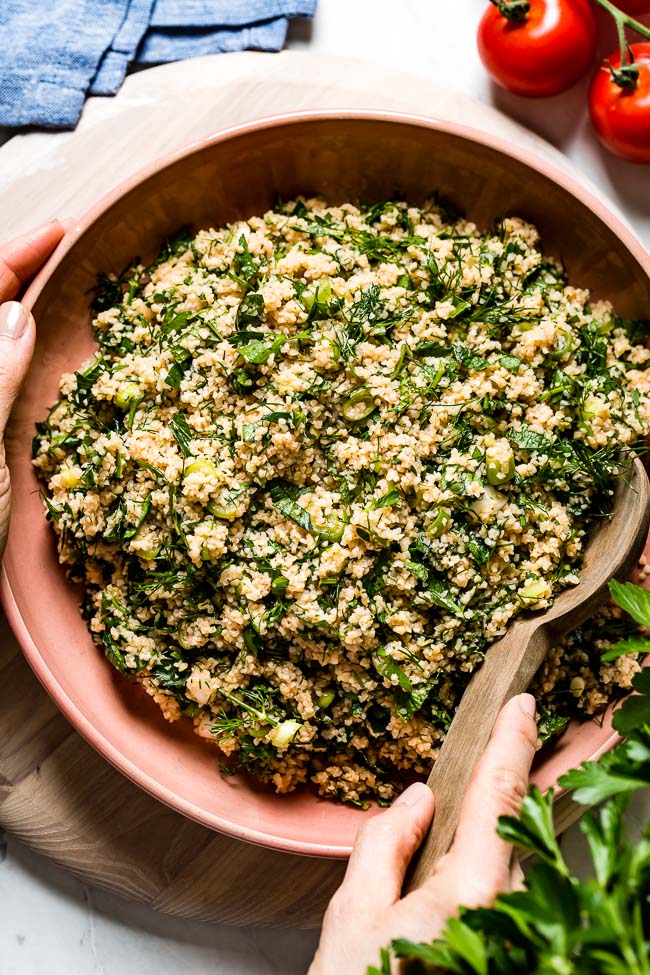
While most popular tabouli recipes are labeled as Lebanese, it is commonly made in the Middle East (Arab countries) and Mediterranean regions (including Cyprus and Greece).
So, how is the Turkish way different from the Lebanese one? A few things:
A mix of herbs: I use parsley, dill, and mint together. The Lebanese version is mostly parsley.
How the bulgur is cooked: I soak mine in hot water before mixing. In the Lebanese method, the bulgur softens in the lemon and oil, rather than in the water.
More bulgur: The Lebanese version uses far less. Mine leans on the bulgur.
What Is It Made Of
To make it easier, I am breaking down the ingredients for my homemade tabouli recipe into four categories:
Fine Bulgur:
The authentic tabbouleh recipe uses fine bulgur (also known as #1 bulgur), but if you cannot get your hands on it, you can also use medium-coarse and red bulgur. The cooking method would be different, but it would still work.
If you want to purchase it online, this fine bulgur (affiliate link) is the one I always buy.
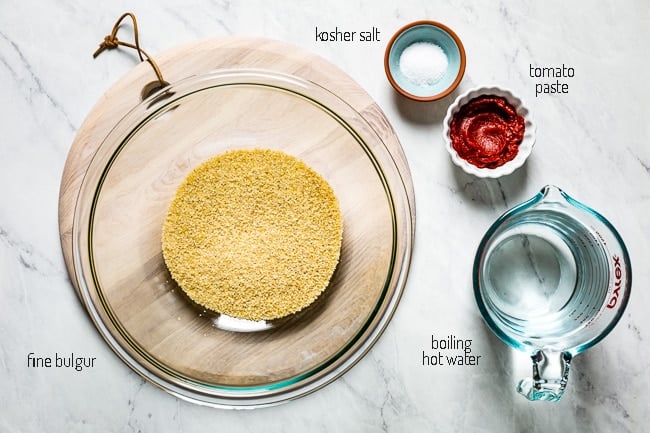
To soak fine bulgur, you will need boiling water, tomato paste, and salt.
A Quick Note on the Amount of Bulgur I Use:
I cook 1 cup of fine bulgur, but if you prefer less, feel free to use less. The bulgur-to-water ratio I use is 1:1.25. In other words, I use 1 cup of bulgur wheat to 1 1/4 cups of water.
If you decide to use less bulgur, be sure to adjust the amount accordingly.
Salad Ingredients:
- Fresh Herbs: I used a combination of flat-leaf (Italian) parsley, mint, and dill.
Can I use a food processor to chop the herbs? I highly recommend against it as it will bruise the delicate leaves of these fresh herbs. Traditional tabouli is made by chopping the herbs by hand with a sharp knife.
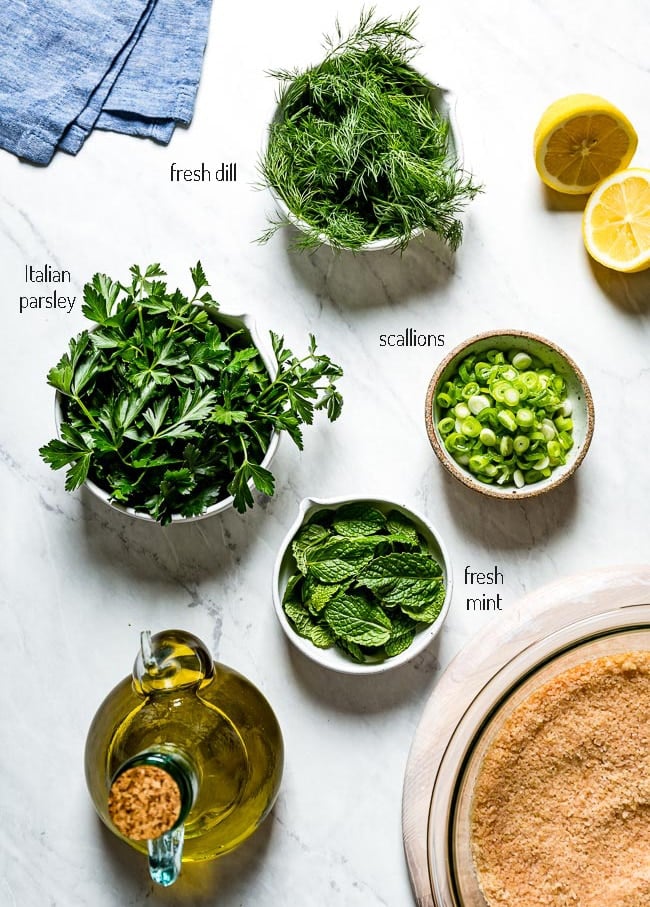
A quick note on fresh herbs: Most recipes feature parsley as the only herb, so this salad is also called Mediterranean Parsley Salad. While my version uses a combination of fresh parsley, dill, and mint, if you prefer, you can leave out the mint and dill and use parsley instead.
- Scallions: Finely chopped with both green and white parts. It is not traditional, but you can substitute scallions with chopped red onions.
The Dressing:
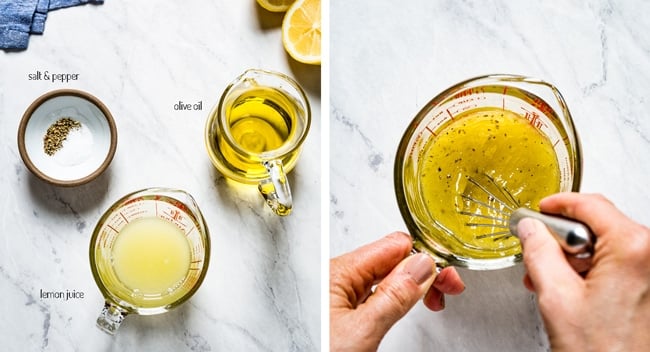
The tabbouleh dressing is made with olive oil and lemon juice, and seasoned with salt and pepper.
Optional Spices:
I kept my easy tabbouleh recipe simple and used only salt and pepper. However, my mom would always sprinkle it with sumac. I recommend using it if you have some, as it adds a layer of zesty flavor to the overall dish.
How To Cook Bulgur for Tabouli
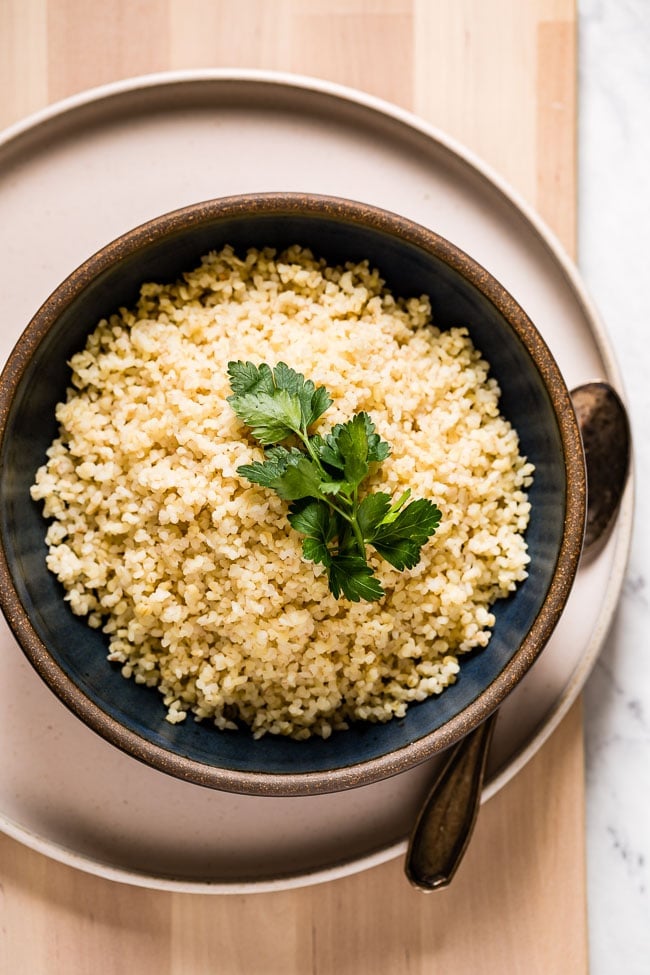
As I mentioned earlier, since fine bulgur is thin and cooks quickly, we prefer to soak it in hot water rather than boil it on the stovetop. To do so:
- You will need a large bowl: Place fine bulgur in a large bowl (one that is big enough to make the salad)
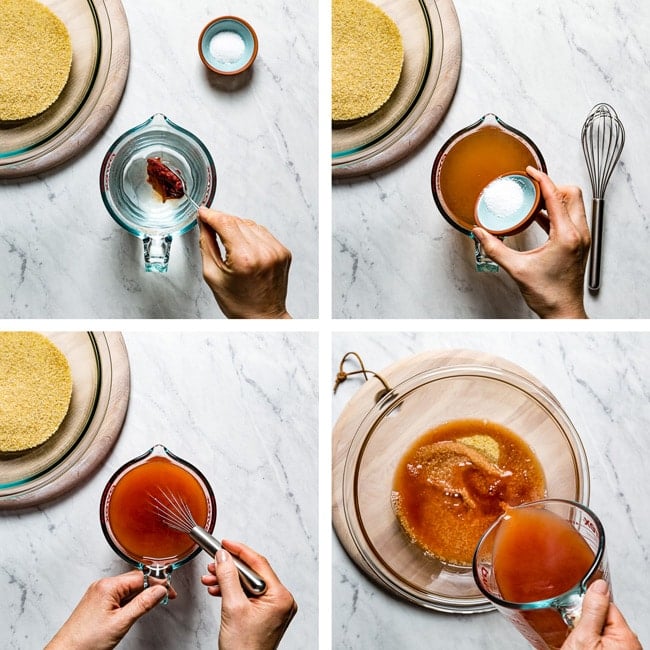
- Prep the liquid mixture: In a measuring cup, mix 1 ¼ cups of hot boiling water with 2 tablespoons of tomato paste and 1 teaspoon of salt (I used Diamond kosher salt.)
- Pour it in: Pour the mixture into the bowl, making sure the bulgur is fully covered.
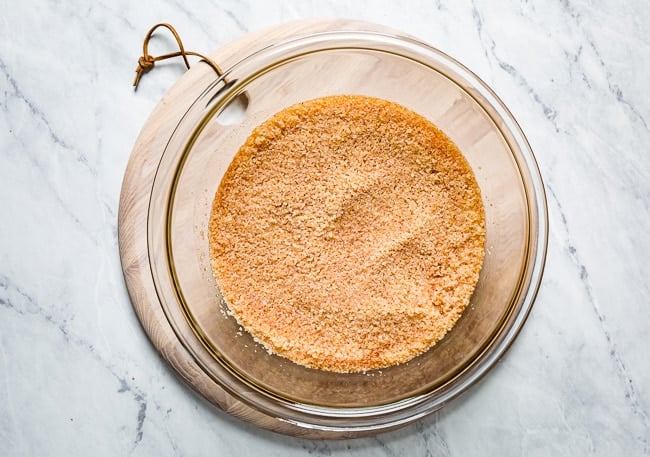
- Rest & Fluff: Let it soak for 10-15 minutes or until the liquid is fully absorbed and the bulgur is cooked. Fluff it with a fork before adding the remaining ingredients.
What if my bulgur is not fully cooked? This usually comes down to one of three things: the water was not hot enough to cook it, you did not use enough of it, or you did not wait long enough. If you did all three and it is still firm, add a bit more water, no more than 1/4 cup, and give it a few more minutes.
How To Make It
Once the bulgur wheat is cooked, the rest of making this Mediterranean salad is relatively easy. Simply:
- Make the tabbouleh dressing: Whisk together freshly squeezed lemon juice, olive oil, salt, and pepper in a bowl. Set it aside.
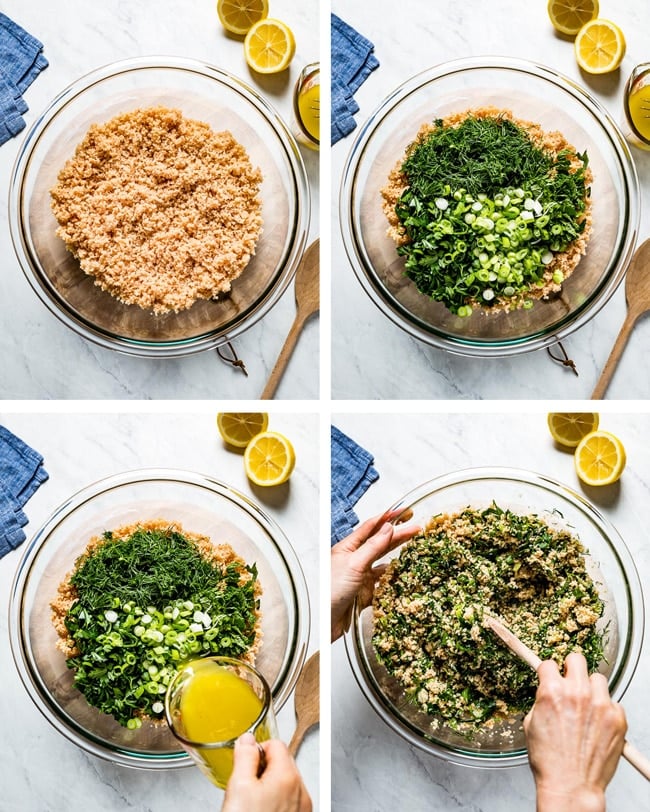
- Chop the herbs & green onions: Prep the parsley, mint, dill, and scallions and place them on top of the soaked bulgur.
- Pour the dressing over & mix: Drizzle the salad with the dressing, then gently mix to combine.
- Taste for seasoning and serve: Give it a taste and add more if necessary. Serve.
Make-Ahead Instructions
If you want to make it a day earlier, I recommend soaking the bulgur, chopping the herbs and scallions, and keeping them in an airtight container. You can also prep the dressing and store it in the fridge separately.
When ready to serve, pour the dressing over and give the tabouli mix a gentle toss to combine.
Storage Tips & How Long Will It Keep In the Fridge
To store, place your Mediterranean bulgur salad into an airtight container and place it in the fridge. It should stay fresh in the fridge for up to 3 days.
Keep in mind that this is one of those salads that gets better as it sits. I personally enjoy it more the next day. For that reason, I usually make this easy tabbouleh recipe as a part of my weekly meal prep.
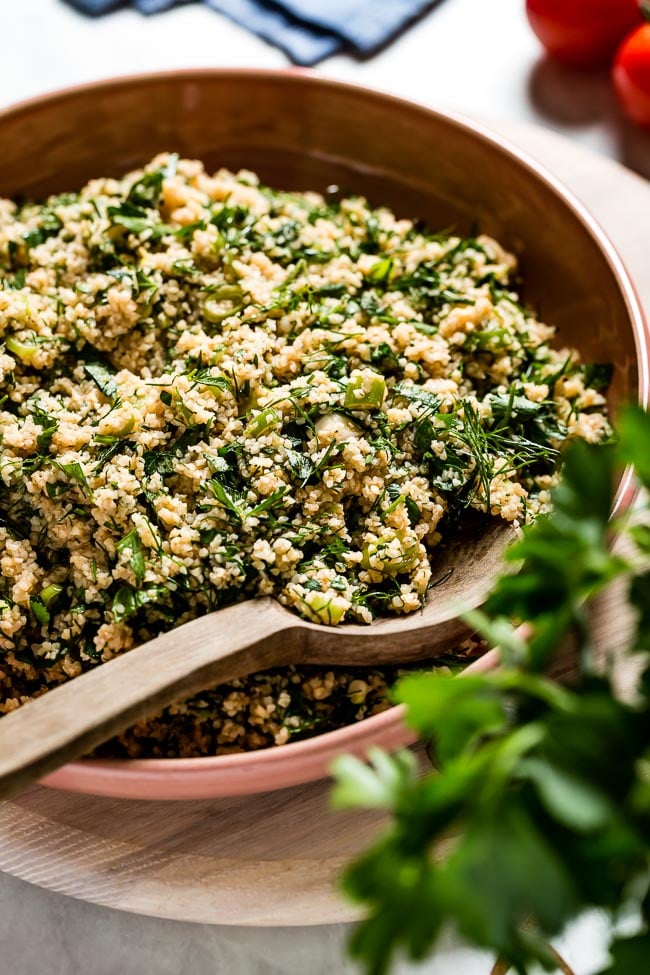
Variations:
The beauty of this Turkish tabbouleh is that it can be customized in various ways to suit your taste buds. Here are a few variations you can try:
- Tabbouleh without bulgur: If you prefer this recipe without bulgur or following a gluten-free diet, be sure to try my Quinoa Tabbouleh Salad recipe.
- With Tomatoes and Cucumber: While it is not traditionally added into tabbouli, you can add half a cup of each chopped fresh tomato and cucumber into your tabbouleh.
- Without Parsley: If you are not a fan of fresh parsley, you can substitute it with a combination of fresh mint and dill. If you do not prefer using fresh herbs, you can thinly chop a few cups of romaine lettuce and use it instead.
- Warm Tabbouleh Salad: You can serve this salad warm by heating it in the microwave for 15-30 seconds, until it reaches your desired temperature.
- Red bulgur tabbouleh: You can make this salad with red bulgur, which is easy to find in most US supermarkets. I recommend following my detailed instructions for cooking red bulgur rather than soaking it as I do with fine bulgur.
Serving Suggestions & Calories:
The easy tabbouleh recipe below makes about 4 cups. As a vegetarian main, I serve about 1 cup per person, totaling 4 servings at roughly 386 calories each.
As a side dish, it stretches to 6 smaller servings.
What to Serve it With:
While it is traditionally served as a meze, I usually serve this salad as a side dish with grilled or roasted main dishes, or as a light lunch on its own. Here are the three dishes I reach for most:
- My most-requested meatballs: Turkish Meatballs are the dish I serve this with more than any other, usually with a tall glass of Ayran, a salty Turkish yogurt drink.
- A lighter kofta: I serve my Chicken Kofta over a bowl of tabbouleh to make it a full meal.
- For a bigger meal: This salad is the side dish I reach for with Lamb Burgers. The lemon and fresh herbs cut through the richness of the lamb.
Easy Tabbouleh Recipe
Ingredients
For The Fine Bulgur:
- 2 tablespoons tomato paste
- 1 ¼ cups boiling water
- 1 teaspoon kosher salt
- 1 cup fine bulgur wheat
For The Dressing:
- ½ cup extra virgin olive oil
- ¼ cup lemon juice, freshly squeezed
- ½ teaspoon kosher salt
- ¼ teaspoon ground black pepper
For The Tabbouleh Salad:
- 1 cup fresh Italian parsley, finely chopped
- 1 cup fresh dill, finely chopped*
- ½ cup fresh mint leaves, roughly chopped*
- 3-4 stalks green onions, chopped with both green and white parts – about 3/4 cup
Instructions
- In a measuring cup, whisk together tomato paste, water, and salt until fully combined.
- Place fine bulgur in a large bowl and pour the mixture over it. Let it rest on the counter for 10-15 minutes or until the whole liquid is absorbed. Fluff it with a fork.
- Meanwhile, make the dressing by whisking together olive oil, lemon juice, and salt and pepper.
- Add in the herbs and scallions into the bowl and drizzle it with the dressing.
- Give it a gentle toss, taste for seasoning and add in if necessary. Serve.
Notes
- Yields: This recipe makes about 4 cups of tabbouleh, which is ideal as 4 servings as a main vegetarian dish or 6 servings as a side dish. The nutritional values below are per cup.
- A note on herbs: If you are not a fan of mint and dill, you can substitute them with an equal amount of fresh parsley.
- A note on the amount of bulgur used: If you prefer using less bulgur, feel free to half the amount that is used. If you do so, soak 1/2 cup bulgur with 2/3 cups of boiling water mixed in with 1 tablespoon of tomato paste and 1/2 teaspoon salt.
- Taste for seasoning: The recipe written here uses the least amount of salt, but be sure to taste it at the end to make sure that it is to your liking.
- To store: Place the leftovers in an airtight container and keep in the fridge up to 3 days.
- Freezing? I would not recommend freezing tabbouleh salad.
Nutrition
Nutrition information is automatically calculated, so should only be used as an approximation.










I love the throughness of this site. Very informative, good instructions and beautiful imagery. Thanks for sharing your knowledge with us! 🙂
(I needed to look up the cooking method for the Bulgur wheat, and guidance for a tabbouleh salad I prepared. It came out great!)
This makes me so happy to read. Thanks for your kind words Antonella.
So easy and so flavorful! The more herbs the better for me, so I added a little extra than called for in the recipe. Absolutely delicious!
I am thrilled to hear that you enjoyed it Canan. Thanks for coming by and sharing your experience.
The tomato paste idea is inspired – I used coriander instead of dill (wife doesn’t like Dill) and it was fantastic also added some coriander and chilli flakes – heaven
Finally if you have too many lemons freeze the extras and just grate them as you need them into pastas, stews, curries etc, pith and all doesn’t matter
Great tips. Thanks for sharing your experience Nick.