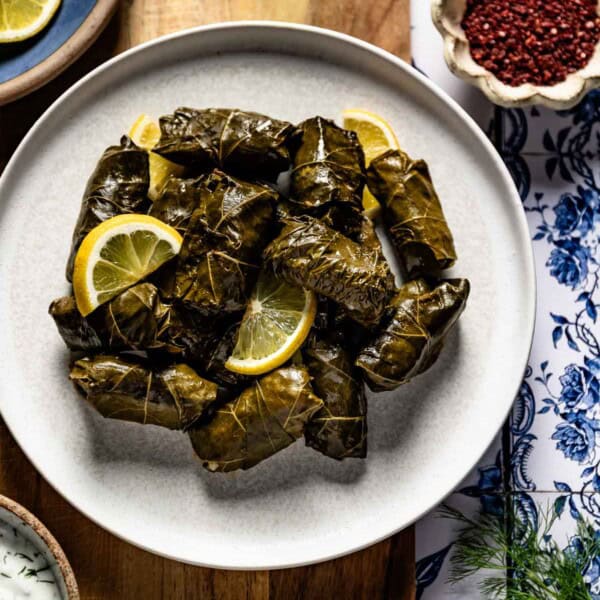
This is her recipe, written with every detail you need so that whether this is your first time or your tenth, you will roll with confidence, never run out of filling, and end up with dolmas that taste exactly like they do in a neighborhood restaurant in Istanbul.
Why you’ll love this family favorite recipe!

Every year, as soon as the grape leaves in our backyard were ready for harvesting (usually late April or early May), my mother and I would start making dolma.
Most of the time, our next-door neighbor, aka my mom’s best friend, would join us, and we would make enough for both households.
I can still feel the cool, slightly waxy texture of those fresh leaves in my hands, and smell their sharp, earthy scent cooking on the stovetop, filling our kitchen in Bursa.
Hours of rolling at the kitchen table, talking about life, laughing, learning from those two wise women… Those are the core memories that shaped who I am today.
Let me be honest with you: This is not a quick weeknight recipe, but like any labor of love, the process is part of the pleasure. And once you have done it, you will understand why Turkish women have been gathering around kitchen tables to make dolma together for generations.
What Are Stuffed Grape Leaves (Dolmas)?
Stuffed grape leaves go by many names across the Mediterranean and Middle East, and for good reason: this dish has been part of the region’s food culture for centuries.
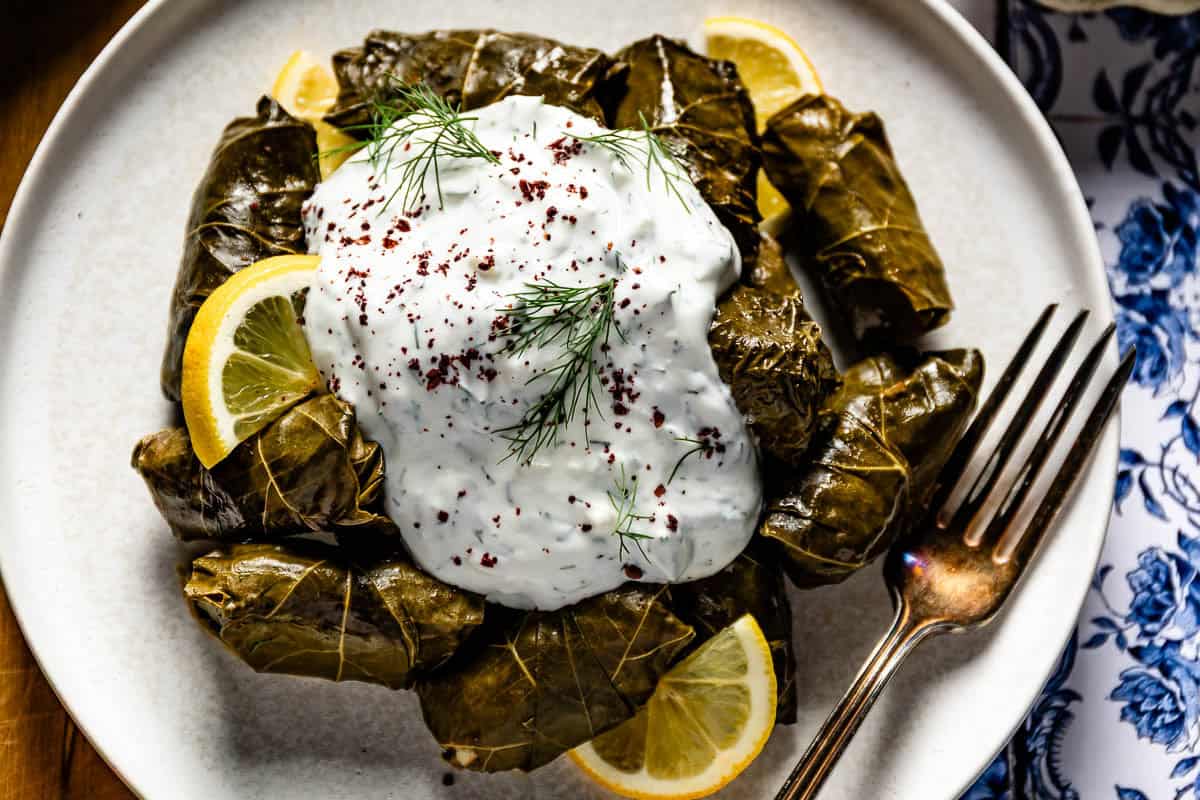
Whether you are new to it or would like to learn more, here is what you need to know in a nutshell:
What does dolma mean? Dolma comes from the Turkish verb “dolmak“, meaning to stuff or fill. It is a Turkish word that traveled across the entire region with the Ottoman Empire.
In Turkish cooking, pretty much any vegetable, such as tomatoes, zucchini, and eggplant, can be stuffed, but grape leaves are the most iconic.
What is the difference between dolma, dolmades, and warak enab? These are different names for the same general idea, depending on the country. Dolmades is Greek, warak enab is Arabic.
The main difference is usually how the filling is made and the flavor profile. My recipe here is the Turkish version I learned from my mom.
Ingredients
Most of what you need for this stuffed grape leaves recipe is already in your pantry. The only ingredient you may need to pick up is jarred grape leaves, which you can find in the international aisle of most grocery stores or order online.
You can find the full ingredient list with exact measurements in the recipe card below. Here are my notes from testing:
Jarred grape leaves in brine: I tested this recipe with three different brands. They all worked well, but my favorite one was Orlando, a California-based brand available at most major grocery stores and online.
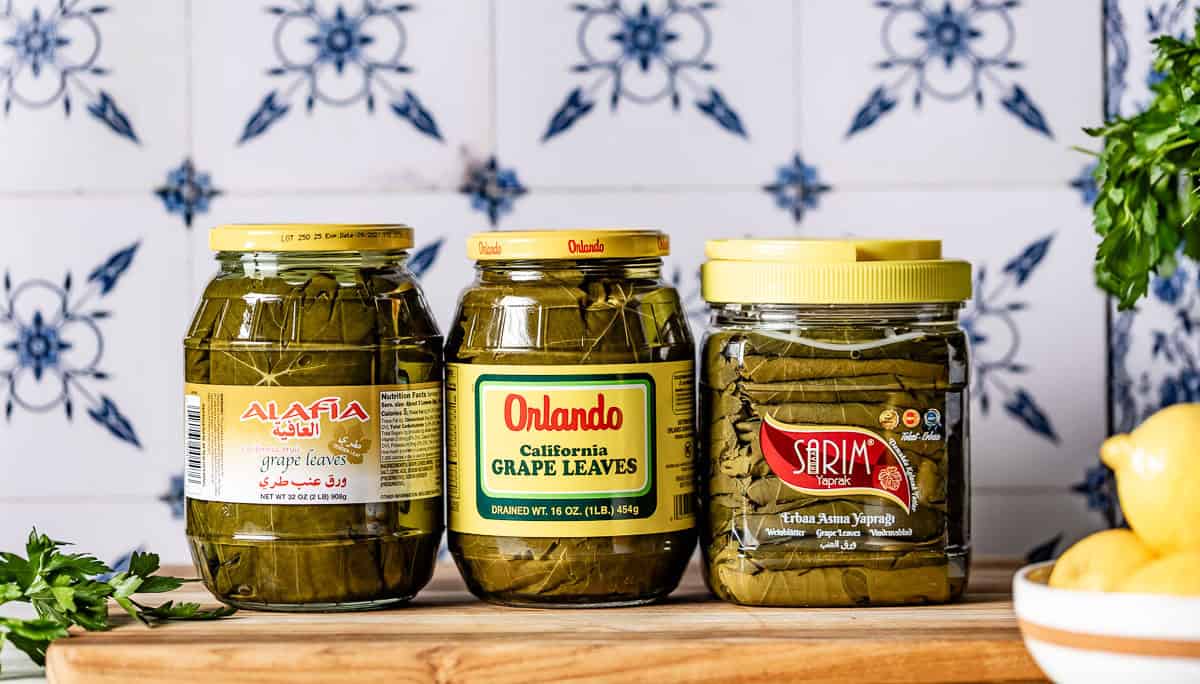
What matters most when choosing jarred grape leaves is their saltiness and texture. Orlando’s leaves were perfectly balanced. Not too salty, not too thick to be chewy, and not too soft to fall apart during rolling.
Using fresh grape leaves: If you have access to fresh grape leaves, you can absolutely use them here. When picking, look for unblemished medium-sized leaves of similar size. Also, choose lighter green leaves over darker ones, as they have softer spines and will be more tender after cooking.
Here is how my mom prepared the fresh grape leaves for rolling:
- Fill a medium saucepan halfway with water, add a pinch of salt, and bring to a boil. Reduce to a gentle simmer.
- Using kitchen tongs, blanch 2 to 3 leaves at a time for about 10-20 seconds, then transfer to a colander to drain before rolling.
- Remove the stems one by one. Stack each leaf to a colander to drain with shiny side down (so it is easier to start stuffing).
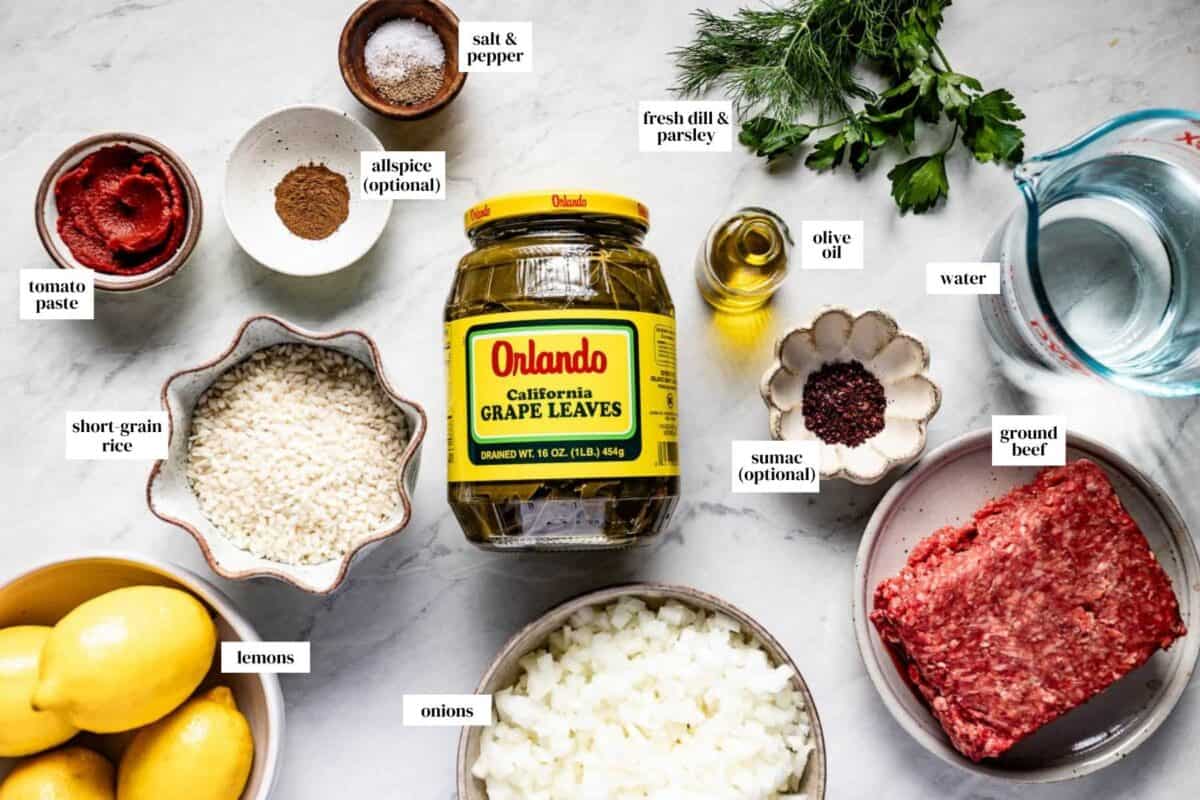
Ground beef: I used 85% lean ground beef. 80% lean works too. The higher fat content makes the filling even more flavorful. While not traditional, ground lamb or a mix of beef and lamb are both delicious substitutes.
Rice: Traditional dolma is made with short-grain rice because its higher starch content creates a stickier texture that helps hold the filling together.
In Türkiye, most people use baldo rice, but since it can be hard to find, I used Arborio rice, which works beautifully.
I have also made this with inexpensive enriched long-grain rice. The filling was not quite as rich, but it was still delicious.
Can I use brown rice? I would not recommend it. Brown rice takes significantly longer to cook, which risks overcooking both the leaves and the meat and making everything overly soft.
Fresh herbs: My mom always used a combination of fresh parsley and fresh dill, which is exactly what I do here. Depending on the region, some people also add a handful of fresh mint.
There is no right or wrong. Just make sure you have at least one full cup of fresh herbs in the filling. I use half a cup each of parsley and dill. Feel free to use what you have on hand.
Spices: My mom’s recipe used only salt and pepper, which is the traditional Turkish way.
Some versions of this recipe include allspice, and I think it is a lovely addition. I have included it as an optional ingredient. Leave it out if you prefer a cleaner, more herb-forward flavor.
Cooking liquid: I use water mixed with tomato paste, olive oil, and salt, since I think the tomato paste and olive oil provide enough flavor on their own that broth isn’t necessary.
That said, if you prefer a richer, deeper flavor, feel free to substitute chicken stock or vegetable broth for the water.
Tomato paste: I use tomato paste twice in this recipe, a small amount in the filling for depth, and again in the cooking liquid for color and richness. The flavor is subtle, but you would notice if it were missing.
If you can get your hands on it, Turkish red pepper paste (biber salçası) is a wonderful substitute or addition.
How to Make Stuffed Grape Leaves Step by Step
With all the ingredients ready, now it is time to put it all together. Here are the steps to making dolmas exactly how my mom made them:
Step 1 – Getting the Grape Leaves Ready
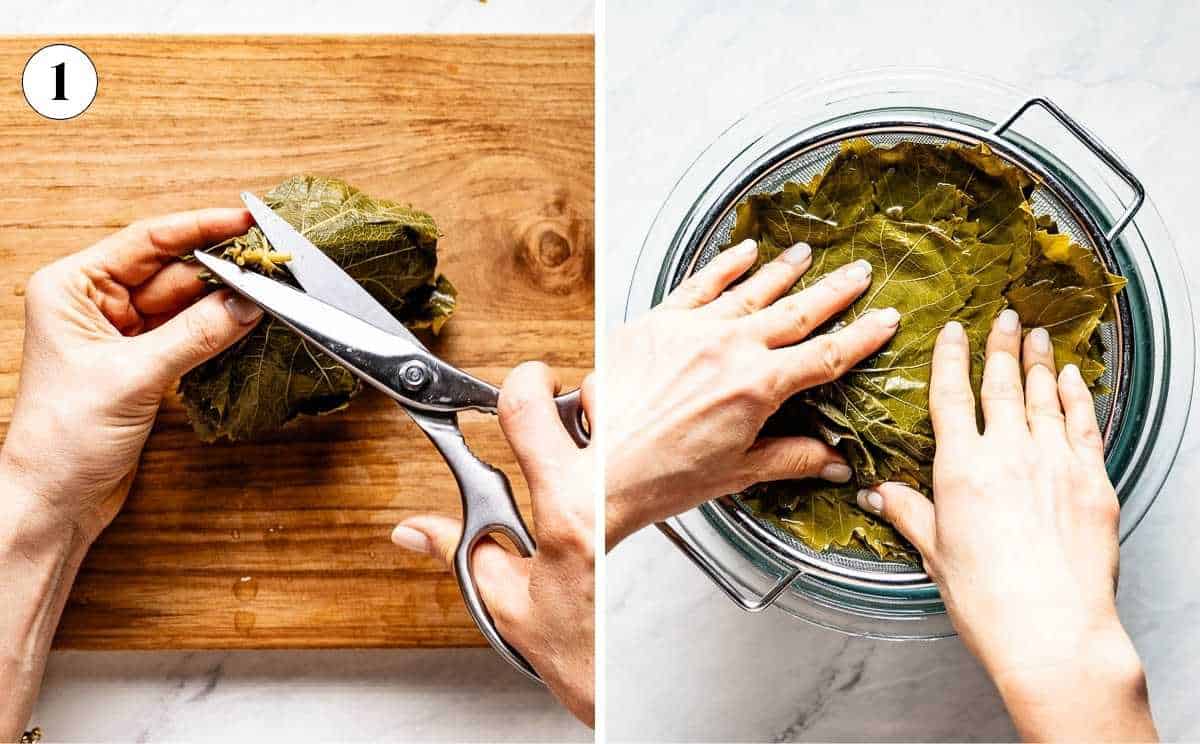
Carefully remove the grape leaves from the jar. A standard 16-oz jar contains two bunches, totaling roughly 70 leaves. Gently unfold them and pick out any torn or oversized leaves to use later for lining the bottom of the pot.
Now, you can cut the stems one by one during the stuffing, but I use a shortcut I learned from my mother to make it faster. Simply align the stems of 7 to 8 leaves at a time and cut them all at once with kitchen scissors.
Transfer the leaves to a colander placed in a large bowl, pour hot tap water over them, and let them soak for about 1 to 2 minutes. Rinse once and drain. Doing this helps remove excess salt and softens the leaves slightly before rolling.
Pro tip: Keep in mind that saltiness varies by brand. After soaking, give a leaf a quick taste. If it still tastes quite salty, rinse once more. You want to remove the excess salt without washing away all of the brine flavor.
Step 2 – Mixing the Filling
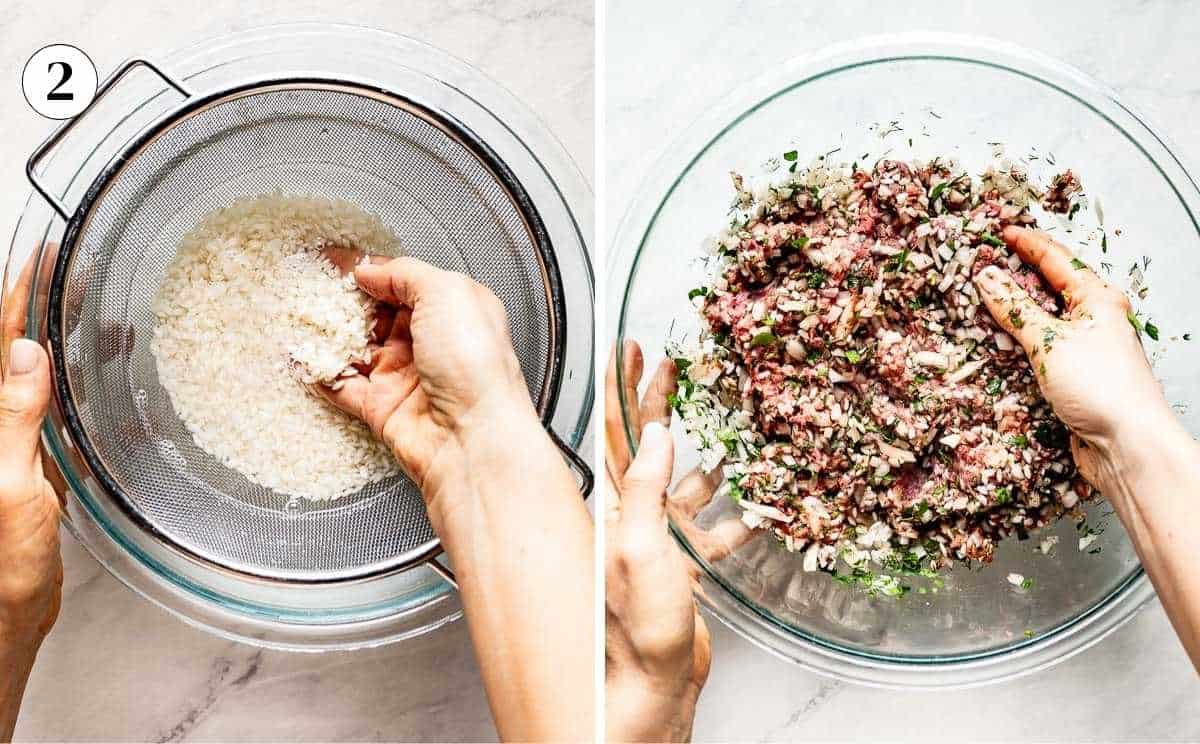
Place the rice in a fine-mesh strainer and rinse under hot tap water until the water runs clear, about 1 minute. Set aside to drain fully.
To make the filling, place the ground beef, rice, chopped onion, tomato paste, dill, parsley, salt, pepper, and allspice (if using) in a large bowl. Using clean hands, mix well until it is evenly distributed and the filling holds together when pressed.
Pro Tip: At this point, the filling will feel quite dry, and that is completely normal. Resist the urge to add oil or extra liquid.
The moisture comes from the cooking liquid, so the cooked dolmas will be perfectly moist inside.
Step 3 – Setting Up Your Pot
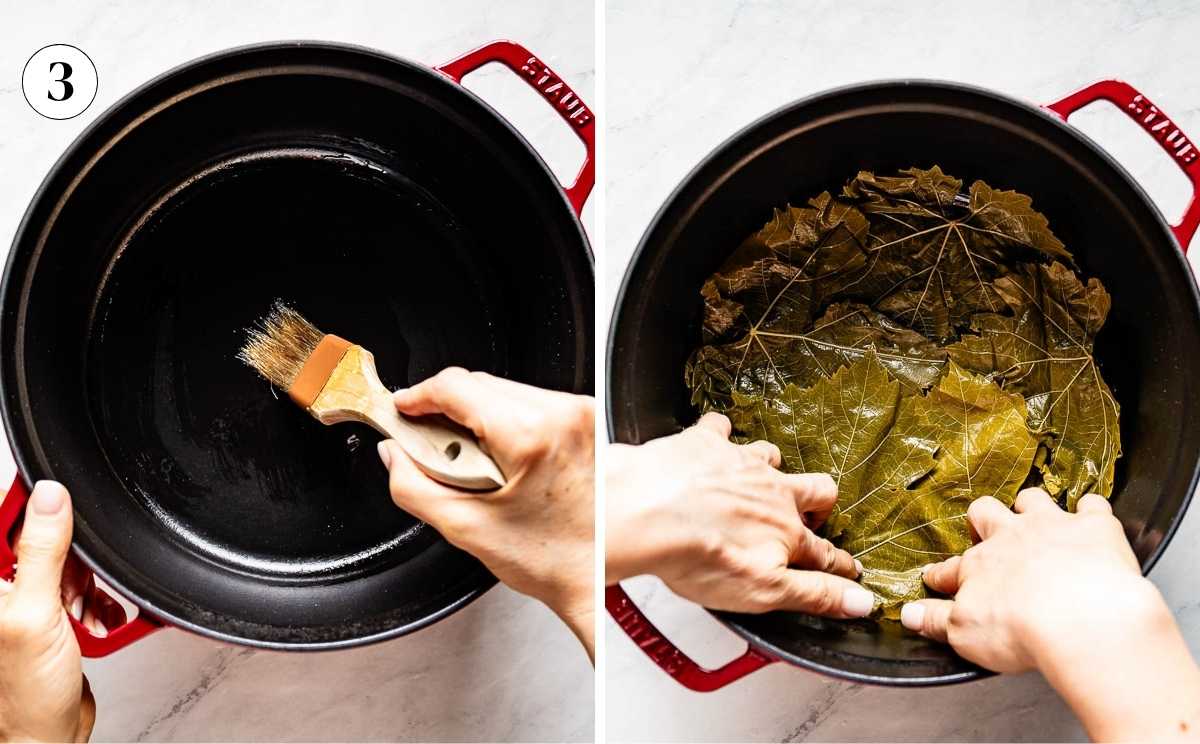
Grab a large pot with a lid. I tested this recipe with both a 4-quart and a 5½ quart Dutch oven. While both worked, I prefer the 5 ½ quart as it offered more room for dolmas.
You can also use a regular large pot. Just make sure that it has a tight-fitting lid.
Lightly brush the bottom and sides of the pot with olive oil, then line it with the reserved torn or large leaves, covering the entire bottom.
A Note on lining the bottom of the pot with vegetables or meat: Depending on the region, some versions of this dolma recipe take it up a notch by lining the pot with sliced tomatoes or potatoes, which absorb the cooking liquid beautifully.
For special occasions in Türkiye, lamb chops at the bottom are a popular choice. They braise slowly under the dolmas, emerging incredibly tender.
I kept things simple, but feel free to use any of the options above.
Step 4 – Rolling the Dolmas – The Filling to Leaf Ratio
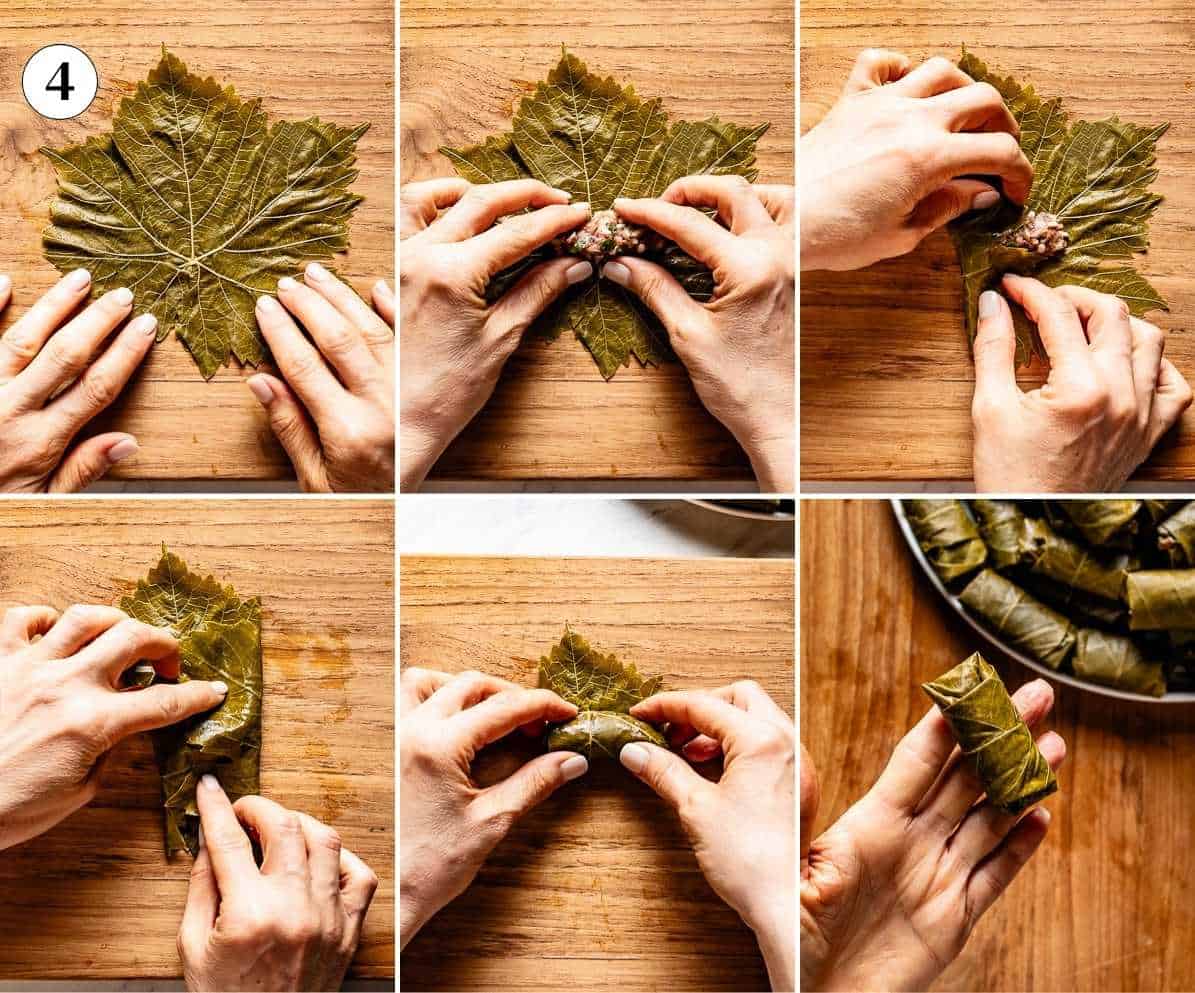
Place one grape leaf, shiny side down, on a cutting board. Place 1 to 1½ teaspoons of filling in the bottom center near the stem. I like to shape it into a 1½- to 2-inch cylinder, so it is distributed evenly.
Pro tip: You may have to adjust the amount of filling based on the size of your leaf. I used 1 to 1½ teaspoons of filling for leaves about 6 inches long. For larger leaves (7 to 8 inches), you can use 2 teaspoons.
First, fold the sides onto the filling, and then roll from the bottom to the top. Each rolled grape leaf should be about 2 to 2½ inches long. Place it seam-side down in the pot so they stay closed during cooking.
A note on how tight it should be rolled: One of the most common questions about making dolma is how tightly to roll them. In Türkiye, you’ll hear some say it should be “thin as a pencil,” while others prefer them on the larger side.
I like to roll them tight enough that the rice has enough room to expand during cooking. If you roll it too tight you will risk them bursting open. On the other hand, rolling too loosely will cause them to open up in the pot.
Step 5 – Arrange the dolmas in the pot:
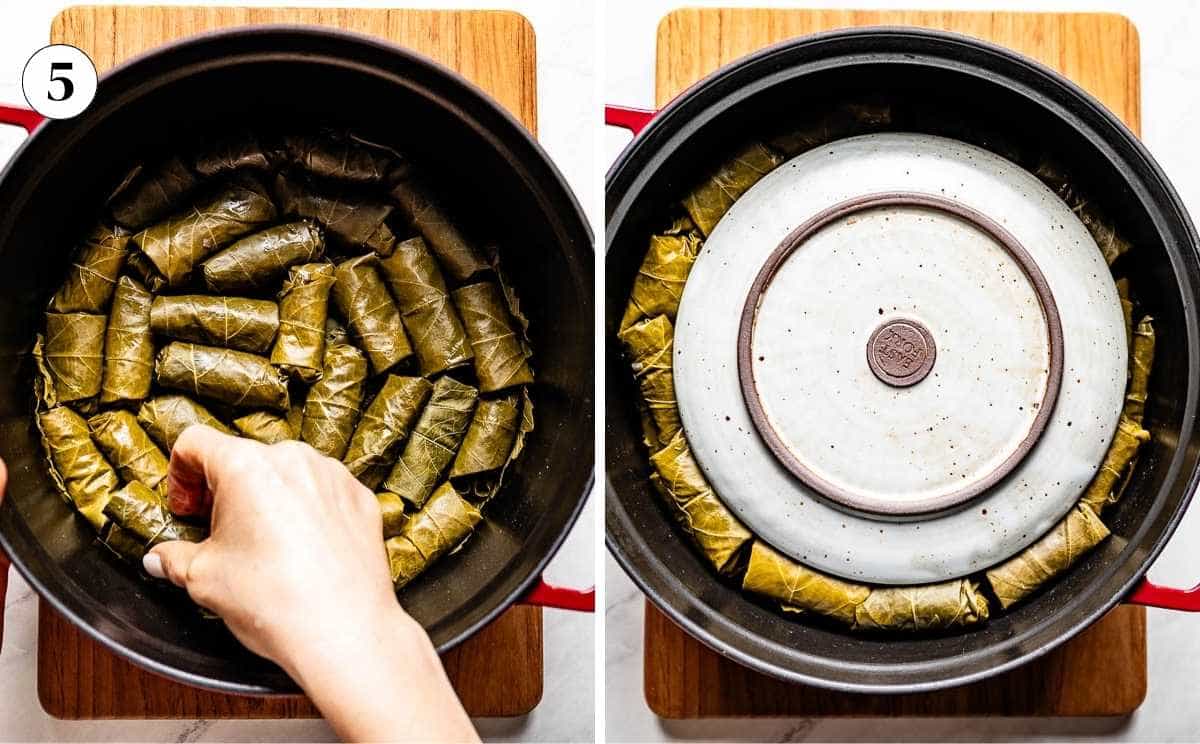
Repeat with the remaining leaves, arranging the rolls in a spiral pattern. I ended up with 30-33 dolmas per layer in my 5½ quart pot, which gave me 2 layers in total.
That said, depending on the number of leaves you have, you may end up with more (or less). Do not be afraid to layer a third layer if you have to.
Place an inverted plate directly on top of the dolmas to keep them in place and prevent them from floating or unraveling once the liquid is added.
Step 6 – Pouring the Cooking Liquid
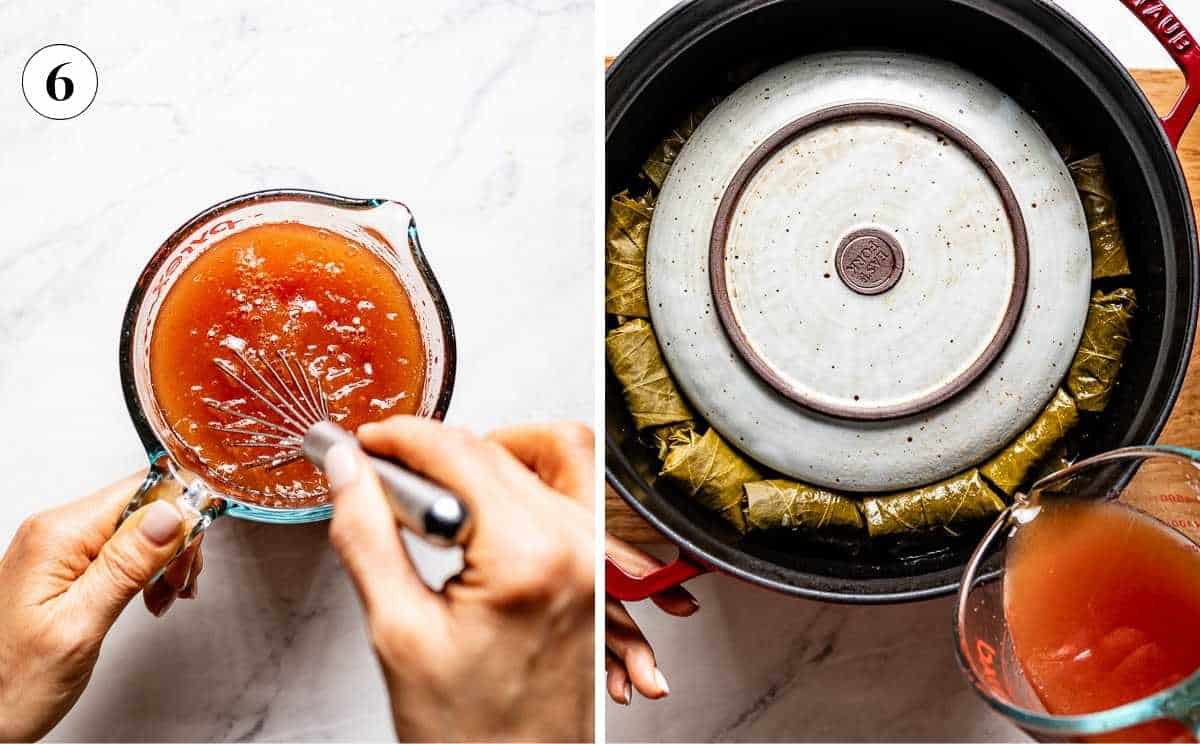
To prepare the cooking liquid, whisk together the boiling water, tomato paste, olive oil, and salt in a measuring cup. I use boiling water to jump-start the cooking process, so it comes to a simmer much faster than if you started with cold water.
Carefully pour it over the dolmas. And watch it closely because it will come to a boil sooner than you think!
Pro Tip: The size of your pot directly correlates with the amount of cooking liquid you’ll need. The goal here is to have enough so it comes up around the sides of the rolls without fully covering the top.
Step 7 – Cooking the Dolmas
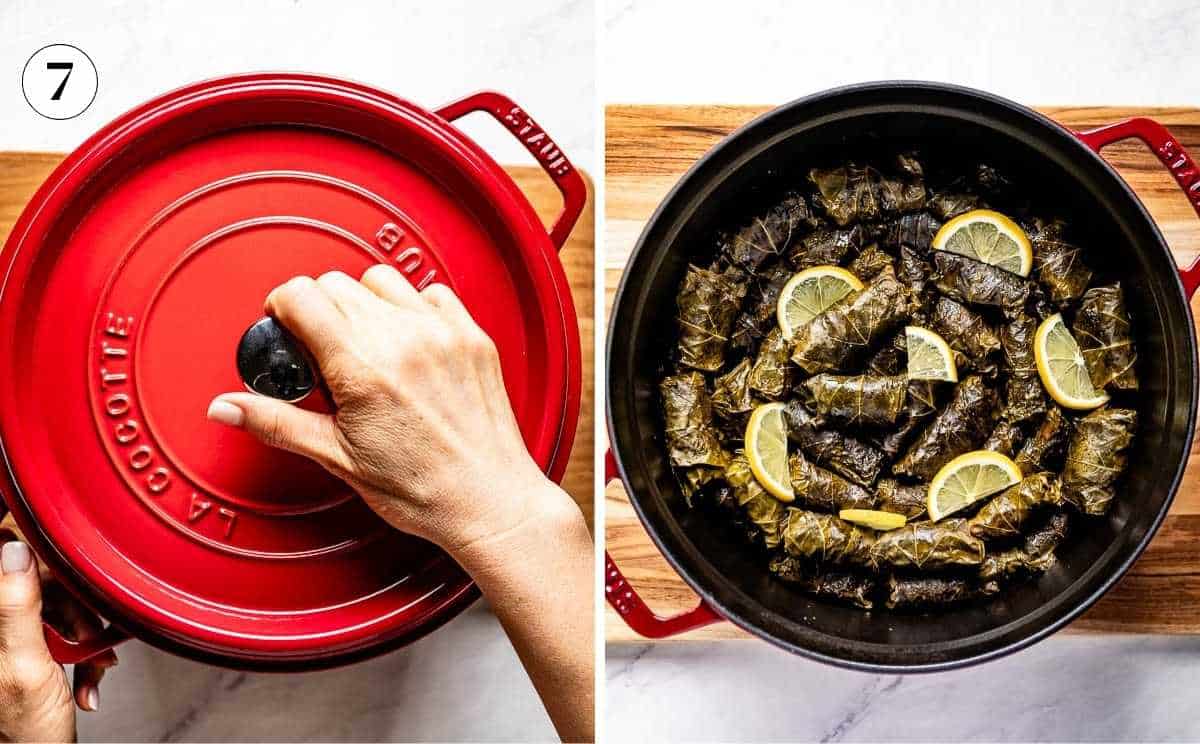
Cover the pot with a lid and cook over medium heat until it comes to a boil, which takes about 5 minutes. Then reduce the heat to medium-low and cook for 30 minutes or until most of the liquid is absorbed.
Remove the plate, pour freshly squeezed lemon juice over the dolmas, and replace the lid. There is no need to replace the plate at this point, as most of the liquid has been absorbed and the dolmas are heavy enough to stay in place on their own.
Continue cooking for another 30 minutes over medium-low heat, keeping a close eye on it and checking often to make sure there is liquid in the pot to prevent sticking.
Pro Tip: The exact cooking time depends on how much the meat releases its juices. A good way to check doneness is to cut open one dolma. If the rice and meat look cooked, they are done.
Step 8 – Resting Before Serving
When the cooking time is up, you may still have some liquid at the bottom of the pot, and that is completely normal. But that is why it is so important to let it rest so the remaining liquid gets absorbed.
Turn off the heat and let it rest, covered, for 20 minutes before serving.
Pro Tip: This is no different from letting your rice rest after it is cooked, so it absorbs all the liquid and you get a perfectly moist rice in the end. In fact, most Mediterranean and Middle Eastern cooks make this dish a day ahead because it is better the next day.
Expert Tips for the Best Stuffed Grape Leaves
Do not rush the first few rolls: Yes, it is a bit tedious, especially if this is your first time making stuffed grape leaves with meat and rice, but after rolling the first few dolmas, you will get the hang of it, and it will come naturally. So be patient and know that it will be worth it.
Make it a group activity: Growing up, the best part of making dolmas was the camaraderie. The neighbors coming over to help and the hours of chatting and laughing while rolling grape leaves were my favorite things about it.
Nowadays, I get my husband to help me, but if you can employ your teenagers, girlfriends, and even your husband, I promise it is much more fun to eat later.
Serving temperature: Do not confuse this with its vegetarian version. The stuffed grape leaves with rice and ground meat are supposed to be served warm because the fat in the filling firms up as it cools.
How to Store, Make Ahead, and Freeze
Dolmas store beautifully, which makes all that rolling even more worthwhile. Here is everything you need to know.
Make Ahead: You have two options here.
- Prepare the filling a day ahead, store it in an airtight container in the refrigerator, then stuff and roll the leaves on the day you plan to cook.
- Cook the dolmas completely, let them come to room temperature, and refrigerate them overnight. I recommend this version because the flavors continue to develop, making them even better the next day.
Storage: Let the dolmas come to room temperature, transfer to an airtight container, and refrigerate for up to 4 days.
Freezing: Freeze cooked dolmas for up to 2 months. Let them come to room temperature first, then transfer to a freezer-safe airtight container. Thaw overnight in the fridge before reheating.
Reheating: Warm dolmas in a small pot with a splash of water over medium-low heat. Let them heat slowly and keep an eye on the water so they do not stick to the bottom.
What to Serve with Stuffed Grape Leaves
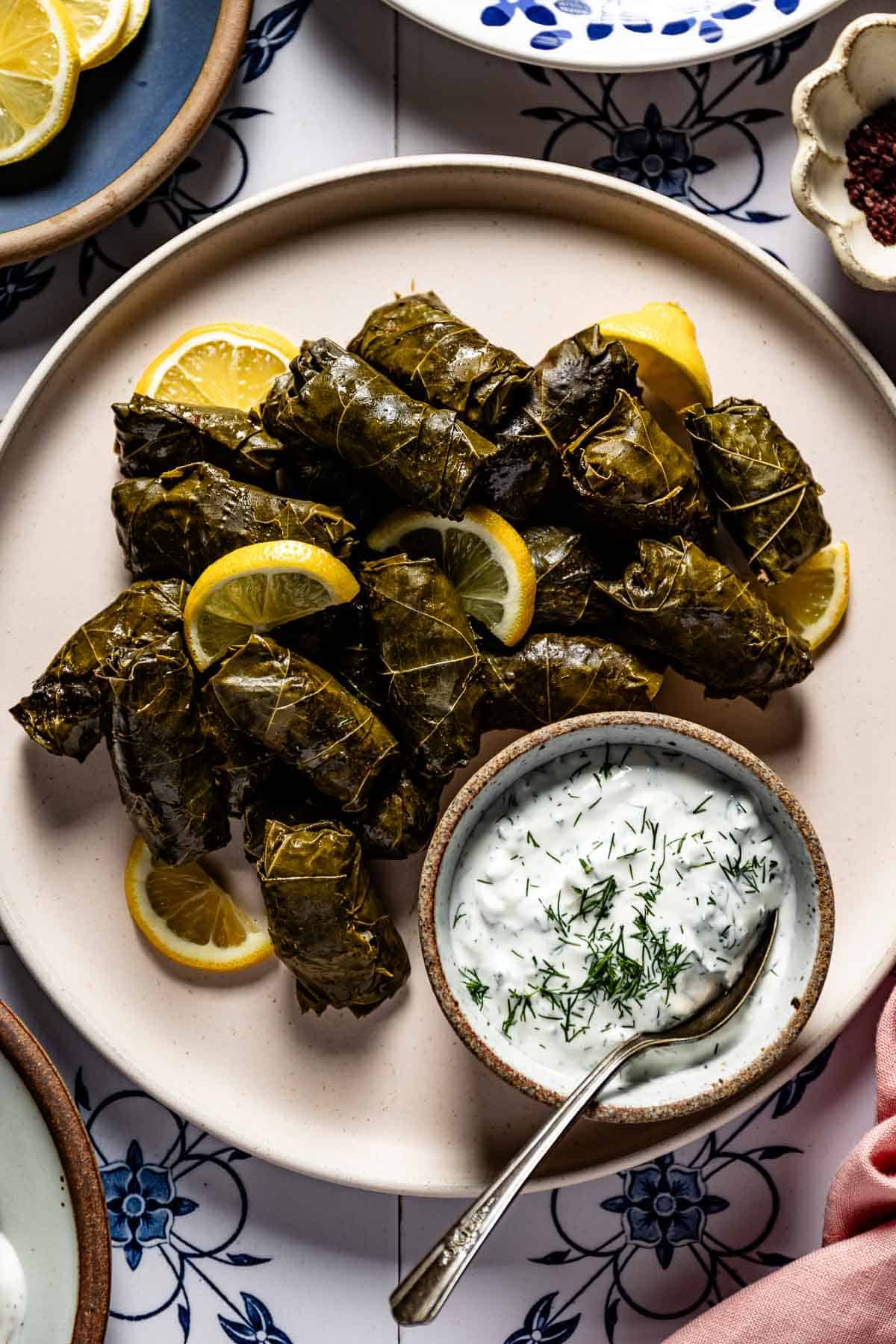
In Türkiye, we always serve this stuffed grape leaves recipe with yogurt sauce, a sprinkle of sumac, and lemon wedges on the side. Below are a few ways to turn this into a feast in your own house:
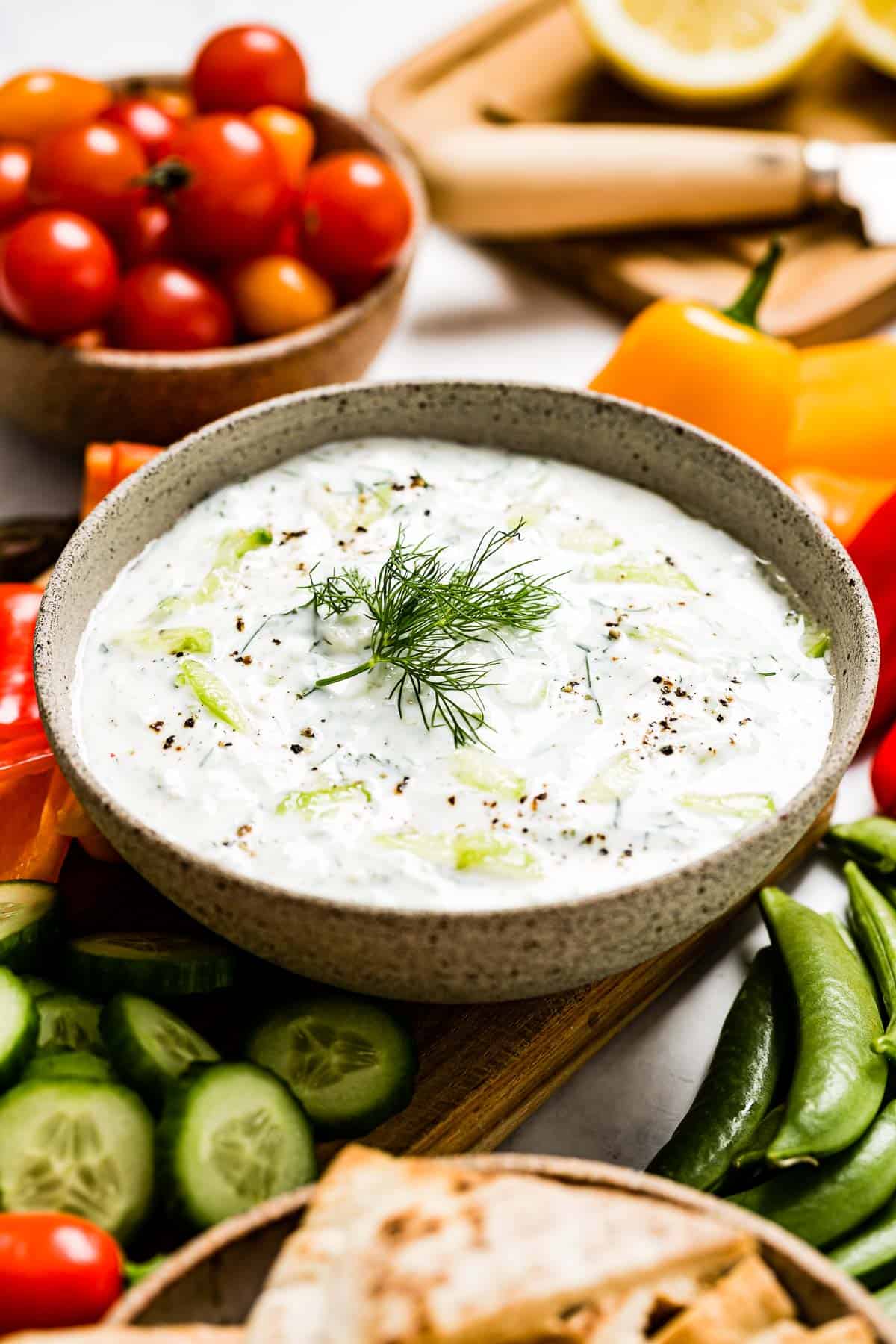
- Savory yogurt sauce: Even a few tablespoons of unsweetened Greek yogurt would work, but if you want to take it up a notch and do it as we do it back home, try my Dill Yogurt Sauce or Mint Yogurt Sauce. You can serve it on the side or drizzle it on top.
- Tzatziki: Pairing this dolma recipe with Tzatziki is a classic Mediterranean move that I highly recommend. The cooling yogurt goes perfectly with the meaty dolmas.
- Mezze spread: You can include stuffed grape leaves as a part of your mezze spread and serve it with other classics like Mediterranean Hummus, Baba Ganoush, and Muhammara Dip.
- Lemon wedges: Always. A generous squeeze of fresh lemon juice right before eating takes this dish from good to great.
FAQ
You sure can. If you want, you can also use 50/50 ground beef and ground lamb.
I would serve 12 to 15 dolmas per person, which makes this dish ideal for 6 generous servings. Keep in mind that dolmas are rich and filling, so this is a very generous portion ideal as a main course.
There are a few possible reasons:
If they burst open, they were likely rolled too tightly because rice needs room to expand during cooking.
If they come undone, they were rolled too loosely.
If they are falling apart and sticking to the pot, there was not enough liquid, or the heat was too high.
Savory, herby, and slightly tangy, with a satisfying meaty flavor.
More Mediterranean Stuffed Recipes
Stuffing grape leaves is a classic move, but the Turkish stuffed recipes tradition goes far beyond dolma. Here are a few more to try:
Try stuffed onions next: Did you know you can stuff onions, too? My Stuffed Onions recipe has a similar meat-and-rice filling, but the pomegranate molasses sauce makes it uniquely Turkish. It is one of my favorite things to make in the fall.
Karnıyarık (Turkish Stuffed Eggplant): A beloved Turkish summertime dinner where eggplant is stuffed with spiced ground beef and baked until tender. If you loved making dolma, this one is next on your list.
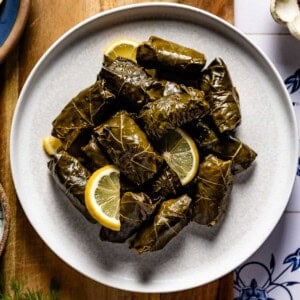
Stuffed Grape Leaves Recipe (Dolmas)
Equipment
Ingredients
For the Dolmas:
- 1 jar grape leaves, 16 oz. – I used Orlando brand
- 1 lb ground beef, 85% or 80% lean
- ¾ cup short-grain rice, such as Arborio
- 1 large onion, finely chopped
- 2 tablespoons tomato paste
- ½ cup fresh dill, finely chopped
- ½ cup fresh parsley, finely chopped
- 1 teaspoon kosher salt, plus more as needed
- ½ teaspoon black pepper
- ½ teaspoon allspice, optional
For the Cooking Liquid:
- 2 cups boiling water
- 1 tablespoon tomato paste
- 3 tablespoons extra virgin olive oil
- 1 teaspoon kosher salt
To Finish & Serve with:
- ¼ cup fresh lemon juice
- Lemon wedges, for serving
- Garlic yogurt sauce, tzatziki, or yogurt dill sauce, for serving
- Pinch sumac, optional
Instructions
- Carefully remove the grape leaves from the jar. Working in groups of 7 to 8 leaves, align the stems and cut them all at once with kitchen scissors. Repeat until you run out of leaves.
- Place leaves in a colander placed in a large bowl. Pour hot tap water over them and soak for 1 to 2 minutes to remove the salt. Rinse once (*1) and then set it aside to drain thoroughly.
- Pick out 5-6 larger or torn leaves for lining the pot. Set them aside.
- Place the rice in a colander and rinse it under hot tap water until the water runs clear, for about 1 minute. Drain well.
- To make the filling, in a large bowl, combine ground beef, rice, onion, tomato paste, dill, parsley, salt, pepper, and allspice if using. Mix well with clean hands until thoroughly combined. (*2)
- Brush the bottom of a 5½ quart Dutch oven (or any other large pot with a lid) with olive oil. Line the bottom of the pot with the reserved (large and torn) grape leaves, fully covering the bottom.
- To stuff the grape leaves: Lay one grape leaf shiny side down on a cutting board. Place 1 to 1½ teaspoons of filling in the center, near the stem end, and shape it into a 1½- to 2-inch cylinder. Fold the sides over the filling and roll from bottom to top. The finished roll should be approximately 2½ inches long. Place seam side down in the pot.
- Repeat with remaining leaves, arranging rolls in a tight spiral pattern. You should have about 30 to 35 of them per layer. I had 2 full layers.
- Place an inverted plate on top of the dolmas.
- In a measuring cup, whisk together the boiling water, tomato paste, olive oil, and salt. Pour the liquid over the dolmas; it should come up around the sides of the rolls without fully covering the top layer.
- Cover with a lid and cook over medium heat. It should come to a boil in 5-6 minutes. Once boiling, reduce the heat to medium-low and cook for 30 minutes.
- Carefully remove the plate, add the lemon juice, cover it with the lid, and cook on medium-low heat for another 30 minutes*3. Be sure to keep a close eye on it so there is some liquid in the pot to prevent sticking. To check doneness, cut one dolma in half and check if the rice and meat are fully cooked.
- Turn the heat off and rest covered for 20 minutes. This rest will help any leftover water be absorbed by the dolmas.
- Serve warm with lemon wedges and garlic yogurt sauce, tzatziki, or yogurt dill sauce. Finish with a pinch of sumac if desired.
Notes
- Yields: This recipe makes about 65 to 70 stuffed grape leaves. It is ideal for serving 6 adults (very generous portions) with each serving being 12 to 15 dolmas. The nutritional values below are per serving.
- *1 Rinsing: When deciding how many times (or how long) to rinse, it is best to taste one leaf for salt. The Orlando brand I used was not too salty, so I did not need to rinse it more than once.
- *2 The filling will feel dry when mixing: Do not be tempted to add oil at this stage. It will be perfectly moist after cooking in the braising liquid.
- *3 No need to put the plate back on as the dolmas are now heavy enough not to float.
- Liquid level: There is a direct correlation between the size of your pot and the amount of liquid to add. Therefore, it is best to add liquid until it comes up around the sides of the rolls, not just by the cup measurement.
- A note on the filling: Keep in mind that leaf size varies by brand and batch, so the amount of filling per leaf will vary, too. Use the measurements in this recipe as a guide, not a rule. As you roll, keep an eye on your remaining filling and adjust accordingly. A slightly smaller amount in larger leaves, a little more in the smaller ones. The goal is to use up the filling and the leaves simultaneously. A little back-and-forth as you go is completely normal and part of the process.
- Doubling the recipe: To make a larger batch, use two 16-oz jars of grape leaves and double all the ingredients. You can cook everything in one pot, but I would recommend using a larger pot (6 qt or more). The cooking time stays the same regardless of batch size.
- Make ahead: Filling can be made a day ahead. Rolled uncooked dolmas can be refrigerated overnight.
- Storage: Refrigerate in an airtight container for up to 4 days. Keep in mind that dolmas taste even better the next day.
- Freezing: Freeze cooked dolmas for up to 2 months. Thaw overnight and reheat gently with a splash of water.
Nutrition
Nutrition information is automatically calculated, so should only be used as an approximation.
This post may contain affiliate links. If you purchase through these links, I may earn a small commission, at no additional cost to you.