


The Real Deal: Why This is the Only Authentic Turkish Red Lentil Soup You’ll Ever Need

If your travels ever take you to Türkiye in the cooler months, you will likely find yourself in a Lokanta, a traditional restaurant serving heartwarming, authentic Turkish food. There, you’ll almost certainly be served a bowl of this Kırmızı Mercimek Çorbası as a starter or a light meal.
In fact, if you’re a friend of mine, you will probably come back and ask me for the recipe. I know it because it happened to me more times than I can count.
The reason this soup is so well-loved is that it transforms humble, affordable pantry staples into a dish that epitomizes Turkish comfort food. I am sharing my mom’s version with you here, which is nearly identical to the professional standard you’ll find in traditional restaurants throughout Türkiye.
One thing to note here, in the world of Turkish soups, there is another popular soup called Ezogelin Corbasi (Bride Soup). While both soups use red lentils, Ezogelin is a heartier, chunkier soup made with bulgur and rice, whereas this red lentil soup here has a creamy texture and does not use any grains.
Ingredients You’ll Need
To make this traditional red lentil soup recipe, you only need a handful of simple ingredients that are easy to find. You’ll see the full list in the recipe card below, but here are a few notes from my recipe testing:
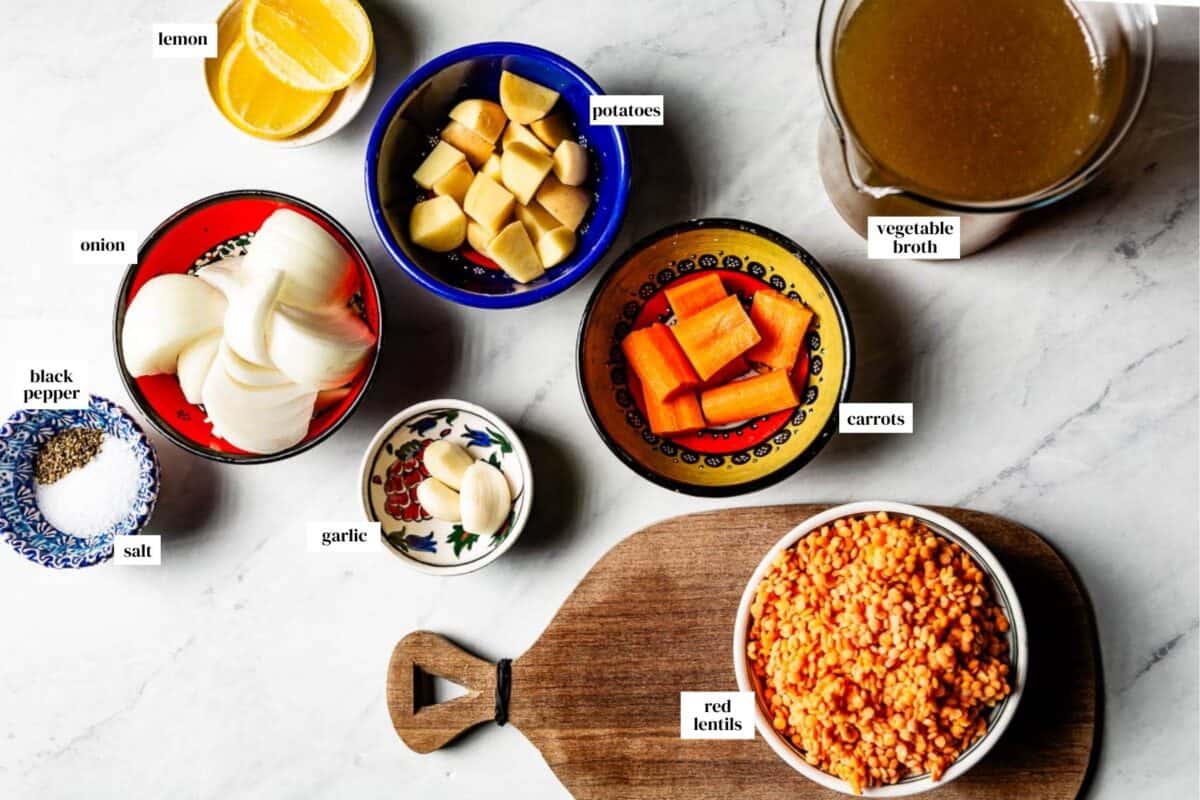
For the Soup:
Red Lentils (Kırmızı Mercimek): Nowadays, most supermarkets sell red lentils in their dry goods section. However, you can find red lentils online. One of the most popular Turkish brands is Duru, which is what I usually buy. However, I have also made this recipe using popular American brands like Bob’s Red Mill or Food to Live, and they worked just as well.
Pro Tip: Regardless of the brand you use, always rinse and drain your red lentils before cooking to wash away excess starch. Simply place it in a colander and wash it under cold running water until the water runs clear.
Aromatics: A simple base of yellow onion and a few cloves of garlic is all you need. Give them a rough chop. No need to spend any time chopping them finely. They will all be blended with the remaining ingredients.
The “Secret” Thickeners: Depending on the region, some people thicken this soup with a flour-and-butter roux, but in my version, I am following in my mother’s footsteps and using two starchy vegetables: a carrot and a potato to thicken the soup. That is how you end up with a creamy soup without using any cream.
I recommend using one large carrot or a handful of baby carrots. Peeling is optional, especially if it is organic, and if you give it a good scrub.
For the potato, I recommend using a Yukon Gold, as it is creamier than other varieties. However, any potato would work. Just make sure to cut it into equal-sized cubes so they cook evenly.
Tomato paste or Red Pepper Paste: In Türkiye, we often use Red Pepper Paste (Biber Salçası) for its smoky, savory profile. While you can find it online, tomato paste is a good alternative.
Why do we use tomato or red pepper paste? Since red lentils and root vegetables are naturally mild, we need a “concentrated” ingredient to build complexity and depth. However, keep in mind that a small amount goes a long way. Our goal is to elevate the earthy lentils, not to turn this into a tomato soup.
Liquid (broth or water): I usually make this soup with Vegetable Stock to keep it plant-based, but Chicken Stock works too.
Homemade or store-bought work just as well, but if you are using a store-bought brand, I recommend buying low-sodium stock so you can control the seasoning.
You can also use water as your base, but I recommend using extra seasoning, perhaps an extra pinch of salt or cumin, as needed.
Ground cumin (optional): While not essential, cumin is a common addition in Turkish homes. It adds a warm, earthy flavor that pairs nicely with the lentils.
Lemon juice: To me, freshly squeezed lemon juice is the most important ingredient in the entire recipe, because without it, the dish will taste bland. I listed only 2 tablespoons on the recipe card, but I usually use much more than that when I make it for my family. Taste your soup before serving and add more as needed.
Dried mint (optional): I know it can be hard to find, but most restaurants use it as a garnish after drizzling with chili oil. If you can’t get your hands on it, a good alternative would be a handful of chopped fresh parsley.
For The Chili Oil (Pul Biberli Yağ)
You know how many Asian cuisines have chili crisp? Chili oil (pul biberli yağ) is our version of that. It is usually used as a finishing oil to add a layer of complexity to the soup.
It is optional, but if you want the restaurant-quality (lokanta-style) Turkish lentil soup, I do not recommend skipping it.
Butter or Olive Oil: Traditionally, Turkish households make this with butter. However, if you prefer to keep this recipe dairy-free and vegan, you can use olive oil instead.
Urfa or Aleppo pepper flakes: These are the most common peppers we use in Turkiye; they are smoky, slightly sweet, and a little spicy. If you do not have them, red pepper flakes or paprika are great substitutes.
How to Make Turkish Lentil Soup
Even though this Turkish red lentil soup looks and tastes like it took all day, it actually comes together in just a few simple steps. Here’s how I do it:
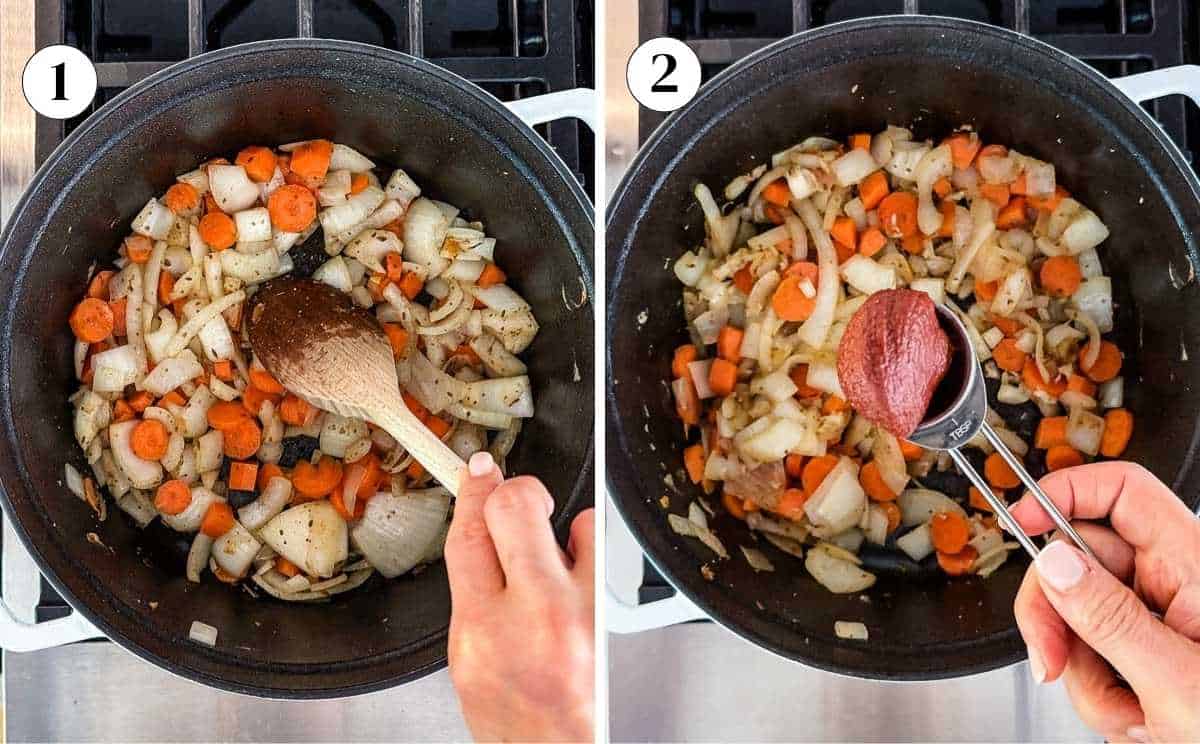
Step 1 – Sauté veggies: Grab a large Dutch oven (a 5-qt is ideal) or a large pot. Heat oil over medium-high heat. Add the onion, carrots, and ground cumin, and cook, stirring often, until the onions are softened, about 3-4 minutes.
Step 2 – Add the aromatics: Stir in the red pepper (or tomato) paste and minced garlic and cook, stirring constantly, for about a minute.
Pro tip: Whether you are using red pepper or tomato paste, it is important to cook it for a minute to “bloom” the flavor; otherwise, you may end up with a raw, metallic taste.
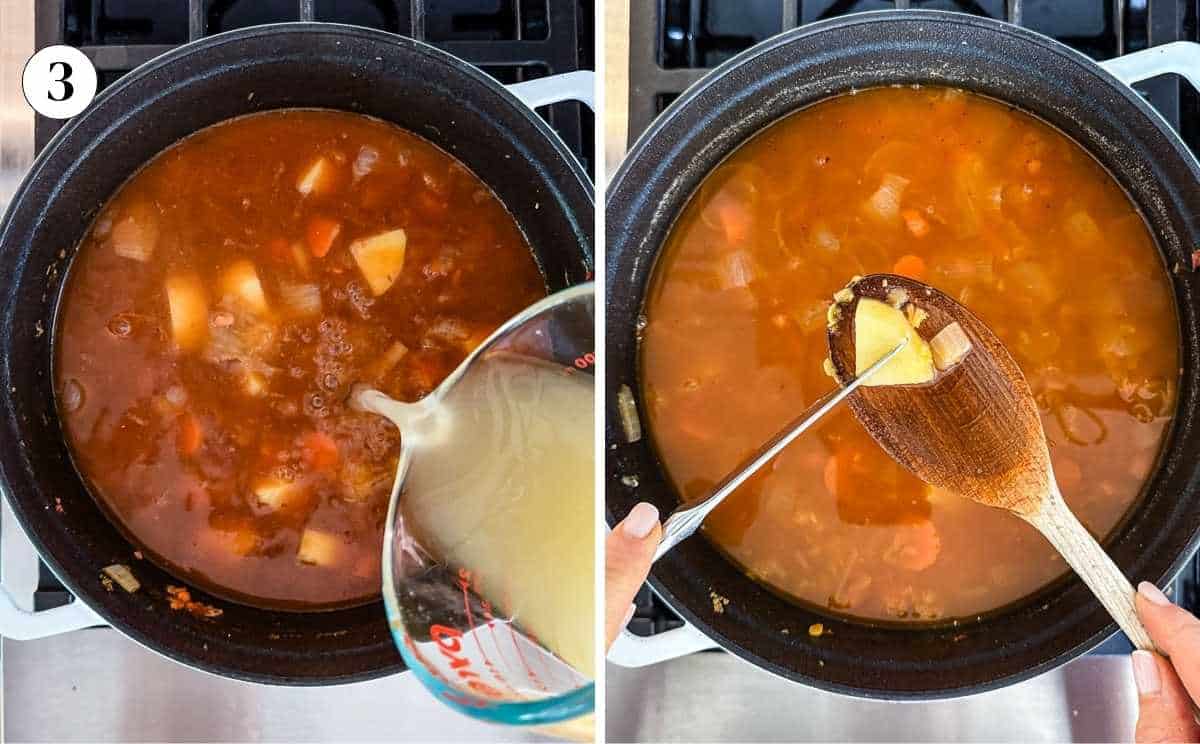
Step 3 – Combine everything in the pot: Stir in the cubed potatoes and red lentils and pour in the broth. Sprinkle with salt and pepper. Give everything a good stir to make sure all the veggies are fully submerged in the liquid.
Put the lid on and bring it to a boil. Once it comes to a boil, turn the heat down to medium-low and let it simmer for 20 minutes, keeping a close eye on it and stirring often to prevent the veggies and lentils from sticking to the bottom of the pot.
Pro Tip: To check doneness, I usually insert a knife into a potato. If it comes in and out easily, your soup should be ready to blend.
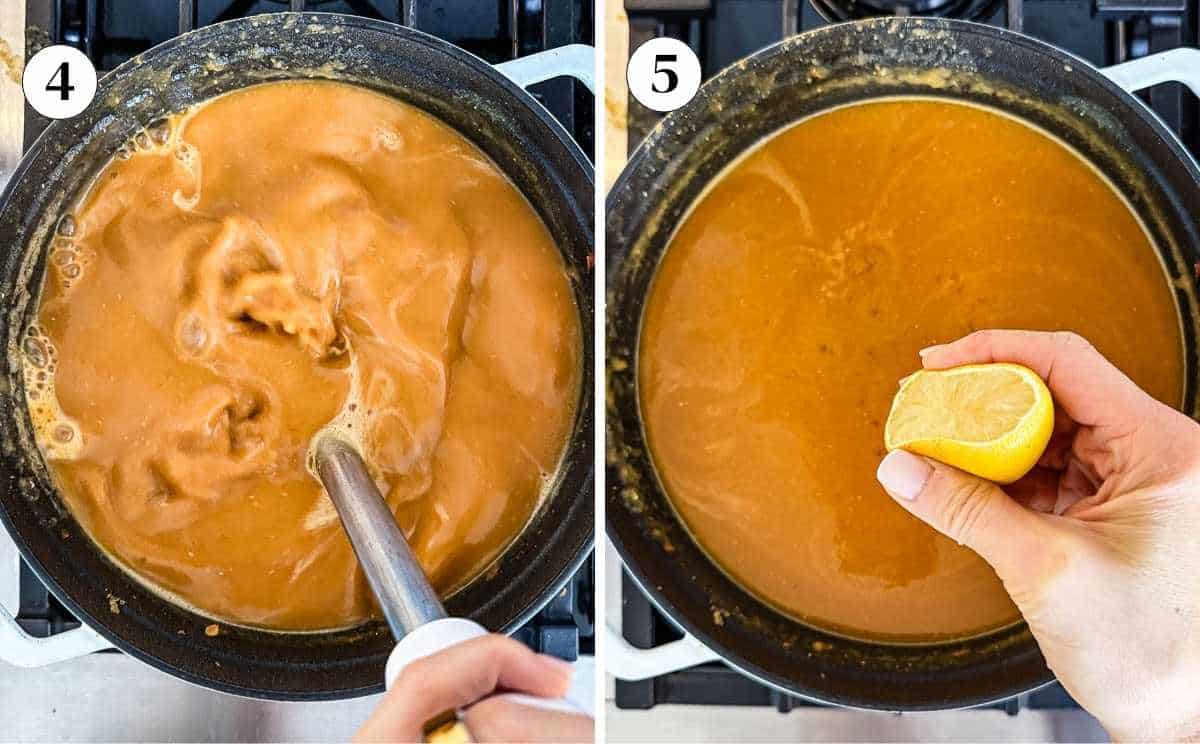
Step 4 – Blend the soup: Off the heat, use an immersion blender to carefully puree the soup until silky smooth, with no visible lentils remaining. If you do not have an immersion blender, you can use a blender (or a food processor). However, for your own safety, I recommend doing it in batches.
Step 5 – Add the lemon juice: Put the pot back on the stove and bring it to a final boil. Squeeze a generous amount of lemon juice and taste for seasoning. Add more if necessary.
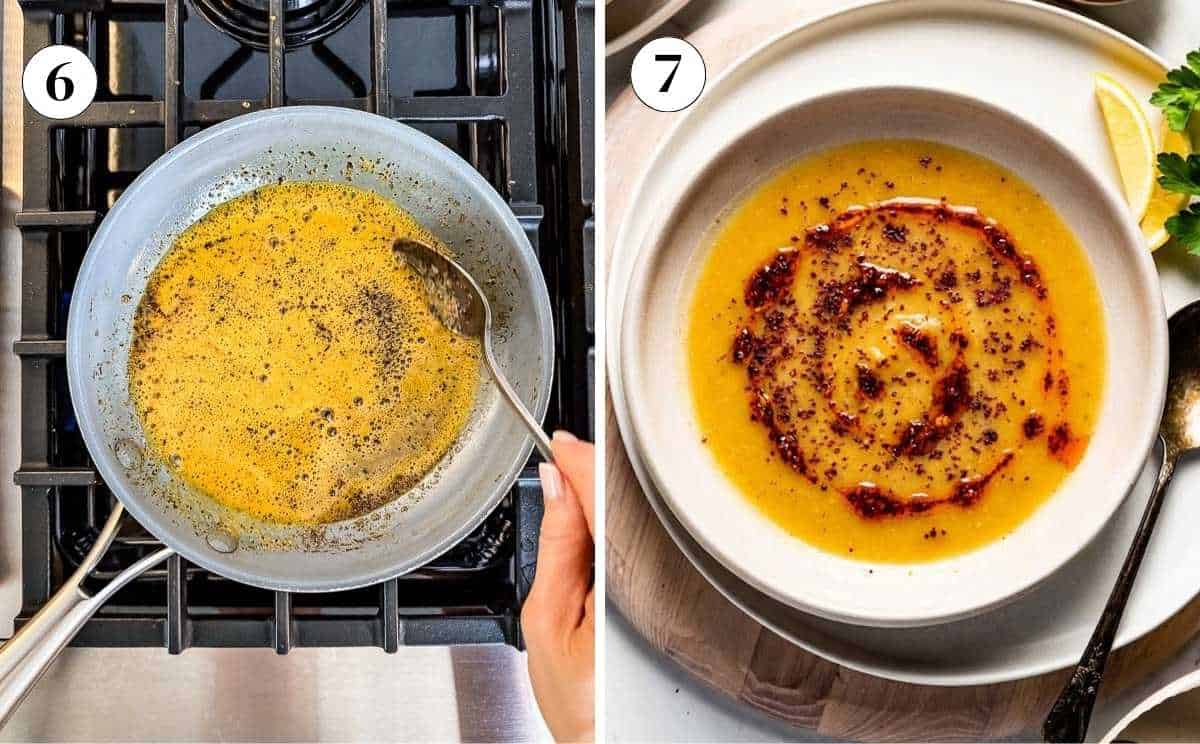
Step 6 – Make the chili oil: Make it right before serving. In a small skillet, heat unsalted butter (or oil) until melted. Add the Urfa chili and stir to combine. Let it cook for about 30 seconds. It will bubble up, so be very careful.
Step 7 – Serve: Ladle the soup into bowls and drizzle with chili oil. Garnish with dried mint (if using) and serve with lemon wedges on the side.
Pro tip: If you don’t use all the chili oil, you can stir it into the soup before refrigerating.
Helpful Tips
Adjust the consistency: I usually use 6 cups of liquid for every cup of red lentils and find that it delivers the consistency that I am accustomed to. The traditional Turkish red lentil soup has a pourable consistency, unlike most blended soups, which tend to be thick and porridge-like.
However, if you prefer your soup a bit thicker, I recommend using 5 cups of liquid. The easiest way to adjust is in half-cup increments until it looks right to you.
Leftover chili oil: While I chose to serve it restaurant-style, drizzling the pul biber yağı (chili butter) over the soup as a garnish, my mom would always add it directly to the pot, stir it in, and serve it as part of the soup itself. Either way works; it really comes down to personal preference.
That being said, if you use it as a garnish, you can simply stir any leftover oil into the pot before storing the soup in an airtight container.
Safety Tip: If you do not have an immersion blender, you can use a blender or even a food processor. However, I recommend extreme caution when working with hot soup. Always work in batches, never fill the blender more than halfway, and keep the lid slightly open with a kitchen towel on top so the steam can escape safely.

Turkish Red Lentil Soup Recipe (Kirmizi Mercimek Corbasi)
Equipment
Ingredients
For The Soup
- 2 tablespoons olive oil
- 1 onion, medium-sized, diced (about 1 ½ cups)
- 1 carrot, medium-sized, diced (about ½ cup)
- 1 teaspoon ground cumin, optional
- 3 cloves garlic, minced
- 1 tablespoon red pepper paste, or tomato paste (optional)
- 1 Yukon gold potato, medium-sized, peeled and cut into small cubes
- 1 cup red lentils, rinsed and drained
- 6 cups vegetable broth , or water
- 1 ½ teaspoons Kosher salt
- ½ teaspoon black pepper
- 2 tablespoons lemon juice, plus, more for serving
For The Chili Oil
- 3 tablespoons unsalted butter* , or olive oil
- 1 teaspoon Urfa chile powder, or red pepper flakes, or paprika
Instructions
- Heat the oil in a large pot over medium-high heat. Add the onion, carrots, and cumin, and cook for 3-4 minutes, until the onions are softened.
- Stir in the garlic and red pepper (or tomato) paste, saute, stirring constantly, for about a minute.
- Add the cubed potatoes and red lentils.
- Pour in the vegetable broth. Season with salt and black pepper.
- Put the lid on and bring it to a boil. Once boiled, reduce the heat and simmer for 20 minutes, stirring a few times.
- Using an immersion blender*, carefully puree the soup until smooth and creamy. Stir in the lemon juice, taste for seasoning, and add more if necessary. Set it aside.
- To make the chili oil, melt the butter (or vegetable oil) in a small skillet over medium heat. Stir the chili pepper (or paprika) and mix to combine.
- Ladle the soup into bowls and drizzle it with a few tablespoons of the chili oil. Serve with lemon wedges on the side.
Video
Notes
- Yields: This makes about 8 cups of soup, ideal for 6 servings. The nutritional values below are per serving and include the optional chili oil.
- Butter or oil: You can make the chili oil with either butter or olive oil. To keep it vegan, use olive oil for the sizzled chili garnish; otherwise, use butter for the traditional restaurant-style finish
- A word on the amount of lemon juice: The most important ingredient in this recipe is lemon juice. I listed only 2 tablespoons in the recipe card, but when I make it for my family, I usually triple that amount as we like it that way. So, feel free to add more after giving it a taste.
- Storage: If you have leftovers, bring them to room temperature and store them in an airtight container. When kept refrigerated, your soup should remain fresh and tasty for up to 4 days.
- Freezing: To freeze, bring it to room temperature, place it in an airtight container, and freeze for up to 2 months.
- To Thaw: Remove it from the freezer and let it thaw in the fridge overnight. Heat in a small saucepan before serving. You may have to add a splash of water if it is too thick.
- Updated: After a recent visit to Turkiye and having this soup on multiple occasions, I decided to update the recipe post with the chili drizzle (as opposed to making it optional) An earlier version of this recipe was served with croutons, which is also a good option, but the authentic version is almost always served with the oil drizzle so the newly updated version reflects that.
Nutrition
Nutrition information is automatically calculated, so should only be used as an approximation.
How To Make Ahead, Store, and Freeze
One reason this red lentil soup is so beloved in Turkiye is that it can be made in large batches and enjoyed for days. Here’s how I keep it fresh at home:
Storage: Let the soup cool to room temperature first, then transfer it to an airtight container. It will keep well in the refrigerator for up to 4 days.
Freezing: This Mercimek soup freezes beautifully. Once it’s cooled, place it in airtight containers or portion it in freezer-safe bags. Be sure to leave an inch of room at the top since liquids expand as they freeze. It will keep well for up to 2 months.
Reheating: For the best results, thaw the soup overnight in the fridge. Then reheat gently in a saucepan over low heat. The soup will thicken as it sits, so you may have to use a splash of broth or water to thin it out.
What To Serve With Turkish Red Lentil Soup
If you go to a lokanta in Istanbul and order this soup, it will likely be served in a big bowl, with a wedge of lemon and some crusty bread on the side. Below are a few of my favorite pairings when I serve this soup to my family:
Crusty bread: A loaf of crusty sourdough or a French baguette is a wonderful pairing. However, if you have the time, I highly recommend making a batch of my No-Knead Artisan Bread. It is wonderful for dipping in the soup.
Traditional Turkish Salads: Serve it with a side of Piyaz (Turkish White Bean Salad) or Turkish Shepherd Salad for an authentic pairing.
Green Salad: If you prefer something lighter, pair the soup with my Butter Lettuce Salad to make it a filling meal.
Other Turkish Dishes You Might Enjoy
If you enjoyed this soup and want to explore more of the flavors I grew up with in Türkiye, here are a few of my most popular (and family-favorite) recipes:
- Master a Classic Street Food: The viral Doner Kebab is one of the most popular Turkish dishes on the blog, not because it is a fantastic weeknight recipe, but also because it is a great shortcut that tastes just as delicious as the real thing.
- Try a Simple Pasta Dish: The Turkish Pasta is another shortcut to the traditional dumplings, known as manti. It is a great weeknight dinner and beginner-friendly recipe to try, especially if you are new to Turkish cuisine.
- Learn the Art of Savory Pastry: You can’t talk about Turkish cooking without mentioning Borek. Don’t be intimidated by the difficult-to-pronounce name; it is made by layering phyllo dough with fillings such as cheese, spinach, mushrooms, etc. I wrote the recipe in a simplified way so anyone can make it.
This post may contain affiliate links. If you purchase through these links, I may earn a small commission, at no additional cost to you.










This is a delicious recipe! The lemon and the chili butter drizzle really take it over the top. So comforting, especially during winter. Thank you for sharing! 🙂
Cannot agree more. Lemon and chili butter are what makes this recipe Turkish. I am happy to here that you enjoyed it, Sarah.
Decent recipe, thanks for sharing. Shame no effort was made to publish the recipe in more accurate metric units for the world beyond the US border.
Our whole family loves this simple but tasty recipe – takes us back to holidays in Turkey. Thank you!!!
Sounds lovely, can’t wait to try it out! Thank you.
Thanks for coming by Sue. I hope you like it as much as we do.
Dear Aysegul, this soup is fantastic. Quick to make, usually with only pantry staples and cheap too. But, the taste……it is magical. Really really good, my hubby could not believe how good it turned out. I really love Turkish cuisine, especially the abundance of veggies in it, so please keep the good recipes coming!
This is music to my ears Alex. I am thrilled to hear that you enjoyed my recipe. Thanks so much for coming by and taking the time to leave a review.
Cheers!
Great soup – perfect for fall! Can’t wait to make it again soon.
Happy to hear that. Thank you!
This red lentil soup was so tasty, so much flavor! I cannot wait to make it again.
I am so happy to hear that you enjoyed it. Thanks for coming by.
I love soup season for for recipes just like this one! Enjoyed this for dinner last night and it was a hit all around the table! Hearty and delicious; my whole family loved it!
I am thrilled to hear you and your family liked this recipe Sara. Thanks for coming by and taking the time to leave feedback.
Cheers!
My sister lives in Bodrum with her husband Aziz……and she has made this lentil soup for me. I absolutely love it and will add your recipe to my file. Turkey has some of the best food in the world. I also have a couple of the coffee sets and on occasion, I make it for me. I spent several weeks there a couple times, both in Istanbul and Bodrum. Can’t wait to return when they Covid virus is under control. Thanks for your recipes.
Same here. I can’t wait to go back and enjoy the food. I love Bodrum as well. 🙂
Thanks for your note. I hope you enjoy this recipe as much as we do. Cheers.
This has to be the easiest soup I have ever made and the flavor is amazing. I did use all chicken broth though. Mine is a bit on the runny side. Next time I will only add maybe 6-7 cups of liquid or more lentils. I whipped this up in no time at all before starting work. This will be our lunch for a few days.
I am so happy to hear that you liked it Julie. I agree, it is an easy soup that fills you up. 🙂
Thanks for coming by and taking the time to leave a helpful comment.
Be safe,
Ice
Wow, I made this for dinner tonight, and I cannot get enough of this. I cannot believe how something this simple and quick can be this flavorful and comforting. This will be my go to soup recip from now on. Thank you, thank you, thank you for this fantastic recipe.
Oh this makes me SOOO happy Claudia. Thank you so much for letting me know.
❤️
Aysegul, this soup sounds amazing. As I look out my window at the cold gray day outside this dish would certainly hit the spot. Thanks for your post.
Analinda.. I am glad you liked it. It is a favorite soup on our house. Thank you!
I took a cooking class when I was in Istanbul last month and we made this soup! I’ve actually been wanting to remake it but I can’t for the life of me find the recipe book they gave us at my class. You have come to my rescue! 🙂 I’m going to make it tomorrow. Can’t wait.
Hi Caitlin,
When were you in Istanbul? How was it?
I am glad you like this soup. It is my absolute favorite.
Let me know if you have any questions.
All the best,
Ice
This looks SO delicious. I’m going to pass it along to my mother who is giving up meat.
Nice to see you the other week (and meet your dad) even though it was too short!
Your photos are getting more gorgeous all the time!
xo
Awww you are so sweet Ashley. Thank you.
I know, it was nice to see you as well. I hope you got a chance to get a new computer.
I hope your mom will like the recipe.
Cheers!
This soup is exactly what I want to eat as the days get colder. I love the neutral colour and the pop of the oil drizzle. This is very likely to appear on our table this weekend!
Aww thank you Ksenia. I hope your family will enjoy it as much mine does. 🙂