



Over the years of hosting holiday dinners, I’ve learned to keep a short list of dependable sides that work for any special occasion. This recipe I adapted from Ina Garten’s cauliflower gratin, has been on that list for more than a decade. It is creamy, cheesy, and somehow wins over even the most proud cauliflower skeptics.
Here is how I made the existing recipe better & foolproof:
- You get the exact amount of cauliflower you need: Her recipe says “two heads of cauliflower,” but let’s face it, that can mean anything. One head can be tiny, another can be huge, and the difference can easily throw off the sauce. By giving you the exact weight of florets, you end up with the right balance every single time. No more guessing, no more ending up with a dish that feels too saucy or not saucy enough.
- This method prevents watery results: Cauliflower holds a lot of moisture, and if it is cooked too long or cut too small, it releases that moisture straight into the sauce. Par-cooking it just until tender and draining it well helps keep the texture right where it should be. The sauce stays creamy instead of thinning out in the oven.
- It is easy to customize: I made sure to include some time-saving tips (i.e, using pre-cut cauliflower), or swapping in a gluten-free flour blend, or changing up the cheeses so you can make it yours.
Ingredients
This baked cauliflower au gratin recipe requires a short list of simple ingredients, with cauliflower as one of the main ingredients. You can find the full list of ingredients in the recipe card below, but below are ingredient notes from my recipe testing:
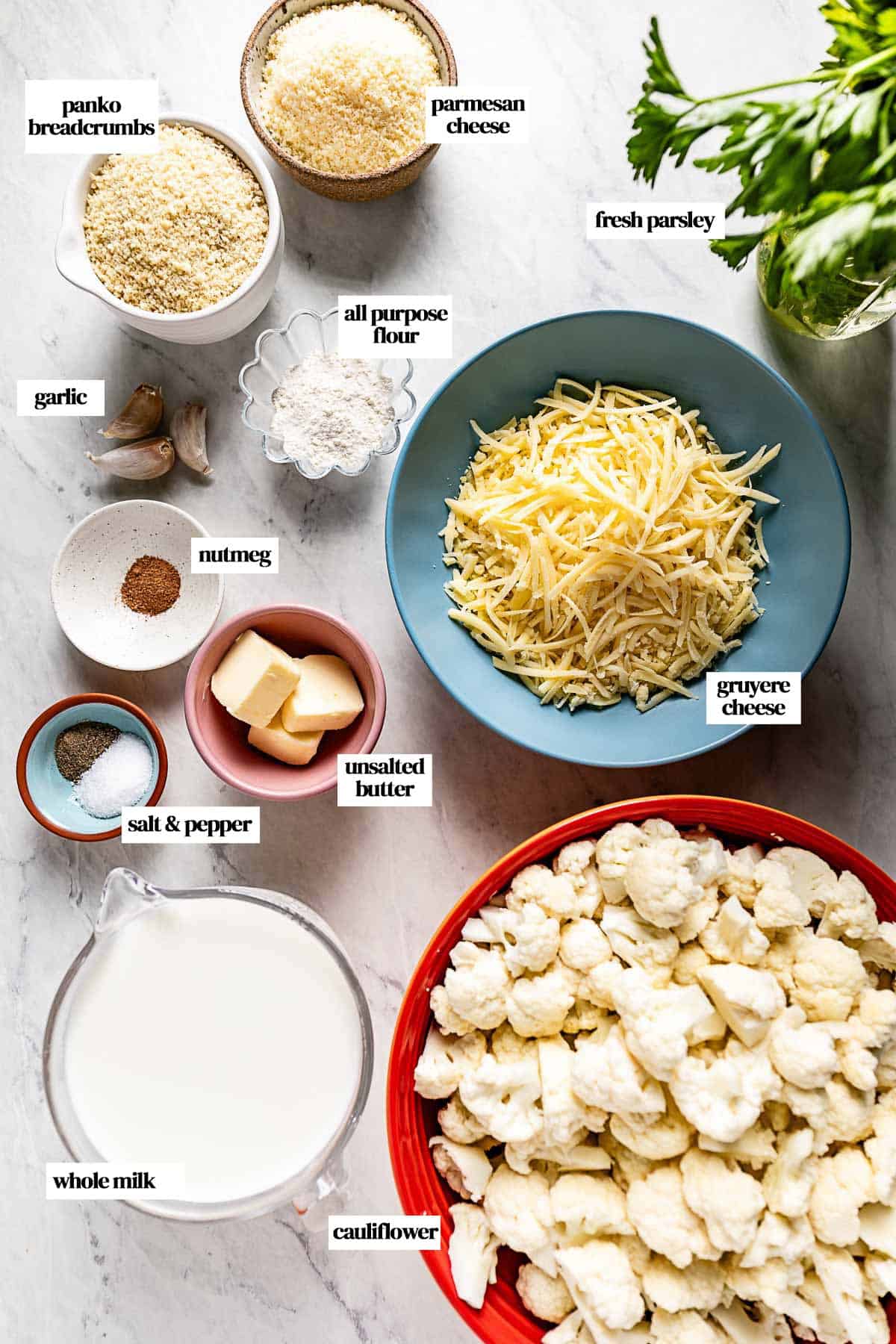
Cauliflower: The key to this recipe is to have 3 pounds of cauliflower florets. In other words, we want 3 pounds total after cutting into pieces and removing the stalks and stems.
I found the best way to ensure enough cauliflower to fill a 9 x 13-inch baking dish is to purchase a 3-pound and a 2-pound head of cauliflower.
Pro tip: If you are short on time, nowadays most stores sell pre-cut, packaged cauliflower, which works perfectly in this recipe. Be sure to check the expiration date and choose a package with firm florets.
Unsalted butter: I almost always use unsalted butter in my recipes so that I have control over the amount of salt, but salted butter would also work. Just be sure to taste for seasoning before adding more.
Fresh cloves of garlic: While I prefer fresh garlic cloves, you can use garlic powder. If you want to take this cauliflower au gratin casserole to the next level, do yourself a favor and use roasted garlic.
Flour: While I am using all-purpose flour, you can use a 1:1 gluten-free flour blend (I like King Arthur‘s GF Flour) as well. Choose a blend that includes starches like tapioca, potato, or corn for the best texture.
Whole milk: Low-fat milk can be used in place of whole milk, but it will not be as creamy. There is also a higher chance of curdling if a lower-fat milk is used.
Seasonings: A simple mix of Kosher salt, black pepper, and nutmeg elevates the dish to new heights. For an extra kick, a pinch of cayenne pepper can also be added.
Cheese: I am following the Barefoot Contessa’s cheesy cauliflower gratin recipe and using a mix of Gruyere and Parmesan, but sharp cheddar, Swiss, or Fontina can be used in place of the Gruyere.
I do not recommend using pre-packaged shredded cheese because most companies use anti-caking agents to keep it fresh, which can affect the consistency of the cheesy sauce.
Bread crumbs: Yet unlike Barefoot Contessa’s recipe, I went with Panko breadcrumbs for extra crunch. For extra indulgence, you could try crushed Ritz crackers mixed with a bit of melted butter for a salty, buttery crunch.
Optional garnish: Fresh parsley gives it a beautiful finish and color. Fresh chives would be a nice addition, too.
How to Make Cauliflower Gratin?
If you are looking for an easy cauliflower au gratin recipe, you have come to the right place! There are three main parts to making a cauliflower gratin, but I can assure you your efforts will be worth it. Here’s how to do it in a few basic steps:
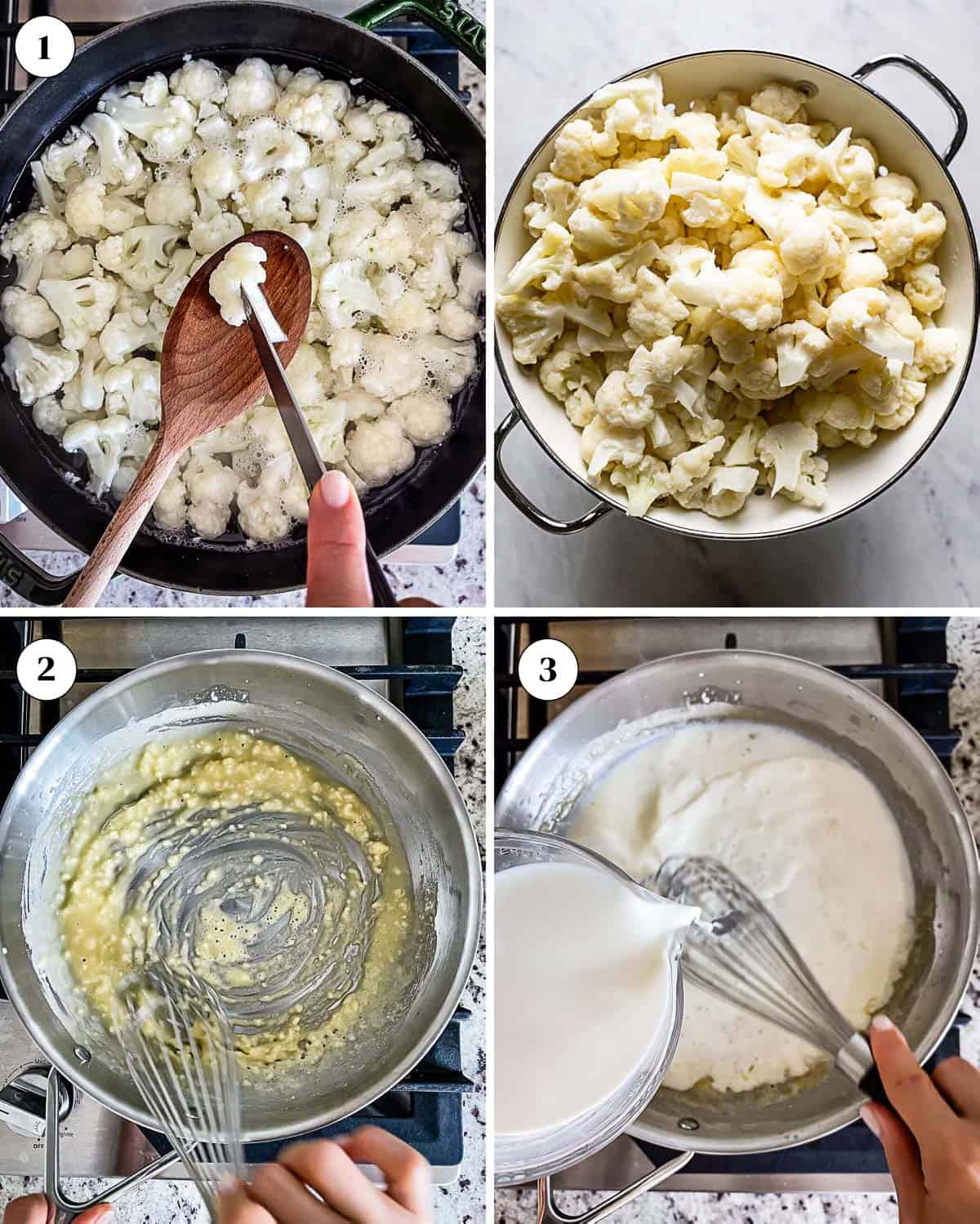
Step 1 – Boil cauliflower: Preheat the oven to 400°F (204°C). In a large pot, place the cauliflower florets, a few teaspoons of salt, and enough water to cover everything.
Bring to a boil over high heat, then reduce to medium heat and cook for 4-5 minutes, or until the cauliflower is softened but still firm when pierced with a fork or knife. Drain the cauliflower very well; shaking the colander helps remove extra moisture, so the sauce doesn’t turn watery later. Set aside.
Step 2 – Make a roux: Melt butter in a large skillet over medium heat. Add the garlic and stir for 30 seconds until fragrant. Add the flour and whisk constantly for 1 minute, until it resembles a smooth paste (but not browned).
Pro Tip: Take your time to cook the flour while constantly whisking, even if it feels like a full minute is too long. This step cooks out the raw, unpleasant taste of flour, because once it’s in there, you can’t fix it later.
Step 3 – Make the white sauce: While whisking constantly, pour in the milk and increase the heat to medium-high. Bring it to a gentle boil and cook for 2-3 minutes, or until slightly thickened.
Look for nape: A simple way to check if the sauce has the right thickness is to dip a wooden spoon in it. When you remove the spoon, the sauce should cling to its back rather than being runny. This is referred to as “nape” in French.
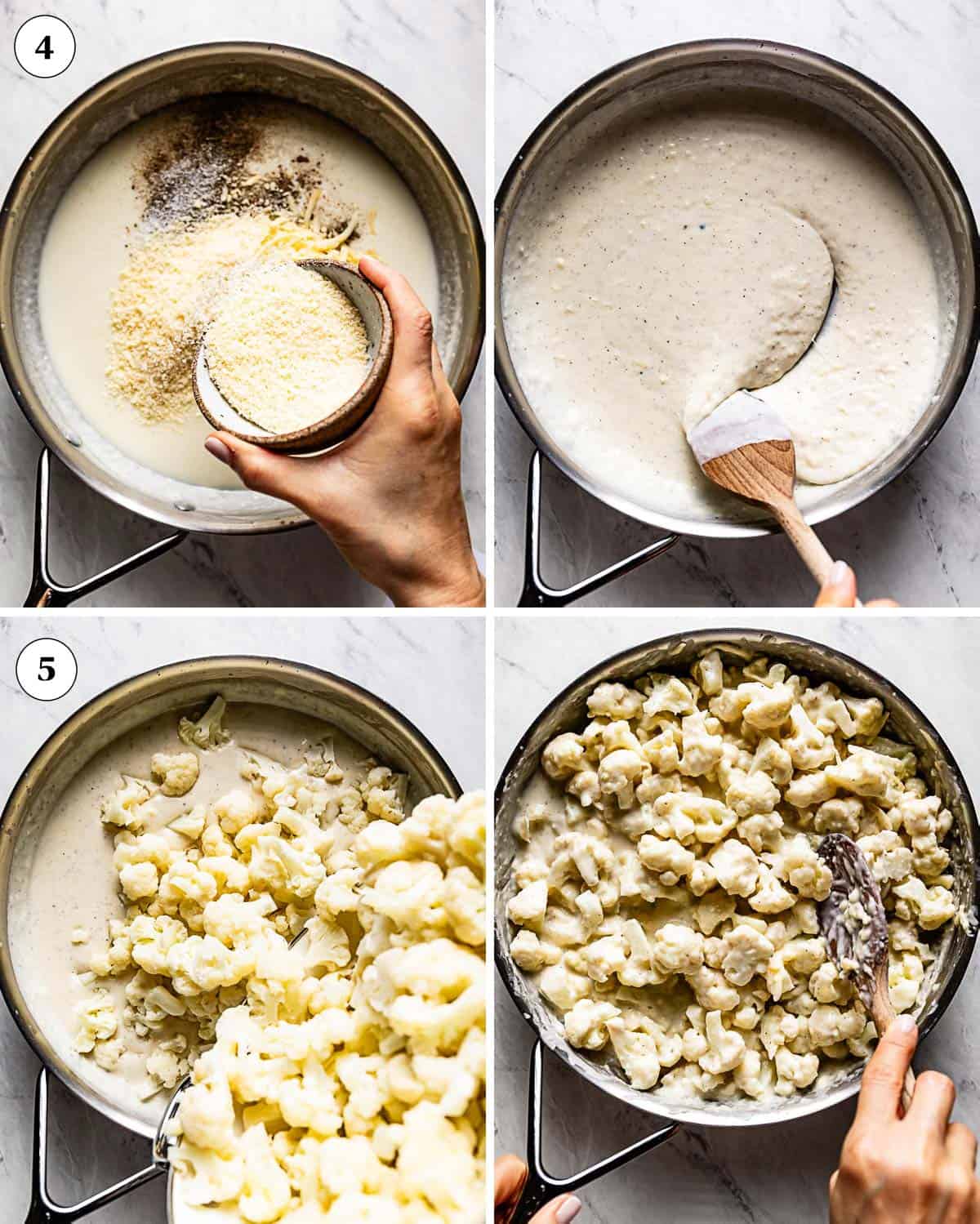
Step 4 – Add the cheese: Remove from the heat and add the Kosher salt, ground pepper, nutmeg, 1 cup of Gruyere cheese, and 1/4 cup of Parmesan cheese. Whisk to combine until the cheese melts and the mixture is smooth.
Step 5 – Add cauliflower: Add the cooked cauliflower florets and toss to combine. Transfer the mixture to a 9 x 13-inch baking pan. Sprinkle the top with the remaining Gruyere cheese, Parmesan cheese, and panko breadcrumbs.
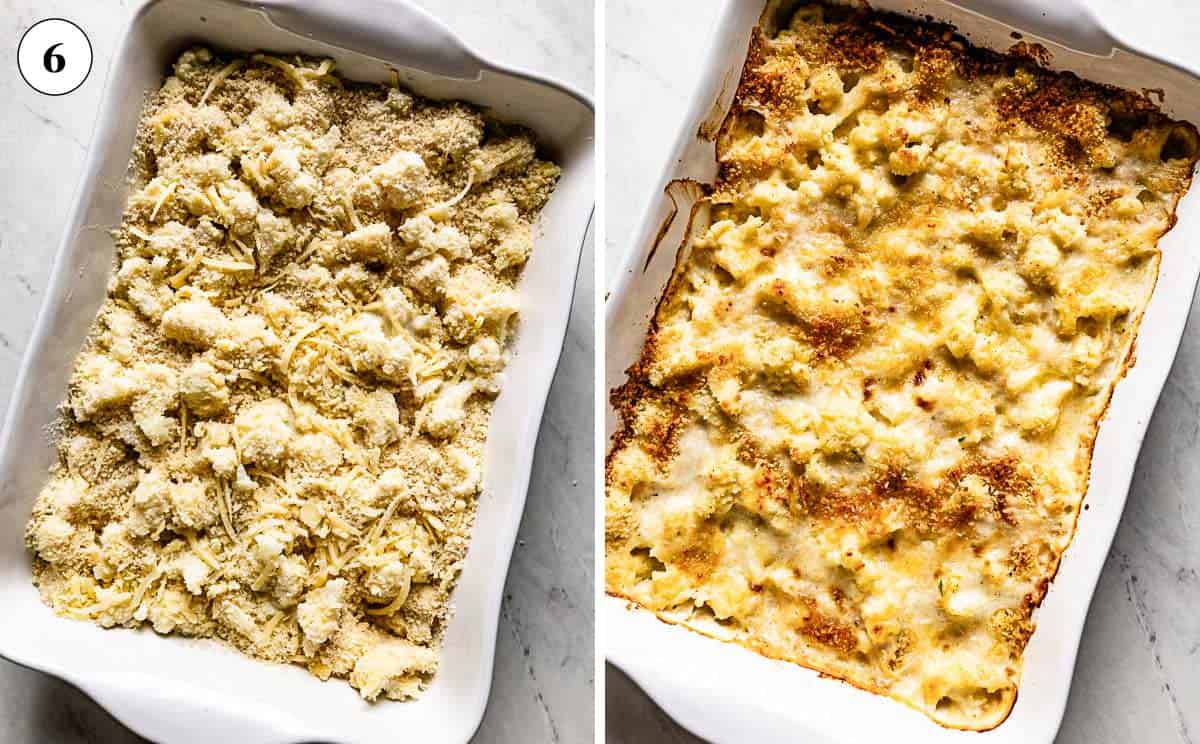
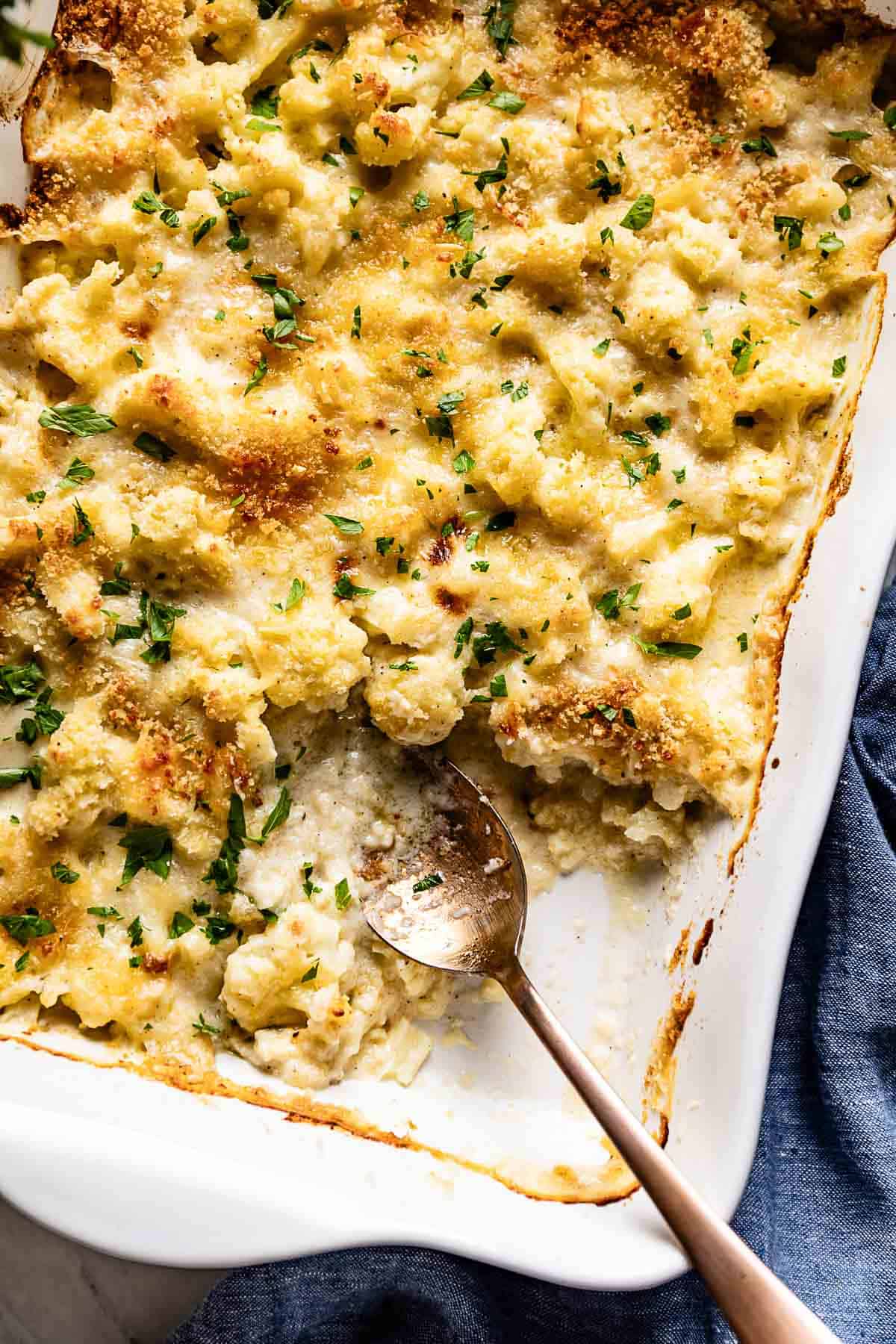
Step 6 – Bake: Bake for 25-30 minutes, until the cheese is bubbling and the top is golden-brown with crisped breadcrumbs. At this point, the cauliflower should be tender when pierced with a fork, and you should see little cheesy pockets forming between the florets.
Step 7 – Garnish and serve: Allow to cool for 5-10 minutes. Garnish with a sprinkle of parsley, and enjoy.
Expert Tips From My Recipe Testing
As you can see, the recipe for this creamy side dish is pretty straightforward. However, I learned a few lessons during our recipe testing that I think are important to share to help you end up with the best cauliflower au gratin of your life (I know it is quite a bold statement, but I mean it.):
How to prevent the watery gratin: Be sure to drain the cauliflower after it is parcooked. I would even recommend letting it sit in the colander for a few minutes so all the liquid fully drains. Additionally, make sure that your roux is cooked until slightly thickened.
You should not have this issue if you follow these steps, but if you do, you can bake it a bit longer (keeping a very close eye on it) to help the liquid evaporate.
Browning: If the cauliflower is tender, but the top hasn’t browned enough, place it under the broiler for 1 minute or until browned to your liking. Make sure to check it often to avoid burning.
Blanching the cauliflower: Make sure to cook the cauliflower in a large pot of boiling salted water and keep a close eye on the texture. We are not cooking the cauliflower all the way through, just enough to parboil it into tender cauliflower florets, as it will continue to cook in the oven.
Use a large enough skillet to mix everything together: I used a 12-inch skillet (affiliate link), which was large enough to make the cheese sauce, and tossed all the cauliflower so that each floret was coated with the sauce.
Patience is key with the bechamel sauce: When you are making the roux (aka bechamel sauce), patience is the key. Do not rush, and be sure to cook the flour with the butter for at least 1 minute so that you cook out the raw flavor of the flour. For ease, make the roux with a wooden spoon, then switch to a whisk when you begin adding the milk. And whatever you do, do not leave it unattended.
Cold milk vs warmed milk: Slightly warmed or room temperature milk mixes better, but I tested the recipe with cold milk, and it worked just as well.
Don’t fret about consistency: Upon first making the cheese sauce, it may seem a little loose, but keep in mind that some of the moisture will evaporate in the oven, and it will thicken as it bakes.
How to Make Ahead, Store, Freeze, and Reheat?
This scalloped cauliflower recipe is a wonderful make-ahead and can be stored in both the fridge and freezer. To do so properly, simply:
- Make Ahead: Blanch the cauliflower and make the creamy sauce up to 2 days in advance. Store each separately in airtight containers in the refrigerator. Or, make the entire casserole dish 1 day in advance. Remove from the fridge at least 30 minutes before baking.
- Storing Leftovers: Leftover gratin of cauliflower can be stored in an airtight container in the fridge for up to 3 days.
- Freezing: Cauliflower gratin can be frozen, but keep in mind the texture may be affected after thawing and reheating due to the water content in cauliflower. For best results, cool the gratin completely (to prevent ice crystals from forming) and store it in a freezer-safe airtight container with a piece of plastic wrap directly on the surface. Label, date, and freeze for up to 3 months.
- Thawing: Thaw frozen gratin overnight or up to 24 hours in the refrigerator.
- Reheating: Reheat leftovers, uncovered, in a preheated 350°F (177°C) oven for 15-20 minutes. If reheating frozen but thawed cauliflower gratin, it could take up to 30 minutes. If reheating from frozen, bake at 350°F (177°C) for 45 minutes – 1 hour, tented with aluminum foil, then remove the aluminum foil during the last 15 minutes of baking.

Cauliflower Au Gratin Recipe
Ingredients
- 2 heads cauliflower, cut into bite-sized florets (total of 3 pounds of florets) *
- Kosher Salt
- 3 tablespoons unsalted butter
- 3 cloves garlic, finely minced or pressed
- 3 tablespoons all-purpose flour
- 2 ¼ cups whole milk
- 1 ½ teaspoons Kosher salt
- ¾ teaspoon ground black pepper
- Pinch nutmeg
- 1 ¾ cups Gruyere cheese, shredded, divided – 6 ounces – Swiss or Cheddar cheese would also work
- ¾ cup grated Parmesan cheese, divided
- ½ cup panko breadcrumbs
- 2 tablespoons fresh parsley, chopped
Instructions
- Preheat the oven to 400°F (204°C).
- Place the cauliflower florets in the stock pot and a few teaspoons of salt and cover with water.
- Cover the pot and bring it to a boil over high heat, then reduce to medium heat and cook for 4-5 minutes until the cauliflower is softened but still firm when pierced with a fork or knife.
- Drain and shake to remove any excess water. Set aside.
- Meanwhile, melt the butter in a large skillet* over medium heat. Add the garlic and saute for 30 seconds to soften.
- Add the flour. Whisk constantly until the flour is cooked (but not browned) for 1 minute.
- While whisking constantly, pour in the milk and increase the heat to medium-high. Bring it to a boil and cook for 2-3 minutes or until thickened but still smooth.
- Remove from the heat and add the Kosher salt, ground pepper, nutmeg, 1 cup of Gruyere cheese, and 1/4 cup of Parmesan cheese. Whisk to combine until the cheese melts and the mixture is smooth.
- Add the cauliflower florets and toss to combine.
- Place the mixture into the baking dish and smooth it out evenly.
- Sprinkle the top of the mixture with the remaining Gruyere cheese, Parmesan cheese and panko bread crumbs.
- Bake for 25-30 minutes until the cheese is bubbling and the top is browned. The cauliflower should be tender when pierced with a fork or knife.
- Cool for 5 minutes, garnish with parsley if desired and serve.
Notes
- Yields: This recipe makes a 9 X 13 casserole full of cauliflower gratin, which is ideal for serving as a side dish for 8 adults. The nutritional values below are per serving.
- Cauliflower florets: The total weight of the cauliflower (3 pounds) is in reference to the cauliflower florets, not the whole head of cauliflower. During my recipe testing, I found the stalks weigh about 1 pound each per head, so pick up a 2-pound and a 3-pound cauliflower head to get 3 pounds of florets in total.
- Use a large enough skillet to mix everything together: I used a 12-inch skillet (affiliate link), which was large enough to make the cheese sauce, and tossed all the cauliflower so that each floret was coated with the sauce.
- Make Ahead: You can make this dish a day in advance. Simply follow the recipe until you place the cheese and cauliflower mixture into the casserole dish (until step 11.) Bring to room temperature and cover well. Keep it in the fridge until you are ready to bake. When ready, follow the recipe as written and bake.
- Storage: You can store the leftovers of this cauliflower casserole (after they come to room temperature) in an airtight container for up to 3 days in the fridge.
Nutrition
Nutrition information is automatically calculated, so should only be used as an approximation.
Variations
Cauliflower gratin is a gorgeous recipe that can be elevated or adapted based on what you are craving. Below are a few variations of this basic recipe that you can also try:
- Roasted Cauliflower Au Gratin: If you enjoy the smoky roasted flavors, instead of blanching your cauliflower, you can roast them in the oven. To do so, drizzle the florets with a tablespoon of olive oil and season with salt and pepper. Bake for 15-20 minutes or just until softened. Transfer it to your baking dish and drizzle the creamy cheese sauce over the cauliflower. Then bake your roasted cauliflower gratin following the recipe as written.
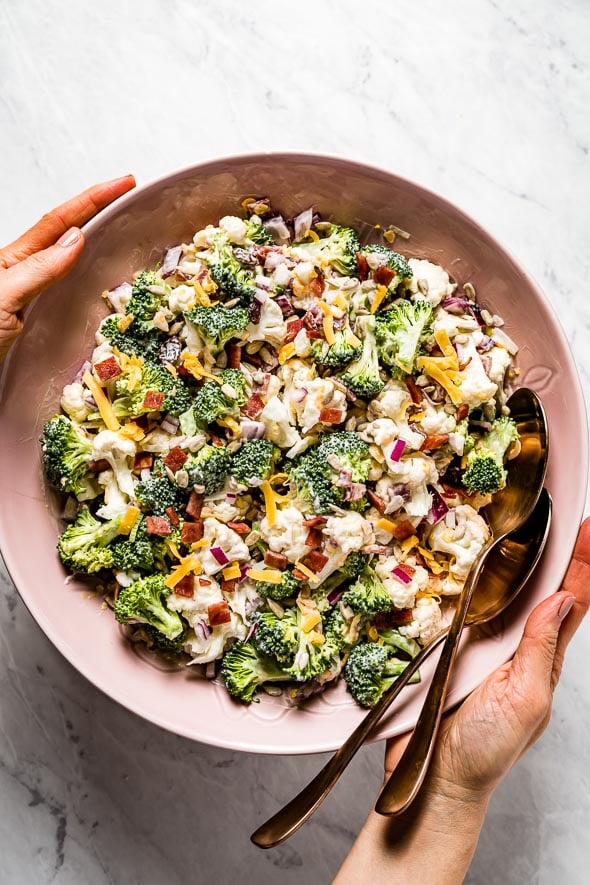
- Broccoli Cauliflower Au Gratin: For more of a healthy and veggie-packed version, you can swap out half the cauliflower for an equal amount of broccoli instead. You can blanch them at the same time, so it is just a quick and easy swap.
- Potato and Cauliflower Gratin: If you want to incorporate potatoes into this dish, it is totally possible and easy to do so. Simply swap out one pound of cauliflower for one pound of peeled, cubed Yukon Gold potatoes. I recommend cutting the peeled potatoes into bite-sized chunks and boiling them in water until al dente. Be sure to drain them well before adding them to the cheese sauce with the cauliflower florets.
What to Serve It With?
Decadent yet easy cauliflower au gratin is a beautiful side dish for holidays and special occasions. It is a great veggie side for Thanksgiving and a fun addition to Friendsgiving menu ideas. But it is delicious enough to enjoy with any main dish when you are craving a cheesy, delectable vegetable side dish. Serve it with:
- Poultry / Meat: This cauliflower cheese gratin makes the perfect side dish to serve alongside a hearty protein like Turkey Tenderloin, Turkey Meatloaf, Goat Cheese Stuffed Chicken, or Seared Beef Tenderloin.
- Bread: Make it extra indulgent alongside Brioche Rolls, Air Fryer Garlic Bread, or Foccacia.
- Side Salad: If you’d prefer to turn this scalloped cauliflower au gratin dish into a vegetarian meal, its rich flavors and textures would pair beautifully with our Butternut Squash Salad, Shaved Brussel Sprout Salad, or Acorn Squash Salad.
FAQs
Cauliflower au gratin is a twist on the French potatoes au gratin that features delicious cauliflower coated in a cheesy bechamel sauce, then topped with breadcrumbs and baked until golden brown and bubbly.
A watery cauliflower au gratin can be due to overcooked cauliflower, too thin bechamel sauce covering the dish while baking, or too low an oven temperature. To remedy this, place it back in the oven, uncovered, to allow some of the moisture to evaporate.
Yes, easy cauliflower gratin is a wonderful make-ahead recipe and can be made 1 day in advance. Simply parboil the cauliflower, drain and set it aside. Then make the roux and assemble the gratin. Instead of baking it right away, bring it to room temperature, cover, and refrigerate. On the day you are ready to serve, top it off with breadcrumbs and cheese and bake as directed.
Yes, you can freeze cauliflower au gratin. Keep in mind, however, that freezing the gratin may affect the texture upon thawing and reheating. Simply bring it to room temperature and transfer it to a freezer-friendly container. Cover well (to avoid freezer burn) and freeze for up to 3 months. Thaw overnight in the refrigerator.
Other Cauliflower Side Dishes You Might Like:
It is no secret that this cauliflower bake makes a delicious side dish to serve along with any of your favorite main dishes. Here are a few other cauliflower recipes that you might also like to try:
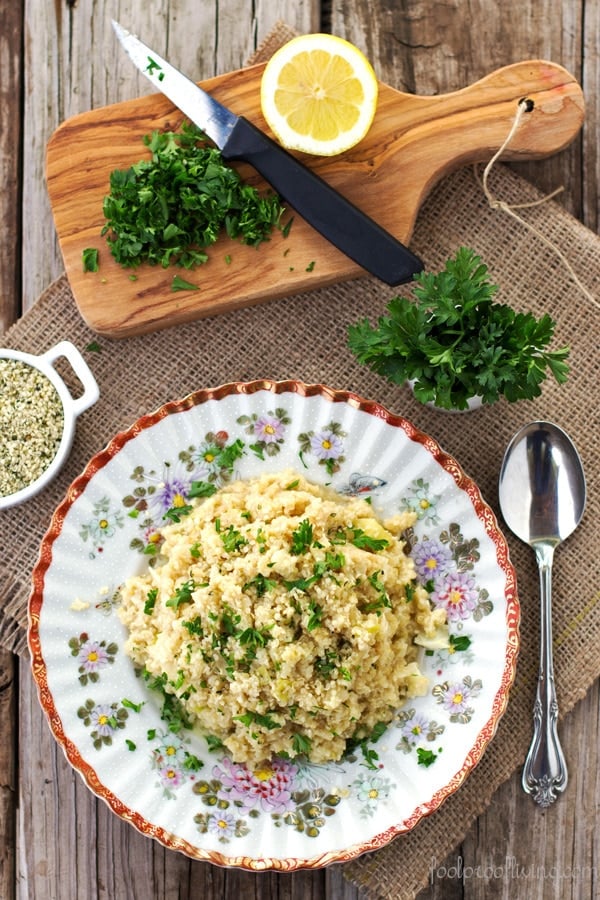
- If you are looking for a cozy, plant-based dish, my Vegan Cauliflower Risotto is a great place to start. It’s creamy, comforting, and made with nutritional yeast, miso paste, and tahini.
- For something warm and cozy, try my Cauliflower Celery Root Soup. This vegan and gluten-free soup is silky smooth, perfect for a cold winter day.
- And if you want something bright and more satisfying, my Roasted Cauliflower Salad is delicious. It’s made with lentils, dates, and a tahini dressing.











Flavour, amazing!
Texture on the other hand will take some getting use to.
That is so true. Cheese is yummy but it adds additional moisture making it somewhat soggy.
Thank you for your kind words Beeta. I really appreciate it. 🙂
Thank you Traci. I made this gratin dish again last night for friends and it was a hit. Panko really takes it to another level. 🙂
It looks great;I can almost taste it. I think the last Chinese Chef would approve!
Where in the BVI might I find panko crumbs ( which I use when in the States), chia seeds ( what about how they lodge between one’s teeth –but they can be worth it!)or the different colored sesame seeds…?
Hi Mary,
Ha ha.. Thank you!
You can find panko bread crumbs in Bucks Marina. I get chia seeds from the health food store in Tortola. You can find sesame seeds in Supa Value. Though I doubt that they have black sesame seeds.
With all that being said, I have plenty of all these things and would love to share it with you. Just let me know when you want to make it, I’ll give them to you.
All the best..
My sister used to do cauliflower gratins all the time when she was still living in Portugal and I used to loathe it. LatelyI have been thinking hard about this dish, and am on the brink of trying it and see what I feel about it now, so many years down the road!
http://bloglairdutemps.blogspot.pt
Ha ha.. I wasn’t a big fan either, but lately it is growing on me. Especially, when paired with other things.
I hope you’ll give it another try, and hopefully this time, you will like it.
Thank you for stopping by Miranda.