
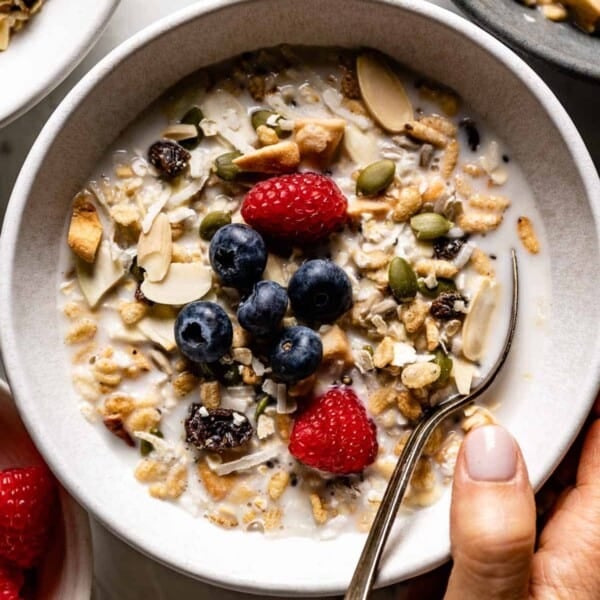
Why Should You Make Muesli At Home

Growing up in Turkiye, breakfast was a spread of olives, cheeses, eggs, and fresh tomatoes. The American “cereal culture” wasn’t something I knew about. But when I moved to the U.S. (over 20 years ago), I was introduced to the cereal aisle.
I had never seen so many colorful boxes in my life!
Initially, I leaned into the convenience, but the novelty quickly wore off. I realized these processed options were not only expensive but also often loaded with more sugar than I should consume in a day.
That’s when I started experimenting with making my own muesli. I wanted to move away from boxed cereal and return to basics.
Determined to do better, I spent months reverse-engineering those store-bought blends. By studying their labels and testing dozens of my own ingredient combinations, I finally perfected a formula that prioritizes quality and flavor without any additives or added sugars.
When you take control and make your own muesli at home, you:
- Eliminate Hidden Sugars: Most store-bought brands use sweeteners to hide bland ingredients. Here, you are in control of the sweetness level by choosing specific dried fruits or fresh fruit, or by using natural sweeteners like honey or maple syrup.
- Get Premium Quality at Bulk Prices: By sourcing your own organic grains and nuts in larger quantities, you get a much higher-quality muesli for a fraction of the cost of those tiny packaged mueslis sold in stores.
- Customize it to your liking: You aren’t stuck with a factory’s ratio. Use my muesli formula as a starting point and customize it to your taste or what you have in your pantry.
What is Muesli?
Muesli is a simple cereal-style breakfast made from a rolled oats base mixed with other ingredients, such as nuts, fruits, and seeds, and served raw with milk, yogurt, or juice, or soaked overnight.
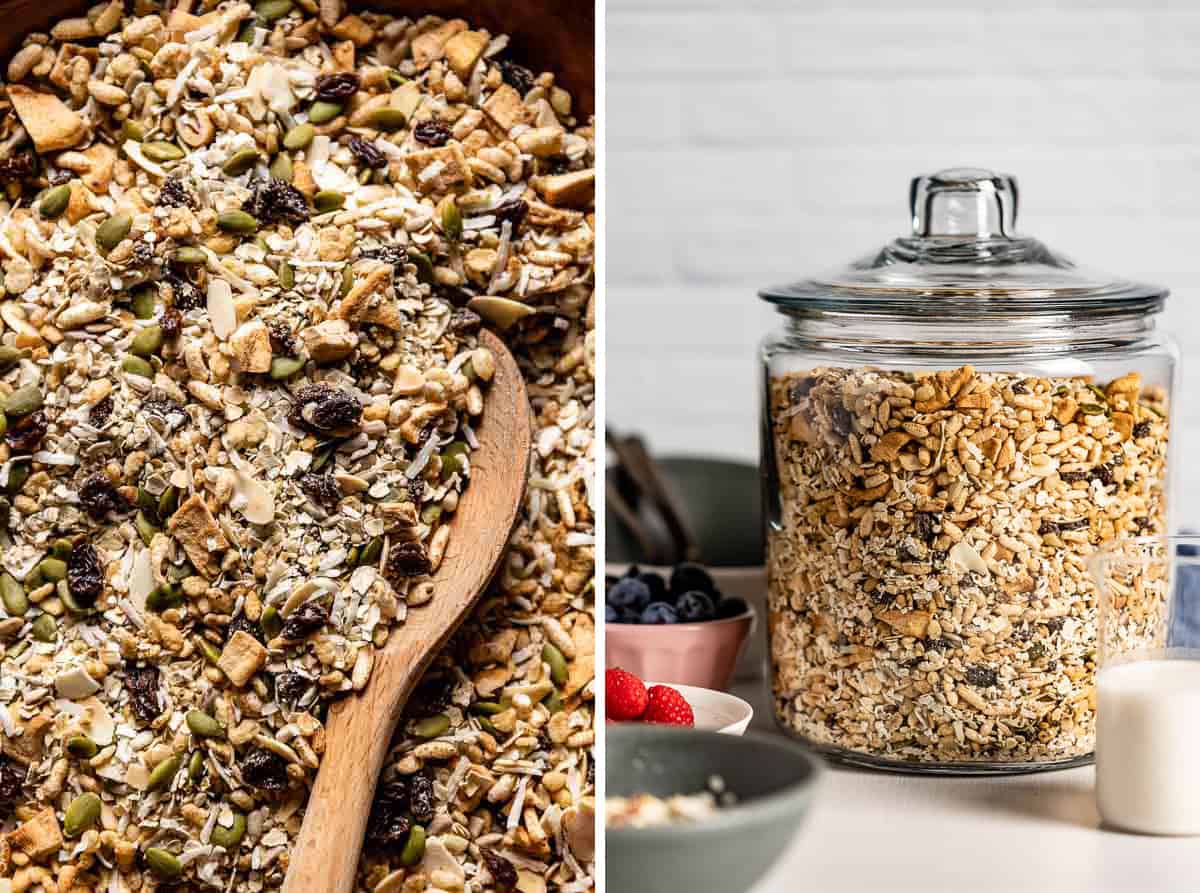
Sometimes referred to as “museli,” “meusli,” “muselix,” and “muslie,” it was created by Swiss physician Maximilian Bircher-Benner in the 20th century as a quick breakfast option for hospital patients as part of their treatment.
That said, the original Bircher muesli recipe was a bit different from the packaged muesli you find in stores today. It was made with raw oats, grated apples, and chopped nuts, mixed with water, lemon juice, and sweetened condensed milk.
Needless to say, it took off after its creation, and muesli breakfasts spread quickly throughout Switzerland. The recipe became so widespread in the country that many still refer to it as “Swiss muesli” or “Swiss-style muesli.”
Despite its European origins, muesli has also become a favorite breakfast food in the U.S., with brands like Alpen Muesli and Bob’s Red Mills appearing in grocery stores across the country.
Muesli vs. Granola: What’s the Difference?
This is one of the most common questions I get because, let’s face it, modern-day marketing jargon can be confusing. While muesli and granola often share similar ingredients and are mostly served as breakfast (or snack), the way they are made is quite different.
Granola is baked with oil and a sweetener (such as honey, maple syrup, or brown sugar) and mixed with nuts and seeds. It is usually baked in one large piece in a sheet pan and broken down into clusters before serving.
Muesli, on the other hand, uses raw ingredients without added liquid oil or sweeteners. Therefore, it is more like a cereal than clusters. You can consume it raw or lightly toast the ingredients for a few minutes to enhance their flavors.
Muesli Ingredients: The Foolproof Formula
Below, you will find the formula I use for this muesli recipe, along with recommendations for brands I trust and buy regularly.
However, if you live outside the U.S. or don’t have access to these exact ingredients, you can substitute pretty much every single ingredient in this recipe, which is listed under the formula.
That said, these ingredients and brands are just suggestions; I recommend using this basic muesli recipe and adapting it to your taste. My only recommendation is to read the labels while shopping for these ingredients.
When I am at the store, I make sure to buy unsweetened, unsalted, and organic products whenever possible. Simply because I like knowing my breakfast bowl starts with the cleanest ingredients I can find.
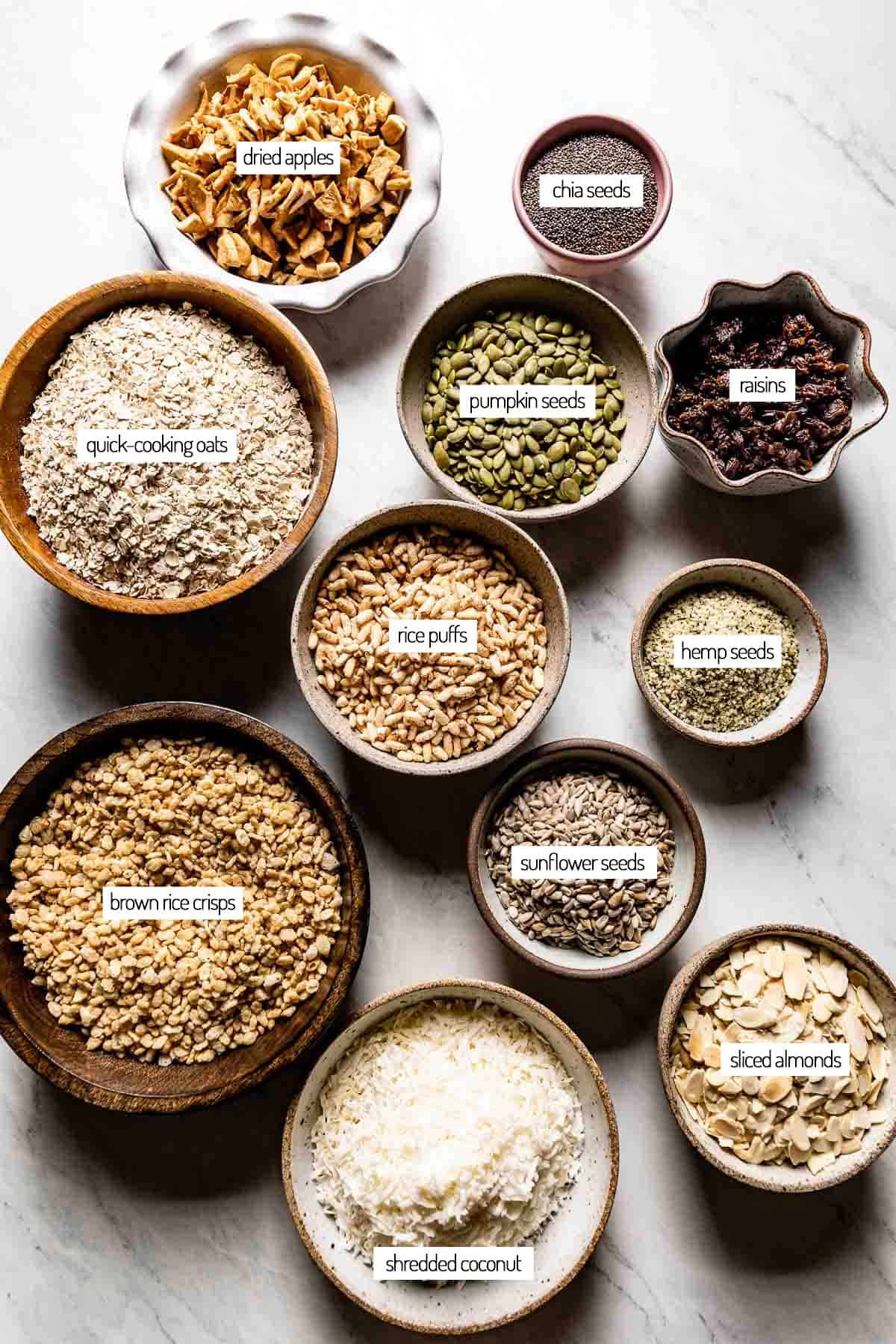
This recipe yields 16 cups of mixed muesli (approximately 16 servings), though the recipe card includes the details you need to make it for 4 cups. Below is my go-to formula:
| Ingredient | Amount |
| Quick Cooking Rolled Oats | 3 cups |
| Other Grain Cereals | 5 cups |
| Dried Fruit | 3 cups |
| Seed Boosters (Chia, hemp, etc.) | 1 cup |
| Seeds and Nuts | 2 1/2 cups |
Quick Cooking Rolled Oats VS. Old Fashioned Rolled Oats
You can use either quick-cooking or old-fashioned oats for muesli. I prefer quick oats because they soften easily when added to milk or yogurt and require no extra preparation.
However, if you plan to make the toasted muesli version, use old-fashioned oats (a thicker cut than quick-cooking oats), as they hold up better in the oven.
If you are not sure about how they are different, be sure to check out this comprehensive article on rolled oats vs. old-fashioned oats.
Other grain cereals:
You may use other grain cereals, but I find that they are the best way to add crunch to your DIY muesli recipe. It also helps increase its volume, so you have enough for weeks.
Some of my favorite brands include Brown Rice Crisps, Rice Puffs, Kamut Khorasan Wheat Puffs (not gluten-free), Bran Flakes (not gluten-free), and Quinoa Flakes, all of which should be available in the health section of your local grocery store.
Of course, you can order them online as well. Be sure to use a gluten-free cereal brand to keep this recipe gluten-free.
Dried fruit:
To give your homemade muesli a bit more sweetness, you can add any dried fruit that is unsweetened and is marked as “unsulfured”. Some of my favorite dry fruits include dried apples, cherries, golden raisins, dried cranberries, dried apricots, goji berries, and dried mango.
Seed Boosters:
You can easily add more fiber to your muesli by adding hemp and chia seeds, which blend seamlessly and don’t alter the overall taste.
Ground flaxseeds are another option, but they are best added just before serving. Because it needs refrigeration, I don’t recommend mixing it into the full batch ahead of time.
Seeds and Nuts:
If you’d like to add more texture and variety to your muesli, seeds and nuts are an easy place to start.
Any unsalted raw seeds or nuts will work. My go-to additions to this muesli cereal recipe include pumpkin seeds, sliced or slivered almonds, sunflower seeds, pecans, and walnuts.
Other optional add-ins & Topping suggestions:
I also like to add unsweetened coconut flakes for a light crunch and a touch of sweetness. You can also stir in wheat germ for extra texture, or finish your bowl with sesame seeds, fresh berries, or sliced bananas just before serving.
I also love adding a pinch of warm spices for depth. Ground cinnamon, nutmeg, cloves, ginger, or cardamom all work beautifully here.
Pro Tip: When adding spices, I recommend starting with a small amount and adding more if needed after tasting.
How To Make Muesli At Home?
There are two simple ways to prepare the muesli mix: raw or lightly toasted.
The raw method is the traditional Swiss approach and works well if you plan to eat your muesli without soaking and want a softer texture. The toasted method is a modern option that gives the cereal a lightly nutty, crunchy finish.
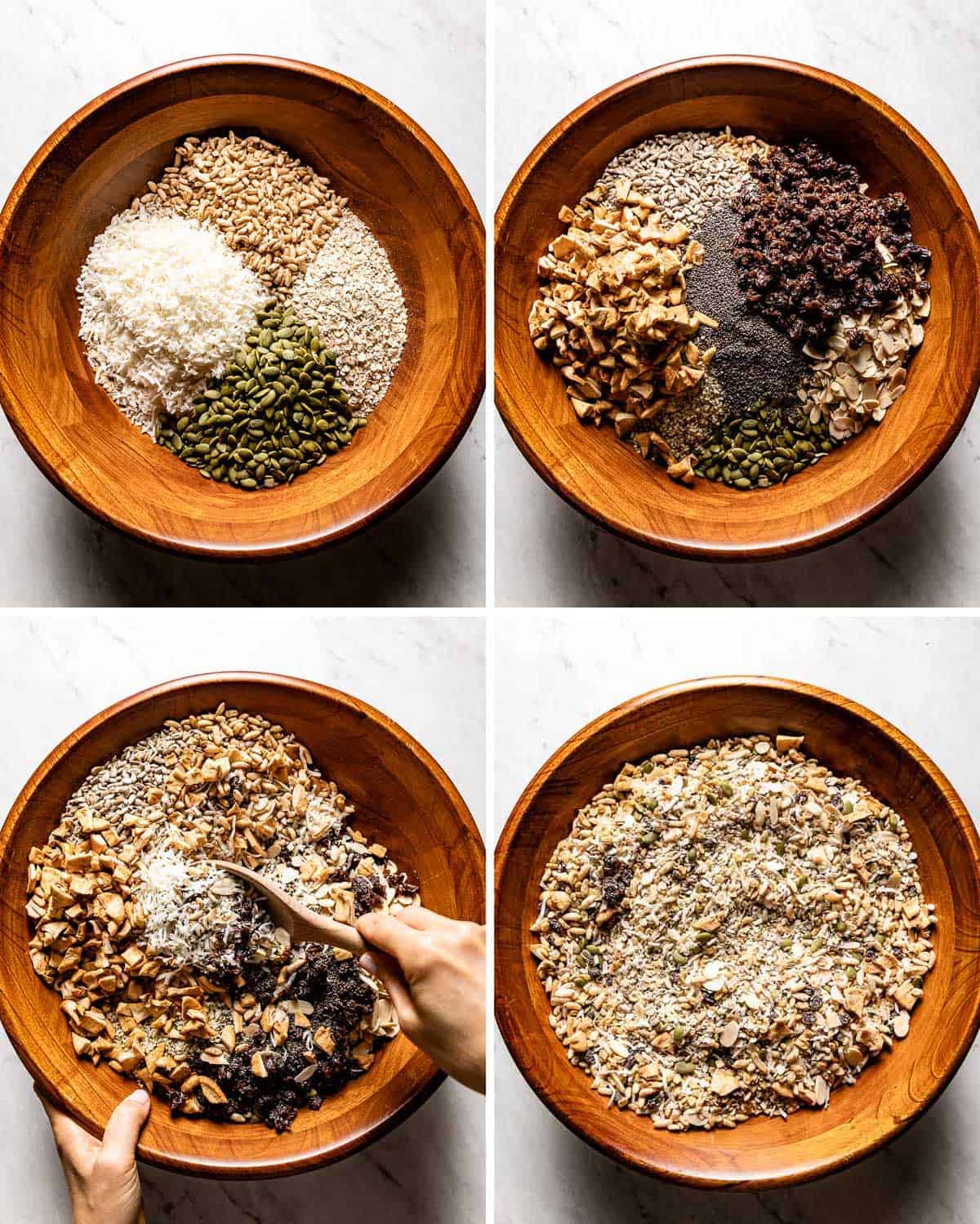
The Raw Method (Traditional)
For this method, I recommend quick-cooking oats, as you don’t need to soak them to soften. That way, you can enjoy your muesli right away.
Step 1 – Combine the base ingredients: Grab the largest bowl you have, add the oats, nuts, and seeds, and toss to combine.
Step 2 – Add the fruit: Chop the dried fruit into small, even pieces.
Do not skip this step, as it ensures the fruit is evenly distributed, so you get a lightly sweet bite in every spoonful. Otherwise, you’ll end up with chunks of dried fruit that stick together.
Add them to the bowl as you chop, and mix well after each addition.
Step 3 – Store and serve: Transfer the muesli to an airtight container and cover tightly. When ready to serve, enjoy it with your favorite milk and top it with fresh fruit.
The Toasted Method (For Extra Flavor)
For this method, I recommend using old-fashioned rolled oats, not quick-cooking oats, as quick oats don’t tolerate heat well and can dry out too quickly.
Step 1 – Toast the oats and nuts: Spread the oats and nuts in an even layer on a large baking sheet. Bake at 350°F (180°C) for 10 minutes, stirring once halfway through.
Step 2 – Let it cool: Remove from the oven and allow to cool completely on the counter.
Step 3 – Add the remaining ingredients: Add the remaining ingredients (grain cereals, chopped dried fruit, etc.) and toss to thoroughly mix.
Step 4 – Store and serve: Transfer it to an airtight container and seal it tightly. Serve with your favorite milk and, if desired, top with fresh fruit.
How To Store Homemade Muesli?
You can store your homemade muesli in an airtight container or jar at room temperature for up to one month. I use this one-gallon glass jar to store my muesli mixture.
Even though the individual ingredients may last longer on their own, once they’re mixed together, the shelf life shortens a bit with regular use.
This recipe yields a generous 16 servings, so the jar gets opened often. Each time you open the jar to scoop some out, a little air and moisture sneak in, which eventually affects the texture, especially the crunch of the nuts and seeds.
The Working Jar Method
A good way to extend its shelf life is to keep it in what I’d like to call “a working jar.” I store most of the muesli in a large one-gallon glass jar in a cool, dark pantry. Then I keep my working jar on the counter for everyday breakfasts and refill it as needed.
This way, the main batch stays sealed most of the time, keeping the mix crisp longer.
How to Prepare and Eat Muesli for Breakfast
The beauty of having a 16-cup batch of muesli in your pantry is the variety it offers. Whether you want a quick “cereal style” bowl or a cozy hot breakfast, here are the ways I serve it to my family:
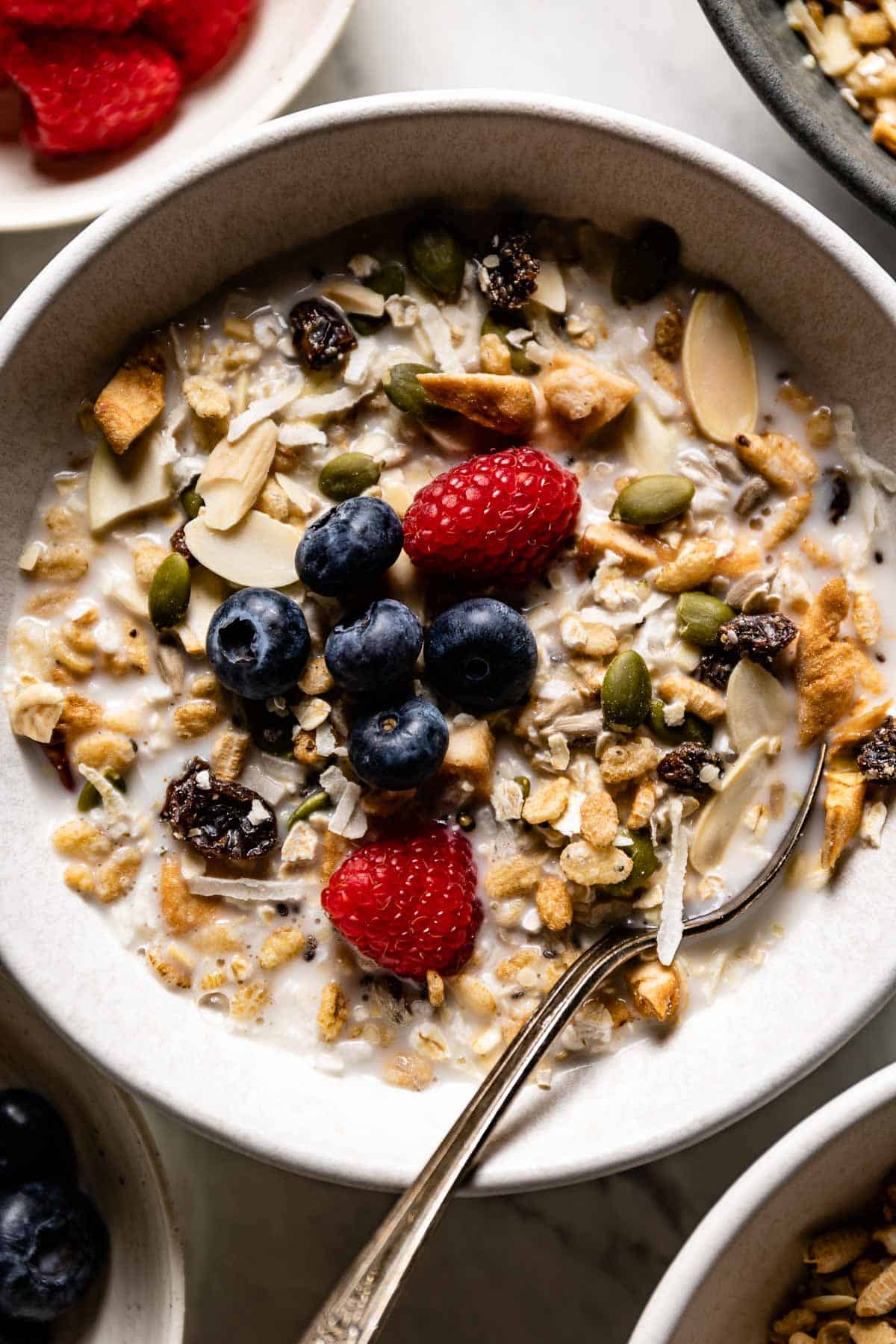
- Muesli with milk (the classic way): This is the fastest way to enjoy your muesli. Simply combine equal parts muesli and cold milk (I like a 1:1 ratio). You can use dairy milk or a plant-based option, such as oat or almond milk (which you can even make at home using my effortless recipes for Almond Milk from Almond Butter or Homemade Almond Milk). Then top off your cereal muesli with fresh fruit (strawberries and blueberries are my faves) for extra juicy, sweet flavor.
- Hot muesli (oatmeal-style): For a warm, comforting bowl, mix ½ cup muesli with 1 cup water or milk. Then, bring it to a gentle boil on the stovetop or warm it in the microwave, stirring once or twice as it cooks. This simple oatmeal comes together in just 5-10 minutes. If you need further instructions, check out my Oatmeal with Chia Seeds recipe.
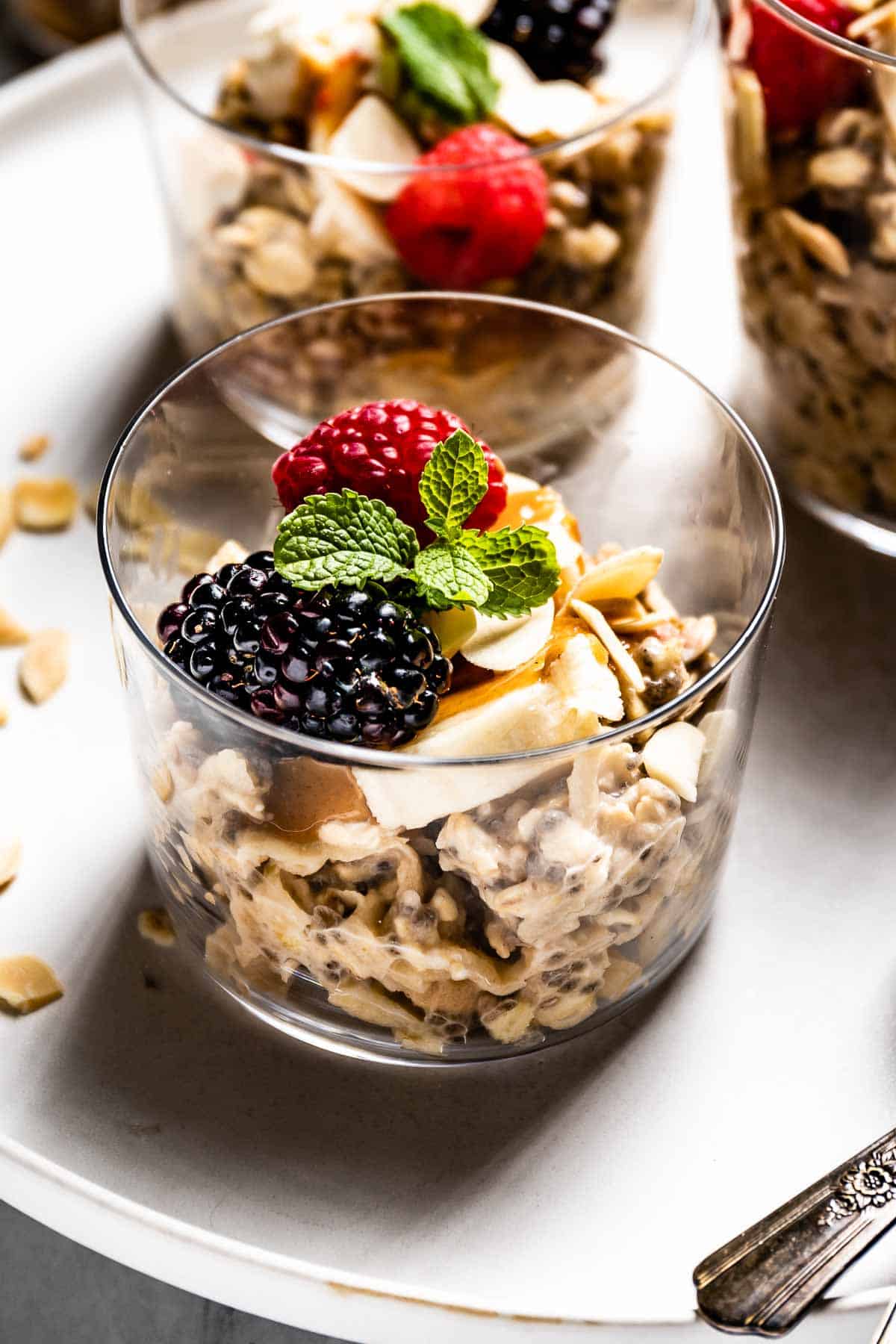
- With yogurt: For a creamy texture, soak muesli overnight in plain Greek yogurt or make my Vanilla Yogurt Recipe for a lightly sweetened option. If you don’t have time for soaking, you can make my Greek Yogurt Parfait by layering muesli with yogurt and topping it with fresh berries. Alternatively, you can make Overnight Oats with Yogurt by simply using this muesli mixture instead of rolled oats.
- With juice: For a refreshing, dairy-free twist, try serving it with orange or apple juice. This is a common way to eat muesli in Europe, similar to how it was served when it was first invented.
- Muesli and fruit: Top it off with a handful of fruit, or better yet, make a batch of my Fruit Breakfast Salad and serve it on the side.
- Optional sweeteners: If you prefer a sweeter bowl, I recommend avoiding refined sugars and opting for natural sweeteners, such as a drizzle of honey, Pureed Blueberries, Unsweetened Applesauce, or (leftover) Cranberry Maple Sauce.
Foolproof Tips for the Best Homemade Muesli
As I mentioned earlier, use my recipe as a starting point and adapt it with whatever you have on hand. That being said, there are a few simple tips that I’d like to point out to ensure you are always getting the best results:
Use a large bowl: This recipe makes a large batch, so using a large bowl makes mixing easier. I used the largest bowl I had to ensure the oats, nuts, and fruit were evenly distributed.
Adjust the batch size: You can easily halve or double this recipe depending on how much muesli you want to keep on hand. Just follow the same ratios and scale the ingredients up or down as needed.
Portion size tip: This muesli is best enjoyed in smaller portions, as it’s high in fiber and packed with grains, nuts, and dried fruit. I find that ½ cup per serving is usually enough for breakfast. If you prefer a lighter bowl, stick to this serving size and top with fresh berries instead of dried fruit.

Homemade Muesli Recipe
Ingredients
Oats
- 3 cups Quick-Cooking Oats*, 290 g.
Grain Cereals
- 3 cups Brown Rice Crisps , 150 g.
- 2 cups Rice Puffs , 43 g.
Seed Boosters
- 1/2 cup Hemp Seeds, 71 g
- 1/2 cup Chia Seeds, 85 g.
Nuts & Seeds
- 1 cup Unsalted Pumpkin Seeds , 148 g.
- 1/2 cup Sliced almonds , 55 g.
- 1 cup Unsalted Sunflower Seeds, 139 g.
Dried Fruit
- 2 cups Dried Apples, chopped – 125 g.
- 1 cup Dried Raisin or Cranberries, roughly chopped – 113 g.
Optional Add in
- 2 cups Unsweetened Shredded Coconut, 130 g. – for some extra crunch
Instructions
- Combine ingredients: Place all ingredients in a large bowl (or a glass jar, like I did) and stir to combine.
- Serve/store: Cover it tightly with a lid. Enjoy it with your favorite milk and fresh fruit.
Video
Notes
- Yields: This recipe makes 16 cups of mixed muesli (approx. 16 servings). The nutritional values below are per cup. They are approximate and may change depending on the brand you use.
- Make a smaller batch – The below ingredients make 4 cups of muesli:
- Oats: 3/4 cups
- Other grain cereals: 1 1/4 cups
- Dried fruit: 3/4 cup
- Seed boosters: 1/4 cup
- Seeds and nuts: 5/8 cup (or a generous ~ 1/2 cup)
- When shopping for these ingredients, be sure to read the label. I recommend choosing ingredients that are made with no added sugar, naturally gluten-free (if that is important to you), and organic, if possible.
- *Raw muesli vs. roasted: I use quick-cooking oats in my muesli because they require no cooking and soften as soon as they are mixed with the liquid. However, you can toast oats and nuts in a preheated 350-degree oven for 10 minutes to enhance the nutty flavors. If you decide to go down that route, I recommend using old-fashioned rolled oats instead.
- Storage: Store it in an airtight container or jar at room temperature for up to a month. It may seem like the muesli ingredients should last longer according to their expiration dates. However, their longevity decreases when repeatedly exposed to air, such as when you open their storage container to get a helping of muesli. If you want it to last longer, you can keep a smaller portion in a “working jar” so the main batch doesn’t have to be exposed to air as often.
- Serving suggestions:
- Serve it with any of your favorite dairy or non-dairy milk (like you would serve store-bought cereal).
- Make it a warm bowl of oatmeal by cooking it with milk. My ratio is ½ cup muesli to 1 cup liquid (plant-based or regular milk or water).
- Mix it with milk or yogurt (1:1) to make overnight muesli.
Nutrition
Nutrition information is automatically calculated, so should only be used as an approximation.
FAQs
Yes, muesli contains raw rolled or quick cooking oats. Quick-cooking oats are better if you plan to serve your muesli raw, while old-fashioned rolled oats are better if you prefer to toast them before using them in your muesli mix.
Muesli can be gluten-free as long as each ingredient you use is gluten-free. This includes ensuring you use certified gluten-free oats and any nuts, seeds, or dried fruit you add to the mix.
Other Breakfast Bowl Recipes You Might Also Like
Once you start making muesli at home, it’s easy to branch out into other simple breakfast bowls. These fan-favorite recipes are all easy to prep and great to rotate through your mornings when you want a little variety.
A quick overnight breakfast: My Overnight Muesli is a great grab-and-go option made with plant-based yogurt and milk, lightly sweetened with a shredded apple.
A Year-Round Quinoa Bowl: My Quinoa Porridge is a simple, vegan breakfast bowl that is a great alternative when you need a break from oatmeal.
Make-Ahead Morning Favorite: When you want a quick breakfast with minimal prep that also keeps well in the fridge, make these Steel Cut Overnight Oats.
This post may contain affiliate links. If you purchase through these links, I may earn a small commission, at no additional cost to you.











Thank you so much for your informative video explaining all the different versions we can make. I will definitely give your recipe a try tomorrow. I am thinking of using this to teach my classroom in the spring semester.
Thank you so much for the kind words, Pey-Lih! I hope your students enjoy making it. What a fun classroom activity!
definitely looks good and healthy, i like the process. but is sugar not added on it even though it’s a preference?
Hello,
You certainly can add sugar if you want. I personally do not add any because the dried fruits are plenty sweet for me but like I said you can certainly add some in if you want.
I hope this answers your question.
Such good recipe and information.
Thank You!
I am allergic to oats. Is there another grain I can use instead?
Hi Jane,
I would use more brown rice puffs in place of oats. It won’t have that chewy texture that oats provide but would still have a satisfying crunch to it. Hope this helps.
I’ve made it with rolled barley and rolled rye, quinoa flakes and wheat germ as the grains for my son because oats affect him if he eats them too often. He tried our muesli (with oats) first, and loved them. When I made him a recipe without oats he said it tasted better than ours.